








Executive Overview
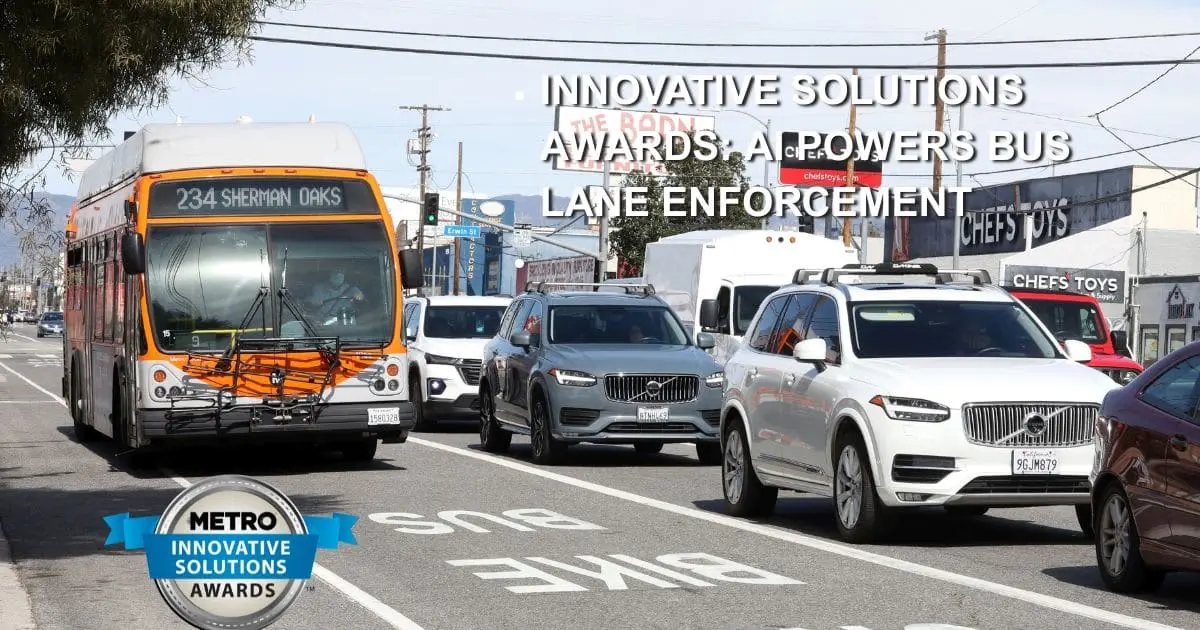
In the sprawling, heavily congested landscape of Southern California, urban mobility has long been dictated by the friction between mass transit and private vehicular traffic. For decades, dedicated bus lanes and designated transit stops—critical lifelines for millions of commuters—have been treated as convenient temporary parking spots by delivery drivers, rideshare operators, and impatient motorists. This routine disregard for transit infrastructure has severely degraded bus reliability, slowed down travel times, and created hazardous conditions for vulnerable riders, particularly those with disabilities.
Enter a groundbreaking technological partnership that is fundamentally rewriting the playbook on urban traffic management. The City of West Hollywood, in close collaboration with the Los Angeles County Metropolitan Transportation Authority (LA Metro), computer vision pioneer Hayden AI, parking management innovator T2 Systems, and operational partner LAZ Parking, has deployed an advanced, artificial intelligence-powered bus lane enforcement program.
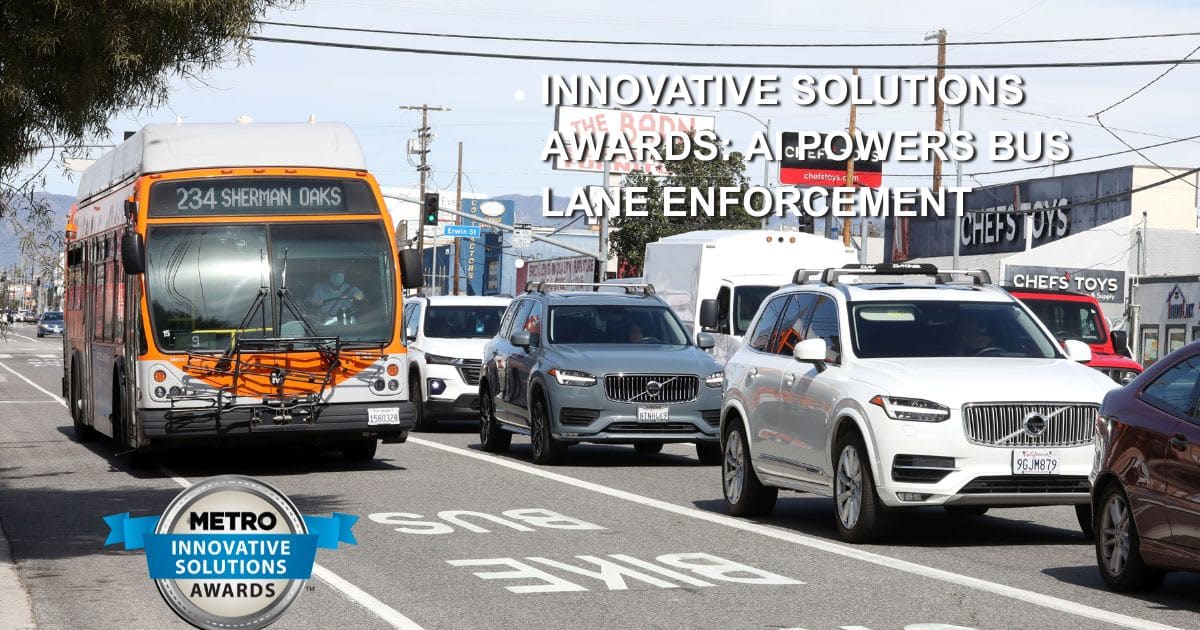
This multi-agency initiative has already captured industry-wide acclaim, earning METRO Magazine’s prestigious Innovative Solutions Award. By fusing cutting-edge onboard computer vision, automated citation processing workflows, and rigorous human oversight, the program has successfully transitioned municipal enforcement from a reactive, labor-intensive chore into a proactive, route-wide digital infrastructure. The results are clear: cleaner bus lanes, faster transit times, enhanced ADA compliance, and a scalable blueprint for cities nationwide grappling with the complexities of modern urban congestion.

Detailed Chronology and Technical Architecture
To understand the magnitude of West Hollywood’s transit enforcement revolution, one must examine the intricate architecture of the partnership and the step-by-step technological evolution that brought the project to life.
The Genesis of the Collaboration
Traditional municipal parking enforcement has historically relied on static solutions: parking enforcement officers patrolling beats in marked vehicles or fixed-position automated cameras mounted at notoriously congested intersections. While effective in specific pockets, these methods are notoriously difficult to scale across active, multi-jurisdictional transit corridors. Officers cannot be everywhere at once, and fixed cameras lack the mobility to catch transient violations, such as a delivery truck temporarily idling in a bus stop.
Recognizing these systemic limitations, civic leaders in West Hollywood and officials at LA Metro began exploring mobile automated enforcement. The objective was to leverage the existing footprint of the public transit fleet itself—turning the very vehicles affected by traffic blockages into active agents of enforcement.
The resulting coalition brought together best-in-class industry leaders:
- LA Metro: Provided the transit network, operational routes, and fleet access necessary to scale mobile enforcement across municipal boundaries.
- Hayden AI: Supplied the proprietary, bus-mounted computer vision and edge-AI platform designed to detect traffic and parking infractions in real time.
- T2 Systems: Integrated the data pipeline directly into municipal workflows via their robust T2 Flex platform, automating citation creation, DMV lookup, payment portals, and appeals management.
- LAZ Parking: Managed the boots-on-the-ground operational support required to keep the program running smoothly on a day-to-day basis.
The Digital Workflow: From Edge AI to Human Review
The technological backbone of the program relies on an airtight, highly secure, and automated digital pipeline. The process functions through several distinct phases:
- Edge Detection via Bus-Mounted Cameras: High-definition, vision-based cameras are installed on select LA Metro buses operating along designated routes through West Hollywood. As the bus navigates its daily route, the onboard edge-AI platform continuously analyzes the roadway environment.
- Infraction Identification: The AI is specifically trained to recognize roadway markings, dedicated transit lanes, bus stop zones, and unauthorized vehicles occupying them. When a potential violation occurs—such as a passenger vehicle parked illegally in a bus lane—the system captures a short, high-definition video clip, crisp license plate imagery, and precise geospatial and timestamp data.
- Targeted Data Transmission: To preserve network bandwidth and ensure rigorous data privacy, the system does not continuously stream or store ambient street footage. Only data packets corresponding to detected potential violations are securely transmitted for further review.
- Mandatory Human Oversight: Upholding the principle of municipal accountability, technology is never permitted to issue a citation autonomously. Trained City of West Hollywood parking enforcement personnel access the transmitted files through a secure web portal to review every single potential infraction. Human staff verify the context, ensuring that emergency vehicles, authorized service trucks, or anomalous lighting conditions are not mistakenly penalized.
- Automated Back-Office Processing: Once a human enforcement officer approves a violation, the T2 Flex platform takes over the administrative heavy lifting. The system instantly automates registered owner lookups via Department of Motor Vehicles (DMV) databases, generates official notices of violation, updates payment processing gateways, and manages tracking for appeals and collections.
Supporting Context and Metrics: Measuring the Impact
The true measure of any municipal technology program lies not in the sophistication of its software, but in its tangible, real-world outcomes. Before the implementation of the AI-powered enforcement initiative, West Hollywood’s transit corridors suffered from chronic delays driven by illegal curb space utilization. Municipal staff spent an unsustainable amount of time manually processing paper citations and investigating ad-hoc complaints—often dedicating 10 to 15 minutes of administrative labor to every single violation.
Operational Efficiency and Administrative Relief
Following the integration of Hayden AI and T2 Systems, the administrative bottleneck evaporated. Once a human officer reviews and greenlights a violation, automated workflows reduce the remaining administrative burden to mere seconds.
By eliminating duplicate data entry, manual handoffs, and paper-based tracking, municipal staff have been freed from routine back-office drudgery. Personnel can now redirect their expertise toward higher-priority community needs, strategic urban planning, and active curb management initiatives.
Behavioral Modification and Transit Reliability
From a commuter’s perspective, the impact has been transformative. Fixed-point enforcement allows motorists to learn patrol schedules and quickly return to illegal habits as soon as an officer departs. In contrast, mobile enforcement integrated directly into bus fleets creates omnipresent, unpredictable accountability.
Project leaders noted that when enforcement becomes consistent and route-wide, driver behavior shifts rapidly. Motorists stop treating bus lanes as overflow parking lanes. Consequently, public transportation regains its foundational promise:
- Improved On-Time Performance: Buses spend less time weaving around obstacles, resulting in predictable headways and reliable schedules.
- Clearer Boarding Zones: Unobstructed bus stops allow transit operators to pull directly curbside, drastically reducing boarding and alighting times.
- Enhanced Safety: Smoother traffic flow reduces sudden lane changes caused by blocked buses, creating a safer environment for motorists, cyclists, and pedestrians alike.
Uncompromising Access for Riders with Disabilities
While speed and reliability are major victories for municipal transit planners, the human rights and accessibility implications are arguably more profound. For individuals with mobility impairments, particularly those who rely on wheelchairs, a blocked bus stop is not merely an inconvenience—it is an impenetrable barrier.
When cars park illegally in designated bus zones, transit operators are frequently forced to deploy wheelchair ramps onto uneven street asphalt rather than the raised sidewalk platform. This creates severe safety hazards and violates the Americans with Disabilities Act (ADA). By keeping bus stops consistently clear, the West Hollywood program ensures that every resident, regardless of physical ability, enjoys safe, dignified, and equitable access to public transportation.
Privacy, Transparency, and Public Trust
In an era of ubiquitous digital monitoring, municipal deployments of artificial intelligence inevitably invite intense public scrutiny regarding privacy, data ownership, and government overreach. Recognizing these valid concerns, the project partners embedded privacy-by-design principles into the foundation of the initiative from day one.
Strict Privacy Safeguards
Unlike broad surveillance networks that capture continuous video of citizens, pedestrians, and private property, the Hayden AI platform utilized in West Hollywood is purpose-built and highly restrictive:
- No Facial Recognition: The system does not utilize facial recognition technology, nor does it attempt to identify pedestrians walking along sidewalks or motorists sitting inside vehicles.
- Interior Exclusion: Cameras are strictly outward-facing; they do not monitor activity, passengers, or drivers inside the transit vehicles.
- Targeted Capture Only: The system discards ambient street data instantly. It only packages and transmits imagery when a specific, objective threshold for a transit-blocking violation is met.
Regulatory Compliance and Data Minimization
Data retention and security are governed by rigorous state standards, specifically complying with California’s stringent AB 917 requirements. Under this framework:
- Footage that does not contain evidence of a traffic or parking violation is automatically and permanently purged from the system within 15 days.
- Data associated with verified, issued citations is retained only for the legally mandated duration required to process payments or resolve administrative appeals, after which it is securely deleted.
By maintaining absolute transparency, limiting data collection strictly to what is necessary for traffic compliance, and preserving final human authority over every citation, the City of West Hollywood has successfully demonstrated that advanced municipal technology can enhance operational efficiency without eroding civil liberties or public trust.
Official Statements and Industry Recognition
The collaborative achievement of West Hollywood, LA Metro, Hayden AI, T2 Systems, and LAZ Parking has set a new benchmark for municipal innovation, culminating in the presentation of METRO Magazine’s Innovative Solutions Award.
Reflecting on the honor, project officials emphasized that the award validates a steadfast commitment to solving tangible, everyday problems rather than chasing technology for its own sake:
"Winning a METRO Magazine Innovative Solutions Award is a tremendous honor, and it’s especially meaningful because it recognizes a program built to solve a very practical, persistent problem: keeping bus lanes and bus stops clear so transit can move safely and reliably."
Officials elaborated on the distinct advantages of mobile enforcement, noting that the ultimate metric of success is positive behavioral change across the community:
"What we’re most proud of isn’t the technology for its own sake; it’s the outcome. A bus-mounted, mobile enforcement solution lets a city extend coverage across an entire bus route, including violations that were previously almost impossible to address. When enforcement becomes consistent and route-wide, drivers change their behavior, resulting in public transportation that people can count on: buses that are on time, bus stops that are unobstructed, and roads that are safer for everyone. That includes riders with disabilities, who depend on bus stops being clear so operators can safely deploy wheelchair ramps."
Furthermore, the project stakeholders highlighted the indispensable value of keeping human judgment at the center of automated enforcement workflows:
"The greatest value comes when the technology supports, rather than replaces, human judgment. Trained parking enforcement staff still review and approve every potential violation before a citation is ever issued. The goal of the program is compliance and safer, more reliable transit operations. The technology is focused on specific bus lane and bus stop violations, and the City retains final authority over whether an incident should proceed as a citation."
Future Outlook: A Scalable Blueprint for Metropolitan Transit
As urban centers across the United States grapple with population growth, climate mandates, and the imperative to decarbonize transportation networks, the future of mobility depends heavily on the attractiveness and efficiency of public transit. When buses get stuck in traffic, commuters abandon public options in favor of private automobiles, exacerbating congestion and emissions.
The successful partnership between West Hollywood and LA Metro offers a powerful, highly replicable model for overcoming these systemic hurdles. By proving that regional transit agencies and municipal governments can bridge jurisdictional boundaries—utilizing Metro buses to enforce municipal codes along West Hollywood streets—the program has established a framework that other metropolitan regions can readily adopt.
Key Takeaways for Future Urban Transit Programs
- Cross-Jurisdictional Cooperation: Municipalities and regional transit authorities must pool their assets—combining transit fleets with municipal enforcement authority—to achieve comprehensive route coverage.
- Technological Synergy: Seamless data integration between edge-AI capture devices (Hayden AI) and enterprise back-office management platforms (T2 Systems) is vital for eliminating administrative friction.
- Human-Centric Automation: Preserving human oversight in the review loop is essential for maintaining accuracy, ensuring fairness, and securing public acceptance.
- Uncompromising Privacy: Strict adherence to data minimization and privacy regulations (such as California’s AB 917) builds community trust and safeguards civil liberties.
- Equity-Driven Outcomes: Prioritizing accessibility and ADA compliance ensures that smart city investments benefit the most vulnerable members of the transit community.
As transit agencies nationwide look for innovative ways to modernize their operations within tight budget constraints, the West Hollywood AI-powered bus lane enforcement program stands as a shining example of what is possible when visionary leadership meets smart technology. By clearing the path for public transit, West Hollywood and its partners are not just keeping bus lanes open—they are paving the way for the sustainable, equitable cities of tomorrow.