







ESBJERG, DENMARK / LÜBECK, GERMANY — In a move set to reshape the global maritime safety landscape, VIKING Life-Saving Equipment (VIKING) has been officially appointed as the Preferred Global Sales and Service Partner for Dräger’s comprehensive portfolio of marine respiratory protection and mobile gas detection technology.
Announced on September 2, 2026, this landmark agreement formalizes, deepens, and significantly expands an existing long-term cooperation between two of the most trusted and dominant forces in the marine safety sector. By combining VIKING’s unrivaled global distribution, servicing network, and managed service concepts with Dräger’s world-class engineering in life-safety and gas-detection technologies, the partnership establishes a highly integrated, one-stop-shop safety solution for shipowners, managers, and operators worldwide.
Executive Overview: Bridging Technical Excellence and Global Reach
The global maritime industry operates under a relentless matrix of safety regulations, environmental mandates, and operational pressures. To remain compliant and protect human life at sea, vessel operators must manage a vast array of safety equipment, ranging from liferafts and evacuation systems to personal protective equipment (PPE), gas detectors, and breathing apparatuses. Historically, procurement and servicing for these disparate assets have been fragmented, leading to administrative inefficiencies, variable service quality across different ports, and increased risk of non-compliance.
The formalization of the partnership between Esbjerg-based VIKING and Lübeck-based Dräger directly addresses these challenges. Under the terms of this new global agreement, VIKING assumes the role of Official Preferred Global Sales and Service Partner for Dräger’s marine portfolio. This includes:
- Respiratory Protection Equipment: Self-Contained Breathing Apparatuses (SCBAs), Emergency Escape Breathing Devices (EEBDs), and full-face masks.
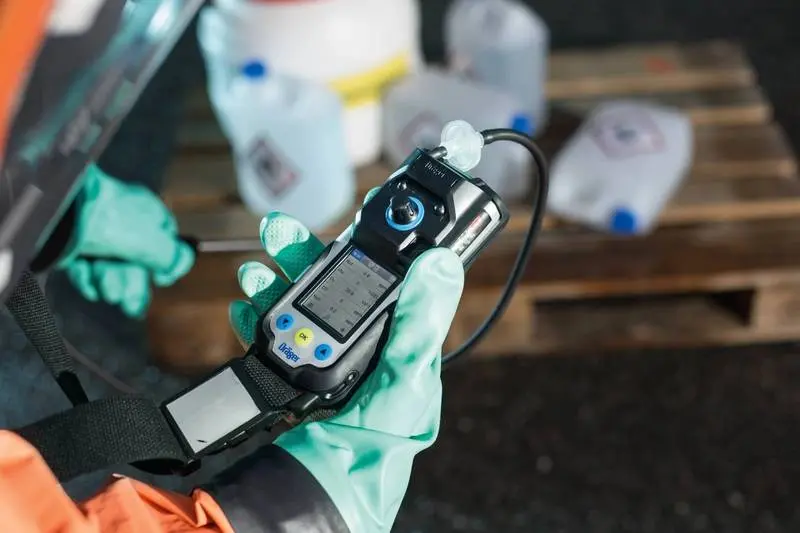
- Mobile Gas Detection Systems: Portable multi-gas and single-gas detectors designed for harsh marine environments.
- Colorimetric Detector Tubes: Rapid-response chemical detection tubes for spot-measurement of toxic gases.
- Drug and Alcohol Detection Kits: Specialized screening equipment critical for enforcing fleet-wide sobriety policies and meeting international maritime labor standards.
By aligning Dräger’s technological precision with VIKING’s extensive service infrastructure, the alliance promises to deliver unprecedented supply chain resilience, standardized servicing quality, and simplified compliance management for maritime operators globally.
Detailed Chronology: From Regional Cooperation to Global Integration
The partnership announced in September 2026 is not an overnight development, but rather the culmination of years of successful tactical collaboration.
[Phase 1: Localized Cooperation]
       │  • Regional distribution agreements in select European and Asian ports.
       ▼  • Technical training of VIKING personnel at Dräger facilities.
[Phase 2: Operational Alignment]
       │  • Integration of Dräger equipment into VIKING Shipowner Agreements.
       ▼  • Standardization of service protocols across key maritime hubs.
[Phase 3: Formalized Global Alliance (Sept 2026)]
          • VIKING designated as Official Preferred Global Sales & Service Partner.
          • Global rollout of unified procurement, servicing, and compliance support.
The Early Foundations
Prior to this global agreement, VIKING and Dräger maintained a successful localized relationship. VIKING frequently included Dräger breathing apparatuses and gas detectors within its customized maritime safety packages. Simultaneously, Dräger utilized select VIKING service stations to facilitate localized maintenance. However, as shipowners increasingly demanded centralized, multi-port agreements, both companies recognized the need for a unified global framework.
The Scaling Phase
As international maritime regulations grew more stringent—particularly regarding enclosed space entry and gas detection—the demand for highly reliable, OEM-certified servicing surged. Over the last several years, the two companies worked to align their technical standards. VIKING technicians underwent rigorous, direct training at Dräger’s specialized facilities in Germany to ensure that maintenance, calibration, and repair services performed by VIKING met Dräger’s strict original equipment manufacturer (OEM) specifications.
The September 2026 Breakthrough
The formalization of the agreement on September 2, 2026, marks the final phase of this evolution. By elevating VIKING to the status of "Preferred Global Sales and Service Partner," Dräger effectively leverages VIKING’s massive global footprint—comprising hundreds of owned branch offices and certified service stations worldwide—while VIKING solidifies its position as the ultimate single-source provider for maritime safety.
Supporting Context & Industry Metrics: The Safety and Compliance Imperative
To understand the strategic value of this partnership, one must examine the regulatory and operational environment of modern commercial shipping.
The Regulatory Landscape: SOLAS and Enclosed Space Hazards
Enclosed space entry remains one of the most hazardous operations aboard commercial vessels. According to data from international maritime safety organizations, asphyxiation in confined spaces (such as cargo holds, ballast tanks, and fuel tanks) continues to be a leading cause of shipboard fatalities.
This has driven rigorous enforcement of international regulations:
- SOLAS Regulation III/19: Mandates regular on-board training and drills for enclosed space entry and rescue.
- SOLAS Regulation XI-1/7: Requires all ships to carry appropriate, portable gas-detection equipment capable of measuring oxygen, flammable gases or vapors, hydrogen sulfide, and carbon monoxide prior to entering enclosed spaces.
- SIRE 2.0 (Ship Inspection Report Programme): The Oil Companies International Marine Forum (OCIMF) has updated its vessel inspection regime, placing a significantly higher emphasis on the operational readiness, calibration history, and crew familiarity with gas detection and respiratory safety equipment.
+-----------------------------------------------------------------------------+
|                     KEY MARITIME SAFETY REGULATIONS                         |
+------------------------------------+----------------------------------------+
| Regulation                         | Operational Mandate                    |
+------------------------------------+----------------------------------------+
| SOLAS Regulation III/19            | Enclosed space entry & rescue drills   |
+------------------------------------+----------------------------------------+
| SOLAS Regulation XI-1/7            | Mandatory portable multi-gas detectors |
+------------------------------------+----------------------------------------+
| OCIMF SIRE 2.0 Vetting             | Strict verification of calibration &   |
|                                    | maintenance records of safety gear     |
+------------------------------------+----------------------------------------+
The Cost of Non-Compliance and Downtime
For a modern ship manager, the failure of a single gas detector or an expired calibration certificate on an SCBA can have catastrophic financial consequences. During Port State Control (PSC) inspections, deficiencies in lifesaving appliances or firefighting equipment are among the most common grounds for vessel detention. A detained vessel can cost shipowners upwards of $20,000 to $100,000 per day in lost charter rates, port fees, and contractual penalties.
By utilizing VIKING’s global service network to maintain Dräger equipment, shipowners gain access to standardized, OEM-certified service at virtually any major port. This drastically reduces the risk of PSC detentions and ensures that critical safety equipment is always fully operational and compliant.

Official Statements: Shared Vision for Global Maritime Safety
The formalization of the partnership has been met with strong enthusiasm from the executive leadership of both organizations, emphasizing a shared commitment to protecting lives at sea.
In communicating the significance of the deal, representatives from VIKING Life-Saving Equipment highlighted the operational advantages for shipowners:
"This agreement represents a natural but highly significant step forward in our mission to protect lives at sea. By combining Dräger’s world-renowned German engineering in respiratory protection and gas detection with VIKING’s unparalleled global service network, we are providing shipowners with an effortless path to compliance and safety. Our customers can now secure, service, and manage their Dräger safety assets through their existing VIKING agreements, streamlining their vendor management and ensuring consistent, high-quality servicing wherever their fleets operate."
From the perspective of Dräger, which maintains a physical presence in over 190 countries, the alliance with VIKING provides a highly focused, maritime-specific channel to maximize the reach of its life-saving technologies:
"For decades, Dräger has been synonymous with safety and precision engineering. The maritime sector presents unique logistical and environmental challenges that require dedicated expertise. In VIKING, we have a partner that understands the maritime industry inside and out. This global sales and service agreement ensures that our cutting-edge respiratory protection and gas detection technologies are backed by VIKING’s world-class marine service infrastructure, ensuring that seafarers worldwide have access to reliably maintained, life-saving equipment."
Future Outlook: Digitalization, Decarbonization, and Next-Generation Safety
As the maritime industry looks toward the horizon, the partnership between VIKING and Dräger is uniquely positioned to address the emerging challenges of the next decade, particularly regarding digital fleet management and alternative green fuels.
                    ┌──────────────────────────────┐
                    │  VIKING & Dräger Partnership  │
                    └──────────────┬───────────────┘
                                   │
         ┌─────────────────────────┼─────────────────────────┐
         ▼                         ▼                         ▼
┌─────────────────┐       ┌─────────────────┐       ┌─────────────────┐
│  Digitalization │       │ Alternative Fuel│       │ Fleet-Wide      │
│  & IoT Tracking │       │   Safety (NH3)  │       │ Standardization │
└─────────────────┘       └─────────────────┘       └─────────────────┘
1. Digitalization and Smart Safety Management
The maritime industry is undergoing a rapid digital transformation. The integration of IoT (Internet of Things) technology into safety equipment is no longer a futuristic concept but an imminent reality. Future iterations of Dräger’s mobile gas detectors and SCBAs are increasingly incorporating wireless connectivity, allowing real-time gas readings and equipment status to be transmitted to the ship’s bridge or directly to shore-based fleet management centers.
VIKING’s advanced digital customer portals are primed to integrate this data. Through consolidated digital dashboards, shipowners will be able to track the real-time calibration status, service history, and physical location of every Dräger safety asset across their entire fleet. This proactive approach transitions safety management from reactive maintenance to predictive servicing, further minimizing vessel downtime.
2. The Green Transition: Alternative Fuels and New Gas Hazards
The International Maritime Organization’s (IMO) aggressive decarbonization targets are driving the adoption of alternative fuels such as liquefied natural gas (LNG), methanol, ammonia, and hydrogen. While these fuels significantly reduce greenhouse gas emissions, they introduce severe new hazards to crew safety:
- Ammonia ($NH_3$): Highly toxic and corrosive, requiring extremely sensitive gas detection and specialized chemical protective suits.
- Hydrogen ($H_2$): Highly flammable with a wide ignition range, requiring specialized detection technologies due to its low molecular weight.
- Methanol ($CH_3OH$): Burns with an invisible flame, demanding advanced thermal imaging and localized gas detection.
The VIKING-Dräger alliance is uniquely positioned to lead the industry through this transition. Dräger’s cutting-edge sensor technology, capable of detecting trace amounts of toxic alternative fuels, combined with VIKING’s expertise in personal protective equipment and marine evacuation, ensures that shipowners adopting green propulsion systems can do so with the highest level of crew safety.
3. Comprehensive Shipowner Agreements (SOAs)
A major vehicle for the rollout of this partnership will be the integration of Dräger equipment into VIKING’s Shipowner Agreements (SOAs). These customizable, fixed-price service agreements allow shipowners to outsource the management, exchange, and servicing of all onboard safety equipment to VIKING.
By incorporating Dräger’s premium gas detection and respiratory equipment into the SOA framework, shipowners can achieve predictable safety budgets, reduce administrative burdens, and ensure absolute compliance across their entire fleet, regardless of port of call.
Conclusion
The formalized partnership between VIKING Life-Saving Equipment and Dräger represents a significant milestone in the maritime safety sector. By bridging the gap between state-of-the-art German safety engineering and a market-leading global marine service network, the two companies have created a powerful alliance that addresses the core operational, regulatory, and financial pain points of modern shipowners. As the maritime industry navigates the complexities of digitalization and alternative fuel transitions, this collaborative powerhouse is well-equipped to protect vessels, cargo, and, most importantly, human lives at sea for years to come.