








Executive Overview
The global luxury yachting market is constantly striving to reconcile two often competing desires: the demand for voluminous, light-filled, expansive outdoor living spaces, and the pressing ecological imperative to reduce maritime carbon footprints, airborne pollutants, and acoustic disturbances. In an industry where heritage designs can occasionally stagnate, visionary shipyards look to bold partnerships to reinvent classic categories. Enter the Azimut Fly 70, a vessel that does not merely update a classic layout—it completely reimagines what a modern 70-foot flybridge yacht can and should be.
Slated to make its highly anticipated world debut at the prestigious 2026 Cannes Yachting Festival, the Fly 70 stands out as one of four major global premieres for the Italian builder, alongside heavyweights such as the Seadeck 9, Magellano 27M, and Grande 44M. This concentration of debuts underscores Azimut’s aggressive R&D roadmap and its dominant position in the luxury composite motor yacht sector.
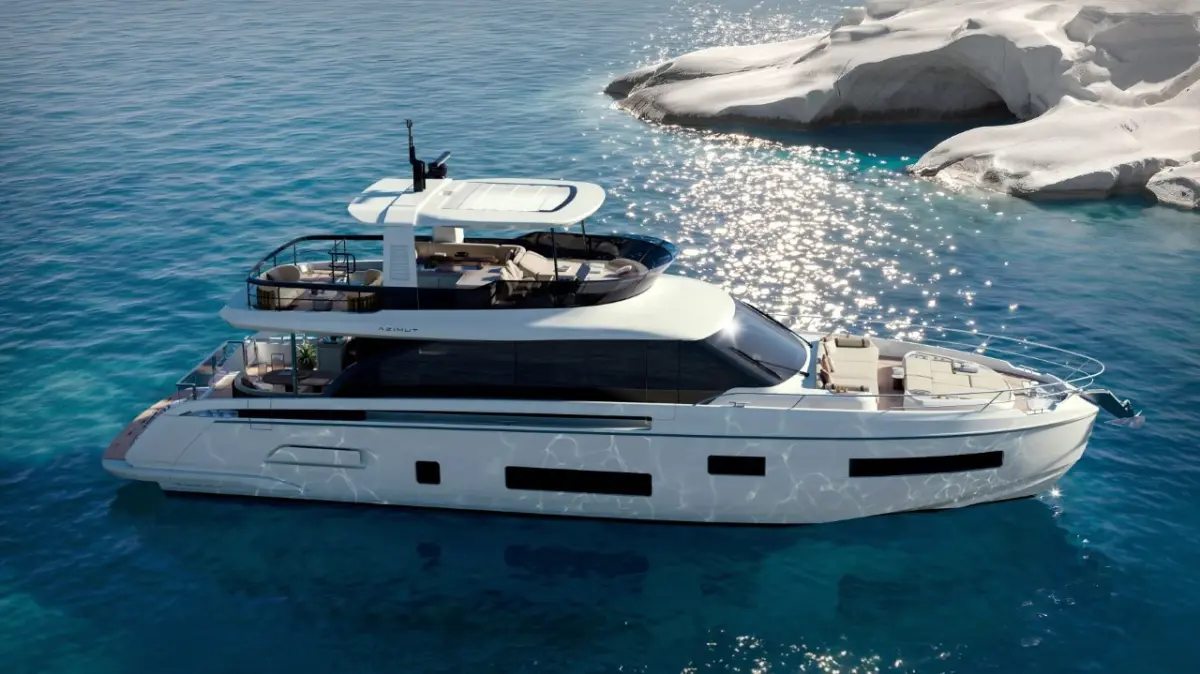
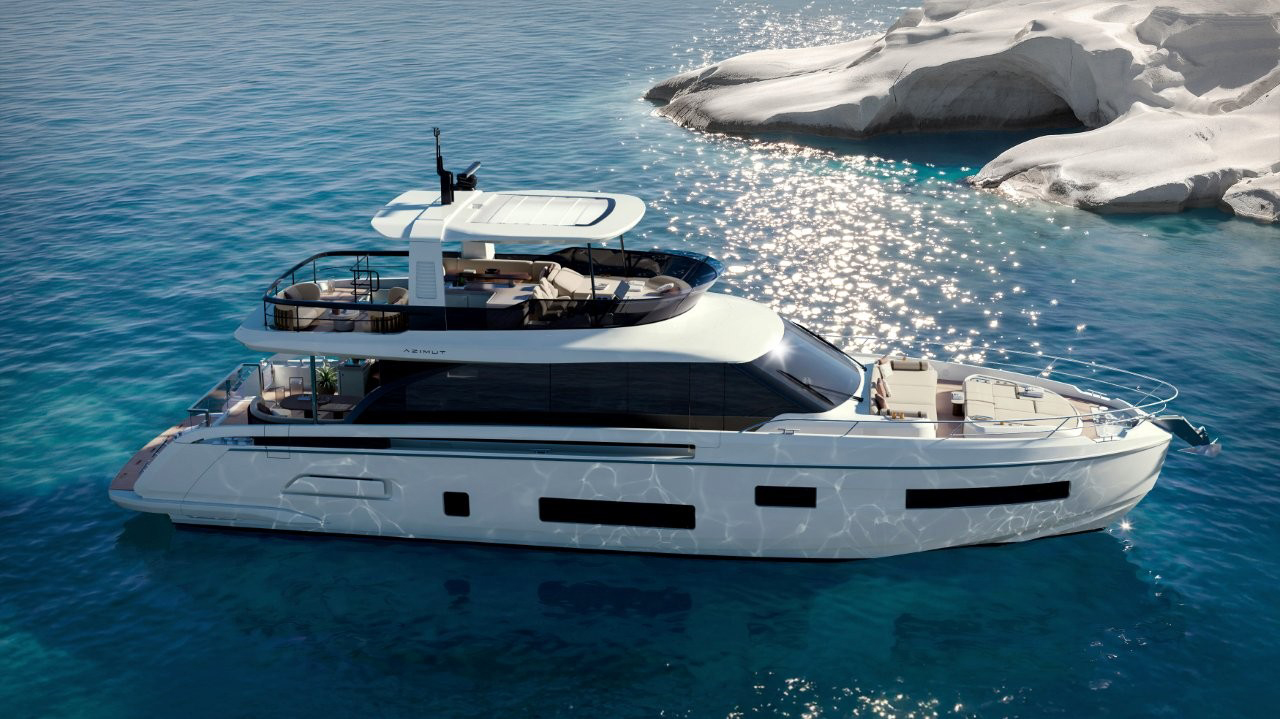
What sets the Fly 70 apart from its contemporaries is a rare marriage of elite Italian design pedigree and cutting-edge engineering. Crafted through a collaborative masterclass by renowned exterior designer Alberto Mancini and interior architect Fabio Fantolino, the Fly 70 rejects dated, compartmentalized layouts in favor of an uninterrupted, contemporary aesthetic that privileges open-air socialization and a profound, immersive connection to the marine environment.
Beneath its striking silhouette and meticulously appointed interior lies an equally revolutionary engineering story. Utilizing Azimut’s proprietary Carbon Tech Generation composite construction, the vessel achieves an optimal strength-to-weight ratio that maximizes speed and efficiency. Propelled by twin Volvo IPS 1350 pods, the yacht delivers a spirited top speed of 31 knots. Crucially, the Fly 70 debuts Azimut Silent Technology – Pure, a pioneering emissions-control and particulate-filtration package that slashes particulate emissions by up to 95 percent while dampening ambient acoustic noise by more than 5 decibels (dBA).
This comprehensive report examines the design philosophy, interior ergonomics, construction breakthroughs, and propulsion innovations that position the Azimut Fly 70 as a definitive benchmark for the next decade of luxury yachting.
Detailed Chronology: From Concept to the 2026 Cannes Global Premiere
The genesis of the Azimut Fly 70 is rooted in a strategic shift within Azimut’s product development pipeline. Recognizing that modern yacht owners increasingly view their vessels as floating private islands rather than traditional cruisers, the builder’s engineering teams initiated development on a mid-range flybridge that would bridge the gap between superyacht amenity and owner-operated agility.
Phase I: Conceptualization and the Mancini-Fantolino Synergy
The partnership between Alberto Mancini and Fabio Fantolino was conceived to merge aggressive, fluid exterior lines with a bespoke, residential interior ambiance. Mancini, celebrated for his dynamic, aerodynamic profiles that mimic automotive styling while preserving interior volume, focused the exterior geometry around expansive glazing and multi-tiered deck spaces. Simultaneously, Fantolino—hailed for his sophisticated interior architecture that balances mid-century warmth with contemporary minimalism—was tasked with ensuring that the transitional spaces between the interior saloon, cockpit, and flybridge felt seamless.

Phase II: Structural Engineering and Carbon Tech Integration
With the design finalized on paper, Azimut’s internal naval architecture department took charge of structural execution. By integrating the shipyard’s proven Carbon Tech Generation methodology, structural engineers substituted heavy fiberglass laminates with structural carbon fiber elements across key load-bearing areas, including the flybridge superstructure and hardtop supports. This reduction in top-side weight lowered the yacht’s center of gravity, drastically enhancing stability both underway and at anchor, while simultaneously liberating internal volume for elevated headroom and sprawling layout configurations.
Phase III: The Green Propulsion Milestone
Parallel to structural development, Azimut’s engineering group collaborated with propulsion partners to integrate advanced emissions-abatement hardware into the machinery spaces. The integration of the Volvo IPS 1350 pod drives required precise hull-form optimization to ensure hydrodynamic efficiency. Furthermore, the integration of the Azimut Silent Technology – Pure particulate filtration system demanded rigorous exhaust-routing trials to ensure that ecological compliance did not compromise engine backpressure, power delivery, or acoustic comfort.
Phase IV: The 2026 Cannes Yachting Festival Debut
The culmination of this multi-year development cycle is the yacht’s premiere at the 2026 Cannes Yachting Festival. Positioned as a cornerstone of Azimut’s four-vessel launch lineup, the Fly 70 anchors the shipyard’s presence on the French Riviera, serving as a live demonstration of how heritage shipbuilders can successfully pivot toward sustainable luxury without sacrificing performance or aesthetic allure.
Supporting Context & Metrics: Architecture, Layout, and Technical Specifications
A rigorous examination of the Azimut Fly 70 reveals a vessel meticulously optimized for lifestyle flexibility. Every linear foot of the 70-footer has been analyzed to enhance usable social real estate.
Technical Specifications Matrix
| Feature / Metric | Specification |
|---|---|
| Builder | Azimut Yachts |
| Model | Fly 70 |
| Exterior Design | Alberto Mancini |
| Interior Design | Fabio Fantolino |
| Construction | Carbon Tech Generation (Composite & Carbon Fiber) |
| Main Engines | Twin Volvo IPS 1350 |
| Maximum Speed | 31 Knots |
| Guest Accommodation | 8 Guests across 4 Lower-Deck Cabins |
| World Premiere | 2026 Cannes Yachting Festival |
The Cockpit Paradigms: Terrace vs. Beach
One of the most innovative engineering features of the Fly 70 is its adaptable transom and cockpit infrastructure, which offers owners two distinct layout options tailored to their cruising preferences:
- The Terrace Cockpit (Featured at Cannes): Designed for owners who prioritize formal alfresco dining and uninhibited sightlines, this configuration utilizes a transparent aft parapet. By eliminating traditional solid bulwarks at the stern, the design creates an unbroken visual continuum between the cockpit seating and the open sea. It features a stern-facing dining setup comfortably accommodating eight guests, positioning diners directly over the water.
- The Beach Cockpit (Optional): For those favoring a relaxed, feet-in-the-water beach club atmosphere, this alternative configuration radically opens up the transom. It features a lowering aft bench that transforms into an expansive water-level sunpad, turning the stern into an easily accessible staging platform for swimming, snorkeling, and water sports deployment.
Tri-Zone Flybridge Architecture
Above the main deck, Alberto Mancini has engineered a flybridge divided into three distinct, highly functional zones, maximizing utility across varying weather conditions and social occasions:
- Forward Sunpad Zone: Positioned adjacent to the secondary helm station, this area offers uninterrupted lounging space with optimal forward-facing visibility while underway.
- Central C-Shaped Dinette & Wet Bar: Protected by the hardtop overhang, this central hub serves as the social epicenter of the upper deck, equipped with comprehensive refrigeration, griddle, and bar facilities to service guests without requiring trips to the main galley.
- Aft Terrace: A flexible open-air platform at the rear of the flybridge that can be populated with freestanding designer loungers or cleared entirely for sunset cocktail parties.
Main Deck and Lower Deck Accommodations
Stepping inside through expansive sliding glass doors, the main deck manifests Fabio Fantolino’s interior vision. A symmetrical pair of facing sofas creates an intimate salon conversation pit, seamlessly flowing into a forward dining area and an ergonomic galley that can be semi-enclosed for crew discretion or left open for interactive hosting.
Below deck, the spatial efficiency of the Volvo IPS pod layout pays massive dividends. The yacht accommodates up to eight guests across four meticulously appointed cabins. This includes a full-beam master stateroom featuring hull-side panoramic windows, generous hanging lockers, and a spa-inspired en-suite head, alongside a spacious VIP stateroom in the bow and two twin-berth guest cabins, all finished with Fantolino’s signature palette of warm woods, brushed metals, and tactile textiles.
Propulsion, Performance, and Eco-Innovation: Azimut Silent Technology – Pure
While layout flexibility and interior styling capture the initial gaze, the true engineering triumph of the Azimut Fly 70 lies beneath the waterline and within the exhaust paths. In an era where regulatory frameworks surrounding maritime emissions are tightening across the Mediterranean and North American coastlines, Azimut has taken a proactive stance.
Volvo IPS 1350 Dynamics
Powering the Fly 70 are twin Volvo IPS 1350 pod drives. The Integrated Propulsion System (IPS) format offers distinct advantages over traditional shaft-line configurations:
- Hydrodynamic Efficiency: Forward-facing, counter-rotating twin propellers operate in undisturbed water, resulting in superior acceleration, higher top-end speeds, and enhanced fuel economy across cruising ranges.
- Joysticking Precision: Maneuvering the 70-footer in tight Mediterranean marina slips or crowded anchorage fields is effortless via joystick control, allowing independent vectoring of the pods.
- Vibration and Noise Reduction: Because the pods are mounted through the bottom of the hull with integrated rubber vibration dampeners, mechanical noise transmitted into the interior living spaces is drastically minimized compared to conventional engine rooms.
This propulsion setup empowers the Fly 70 to achieve an impressive maximum speed of 31 knots, ensuring that owners can swiftly transition between destinations without sacrificing operational stability or passenger comfort.
Azimut Silent Technology – Pure
The crown jewel of the Fly 70’s green engineering suite is the introduction of Azimut Silent Technology – Pure. Historically, motor yachts of this size class—while offering incredible luxury—generate significant particulate matter (soot) from diesel combustion, alongside persistent low-frequency acoustic hums that can impact guest comfort at anchor or underway.
Azimut’s new system tackles these twin challenges head-on:
- Particulate Filtration & Emissions Control: By incorporating advanced marine-grade particulate filters and selective catalytic reduction (SCR) technology into the exhaust infrastructure, the Fly 70 successfully cuts particulate emissions by up to 95 percent. This dramatic reduction ensures that exhaust plume visibility and soot accumulation on the transom are virtually eliminated, aligning the vessel with strict ecological standards in protected marine reserves.
- Acoustic Dampening: Through meticulous sound-insulation engineering, acoustic shielding, and optimized exhaust gas silencing, the system reduces ambient noise levels by more than 5 dBA throughout the vessel. Whether resting in a quiet anchorage with auxiliary generators running or cruising at high speeds, the noticeable drop in decibels creates an exceptionally tranquil onboard atmosphere.
Official Statements and Industry Perspective
Speaking ahead of the world premiere at the 2026 Cannes Yachting Festival, industry analysts and representatives from Azimut’s executive team have highlighted the strategic importance of the Fly 70 within the broader luxury yachting ecosystem.
"With the Fly 70, we set out to challenge the conventions of the traditional flybridge," notes an Azimut product development spokesperson. "Owners no longer want to choose between expansive outdoor living and state-of-the-art environmental performance. Through our collaboration with Alberto Mancini and Fabio Fantolino, alongside our ongoing investments in Carbon Tech and emissions-reduction systems like Azimut Silent Technology – Pure, we have proven that luxury and ecological responsibility can coexist harmoniously at sea."
Designers Alberto Mancini and Fabio Fantolino emphasized the synergy required to execute the project.
"Our objective was to erase the boundaries between the interior spaces and the natural world outside," Mancini explained during preliminary design reveals. "Every exterior line was drawn to channel light inward and invite guests outward toward the horizon."
Fantolino added: "Inside, the focus was on creating a residential sanctuary. We utilized warm, tactile finishes that feel intimate yet contemporary, ensuring the yacht functions equally well as a lively entertainment platform for eight guests or a quiet private retreat."
Marine architects attending pre-debut sea trials have praised the vessel’s balance. The integration of carbon fiber structural elements not only preserves stability despite the voluminous superstructure and expansive flybridge but also ensures that the heavy-duty emissions-control hardware does not negatively impact the yacht’s payload capacity or deadrise efficiency.
Future Outlook: Setting a New Standard for the Flybridge Category
As the marine industry steers toward a more sustainable future, shipyards face mounting pressure to innovate beyond cosmetic updates. The Azimut Fly 70 serves as a powerful case study in how heritage builders can successfully integrate advanced environmental technologies without diluting the core emotional and aesthetic appeal of luxury yachting.
By pairing the design brilliance of Alberto Mancini and Fabio Fantolino with robust composite engineering and the ground-breaking Azimut Silent Technology – Pure system, Azimut has established a formidable template for the next generation of motor yachts.
As the Fly 70 makes its official global debut at the 2026 Cannes Yachting Festival, all eyes will be on how the market responds to this new standard of clean, contemporary, open-air cruising. For discerning owners seeking uncompromised performance, sophisticated interior architecture, and a drastically reduced environmental footprint, the Azimut Fly 70 is poised to dominate conversations across Mediterranean and international waters for years to come.