









NEW YORK — For decades, the psychology of travel consumerism was governed by a definitive psychological milestone: the confirmation screen. Once a traveler hit "book," paid their deposit, and received a randomized alphanumeric confirmation code, the transaction was officially complete. The friction of choice evaporated, replaced by the linear anticipation of departure.
Today, that foundational paradigm has been thoroughly dismantled.
According to a landmark new collaborative report released by Skift Research and McKinsey & Company, titled "Winning Hearts in an Age of Infinite Travel Choices," the modern booking journey no longer terminates at the point of purchase. Instead, hitting "book" has transformed into merely a waypoint in an ongoing, recursive loop of digital behavior. Driven by hyper-connected mobile ecosystems, dynamic pricing models, and an overwhelming abundance of online inventory, contemporary travelers continue to search, browse, and compare options long after their itineraries are locked in. They are perpetually hunting for better deals, second-guessing their accommodations, and keeping one eye open for alternative experiences—a phenomenon that is fundamentally reshaping how hospitality brands, airlines, and online travel agencies (OTAs) must engage with their customer base.

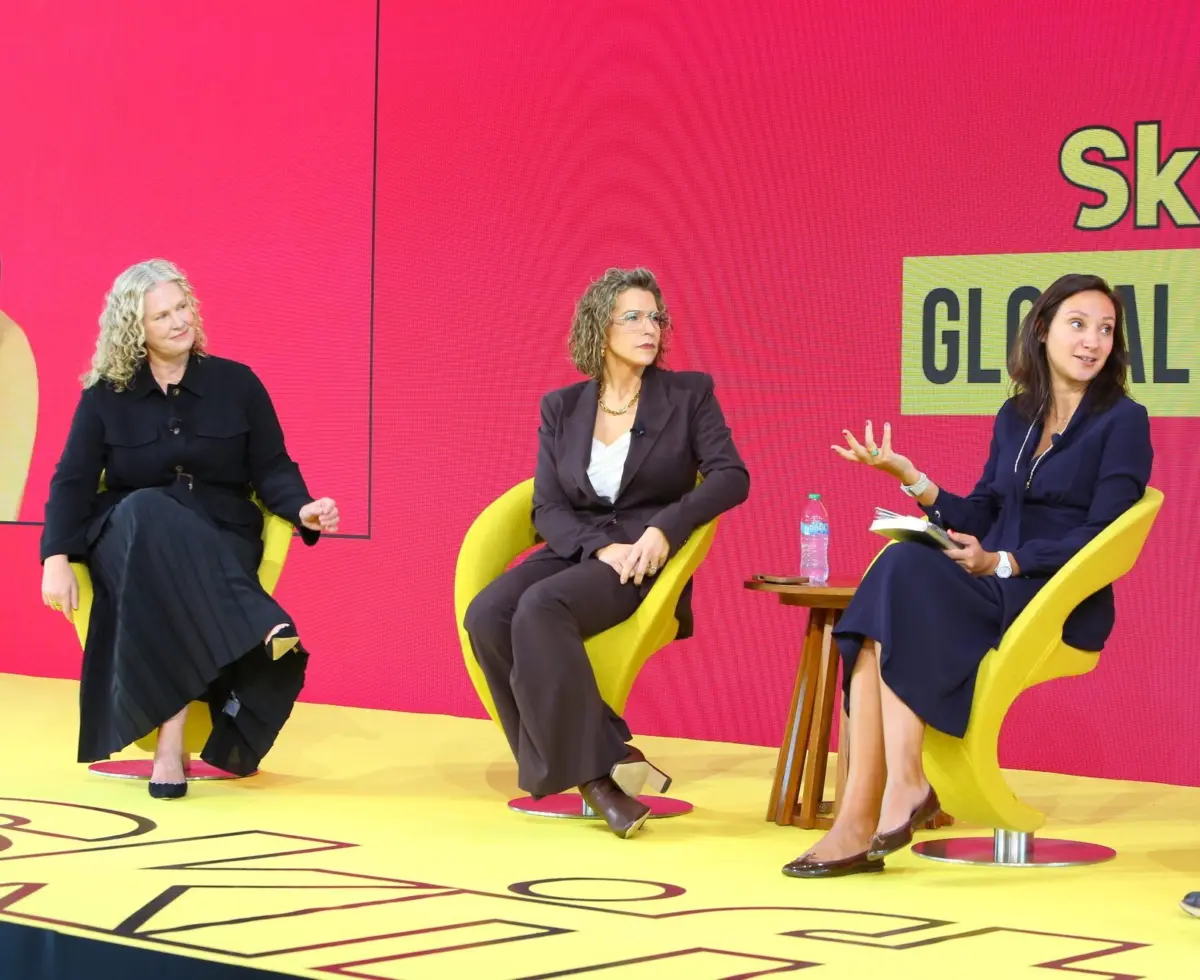
The report’s core findings took center stage on Wednesday at the Skift Global Forum in New York City, where industry leaders—including Heather Balsley, Traci Mercer, and Margaux Constantin—convened to dissect the shifting contours of consumer behavior. Their insights paint a vivid picture of an industry grappling with the paradox of choice: while consumers have never had more access to travel opportunities, they have also never experienced higher levels of post-purchase anxiety and decision fatigue.
Executive Overview: The Death of the Linear Booking Funnel
To understand the modern travel consumer, brands must first unlearn the traditional marketing funnel. For generations, the travel industry relied on the AIDA model—Awareness, Interest, Desire, and Action—assuming that once "Action" (the booking) was achieved, the consumer journey effectively concluded until loyalty marketing kicked in for the next trip.
The Skift Research and McKinsey & Company report reveals that this linear model is functionally obsolete. The contemporary travel journey is non-linear, infinitely looped, and characterized by continuous micro-engagements that persist well past the payment gateway.
[ Traditional Funnel ] -> Awareness -> Interest -> Desire -> ACTION (Booking Ends)
[ Modern Loop ]        -> Inspiration -> Exploration -> Booking -> POST-BOOKING SEARCH -> Reconsideration
Speaking at the Skift Global Forum, Margaux Constantin, a partner at McKinsey & Company and a co-author of the research, illuminated this behavioral shift for an audience of global travel executives:

"There’s always something you’re looking forward to the next trip… and even when that journey ended was also not very clear because after booking, we found out that most travelers are still searching and still exploring and reconsidering options."
This ongoing search behavior is not merely an anomaly isolated to hyper-anxious planners; it represents a systemic shift in how consumers interact with digital platforms. Armed with push notifications, price-tracking algorithms, flexible cancellation policies, and review aggregators, travelers are operating in an environment of infinite choice. However, infinite choice breeds infinite doubt.
The strategic imperative for travel brands in this era is clear: winning the initial transaction is only half the battle. Companies must now figure out how to win—and retain—the traveler’s heart after the credit card has been charged, mitigating buyer’s remorse and cementing brand loyalty before the suitcase is even packed.
Detailed Chronology: The Evolution of Post-Purchase Anxiety
To trace how we arrived at this era of perpetual post-booking reconnaissance, it is necessary to examine the structural evolution of the travel distribution landscape over the past two decades.
Phase 1: The Era of Scarcity and Finality (Early 2000s–2010s)
In the early days of consumer travel e-commerce, booking a trip required a high degree of commitment. Flight tickets were largely non-refundable, hotel reservations carried strict penalty windows, and aggregating inventory across multiple platforms required tedious manual tab-switching.
During this era, the psychological barrier to booking was high, but once the commitment was made, cognitive dissonance was quickly suppressed. The sheer friction of changing a booking meant that travelers had to make peace with their choices. Post-booking search activity was statistically negligible because alternative options were difficult to secure and expensive to alter.
Phase 2: The Rise of Flexibility and Aggregation (2010s–2020)
The proliferation of mobile apps, meta-search engines (like Google Flights, Skyscanner, and Kayak), and user-generated review platforms democratized travel information. Simultaneously, the competitive pressures of the OTA landscape forced suppliers to introduce more flexible booking terms—a trend drastically accelerated by the COVID-19 pandemic.
Free cancellation policies, "book now, pay later" models, and zero-change-fee airline structures became standard operating procedure. While these consumer-friendly policies successfully lowered the barrier to entry and stimulated demand during uncertain times, they inadvertently unleashed a secondary behavioral side effect: the option-hoarding traveler.
Phase 3: The Age of Infinite Choice and Continuous Evaluation (Present Day)
Today, travelers routinely engage in what psychologists call "satisficing" mixed with "maximization loops." Because checking prices costs nothing and canceling a reservation takes two taps on a smartphone, consumers treat bookings as provisional hypotheses rather than fixed plans.
The Skift/McKinsey study highlights that this behavior spans all demographics but is particularly acute among digitally native cohorts (Millennials and Gen Z). These consumers maintain open browser tabs of alternative hotels long after confirming their stay, set automated price alerts for flights they have already purchased, and actively read reviews to validate a decision they made weeks prior.
This creates a perilous window of vulnerability for travel brands. A traveler who has already booked a four-night stay in Miami can easily be poached by a competitor’s flash sale or a compelling social media video highlighting a different neighborhood—provided their cancellation window hasn’t closed.
Supporting Context & Metrics: Quantifying the Post-Booking Phenomenon
The data compiled in "Winning Hearts in an Age of Infinite Travel Choices" provides empirical weight to what many travel executives have observed anecdotally on their balance sheets.
Key Metrics from the Skift Research & McKinsey & Company Report:
- The Post-Booking Search Quotient: Over 60% of leisure travelers admit to continuing their research and browsing competitor sites after securing their primary travel arrangements.
- Cancellation Volatility: In key hospitality markets, cancellation rates for flexible rate plans have risen by nearly 35% compared to pre-2020 baselines, driven largely by consumers continuously upgrading or laterally shifting their bookings based on post-purchase discovery.
- The Consideration Window: The average consumer’s "inspiration-to-booking" timeline has fragmented, with micro-moments of trip evaluation occurring dozens of times a day via mobile devices, even when a trip is fully paid for.
- The Loyalty Paradox: While over 70% of travelers claim loyalty to specific hotel chains or airlines, more than 50% of those same travelers switch providers during the post-booking phase if a significantly better value proposition or perceived experience surfaces.
These metrics illustrate an uncomfortable reality for travel marketers: the customer acquisition funnel has leaked at the bottom. Brands are spending substantial capital to acquire customers at the top of the funnel, only to watch those same customers wander back into the digital marketplace looking for a better deal minutes after checkout.
Official Statements and Industry Insights
The discourse surrounding the Skift/McKinsey report at the Skift Global Forum underscored the urgency with which industry leaders are re-evaluating their customer engagement strategies.
Traci Mercer, speaking alongside Constantin and Balsley, emphasized that the traditional metrics of success—such as conversion rate optimization at checkout—are no longer sufficient indicators of long-term business health.
"We are measuring conversion at the moment of the transaction, but we are failing to measure confidence," Mercer noted during the panel discussion. "If a traveler books with your brand out of initial impulse or convenience, but spends the next three weeks scouring TripAdvisor and OTAs for reassurance, you haven’t won a customer—you’ve invited a cancellation risk."
The panelists argued that travel brands must transition from transactional merchants to trusted advisors. In an ecosystem flooded with infinite options, the most valuable commodity a brand can offer is not necessarily a cheaper price or a wider inventory selection, but cognitive relief.
Heather Balsley echoed these sentiments, pointing out that customer service and post-booking communications must evolve to actively reinforce the traveler’s choice.
"When someone hits book, that is when the relationship should truly begin, not when they check into the lobby or board the aircraft," Balsley stated. "Brands need to proactively feed the anticipation loop with curated, reassuring, and hyper-personalized content that validates why they made the right choice in the first place."
This strategy involves shifting digital touchpoints from generic transactional emails ("Your booking is confirmed") to rich, experiential onboarding sequences. By highlighting exclusive on-property perks, local insider guides, and seamless itinerary management tools immediately following the transaction, brands can effectively "lock in" the consumer’s emotional commitment and discourage further market exploration.
Future Outlook: Navigating the Landscape of Infinite Choices
As we look toward the remainder of the decade and beyond, what must travel brands do to thrive in an environment defined by infinite choice and post-booking scrutiny? The Skift Research and McKinsey report outlines several strategic imperatives for survival and growth.
1. Re-Engineering Post-Booking Communications
Travel companies must dismantle the communication blackout that traditionally occurs between the booking confirmation and the day of travel. Utilizing predictive analytics and artificial intelligence, brands should deliver personalized content that anticipates the traveler’s latent anxieties. If a consumer booked a family resort, sending curated guides on nearby child-friendly activities immediately after booking helps anchor their decision in tangible excitement rather than lingering doubt.
2. Combating Buyer’s Remorse with Dynamic Transparency
To counter the temptation of continuous price-checking, brands should experiment with transparency tools that assure consumers they are getting the best value. Implementing features like automated price-match guarantees, post-booking upgrade bids, and flexible loyalty perks directly within proprietary apps keeps the consumer engaged within the brand’s closed ecosystem rather than driving them back to open-web meta-search engines.
3. Redefining Loyalty Beyond Points
Traditional points-based loyalty programs are increasingly commoditized. In an age of infinite choice, true loyalty is built on frictionless personalization and emotional resonance. Brands that leverage first-party data to tailor the entire pre-trip and in-trip experience will successfully transition customers from skeptical shoppers to brand advocates.
4. Embracing AI as a Trust Architect
Artificial intelligence will play a critical role in managing the paradox of choice. Rather than bombarding consumers with more options, successful travel platforms will use generative AI to act as intelligent curators—narrowing down the infinite expanse of the internet into bespoke, highly confident recommendations that minimize decision fatigue.
Conclusion
The findings from "Winning Hearts in an Age of Infinite Travel Choices" serve as both a warning and an invitation to the global travel industry. The modern consumer is empowered, connected, and perpetually vigilant. They live in a world where the search never truly ends, even after the itinerary is locked in.
For travel brands, this means that the battle for the consumer cannot be won solely at the checkout button. Success now requires a holistic, end-to-end commitment to customer confidence—transforming the post-booking void into a powerful space for engagement, reassurance, and brand loyalty. In a marketplace of infinite choices, the brands that win will be those that provide the ultimate luxury: peace of mind.