










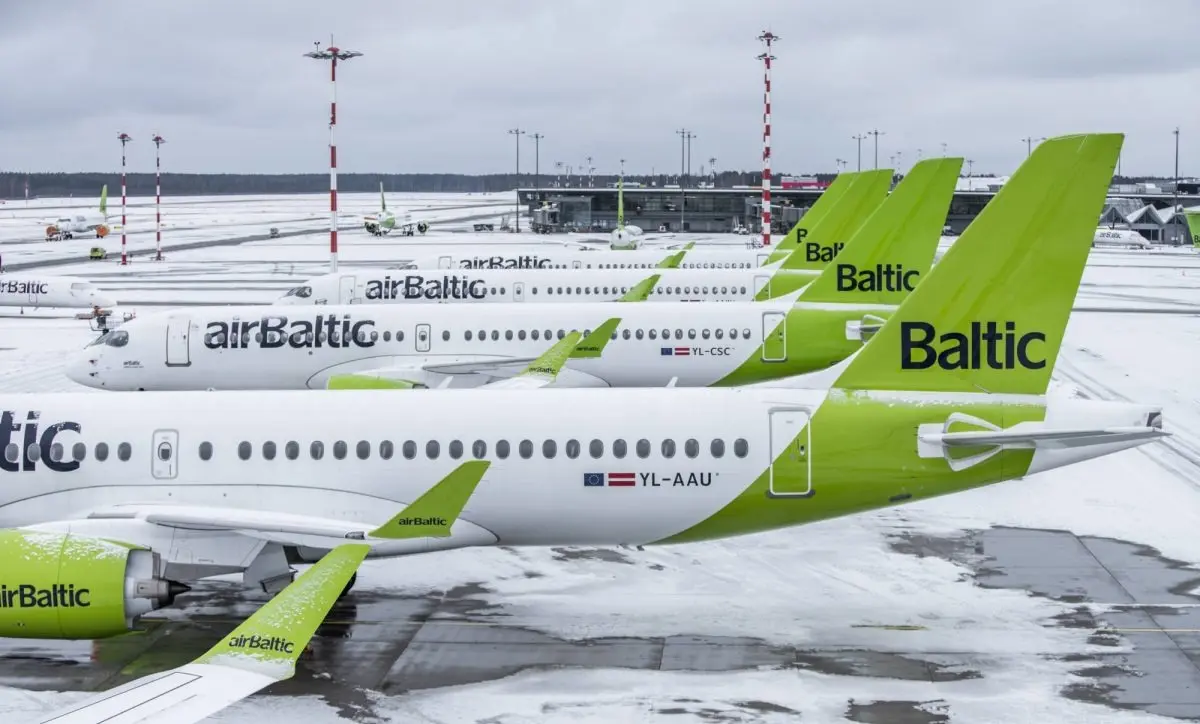
RYGA, Latvia — In a dramatic move designed to shield its balance sheet from creditors and orchestrate a comprehensive financial turnaround, Latvian flag carrier airBaltic has officially filed for Chapter 11 bankruptcy protection in the United States.
The filing, submitted late Monday at the U.S. Bankruptcy Court for the Southern District of New York, represents a watershed moment for the Baltic region’s premier aviation enterprise. While the phrase "Chapter 11" often triggers alarm bells among travelers and industry watchers alike, airline executives have rushed to reassure the public that the legal maneuver is strictly financial. Day-to-day operations, flight schedules, customer reservations, and loyalty programs remain entirely unaffected.
Behind the legal maneuvering lies a staggering structural overhaul. Alongside the U.S. court filing, airBaltic announced it has secured a monumental commitment for €350 million ($404 million USD) in fresh interim financing. This liquidity injection is designed to sustain the carrier through a complex, multi-year stabilization process that management projects will extend until mid-2027.
This in-depth special report examines the catalysts behind airBaltic’s dramatic transatlantic legal filing, details the mechanics of its restructuring strategy, explores the broader economic headwinds facing European aviation, and outlines what the future holds for the airline, its passengers, and its majority stakeholder: the Latvian state.
Executive Overview: A Strategic Pivot for the Baltic Carrier
For nearly three decades, airBaltic has served as an indispensable aviation bridge connecting the Baltic States—Latvia, Lithuania, and Estonia—to the rest of Europe and beyond. Operating an all-Airbus A220-300 fleet, the airline has earned a stellar reputation for operational efficiency, modern product offerings, and network connectivity.
However, the airline industry is notoriously capital-intensive and vulnerable to macroeconomic shocks. In recent years, airBaltic has wrestled with a compounding cocktail of global crises: the lingering financial scars of the COVID-19 pandemic, soaring jet fuel prices, escalating supply chain bottlenecks that have grounded aircraft globally, and the severe regional fallout from Russia’s ongoing war in Ukraine.
Faced with mounting debt obligations and a tight liquidity window, airBaltic’s board of directors, alongside financial and legal advisors, weighed a myriad of turnaround strategies. Ultimately, they concluded that the legal framework of the U.S. Bankruptcy Court for the Southern District of New York offered the most robust, predictable, and internationally recognized environment to execute a comprehensive debt restructuring.

Key Pillars of the airBaltic Restructuring Plan:
- U.S. Court Protection: Chapter 11 shields airBaltic from aggressive creditor litigation and asset seizures while management negotiates a consensual debt-reduction plan.
- Secured New Financing: A critical €350 million ($404 million) financing commitment ensures the airline maintains uninterrupted operational liquidity.
- Business as Usual for Passengers: All flights, ticket sales, customer service channels, and frequent flyer benefits continue without disruption.
- Target Timeline: The airline estimates the formal restructuring process will conclude around June 2027.
Detailed Chronology: How airBaltic Reached This Crossroads
To understand how a regional success story ended up filing for Chapter 11 in a Manhattan courtroom, one must trace the trajectory of external shocks and internal financial pressures that have buffeted the carrier over the past five years.
1. The Pre-Pandemic Growth and the A220 Bet
Long before 2020, airBaltic made a visionary, high-stakes bet: it decided to become the global launch operator and an all-exclusive user of the Airbus A220-300 (formerly the Bombardier CS300). While this modern, fuel-efficient narrowbody aircraft eventually became the backbone of its enviable operating efficiency, the fleet transition required massive capital expenditure.
2. The COVID-19 Shockwave and State Aid
When the COVID-19 pandemic paralyzed global aviation in 2020, airBaltic experienced an overnight evaporation of passenger revenues. To prevent the collapse of the airline—which is viewed by the Latvian government as critical national infrastructure—the State of Latvia injected hundreds of millions of euros in state aid, ballooning government ownership and adding layers of financial complexity that required European Commission oversight.
3. Geopolitical Turmoil: The War in Ukraine
Just as passenger numbers began recovering in 2022, Russia launched its full-scale invasion of neighboring Ukraine. Because of Latvia’s geographic proximity, airBaltic was forced to instantly abandon lucrative Russian and Ukrainian routes. Furthermore, European airspace closures and heightened geopolitical risk premiums altered traffic flows across the Baltic region, dampening tourism yields.
4. Supply Chain Crises and Pratt & Whitney Engine Woes
Perhaps the most acute operational bleeding came from external supply chain constraints. airBaltic, like many carriers operating the Pratt & Whitney PW1500G engines that power the Airbus A220, suffered from unprecedented maintenance delays and premature engine removals. At various points, a significant percentage of airBaltic’s fleet was grounded waiting for spare parts or overhaul slots. This forced the airline to lease costly wet-lease aircraft from other carriers just to maintain its published flight schedules, severely compressing profit margins.
5. The Decision for Chapter 11 (Late 2023 – October 2025)
By late 2024 and into 2025, it became clear that organic cash flow generation alone could not service the company’s legacy debt obligations while simultaneously absorbing high lease rates and engine maintenance costs. Rather than waiting for a liquidity crunch, airBaltic’s leadership team initiated confidential restructuring preparations. By utilizing Chapter 11—a mechanism frequently used by non-U.S. international airlines seeking global debt relief under U.S. bankruptcy jurisprudence—airBaltic positioned itself to restructure liabilities on a global scale.
Supporting Context & Financial Metrics
Examining airBaltic’s financial architecture reveals why a U.S. court filing became necessary. While the airline has consistently reported strong passenger volume growth—frequently carrying millions of passengers annually across its bases in Riga, Tallinn, Vilnius, and Tampere—its bottom line has been heavily weighed down by fixed costs and debt servicing.
The €350 Million Liquidity Lifeline
The cornerstone of the current Chapter 11 filing is the €350 million ($404 million USD) in new financing secured by the carrier. In restructuring parlance, this functions similarly to Debtor-in-Possession (DIP) financing, ensuring that suppliers, lessors, and operational partners remain confident in airBaltic’s ability to pay for goods and services rendered during the restructuring period.
Fleet Dynamics and Operational Footprint
- Fleet Size: Approximately 45+ Airbus A220-300 aircraft (with orders outstanding for future growth).
- Destinations: Over 70 destinations spanning Europe, the Middle East, North Africa, and the Caucasus.
- Wet-Lease Operations: airBaltic has successfully diversified its revenue streams by providing ACMI (Aircraft, Crew, Maintenance, and Insurance) wet-lease capacity to major European legacy carriers such as Lufthansa Group and Swiss International Air Lines. This B2B business model has provided a vital financial cushion during lean winter months.
Why U.S. Chapter 11?
Many foreign corporations choose U.S. bankruptcy courts because of Chapter 11’s sophisticated legal framework, which allows a company to continue operating while binding dissenting creditors to a court-approved reorganization plan. Because many of airBaltic’s aircraft lessors, financial institutions, and major suppliers operate within legal jurisdictions that recognize U.S. federal court orders, the Southern District of New York provides an effective forum to streamline global debt negotiations.
Official Statements and Stakeholder Reactions
The announcement sent immediate ripples through the European aviation community. However, executive leadership has maintained a calm, transparent posture, emphasizing that the filing is a proactive measure rather than an emergency liquidation.
Management’s Perspective
In a statement released alongside the court filings, airBaltic’s executive leadership team articulated the strategic rationale behind the decision:
"We have carefully assessed the restructuring options available to the company, with one priority in focus — to give airBaltic the best possible basis to continue operating and to build a sustainable, resilient future for our passengers, employees, and stakeholders."
Management stressed that the airline’s operational integrity remains uncompromised. Maintenance schedules, safety protocols, and customer service desks are operating under normal conditions.
Government and Shareholder Stance
As the majority shareholder, the Latvian Government has monitored the airline’s financial health closely. Transport ministry officials have repeatedly emphasized that airBaltic remains a vital pillar of the Baltic economy, facilitating trade, tourism, and diplomatic mobility. While state support has historically been substantial, the introduction of private and institutional financing through this restructuring process is expected to normalize the airline’s capital structure and reduce the burden on Latvian taxpayers.
Industry and Creditor Reactions
Aviation analysts have offered mixed yet generally pragmatic reactions to the news. While Chapter 11 filings by non-U.S. airlines are always serious, financial experts note that the inclusion of €350 million in new financing indicates strong backing from key financial partners who believe in the long-term fundamentals of airBaltic’s business model, particularly its unique all-A220 fleet strategy and its thriving ACMI wet-lease partnerships.
Future Outlook: Navigating Toward June 2027
As airBaltic embarks on this multi-year legal and financial journey, the road ahead is defined by specific milestones, strategic adjustments, and ongoing vigilance against macroeconomic volatility.
1. Operational Stability Through the Winter and Summer Seasons
The immediate mandate for airBaltic is operational excellence. To maintain the trust of passengers and corporate travel managers, the airline must execute its flight schedules with high punctuality and reliability. With the €350 million financing package securing its cash runway, the airline has the liquidity buffer required to weather seasonal demand fluctuations through 2026 and 2027.
2. Fleet and Network Optimization
During the restructuring window, airBaltic’s management will likely review its route map to prune underperforming paths while doubling down on high-yield leisure and business routes. Additionally, the ongoing resolution of Pratt & Whitney engine supply chain constraints will be paramount; as grounded aircraft return to active service, airBaltic can scale back its reliance on expensive wet-leased backup aircraft, directly improving operating margins.
3. The Path to Exit: June 2027
The targeted exit date of June 2027 gives the airline ample time to negotiate claims with creditors, adjust aircraft lease agreements to market rates, and formulate a finalized Plan of Reorganization to be approved by the U.S. Bankruptcy Court. Successfully navigating this process will allow airBaltic to emerge as a leaner, financially sound enterprise with a clean balance sheet.
Conclusion
airBaltic’s filing for Chapter 11 bankruptcy protection in New York is undoubtedly a dramatic chapter in the airline’s history, but it should be understood for what it is: a calculated, legal restructuring tool designed to secure longevity rather than signal collapse.
By leveraging €350 million in new financing, shielding its day-to-day flight operations from disruption, and addressing legacy debt and supply chain pressures head-on, airBaltic is proactively taking control of its destiny. For the millions of passengers who rely on the carrier to connect the Baltic region to the world, and for the thousands of employees who keep its Airbus fleet in the skies, the path toward June 2027 marks a decisive journey toward sustainable profitability and long-term security.