






Executive Overview
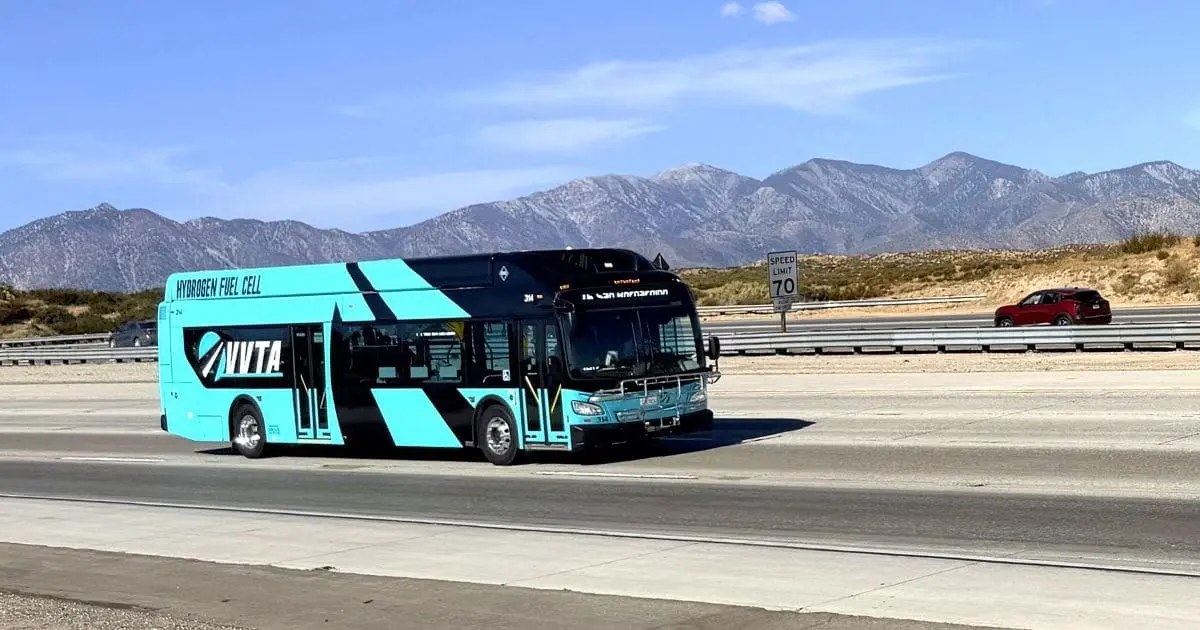
The transportation sector in the American West is undergoing a profound structural evolution, driven by aggressive state-level mandates, environmental imperatives, and technological maturation. At the bleeding edge of this transition sits the Victor Valley Transit Authority (VVTA), a regional public transit agency operating across California’s rugged and sprawling High Desert. In a milestone development that underscores the operational viability of green hydrogen in demanding environments, VVTA has officially introduced its fleet of state-of-the-art hydrogen fuel cell electric buses (FCEBs) into regular revenue service.
Unveiled during a high-profile ribbon-cutting ceremony on January 14, the deployment marks the culmination of years of rigorous planning, multi-agency coordination, and heavy infrastructure investment. VVTA’s initial rollout features 13 zero-emission hydrogen buses, which are currently being integrated into daily operations through a strategic, phased deployment strategy. Passengers riding critical regional arteries—most notably Route 15, a vital commuter corridor connecting the Victor Valley Transportation Center (VVTC) to San Bernardino, Fontana, and the sprawling campus of California State University, San Bernardino (CSUSB)—are already experiencing the smooth, quiet, and emission-free ride of these next-generation vehicles.
This initiative is far more than a routine fleet upgrade; it represents a calculated institutional bet on hydrogen technology to solve one of the most stubborn dilemmas in modern public transit: how to achieve deep decarbonization without compromising range, reliability, or operational flexibility across vast, geographically diverse service areas. VVTA’s expansive jurisdiction encompasses dense urban environments, rugged rural expanses, and grueling long-distance commuter routes. For these demanding duty cycles, traditional battery-electric vehicles (BEVs) have historically faced limitations related to charging infrastructure, weight, and battery degradation under extreme desert temperatures. Hydrogen fuel cell technology bridges this gap, offering the extended range and rapid refueling times necessary to keep buses moving through the scorching High Desert summers and freezing winter nights.
Supported by a coalition of public- and private-sector heavyweights—including vehicle manufacturer New Flyer, fuel cell pioneer Ballard Power Systems, and industrial gas supplier Linde—VVTA’s hydrogen program positions the agency at the vanguard of California’s ambitious push toward a 100% zero-emission public transit future. As these buses log thousands of revenue miles, they are not only carrying commuters and students to their destinations; they are generating invaluable real-world data that will inform the future of transit decarbonization across the United States.
Detailed Chronology: From Concept to Pavement
The integration of hydrogen fuel cell technology into VVTA’s operational framework was neither swift nor accidental. It represents the realization of a multi-year roadmap designed to overhaul the agency’s environmental footprint while insulating its operations against the volatility of fossil fuel markets.
Laying the Groundwork: The Pre-Hydrogen Era
VVTA’s journey toward total fleet electrification began in earnest in 2019, when the agency introduced its first generation of battery-electric buses (BEVs). While those initial deployments provided the agency with foundational experience in zero-emission fleet management, maintenance protocols, and charging logistics, transit planners quickly realized that BEVs alone could not fulfill every operational requirement. The sheer scale of the High Desert service area—characterized by long transit legs, significant elevation changes, and brutal ambient temperatures that strain climate control systems and battery chemistries—demanded a complementary technology capable of heavier duty cycles and superior range.
In response, agency leadership pivoted toward hydrogen fuel cell technology. Unlike battery-electric models that rely solely on grid-supplied electricity stored in heavy chemical packs, FCEBs generate their own electricity onboard through an electrochemical reaction combining stored hydrogen gas with ambient oxygen. Recognizing the potential of this technology to conquer the High Desert’s unique topographical and climatic challenges, VVTA initiated a comprehensive feasibility and procurement study.
The Procurement and Partnership Phase
Years of intensive administrative, engineering, and financial preparation followed. Securing a hydrogen fleet requires far more than purchasing buses; it necessitates the simultaneous development of complex fueling infrastructure, comprehensive safety protocols, specialized maintenance facilities, and rigorous staff training programs.
To bring the vision to life, VVTA forged strategic partnerships with industry leaders who brought specialized expertise to the project:
- New Flyer: Supplied the advanced, heavy-duty hydrogen fuel cell buses engineered to withstand rigorous transit schedules.
- Ballard Power Systems: Provided the core proton-exchange membrane (PEM) fuel cell engines responsible for cleanly generating onboard electrical power.
- Linde: Delivered the complex industrial supply chain and fueling infrastructure necessary to store, handle, and dispense high-purity hydrogen safely and efficiently.
The January 14 Unveiling and Phased Rollout
The culmination of these collaborative efforts occurred on January 14, during a landmark ribbon-cutting ceremony that drew regional transit stakeholders, state and federal officials, and industry partners. The event celebrated not just the physical arrival of the 13 buses, but the activation of the complex technological ecosystem required to sustain them.
Rather than taking the high-risk approach of deploying all 13 vehicles into the active rotation simultaneously, VVTA adopted a deliberate, phased rollout strategy. Under this phased framework, the buses are being introduced into daily service incrementally. This controlled approach allows agency mechanics, dispatchers, and engineers to collect real-time operational data, monitor vehicle performance under diverse weather and traffic conditions, and fine-tune maintenance workflows. As the evaluation period progresses, passengers can expect to see an ever-increasing presence of hydrogen buses across the entire VVTA network.
Supporting Context & Metrics: The Science and Strategy of Hydrogen
To truly appreciate the significance of VVTA’s transition, one must examine the underlying mechanics of hydrogen fuel cell technology and the specific operational realities of the High Desert transit network.
How Hydrogen Fuel Cell Technology Works
At its core, a hydrogen fuel cell electric bus is an electric vehicle. However, instead of drawing all its propulsion energy from a large battery charged via a plug connected to the electrical grid, an FCEB carries its own power plant.
- Hydrogen Storage: High-pressure carbon-fiber composite tanks mounted securely on the roof or chassis of the bus store compressed gaseous hydrogen ($H_2$).
- The Electrochemical Reaction: Hydrogen is fed into the fuel cell stack, where it meets oxygen ($O_2$) drawn from the surrounding ambient air.
- Power Generation: Inside the fuel cell stack, a catalyst forces the hydrogen molecules to split into protons and electrons. While the protons pass through a membrane, the electrons are forced to travel through an external circuit, generating electrical current. This electricity is used to power the bus’s electric traction motors and charge a smaller onboard buffer battery that handles peak power demands during acceleration and regenerative braking.
- Zero Emissions: The only byproducts of this electrochemical process are electrical energy, heat, and pure water vapor ($H_2O$). There is no internal combustion, no burning of fossil fuels, and zero tailpipe emissions of particulate matter, nitrogen oxides ($NO_x$), or carbon dioxide ($CO_2$).
Conquering the High Desert: Range, Climate, and Geography
The operational parameters of the Victor Valley Transit Authority present challenges that make hydrogen an ideal fit compared to pure battery-electric solutions:
- Geographic Span: VVTA services an enormous, disparate territory that includes urban centers, sprawling rural communities, and grueling long-distance commuter arteries. Route 15, for example, bridges the High Desert with the Inland Empire, covering significant mileage and substantial elevation gains across mountain passes. FCEBs offer the extended range required for these multi-hour journeys without requiring mid-route recharging stops.
- Thermal Extremes: The High Desert is notorious for severe weather swings—baking summer heat that forces transit agencies to run cabin air conditioning at maximum capacity, and freezing winter temperatures that significantly degrade the operational efficiency and capacity of standard lithium-ion batteries. Hydrogen fuel cells maintain consistent performance across extreme temperature ranges, utilizing waste heat from the electrochemical reaction to help warm the cabin and defog windows efficiently.
- Refueling Speed: While battery-electric buses can require hours to fully recharge—tying up depot space and limiting daily scheduling flexibility—hydrogen buses can be refueled in a matter of minutes, closely mirroring the rapid turnaround times of traditional diesel or compressed natural gas (CNG) fleets.
Official Statements and Leadership Perspectives
The transition to zero-emission hydrogen transit has elicited strong, forward-looking statements from the leadership team steering VVTA, emphasizing both environmental stewardship and practical reliability.
Rod Goldman, Chief Executive Officer of the Victor Valley Transit Authority, captured the magnitude of the milestone during the rollout:
"This is an exciting moment for VVTA because our investment in hydrogen technology is no longer something we’re simply planning for; it’s here, and our passengers are starting to benefit from this today. These buses represent our commitment to providing safe and reliable transportation while continuing to embrace technologies that make public transit cleaner, more efficient, and more sustainable for the areas we serve."
Goldman’s remarks underline a critical philosophy held by VVTA leadership: sustainability must never come at the expense of operational reliability. For a transit agency serving populations that depend entirely on buses for employment, education, and healthcare access, vehicles must perform reliably day in and day out. The integration of hydrogen is viewed not as an experimental gamble, but as a robust, enterprise-grade solution engineered to meet the demanding standards of modern public mobility.
Regional and state transportation authorities have similarly praised VVTA’s proactive posture. By aligning local infrastructure investments with California’s aggressive statewide decarbonization goals—specifically the Innovative Clean Transit (ICT) regulation, which mandates that all public transit agencies transition to 100% zero-emission fleets by 2040—VVTA has positioned itself as a regional leader in environmental innovation.
Future Outlook: The Road Ahead for VVTA and Regional Decarbonization
The successful launch of VVTA’s 13 hydrogen fuel cell buses and their accompanying fueling infrastructure marks the end of an arduous preparatory phase, but it simultaneously serves as the opening chapter of a much larger transformation.
Expanding the Zero-Emission Footprint
As the phased rollout continues through the coming months, VVTA will systematically scale up the presence of hydrogen buses on its roster. The operational data harvested during this initial phase—tracking fuel consumption, route efficiency, maintenance intervals, and driver feedback—will serve as a crucial feedback loop. This data will guide future fleet procurement decisions, helping the agency optimize its vehicle mix between battery-electric and hydrogen fuel cell models based on real-world performance metrics.
Furthermore, the agency’s close collaboration with industrial gas partners like Linde ensures that the hydrogen supply chain supporting the fleet will scale in tandem with future vehicle acquisitions. Ensuring a secure, reliable, and cost-effective supply of high-purity hydrogen is paramount as VVTA looks toward future fleet expansions.
Broader Implications for the American West
VVTA’s hydrogen initiative holds significance well beyond the boundaries of San Bernardino County. Across the American West, transit agencies operating in arid, mountainous, and geographically vast regions face the exact same operational hurdles that VVTA has navigated. Many of these agencies have watched urban transit properties deploy battery-electric buses with skepticism, questioning whether BEVs can truly handle rural climbs, long commuter legs, and extreme desert temperatures.
By successfully integrating 13 advanced hydrogen fuel cell buses into some of the most demanding transit corridors in California, VVTA is providing a working blueprint for regional and rural transit decarbonization nationwide. The agency is proving that green hydrogen is not a distant, futuristic concept, but a mature, scalable, and highly effective tool for modern mobility.
As passengers step onto Route 15 and settle into the quiet, emission-free cabin of a hydrogen bus rolling past the High Desert landscape, they are experiencing more than just a comfortable commute. They are witnessing the living future of public transportation—cleaner air, quieter streets, and a sustainable technological foundation built to endure for generations to come.