









Executive Overview
For decades, recreational paddlers, anglers, and touring enthusiasts have faced a fundamental decision when entering the sport of kayaking: choosing between a sit-on-top or a sit-inside watercraft. Drawing from more than thirty years of hands-on experience within the commercial paddling industry, experts agree that neither design is universally "better" than the other. Instead, each style presents a distinct architecture tailored to specific water environments, weather patterns, and paddler capabilities.
To navigate this cornerstone choice effectively, prospective buyers must evaluate where, when, and how they intend to use their watercraft. The differences between these two designs go far beyond surface appearance. They dictate how a boat handles wind and waves, how a capsized paddler performs a self-rescue, how much gear can be packed for an overnight expedition, and how comfortable the user will remain over hours on the water.
This comprehensive guide breaks down the engineering, performance metrics, safety considerations, and real-world applications of sit-inside versus sit-on-top kayaks. By analyzing hull dynamics, stability profiles, and rescue protocols, paddlers can make an educated, confident investment tailored to their personal aquatic aspirations.
Detailed Chronology & Industry Evolution
The debate between sit-inside and sit-on-top hulls has evolved significantly alongside advancements in materials science, manufacturing techniques, and consumer demographics.
The Traditional Roots of Sit-Inside Kayaks
Sit-inside kayaks trace their lineage directly to indigenous skin-on-frame designs utilized by the Inuit and Aleut peoples of the Arctic. These vessels were crafted to navigate frigid, treacherous northern waters where exposure to wind and waves could quickly prove fatal. The incorporation of a closed cockpit allowed the paddler to seal the boat using a waterproof skirt—known as a sprayskirt—creating a continuous, watertight barrier between the body and the elements.
As recreational kayaking surged in popularity throughout the mid-to-late 20th century with the advent of rotomolded polyethylene, the sit-inside design became the default standard. Manufacturers produced wide, stable recreational sit-ins designed for casual day-paddling on calm lakes and slow-moving rivers. However, as the sport diversified, the limitations of these early recreational models—particularly their lack of internal flotation bulkheads and the resulting difficulty of deep-water rescues—pushed manufacturers to innovate. This evolution birthed specialized sea kayaks and touring vessels featuring front and rear bulkheads, optimizing them for open-water expeditions and coastal camping.
The Rise of the Sit-On-Top Revolution
In contrast, sit-on-top kayaks represent a more modern, lifestyle-oriented engineering approach. Originally adapted from surfboards and paddleboards, sit-on-top watercraft gained massive traction in warmer climates, coastal environments, and the booming sport-fishing sector.

By sealing the hull completely from top to bottom, manufacturers eliminated the enclosed cockpit entirely. This architectural shift transformed the user experience: paddlers no longer needed to worry about mastering the rolling techniques or wet-exit maneuvers required by traditional sit-inside boats. Instead, if a sit-on-top capsized, the paddler simply flipped the hull upright and climbed back on. This user-friendly safety paradigm catalyzed the explosion of recreational sit-on-tops, transforming them into staples of resort rentals, family fleets, and specialized angling platforms equipped with elevated stadium-style seating and rod holders.
Supporting Context & Metrics: Anatomy, Performance, and Design
Understanding how a kayak performs on the water requires looking closely at three primary design metrics: length, width, and rocker.
Hull Dimensions and Hydrodynamics
The physics governing watercraft performance apply equally to both sit-inside and sit-on-top models:
- Length: All other factors being equal, a longer kayak is faster than a shorter one. Shorter boats (under 10 feet) tend to plow through the water, creating high drag relative to the effort exerted by the paddler. Stepping up to a 12-foot or 14-foot hull dramatically improves glide efficiency. However, there is a natural limit: hulls stretching beyond 18 or 19 feet encounter diminishing speed returns due to skin friction drag, while becoming increasingly unwieldy to maneuver.
- Width (Beam): Wider boats provide greater primary stability, making them feel secure to beginners. Narrower boats slice through the water with less effort, making them faster and more efficient over long distances.
- Rocker: Rocker refers to the upward curvature of the kayak hull from bow to stern. Boats with high rocker (where the ends do not touch the ground when resting on a flat surface) pivot and turn quickly, making them exceptionally maneuverable. Conversely, boats with minimal rocker track straight effortlessly but require more deliberate effort to turn.
Stability Profiles: Primary vs. Secondary
Stability is largely a function of a hull’s width and cross-sectional shape, but seat height plays a critical role.
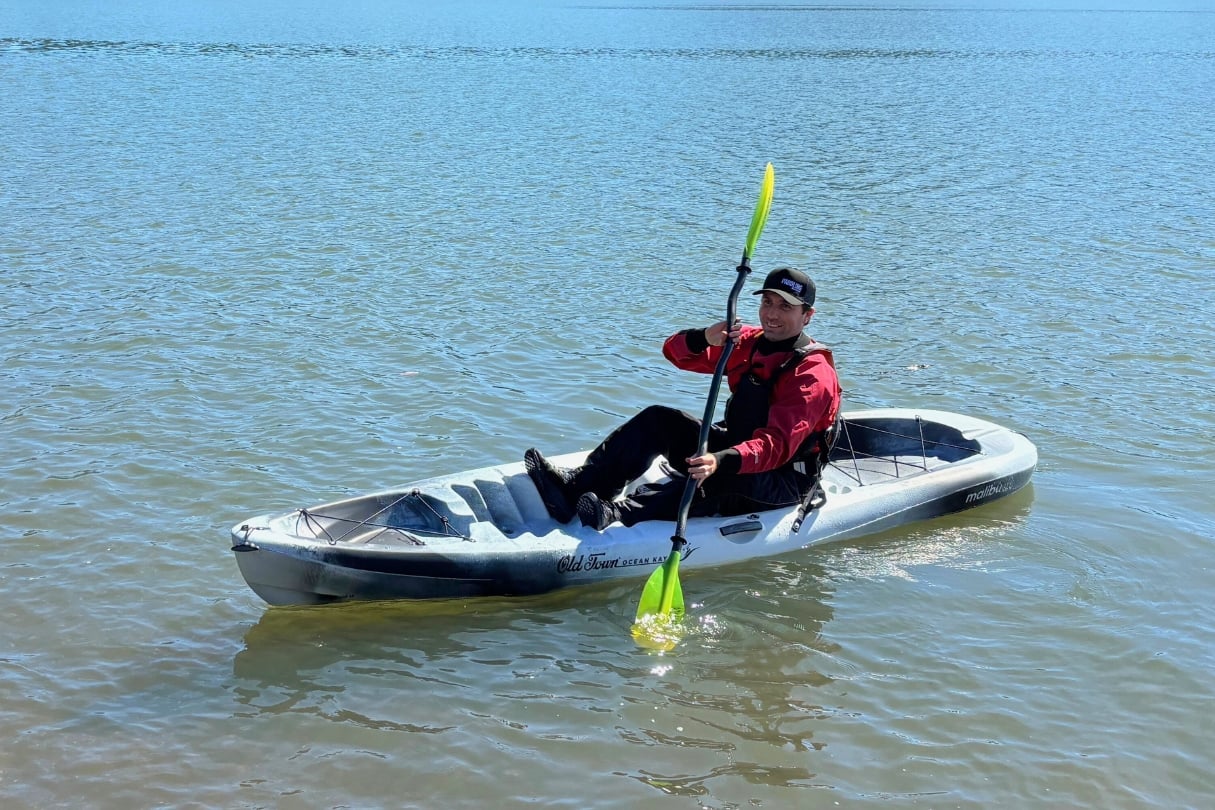
Sit-inside recreational kayaks typically feature low-profile seats mounted close to the waterline, enhancing stability. Modern fishing sit-on-tops, however, frequently incorporate elevated, stadium-style seats that allow anglers to cast standing up or sitting high. Because a high seat raises the center of gravity, manufacturers must compensate by making the hull wider or utilizing "fullness in the ends"—a boxier shape when viewed from above that carries the maximum width further toward the bow and stern.
Official Evaluations: Pros and Cons of Each Design
Sit-Inside Kayaks: Protection vs. Rescue Challenges
The Advantages
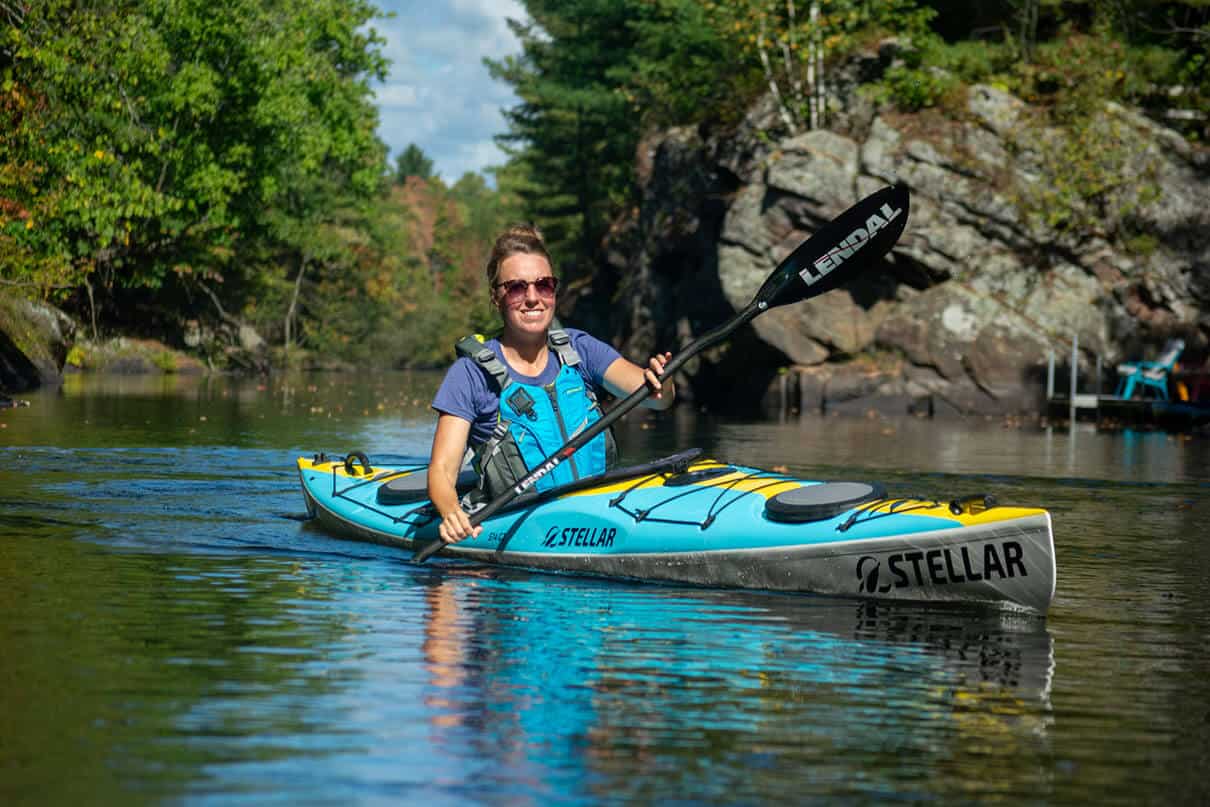
The single greatest advantage of a sit-inside kayak is comprehensive protection from the elements. Fitted with a sprayskirt, the cockpit seals out cold breezes, splashing waves, and driving rain. Furthermore, water is effectively kept out of the hull unless the boat is capsized or caught in an extreme downpour. This makes sit-inside models significantly more comfortable for cold-weather and cold-water paddling, especially when hugging shorelines where wind chill can be a factor.
The Disadvantages
The primary drawback of recreational sit-inside kayaks involves flotation and rescue logistics. Most recreational sit-ins feature large, open cockpits designed for ease of entry. If flipped, these large openings can take on massive volumes of water.
While dedicated touring kayaks feature sealed front and rear bulkheads that limit water intrusion, most recreational sit-ins feature either a single rear bulkhead or none at all. A swamped recreational kayak without adequate flotation is heavy, incredibly difficult to empty on the water, and nearly impossible to paddle back to safety. Consequently, recreational sit-ins are best restricted to close-to-shore environments where a swimming rescue to a nearby beach is feasible. For open-water coastal touring, paddlers must rely on multi-bulkhead sea kayaks and master specialized self-rescue skills.
Sit-On-Top Kayaks: Self-Rescue vs. Element Exposure
The Advantages
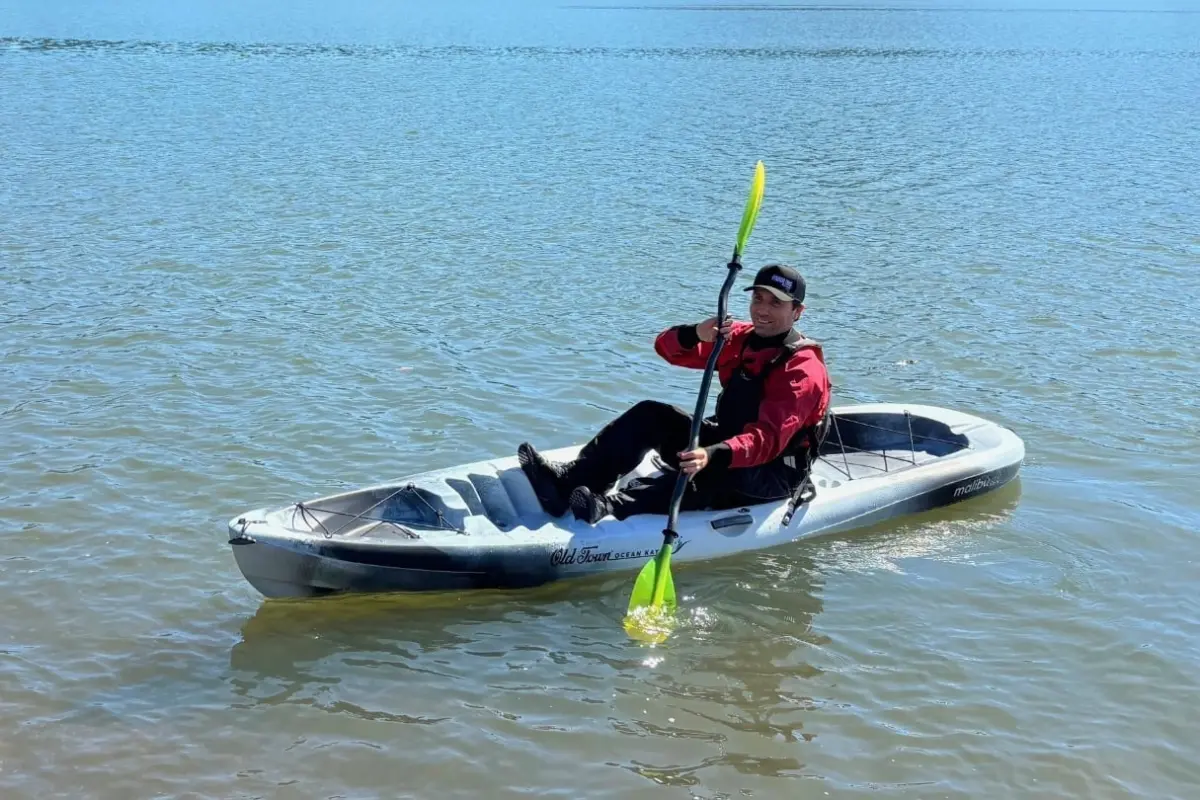
Sit-on-top kayaks excel in self-rescue simplicity and ease of embarkation. Because the hull is completely sealed, capsizing a sit-on-top does not result in a flooded interior. A capsized paddler simply rights the boat and climbs back on, requiring no advanced rolling or pumping skills.
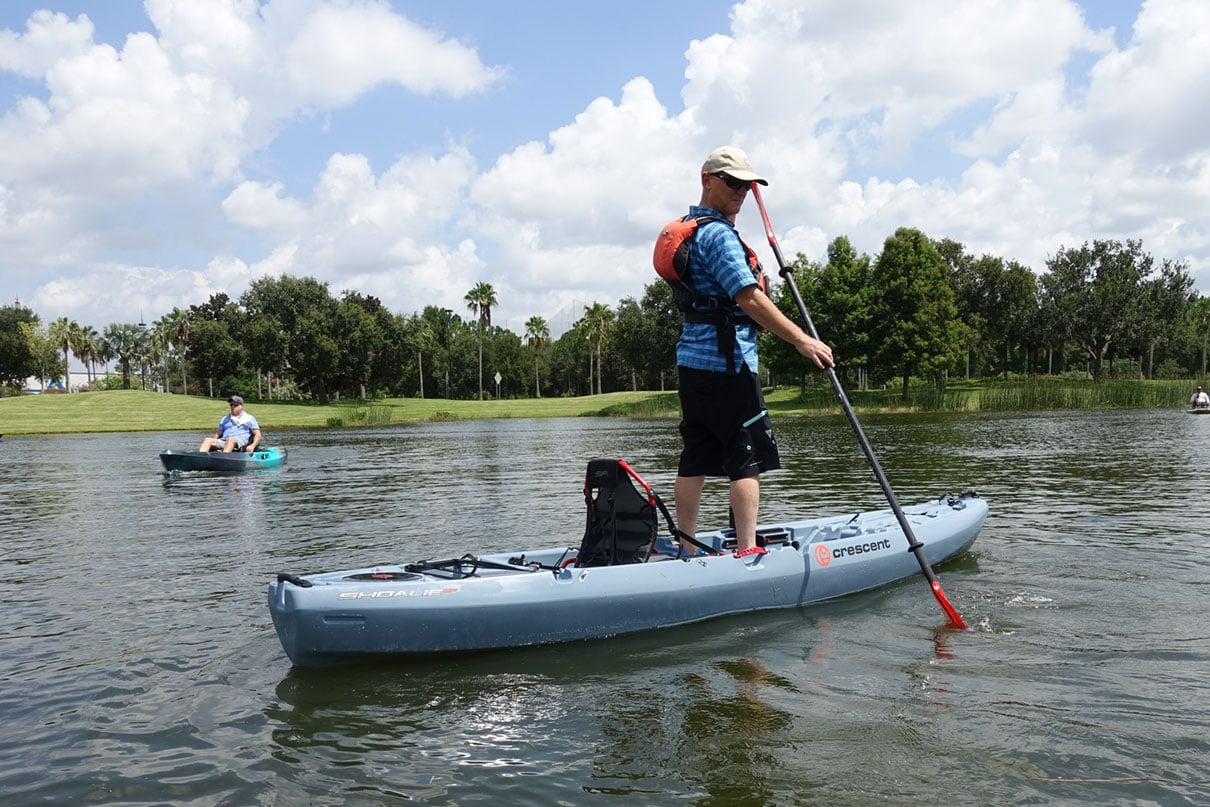
Additionally, scupper holes—drainage ports passing through the hull—allow water washing over the deck to drain out naturally. The low, open design also simplifies launching: paddlers can wade into knee-deep water, lower themselves onto the seat, and swing their legs aboard, making sit-on-tops exceptionally popular among paddlers with limited mobility.
The Disadvantages
The primary vulnerability of the sit-on-top design is exposure. Without a cockpit to shield the lower body, paddlers are fully exposed to wind, rain, and ambient temperatures. Waves can wash over the deck, pooling around the seat and soaking the paddler’s lap. Furthermore, while scupper holes drain water out, choppy conditions or heavy loads can occasionally cause water to bubble up from beneath. Paddlers choosing sit-on-top craft must invest in appropriate technical apparel (such as wetsuits or drysuits in cold conditions) to mitigate the risk of hypothermia.
Specialized Applications: Storage, Tandems, and Fishing
When expanding your paddling envelope to include multi-day camping trips, angling, or tandem outings, hull selection becomes even more critical.
Storage Capacity and Cargo Management
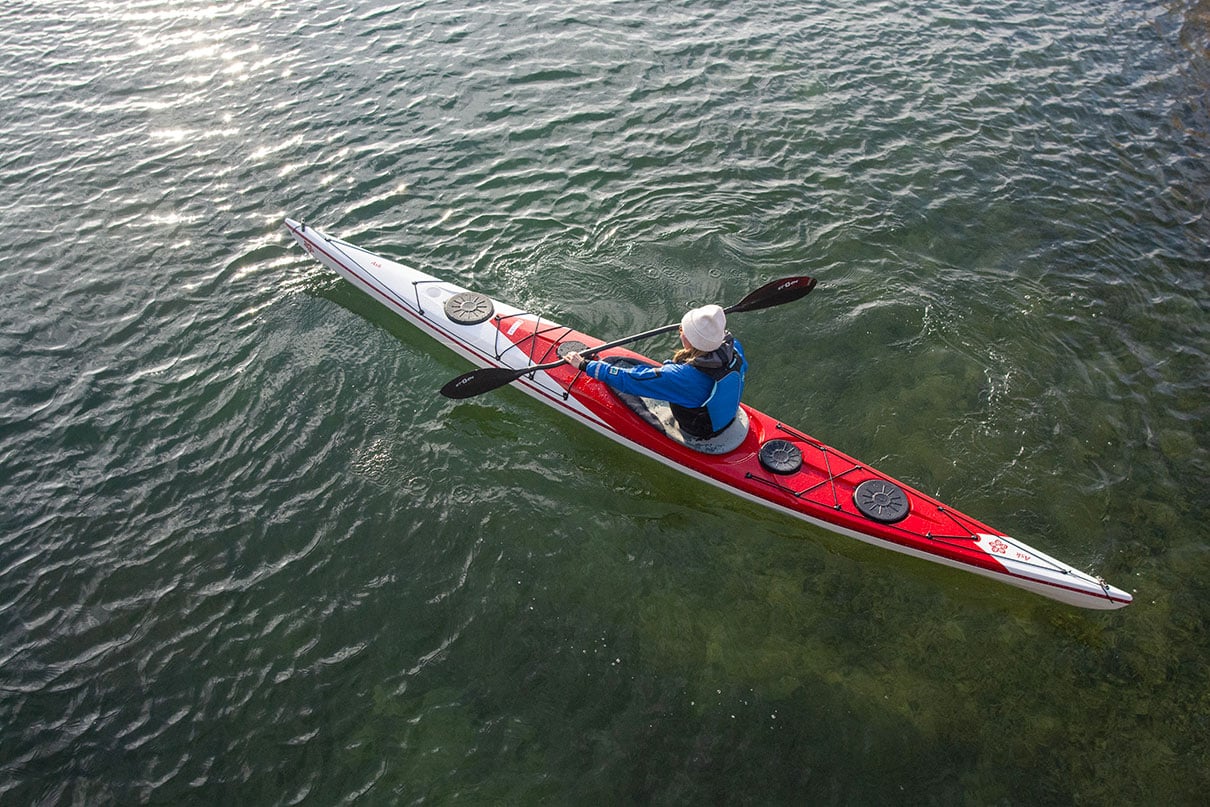
- Sit-Inside Touring Kayaks: The undisputed champions of overnight camping. Front and rear bulkheads create massive, dry internal compartments accessible via deck hatches, allowing campers to stow heavy gear low inside the hull for optimal balance.
- Sit-On-Top Kayaks: Typically feature open rear cargo wells secured with bungee cords, ideal for strapping down bulky dry bags or coolers. Many modern sit-on-tops also feature bow hatches for internal storage, though total cargo volume is often less protected than in a fully bulkheaded touring boat.
Tandem Paddling Dynamics
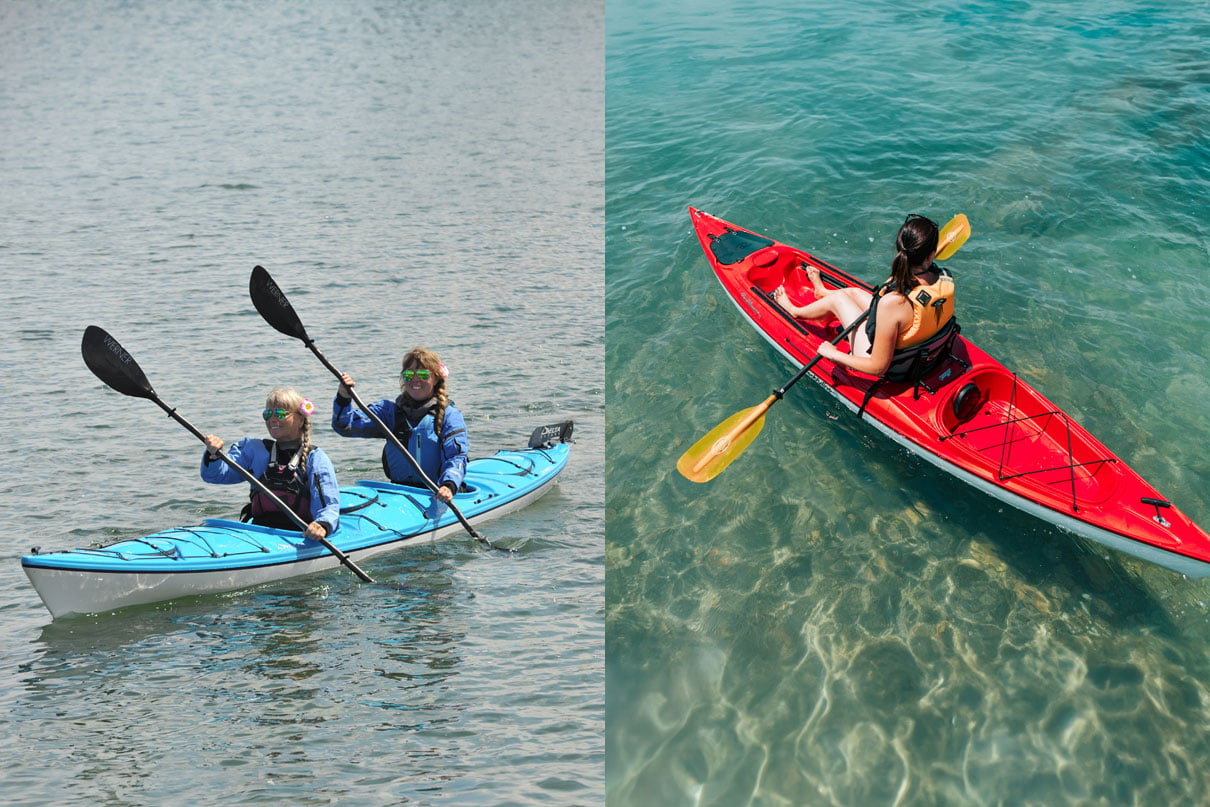
When paddling with a partner, neither design holds an absolute monopoly. Sit-on-top tandems offer exceptional stability and safety for casual recreational outings, while sit-inside recreational tandems provide a drier ride in calm water. For multi-day tandem expeditions, a dedicated tandem touring kayak with separated cockpits and ample storage remains the gold standard. To optimize tandem performance, paddlers must synchronize their strokes—unless operating a larger touring design featuring a separated middle hatch that buffers the seating positions.
Future Outlook: Choosing Your Ideal Watercraft
As the paddling community continues to innovate—witnessing the rise of modular take-apart kayaks, hybrid pedal-drive fishing platforms, and ultra-lightweight composite materials—the fundamental physics governing hull choice remain unchanged.
When preparing to purchase a watercraft, prioritize the conditions you expect to encounter ninety percent of the time, while keeping an eye toward your future paddling ambitions:
- Open Water & Expedition Camping: Look closely at bulkheaded sit-inside touring and sea kayaks.
- Angling & Casual Coastal Exploration: Prioritize wide, stable sit-on-top platforms with elevated seating.
- Calm Lakes, Slow Rivers, & Shoreline Cruising: Select a versatile recreational sit-inside or sit-on-top depending on your temperature preferences and comfort with water exposure.
Before finalizing your purchase, visit a reputable local paddlesports dealer to inspect the physical inventory. Whenever possible, arrange for a test paddle on flat water. By doing your homework, consulting industry professionals, and matching boat design to personal capability, you will secure the perfect vessel to launch a lifetime of rewarding adventures on the water.