









Executive Overview
Tucked away in the undulating hills of southeastern Oklahoma lies McAlester, a vibrant municipality of approximately 18,000 residents that consistently punches far above its weight class. Long overshadowed by the sprawling metropolitan footprints of Oklahoma City, Tulsa, Dallas, and Little Rock, McAlester has quietly transformed itself into a premier regional destination. Merging deep-rooted historical significance with a forward-thinking economic revitalization strategy, this Choctaw Nation anchor offers a compelling narrative of resilience, community pride, and adaptive reuse.
Strategically positioned within an easy drive of four major economic centers—sitting 130 miles southeast of Oklahoma City, 90 miles south of Tulsa, 170 miles north of Dallas, and 266 miles west of Little Rock—McAlester is uniquely situated to capture the weekend-traveler market. Far from being a mere sleepy bedroom community, the city boasts a bustling, highly walkable downtown characterized by turn-of-the-century brick architecture, eclectic boutiques, acclaimed dining establishments, and a dynamic calendar of festivals.
This in-depth investigative feature explores McAlester’s evolutionary trajectory. We examine its complex historical origins, chart the structural renaissance of its downtown commercial district, evaluate its burgeoning cultural tourism economy through major music and heritage festivals, and outline the strategic metrics ensuring its long-term viability as an authentic American heartland destination.
Detailed Chronology: From Frontier Crossroads to Modern Cultural Oasis
To understand McAlester’s contemporary renaissance, one must retrace a complex historical timeline that spans over 180 years of frontier transformation, geopolitical conflict, industrial adaptation, and cultural convergence.
1838–1865: The Birth of Perryville and the Civil War Crucible
The foundational roots of modern McAlester trace back to 1838 with the establishment of Perryville, founded at the critical intersection of two major historic overland routes. Serving as a vital logistical stopover for pioneers, traders, and fortune-seekers traversing west toward California or south toward Texas, Perryville quickly developed into a bustling frontier outpost.
However, the geographic importance of the settlement proved to be its undoing during the American Civil War. Much like Atlanta, Perryville was strategically targeted and burned to the ground during the conflict, leaving the junction reduced to smoldering ashes and scattering its inhabitants. For several years following the cessation of hostilities, the site lay largely dormant, a casualty of the turbulent redrawing of the American frontier.
The Post-War Resurgence: J.J. McAlester and the Coal Boom
The embers of Perryville sparked anew through the vision of J.J. McAlester, a former Confederate officer who recognized the immense economic potential of the region’s geography and natural resources. In the late 1860s, McAlester established a strategic trading post directly on the grounds of the former settlement.

This commercial toehold coincided with the discovery of vast, high-grade bituminous coal deposits beneath the surface of the Choctaw Nation. The ensuing coal-mining boom transformed the nascent settlement into an industrial powerhouse, drawing thousands of immigrants and laborers from Europe and across the United States. The town officially adopted the name McAlester, institutionalizing a legacy of industrial grit and multicultural integration that still defines its architectural and demographic landscape today.
The 20th Century: Architectural Permanence and Economic Shifts
As the coal industry matured and eventually gave way to broader energy and agricultural shifts, McAlester solidified its status as a permanent civic hub. The wealth generated during the late 19th and early 20th centuries materialized in enduring architectural monuments. Downtown McAlester was rapidly built out using heavy, durable red brick and locally sourced stone, creating a dense urban grid of commercial buildings designed to weather economic storms.
Throughout the mid-20th century, the city functioned as a regional trade, judicial, and agricultural center. Yet, like many American heartland communities, the late 1900s brought suburban flight, big-box retail encroachment, and economic stagnation to the historic downtown core.
The 21st-Century Renaissance: Adaptive Reuse and Cultural Placemaking
The turn of the 21st century marked a deliberate turning point for McAlester civic leaders, property owners, and entrepreneurs. Recognizing that industrial manufacturing and retail would no longer solely sustain the local economy, stakeholders pivoted toward heritage tourism, historic preservation, and cultural placemaking.
Vacant turn-of-the-century storefronts were painstakingly restored rather than demolished. Independent merchants, antique dealers, and culinary artisans were courted with supportive local ordinances and collaborative marketing initiatives. Concurrently, municipal investments in civic infrastructure and large-scale cultural events—such as the Dancing Rabbit Music Festival launched in 2021—cemented McAlester’s reputation as a progressive, culturally rich destination that honors its past while aggressively innovating for the future.
Supporting Context & Metrics: Economic Vitality and Tourism Analytics
A rigorous examination of McAlester’s current economic ecosystem reveals a resilient micro-economy driven by tourism, small business incubation, and strategic geographic positioning.
Demographic and Geographic Metrics
- Population: Approximately 18,000 residents within city limits, supported by a much broader regional trade area encompassing several surrounding rural counties.
- Geographic Proximity:
- Tulsa, OK: 90 miles north (approx. 1.5-hour drive via US-69)
- Oklahoma City, OK: 130 miles west (approx. 2-hour drive via I-40 and US-69)
- Dallas, TX: 170 miles south (approx. 3-hour drive via US-69 and US-75)
- Little Rock, AR: 266 miles east (approx. 4-hour drive via I-40)
- Lodging Ecosystem: Transitioning from traditional highway motels to an expanding inventory of short-term urban loft rentals, boutique guesthouses, and historic properties within the downtown core, encouraging multi-day stays rather than quick afternoon stopovers.
The Commercial Landscape: Retail and Culinary Diversification
McAlester’s downtown business district operates on a collaborative model where independent merchants share customer bases rather than compete aggressively. The retail sector is anchored by specialized curation:
- Apparel and Lifestyle: Stores such as The Olive Branch and Harper & Grey House offer contemporary clothing, high-end kitchenware, and specialty beauty products, appealing to urban ex-pats and weekend travelers accustomed to metropolitan shopping standards.
- Locally Inspired Merchandise: Common Roots capitalizes on regional pride, manufacturing custom shirts, sweatshirts, and artisanal home goods that celebrate southeastern Oklahoma culture.
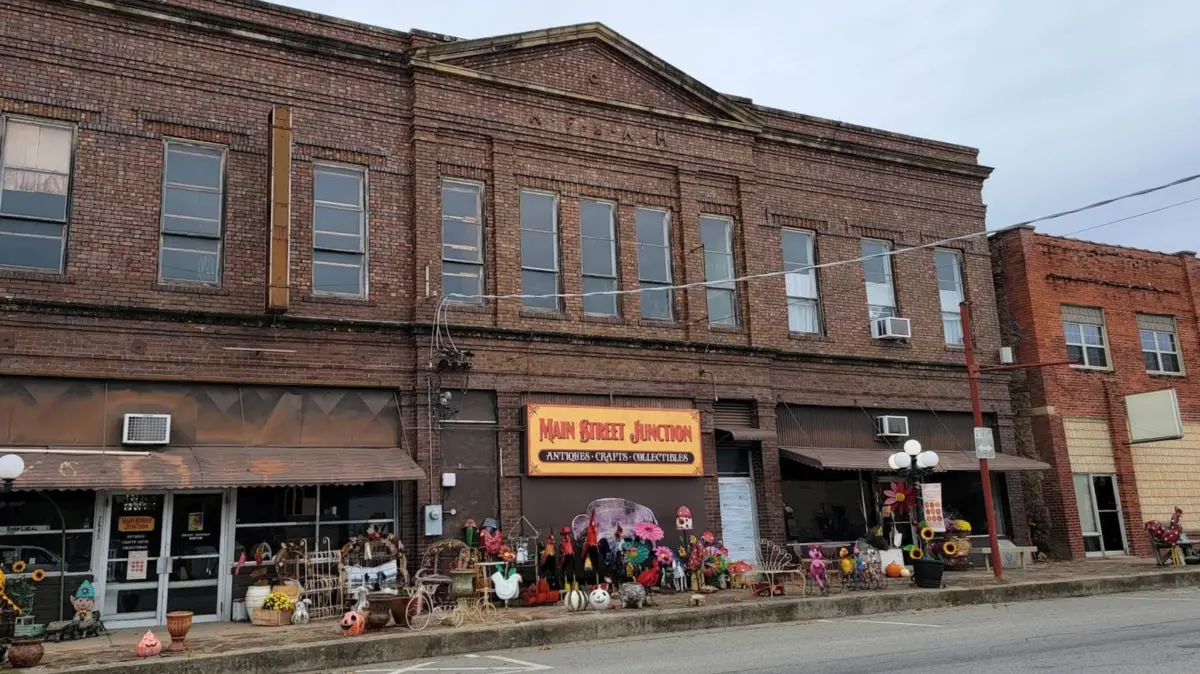
- The Antique Economy: McAlester functions as a recognized antique capital within the region. Institutions like Main Street Junction (operating continuously since 1994) and the sprawling McAlester Antique Mall—which houses over 40 distinct dealers under one roof—draw serious collectors from across Texas, Arkansas, and Oklahoma.
Gastronomic Footprint
The city’s culinary scene bridges traditional Southern comfort food, classic American diner fare, and rich ethnic culinary traditions deeply rooted in the area’s immigrant history:
- Lucy’s Two: A legendary local institution boasting a near-perfect 4.8 star rating on TripAdvisor and a 100% recommendation score across multiple review platforms. Renowned for scratch-made soups, classic sandwiches, and exceptional homemade pies and cakes.
- Joe’s Yardbird: A modern favorite specializing in gourmet fried chicken sandwiches, artisanal burgers, and classic Philly cheesesteaks.
- El Jalisco: A multi-award-winning staple recognized repeatedly by readers of the McAlester News-Capital for authentic, high-quality Mexican cuisine.
Official Statements and Stakeholder Perspectives
Local civic leaders, business owners, and cultural organizers emphasize that McAlester’s success is rooted in authenticity and community-driven momentum.
"We aren’t trying to manufacture a fake historic Main Street; our history is real, our brick buildings are authentic, and our community spirit cannot be franchised," notes a representative from the local economic development coalition. "When visitors come to McAlester, they aren’t just consuming a product—they are engaging with a living, breathing culture shaped by the Choctaw Nation, generations of coal miners, and modern artisans who chose to build their dreams right here in southeastern Oklahoma."
Cultural programmers behind the city’s major events echo this sentiment, pointing out the intentional diversity of McAlester’s programming:
"Whether it’s bringing platinum-selling Grammy winners to an outdoor street stage through the Dancing Rabbit Music Festival, celebrating our Italian heritage with authentic cuisine, or diving into the imaginative world of the SteamPunk Stampede, our goal is to offer an intellectual and sensory richness that defies expectations for a city our size," shares a downtown event coordinator. "People come for the afternoon, stay for the weekend, and start looking at real estate listings by Sunday morning. That is the ultimate metric of success."
Future Outlook: Strategic Growth and Sustainability
Looking ahead, McAlester is well-positioned to capitalize on the broader secular shift toward domestic heritage travel, remote-work mobility, and secondary-market residential migration. As urbanites from Dallas, Tulsa, and Oklahoma City seek refuge from high-density living without sacrificing cultural amenities, McAlester offers an ideal value proposition.
Strategic Infrastructure Priorities
- Downtown Housing Conversion: Expanding the upper-story loft development initiative to bring more residential rooftops directly into the central business district, thereby ensuring nighttime foot traffic and vibrant urban streetscapes.
- Cultural Tourism Expansion: Scaling the Dancing Rabbit Music Festival and specialty events like the SteamPunk Stampede to attract broader regional and national media attention, further cementing the city’s status as a premier Oklahoma tourism anchor.
- Tribal Partnership and Heritage Preservation: Deepening collaborative ventures with the Choctaw Nation to highlight indigenous history, expand educational tourism infrastructure, and honor the region’s earliest settlers through permanent exhibits and expanded annual celebrations.
Conclusion
McAlester stands as proof that small-city America possesses immense vitality when anchored by historical pride, entrepreneurial grit, and innovative placemaking. By bridging its frontier past with a vibrant, modern cultural economy, this southeastern Oklahoma gem has ensured that getting off the beaten path is no longer just a clever travel tip—it is an essential journey for anyone seeking the authentic heartbeat of the American heartland.