







Executive Overview
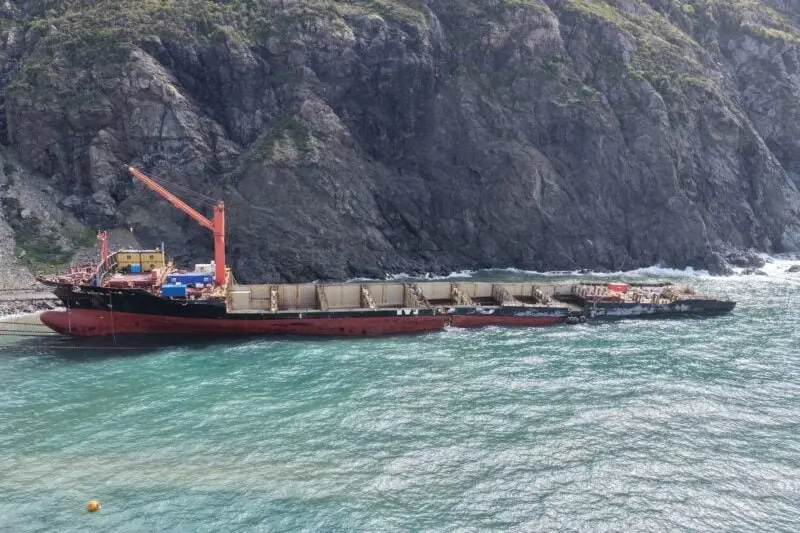
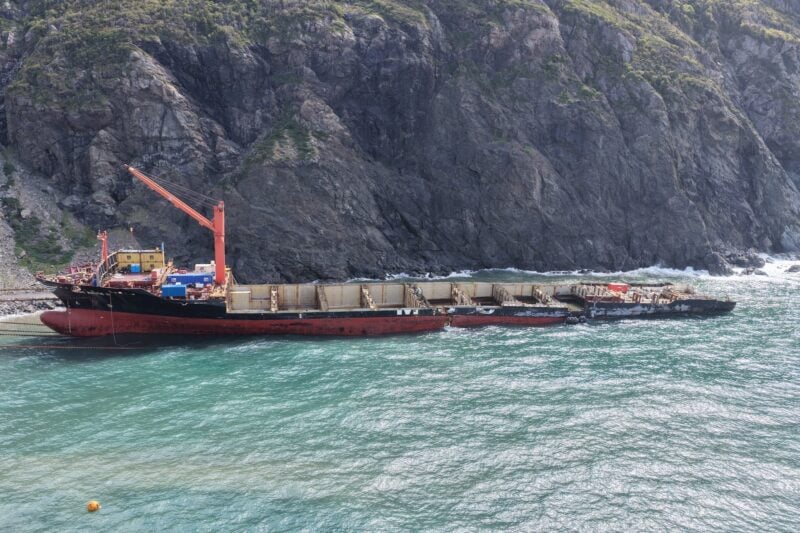
In one of the most complex and protracted marine salvage operations in recent Canadian history, salvage crews have marked a major milestone on the rugged western coast of Newfoundland and Labrador. Resolve Marine, under the oversight of the Canadian Coast Guard, has successfully pulled the grounded container ship MSC Baltic III approximately 53 meters closer to the shoreline near Wild Cove. This strategic maneuver is part of a delicate, multi-phase demolition process designed to dismantle the vessel directly on the rocky shore rather than attempting a traditional—and highly risky—refloating operation.
The MSC Baltic III ran aground in February 2025 after losing propulsion during a severe North Atlantic winter storm. Over the past 18 months, the vessel has remained hard aground, battered by waves, while salvage engineers devised a meticulous plan to scrap the ship in situ.
To date, demolition crews have cut away and lightered approximately 4,200 tonnes of steel and shipboard infrastructure—representing roughly 40 percent of the vessel’s total deadweight tonnage. By dragging the severely damaged hull closer to land, salvage teams can leverage shore-based heavy machinery, stabilize the remaining hull structure, and mitigate the persistent threat of environmental contamination in these sensitive sub-Arctic waters.
MSC BALTIC III SALVAGE: KEY METRICS AT A GLANCE
┌──────────────────────────────────────┬──────────────────────────────────┐
│ Metric                               │ Status / Value                   │
├──────────────────────────────────────┼──────────────────────────────────┤
│ Grounding Date                       │ February 2025                    │
│ Total Materials Removed to Date      │ ~4,200 Tonnes (~40% of wreck)    │
│ Shoreward Distance Pulled            │ 53 Meters                        │
│ Original Container Count             │ 472 Units                        │
│ Containers Successfully Extracted    │ 471 Units                        │
│ Remaining Onboard Containers         │ 1 Unit (Heavily Damaged)         │
│ Salvage Contractor                   │ Resolve Marine                   │
│ Lead Regulatory Agency               │ Canadian Coast Guard             │
└──────────────────────────────────────┴──────────────────────────────────┘
Detailed Chronology of the Crisis
The Grounding: February 2025
The ordeal began in the dead of winter in February 2025. The MSC Baltic III, a mid-sized container ship, was transiting the waters off western Newfoundland when it encountered severe weather, characterized by freezing temperatures, gale-force winds, and heavy swells. The vessel suffered a catastrophic loss of propulsion, leaving it at the mercy of the sea.
Despite the crew’s efforts to stabilize the ship, the relentless wind and waves pushed the vessel onto the jagged rocks near Wild Cove.
Recognizing the imminent danger to human life, the Joint Rescue Coordination Centre (JRCC) initiated an emergency evacuation. In a daring operation executed amidst extreme weather conditions, search and rescue helicopters successfully airlifted all 20 crew members to safety. No injuries were reported, but the vessel was left firmly wedged against the rocky, unforgiving shoreline.
CHRONOLOGY OF THE MSC BALTIC III SALVAGE CAMPAIGN
│
├── February 2025: Vessel loses power in storm; 20 crew members evacuated.
│                  Initial damage assessment reveals severe hull breaches.
│
├── Spring–Summer 2025: Bulk fuel and oil extraction completed.
│                       Offloading of 471 cargo containers begins.
│
├── Fall–Winter 2025: Hydrogen sulfide gas detected in flooded cargo holds.
│                     Specialized containment and air monitoring deployed.
│
├── Spring 2026: Cableway system installed; shoreline scrap pad completed.
│                Heavy-lift crane positioned to begin structural cutting.
│
├── July 31, 2026: Shoreward pulling operations commence using heavy jacks.
│
└── September 2026: Vessel successfully shifted 53 meters shoreward.
                     Transition to temporary gangway; 40% of steel removed.
Transition from Refloating to Scrapping
Initial assessments by salvage underwriters and structural engineers quickly ruled out a conventional refloating operation. The MSC Baltic III had sustained extensive bottom damage, with multiple cargo holds and double-bottom tanks breached by rocky pinnacles. The structural integrity of the hull was severely compromised.
Attempting to patch, seal, and refloat the ship carried a high probability of structural failure, which could have caused the vessel to break in two, sink in deeper water, and release residual contaminants into the Gulf of St. Lawrence.
By late spring 2025, the Canadian Coast Guard and Resolve Marine finalized an alternative strategy: a comprehensive, shore-assisted in-situ deconstruction. This approach required preparing the shoreline, stabilizing the wreck, stripping all hazardous cargo and fluids, and gradually dragging the hull landward as it was cut into manageable pieces.
The Demolition and Pulling Campaign
Throughout late 2025 and the first half of 2026, salvage crews worked continuously to prepare the vessel for dismantling. A sophisticated aerial cableway system was constructed to transport personnel and equipment between the cliffs of Wild Cove and the deck of the listing ship.
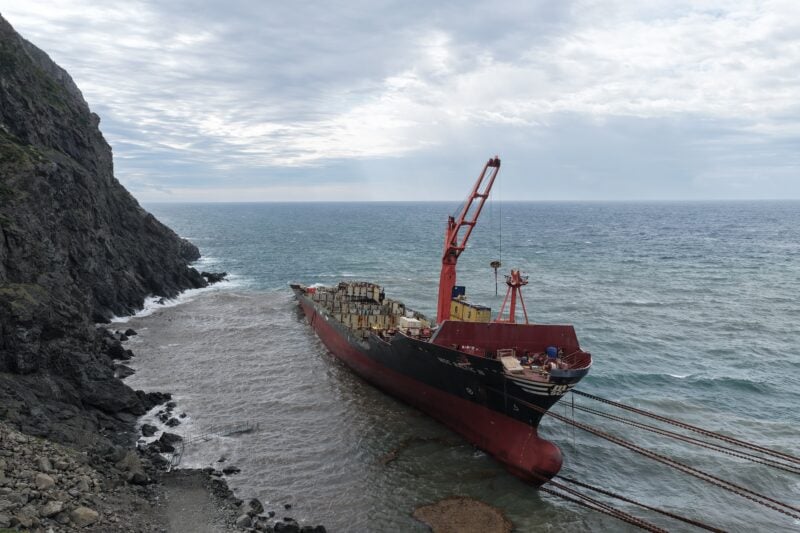
On July 31, 2026, after months of preparation, Resolve Marine initiated the first "pull." Using massive hydraulic linear pullers secured to bedrock anchors on shore and connected to the wreck by heavy chains, salvors began dragging the MSC Baltic III landward.
By utilizing the natural buoyancy provided by high tides, salvors reduced the friction of the hull against the seabed, allowing the vessel to be shifted 53 meters closer to the staging area on shore.
Supporting Context & Technical Metrics
Dismantling a 10,000-tonne container ship on an active, wave-exposed shoreline requires a highly coordinated engineering setup. The logistics of the Wild Cove operation are defined by several critical components:
Shoreline Infrastructure and Logistics
- The Scrap Pad: To facilitate the heavy lifting required for lightering, engineers constructed a reinforced scrap pad along the rocky shoreline. This level platform supports a high-capacity crawler crane used to hoist heavy steel sections cut from the wreck.
- The Pulling System: Large-diameter steel chains run from the ship’s structure to hydraulic jacks mounted on the shore. These jacks exert thousands of tons of pulling force to slide the ship along the seabed.
- Access Transition: As the ship has moved closer to shore, the operational logistics have shifted. The aerial cableway system, which served as the primary transit route for workers during the high-risk phases of the project, is now being dismantled. Crews are now accessing the vessel via a temporary gangway extending directly from the newly prepared shoreline work area.
Cargo and Material Extraction Metrics
Of the 472 containers originally stowed on deck and in the holds of the MSC Baltic III, 471 have been safely recovered and transported offsite.
The final remaining container is severely crushed and wedged deep within a collapsed section of the cargo hold. Because extracting it at sea posed an unacceptable risk to workers and could have triggered further structural collapse, salvors decided to leave it in place. It will be dismantled along with the surrounding ship structure once that section of the hull is dragged onto the shoreline scrap pad.
Environmental Safeguards & Hazard Management
The western coast of Newfoundland is a pristine marine ecosystem, home to vital commercial fisheries and diverse marine life. Consequently, environmental monitoring and hazard mitigation have been central to the Canadian Coast Guard’s oversight.
Hydrocarbons and Residual Fuel Management
While the ship’s bulk fuel oil was pumped off during the initial emergency response phase in 2025, residual hydrocarbons trapped in piping, deep tanks, and machinery spaces present an ongoing challenge.
During cutting and structural dismantling, these pockets of trapped oil can be exposed. To counter this, the salvage team has deployed several layers of defense:
- Internal Containment: Absorbent booms and skimming equipment have been placed directly inside the flooded cargo holds to capture oil at the source before it can escape into the open sea.
- External Monitoring: Daily shoreline patrols are conducted to identify and collect any escaped contaminants.
- Tar Ball Remediation: The Coast Guard has acknowledged that small quantities of tar balls and light oily coatings continue to be detected on nearby rocks. Cleanup crews are dispatched daily to manually remediate these areas as weather and sea conditions permit.
- Sheen Management: A faint, localized oil sheen has occasionally been observed immediately adjacent to the hull. Responders maintain active spill-response vessels and containment booms around the wreck to minimize the spread of any surface film.
ENVIRONMENTAL MITIGATION PROTOCOLS
┌───────────────────────┬─────────────────────────────────────────────────┐
│ Hazard                │ Control Measure                                 │
├───────────────────────┼─────────────────────────────────────────────────┤
│ Residual Fuel Oil     │ Internal absorbent booms, localized skimmers    │
│ Escaped Hydrocarbons  │ Active containment booms surrounding the hull   │
│ Shoreline Pollution   │ Daily manual patrols and tar ball recovery      │
│ Toxic Gases (H2S)     │ Continuous atmospheric monitoring, ventilation  │
└───────────────────────┴─────────────────────────────────────────────────┘
The Hydrogen Sulfide ($H_2S$) Threat
During the earlier phases of cargo recovery, salvors encountered a significant safety hazard: the accumulation of hydrogen sulfide ($H_2S$) gas.
Organic matter and cargo inside the flooded, anaerobic environments of the lower holds had begun to decay, generating highly toxic and flammable gas. To protect workers, Resolve Marine had to pause operations to install specialized industrial ventilation systems, deploy continuous atmospheric monitoring sensors, and equip salvage teams with self-contained breathing apparatuses (SCBA).
While the $H_2S$ hazard was successfully managed and never posed a threat to nearby communities, it highlighted the unpredictable dangers inherent in long-term wreck removal.
Official Statements & Regulatory Oversight
The Canadian Coast Guard remains the lead regulatory agency overseeing the unified command, ensuring that Resolve Marine adheres to strict safety and environmental standards.
In a recent public update, the Canadian Coast Guard emphasized the necessity of maintaining a strict safety perimeter around Wild Cove:
"The safety of workers and the protection of the marine environment continue to be the main priorities of the unified command. We urge the public to respect the safety exclusion zones. Heavy pulling, thermal cutting, and crane operations carry significant risks, and unauthorized vessels or onlookers in the area compromise the safety of the salvage teams."
Maritime safety analysts point out that the MSC Baltic III operation represents a textbook example of modern "wreck-demolition" philosophy. Rather than risking a catastrophic structural failure by trying to refloat a severely compromised vessel, salvors are treating the ship as a stationary industrial demolition site. This method, while slower and more expensive, significantly reduces the risk of sudden, uncontrolled environmental disasters.
Future Outlook & Environmental Rehabilitation
The salvage of the MSC Baltic III is far from over, but the successful 53-meter shoreward pull marks the beginning of the final phase.
Over the coming months, Resolve Marine will continue its cycle of pulling and cutting:
- High-Tide Pulls: Crews will wait for favorable spring tides to provide maximum buoyancy, using the shore-based hydraulic jacks to pull the remaining hull sections further onto the scrap pad.
- Thermal Cutting: Once stabilized on land, heavy hydraulic shears and thermal cutting crews will carve the hull into manageable sections.
- Recycling and Disposal: The recovered steel will be loaded onto barges or flatbed trucks for transport to regional recycling facilities, ensuring that the vast majority of the ship’s structural mass is recycled.
Once the final section of the keel is hauled away, the focus will shift to environmental remediation. The Canadian Coast Guard, in coordination with local environmental officers, will conduct extensive soil, water, and sediment testing around Wild Cove to ensure that any residual contaminants are thoroughly cleaned up.
The ultimate goal is to return the rocky shoreline of Wild Cove to its natural state, leaving no trace of the winter storm that claimed the MSC Baltic III in February 2025.