





Executive Overview
In the pitch-black waters of the Southern California coast, just a half-mile off Arch Rock near Anacapa Island, a high-stakes maritime rescue unfolded on the night of August 18. Two kayakers, stranded and adrift for roughly four hours inside a crippled, waterlogged hull, found themselves saved from the unforgiving Pacific Ocean by a narrow margin of geographic fortune and emergency preparedness.
The U.S. Coast Guard Los Angeles-Long Beach sector received an emergency distress call at 11:17 p.m. Within 43 minutes, a specialized rescue helicopter crew arrived on the scene, utilizing night-vision technology to spot a faint handheld light piercing the darkness. Hoisting the hypothermic yet stable paddlers from the ocean via rescue basket, the crew transported them safely to Ventura County emergency medical services.
While the operation ended without loss of life, maritime authorities have seized upon the incident as a cautionary tale. The paddlers—who were en route to a multi-day camping expedition on the Channel Islands—survived thanks to a confluence of fortunate factors: they wore wetsuits and life jackets, carried a signaling light, and happened to catch a faint, fleeting cellular signal in an area notorious for telecommunications dead zones.
Yet, maritime safety experts emphasize that the rescue should not be viewed as a success story of planning, but rather as a close call that underscores the perilous gamble of relying on consumer technology in remote open-water environments. This comprehensive report explores the timeline of the rescue, the vital safety lessons emerging from the incident, the technical challenges of open-ocean communication, and the shifting protocols governing coastal paddling.
Detailed Chronology: Four Hours Adrift in the Dark
The sequence of events leading up to the midnight rescue remains partially obscured by the suddenness of the emergency, but federal authorities and commercial recovery teams have pieced together a timeline of the ordeal.
The Outset and the Capsize
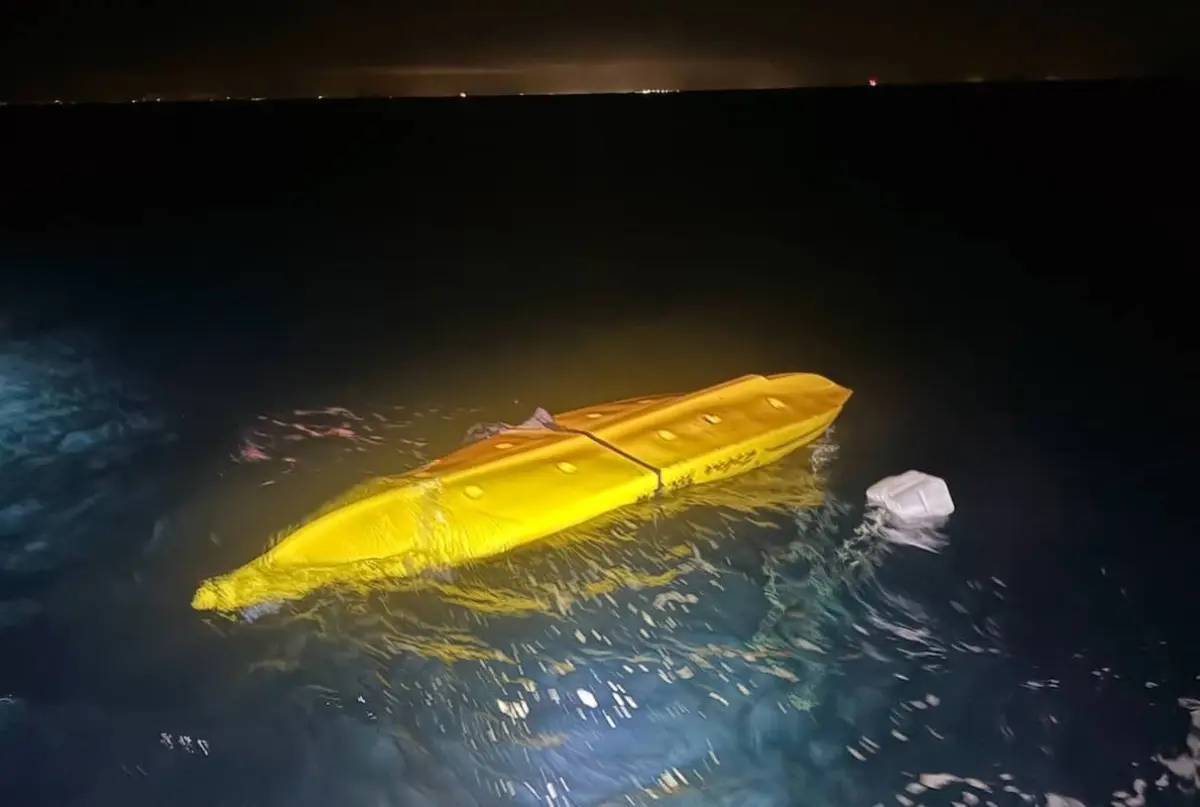
Earlier in the day on August 18, the two unnamed paddlers launched their watercraft with intentions to camp across the Channel Islands over the coming days. According to Captain Carson Shevitz of TowBoatUS Ventura—the commercial maritime firm later tasked with recovering the abandoned kayak and personal gear—the journey began under typical coastal conditions. However, at some point during transit, the kayak capsized.
The exact catalyst for the rollover remains undetermined. Neither the U.S. Coast Guard nor recovering officials have pointed to specific weather anomalies, rogue swells, or structural equipment failures. What is clear, however, is that the mishap occurred far from shore and long before the pair reached their intended campsite.
Adrift in the Pacific
With their vessel taking on water and ultimately failing to right itself, the kayakers found themselves stranded half a mile from land. In open ocean conditions, a swamped kayak offers virtually no positive buoyancy when laden with gear, transforming from a mode of transportation into a floating hazard.
As daylight faded into twilight and twilight dissolved into absolute darkness, the paddlers drifted. For approximately four hours, they clung to their compromised craft or floated nearby in the chilly Southern California waters. The psychological toll of an open-ocean drift at night—surrounded by black water, buffeted by ocean currents, and cut off from immediate visual reference points—cannot be overstated.
The 11:17 P.M. Breakthrough
By late evening, the pair reached a critical decision point. Desperate for assistance, they tested their mobile phones. By sheer statistical anomaly, a connection locked onto a distant cellular tower. At 11:17 p.m., the call connected to the U.S. Coast Guard sector command center.
The timing was razor-thin. Coast Guard aircraft commander Jason Condon noted that the Channel Islands region is notoriously hostile to cellular transmissions. Had the paddlers drifted even a short distance further, or found themselves on the leeward side of an adjacent island, the call would have failed entirely.
The Midnight Extraction
The response from the Coast Guard was immediate. A rescue helicopter was scrambled, vectoring toward Arch Rock near Anacapa Island. By 12:00 a.m. on August 19, the aircraft was orbiting overhead.
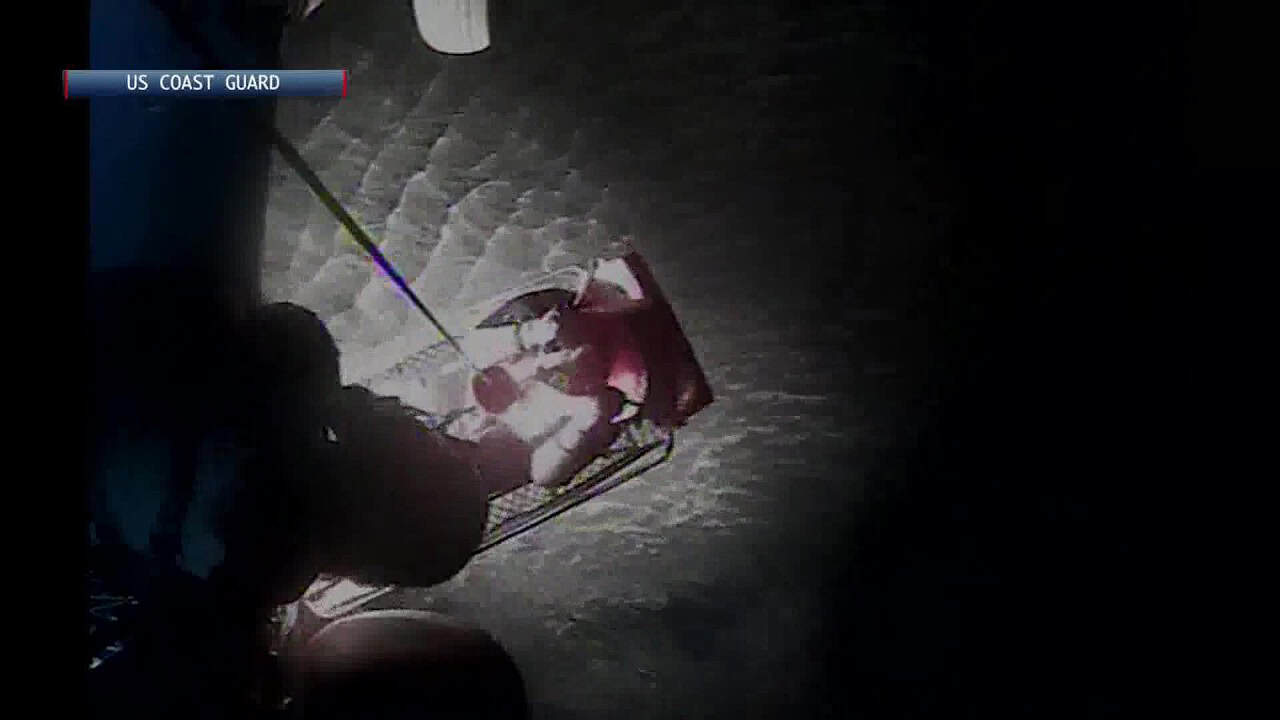
Locating a human form in the open ocean at midnight is akin to finding a needle in a haystack. However, the paddlers possessed a critical piece of gear: a handheld light. As the helicopter swept the search area utilizing night-vision goggles (NVGs), the kayakers illuminated their light. To the aircrew scanning through NVGs, the sudden burst of light transformed an invisible target into a clear, illuminated coordinate.
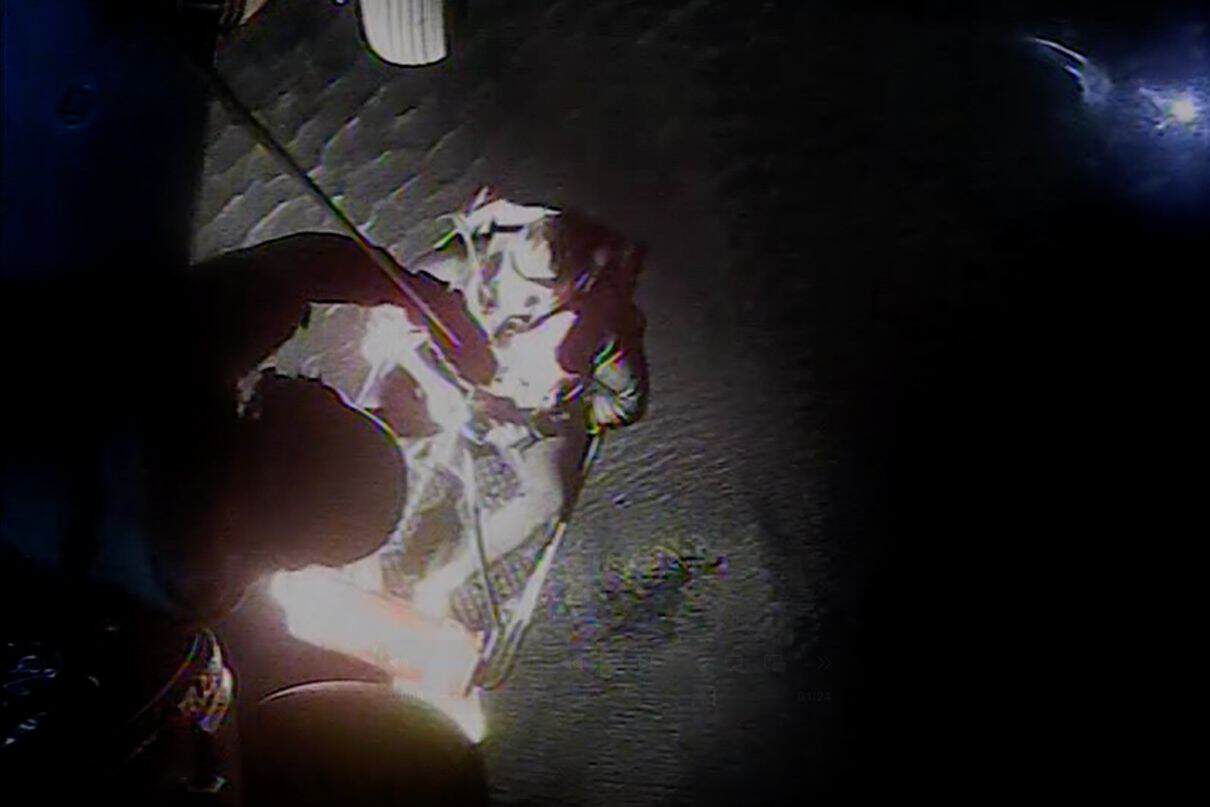
The helicopter lowered a rescue basket, hauling the paddlers out of the water one by one. Safely inside the cabin, they were evaluated by flight medics before being flown directly to Ventura County emergency medical services, where both were treated and cleared in stable condition.
Supporting Context & Metrics: The Channel Islands Hazard
To understand the severity of the August 18 incident, one must examine the geographical and environmental realities of the Channel Islands National Park region.
[Timeline of Events - August 18]
 ├── Morning: Kayakers launch toward Channel Islands
 ├── Afternoon / Early Evening: Kayak capsizes; vessel begins taking on water
 ├── Evening (4-Hour Drift): Paddlers drift helplessly in darkness for ~4 hours
 ├── 11:17 PM: Emergency call placed via rare cellular breakthrough
 └── 12:00 AM (Aug 19): Coast Guard helicopter arrives; night-vision rescue executed
Environmental Pressures
The waters surrounding the Channel Islands are characterized by cold ocean temperatures, unpredictable wind-swell interactions, and heavy shipping traffic lanes. Water temperatures in this region frequently hover below the 60°F (15°C) threshold during various parts of the year.
According to cold-water survival metrics compiled by maritime safety organizations:
- Onset of Hydrocution / Cold Shock: Occurs within the first 1–3 minutes of immersion, triggering an involuntary gasp reflex and rapid spikes in blood pressure and heart rate.
- Swimming Incapacitation: Typically sets in within 10 to 15 minutes as cold water drains heat from peripheral muscles, destroying the victim’s ability to self-rescue, swim, or hold onto equipment.
- Hypothermia: Unprotected humans can lose consciousness within 30 to 60 minutes in 55°F to 60°F water without proper thermal protection.
The fact that the kayakers survived four hours in the water is directly attributable to their apparel. By wearing wetsuits and personal flotation devices (PFDs), they insulated their core body temperatures against rapid conductive heat loss and maintained positive buoyancy, preventing exhaustion from treading water.
The Telecommunications Desert
Cellular coverage maps across the California Channel Islands reveal a patchwork of dead zones. High cliffs, deep marine canyons, and distance from mainland towers create a hostile environment for commercial mobile devices.
Captain Carson Shevitz of TowBoatUS Ventura highlighted the oddity of the incident during his interview with the Santa Barbara Independent:
"For a kayak to be underway at night in that area is very unusual. It’s a weird location to be doing it… They may have been searching for cell service, which is spotty around the Channel Islands."
This observation points to a dangerous behavioral trap common among modern recreationists: venturing into hazardous environments under the unverified assumption that a smartphone will serve as an infallible umbilical cord to civilization.
Official Statements and Expert Analysis
The rescue has generated extensive commentary within federal maritime agencies and commercial rescue outfits, focusing on the dichotomy between the paddlers’ poor tactical choices (paddling at night without a marine radio) and their sound gear choices (wetsuits, PFDs, and a signaling light).
U.S. Coast Guard Perspectives
Coast Guard aircraft commander Jason Condon did not mince words regarding the narrow margin between survival and tragedy during the August 18 operation:
"I mean, let’s say they didn’t have cell service… It was midnight, and I think they had started paddling in the morning. If they didn’t have cell service, they would be floating in the water until who knows? Until a boat saw them or they get to shore."
Condon also emphasized the indispensable role played by the simple flashlight in the darkness:
"It was dark, so a thing that really helped them was having a signaling device. We were looking for them, again it is hard to spot just a head in the water, but they used a light. We have night vision goggles, so once they turn on that light, we instantly see them."
Search and rescue mission coordinator Lt. Cmdr. Jason Caprioli reinforced the agency’s official stance on layered communication infrastructure:
"Thankfully, the kayakers were in cellphone range, which allowed them to reach the Coast Guard. However, we strongly urge all mariners to have a signaling device and VHF-FM marine radio when on the water to communicate with the Coast Guard or nearby mariners because this safety gear can make a critical difference during an emergency."
Commercial Recovery Insights
Captain Carson Shevitz, reflecting on the recovery of the waterlogged kayak and scattered equipment, reiterated that night paddling in open ocean water is an extreme anomaly that defies standard safety protocols. The lack of an onboard marine radio meant the paddlers had no way to broadcast a Mayday signal to commercial vessels or passing recreational boats operating on VHF Channel 16, relying entirely on a terrestrial voice call routed through cellular towers.
Future Outlook: Best Practices and Safety Recommendations
The Anacapa Island incident serves as a masterclass in the realities of modern wilderness and marine emergencies. Moving forward, safety advocates are pushing for a paradigm shift in how paddlers view emergency preparedness.
1. Ditch the "Single Point of Failure" Mentality
Relying solely on a smartphone for maritime communication is a high-risk gamble. Smartphones are fragile, vulnerable to water damage, dependent on battery life, and subject to geographic dead zones.
- The Marine VHF Radio: Every coastal paddler should carry a waterproof, floating handheld VHF-FM marine radio. VHF channels are actively monitored by the Coast Guard and nearby commercial and recreational vessels.
- Satellite Communicators: Devices such as a Garmin inReach or ACR Bivy Stick utilize global satellite constellations (such as Iridium) rather than cell towers, ensuring two-way messaging and SOS capabilities from virtually anywhere on Earth, regardless of cellular coverage.
2. Dress for Immersion, Not the Air Temperature
A recurring theme in maritime fatalities is the assumption that warm air equates to safe water. The Coast Guard’s baseline rule remains definitive: if the water is 60°F (15°C) or colder, wear a wetsuit or drysuit.
As Condon noted regarding the Anacapa kayakers:
"It was worth it to be over prepared, and they’re very thankful that they did. If they didn’t have [wetsuits], they could have been in a worse situation, and it probably would be a lot more scary for them."
3. Comprehensive Pre-Trip Planning and Gear Testing
Mariners must audit their safety gear before pushing off from the beach.
- Test Your Equipment: Know the functional limitations of your communication gear. Will your VHF radio transmit clearly from the canyons and coves of your destination? Have you tested your satellite subscription?
- Never Paddle at Night Without Specialized Lighting: Navigating open water in the dark exposes paddlers to extreme collision risks from motorized vessels and drastically diminishes self-rescue capabilities. If night transit is unavoidable, vessels must be equipped with USCG-approved navigation lights and high-intensity strobe signaling devices.
Ultimately, the two kayakers off Anacapa Island returned home because of a miraculous cellular ping and the foresight to wear wetsuits and life jackets. But marine authorities stress that luck is not a safety strategy. By investing in redundant communication tools, respecting cold-water immersion hazards, and avoiding unnecessary nighttime open-ocean transits, paddlers can ensure their adventures end safely on dry land rather than in the beam of a Coast Guard rescue helicopter.