








Executive Overview
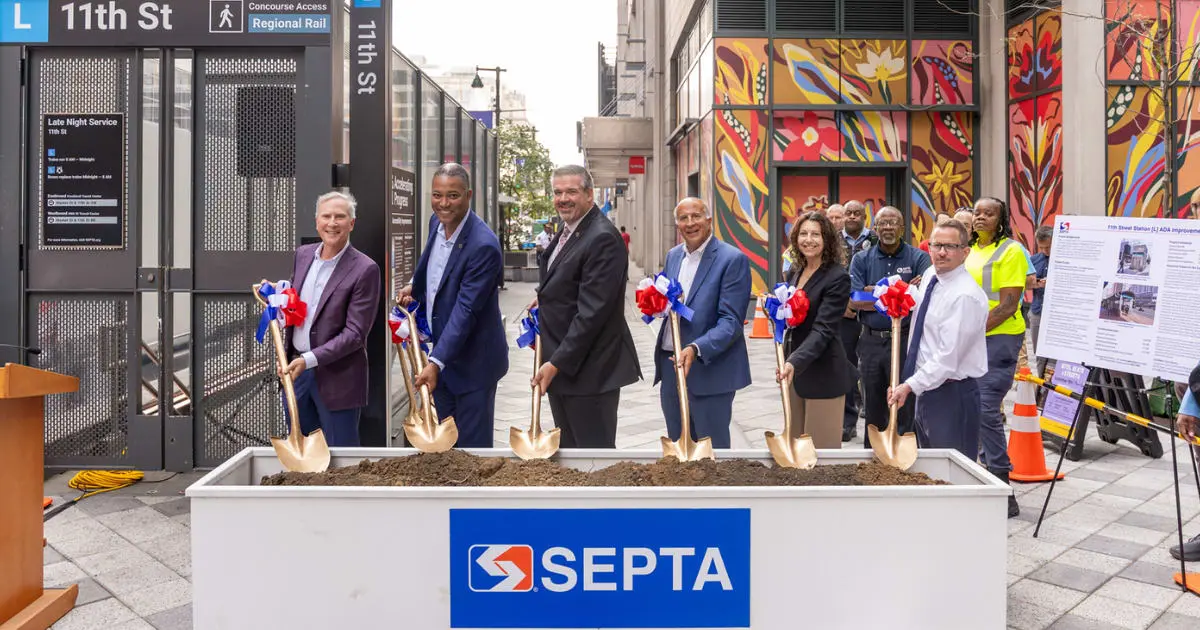
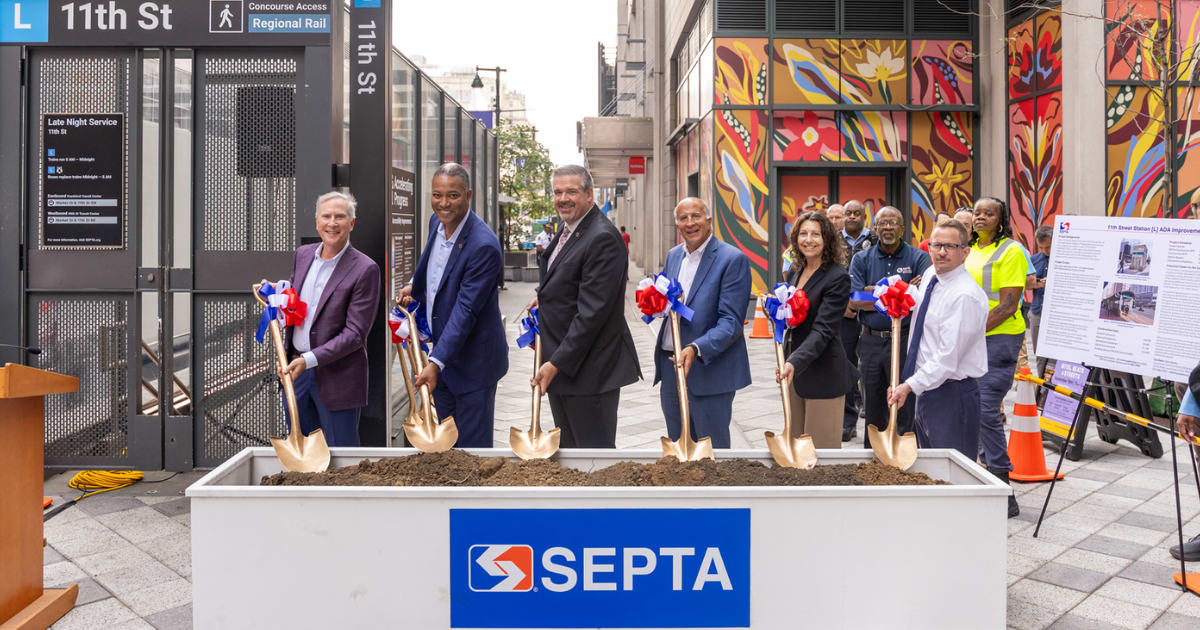
In a milestone event that underscores a broader regional commitment to equity, modern infrastructure, and public transit modernization, the Southeastern Pennsylvania Transportation Authority (SEPTA) officially broke ground on August 27 on a transformative $44 million project. The initiative aims to bring full Americans with Disabilities Act (ADA) accessibility to the heavily trafficked 11th Street Station along the Market-Frankford Line—locally known as the "L."
Gathered alongside key federal, state, and local elected officials, as well as crucial civic and transportation stakeholders, SEPTA leadership heralded the groundbreaking not merely as a localized construction project, but as a critical leap forward in fulfilling a core institutional mission: ensuring public transit is universally accessible to every resident, commuter, and visitor in the Greater Philadelphia area.
The renovation carries profound significance for the thousands of daily riders who rely on the East Market corridor. Currently, 11th Street Station acts as a major commercial and commuter gateway. However, its lack of modern vertical accessibility has long posed a barrier for individuals with mobility challenges, parents navigating strollers, cyclists, and travelers managing heavy luggage or shopping carts.
To rectify this, the core engineering undertaking of the project involves the installation of two high-capacity elevators connecting the street level directly to both the eastbound and westbound platforms. When paired with comprehensive structural, technological, and aesthetic upgrades, the project will catapult the station into compliance with federal accessibility laws and dramatically reshape the passenger experience.
Crucially, SEPTA and its project partners have adopted an aggressive, highly calculated construction strategy to minimize the long-term impact on the community. By opting to completely close the station for a continuous 12-month window beginning in September 2026—rather than dragging out construction over traditional, piecemeal timelines—SEPTA engineers estimate they will slash the overall construction schedule by at least 10 months. Furthermore, this streamlined approach is projected to save taxpayers and the transit agency up to $3 million in capital costs.
Funding for the overhaul is being drawn from a multi-layered coalition of financial supporters. This includes critical federal allocations secured through the Federal Transit Administration’s (FTA) competitive All Stations Accessibility Program (ASAP), bolstered by ongoing, vital funding partnerships with the Commonwealth of Pennsylvania and the City of Philadelphia. As SEPTA contends with broader financial complexities in its operating and capital budgets, the 11th Street Station overhaul stands as a shining example of how targeted federal infrastructure investments can be leveraged to deliver outsized, generational benefits to urban communities.
Detailed Chronology and Project Phasing
Transforming a legacy urban transit station built decades before modern accessibility standards requires meticulous planning, precise engineering, and an uncompromising dedication to safety. The 11th Street Station project represents a masterclass in accelerated project delivery, carefully structured to balance the urgency of modernizing civic infrastructure with the realities of managing a bustling metropolitan transit system.
The Groundbreaking and Pre-Construction Phase (August–September 2026)
Following the official groundbreaking ceremony on August 27, project managers, contractors, and agency officials immediately shifted into the final pre-construction preparations. This phase involves finalizing staging areas, moving underground utilities, procuring specialized elevator and security equipment, and conducting comprehensive public outreach campaigns to ensure that the more than 9,400 daily weekday riders who use 11th Street Station are fully aware of upcoming service disruptions.
The Accelerated Station Closure and Heavy Construction (September 2026–August 2027)
The most disruptive yet necessary phase of the project is slated to begin on September 5, 2026. To achieve maximum construction efficiency, 11th Street Station will be completely closed to the public through August 30, 2027. During this 12-month continuous closure, Market-Frankford Line trains will bypass the station. Additionally, the underground pedestrian concourse stretching from 13th Street to 11th Street will be entirely closed to pedestrian traffic to allow heavy machinery, structural reinforcement teams, and utility contractors unhindered workspace.
Traditionally, infrastructure projects of this magnitude—constrained by the need to maintain partial public access, night-only work windows, and piecemeal staging—routinely drag on for upwards of 35 months. By negotiating a total temporary closure, SEPTA’s engineering teams anticipate cutting the total project duration down to just over a year, bypassing at least 10 months of cumulative construction drag. This compressed timeline not only yields financial savings of up to $3 million, but it also reduces the total window of community disruption, ensuring that the corridor returns to full, modernized functionality much faster than would otherwise be possible.
Phased Reopening and Final Finishes (Late 2027 and Beyond)
When 11th Street Station reopens its doors to the public in late August 2027, riders will walk into a radically transformed facility. While the primary structural and vertical accessibility components—namely the elevators, newly reinforced stairwells, and primary ADA paths—will be fully operational, any remaining interior finishing touches or minor cosmetic details will be completed during off-peak hours with minimal disruption to daily passenger flows.
Supporting Context, Infrastructure Metrics, and Financial Engineering
The $44 million investment in 11th Street Station does not exist in a vacuum; it is part of a massive, systemic push by SEPTA to overhaul its aging infrastructure network and meet the legal and moral imperatives of universal transit accessibility.
Ridership Demographics and Station Utility
With an average weekday volume exceeding 9,400 passenger entries and exits, 11th Street Station serves as a critical pulse point in Center City Philadelphia. It anchors the bustling East Market Street commercial, residential, and medical corridor, connecting workers to office towers, shoppers to retail centers, and residents to the broader regional transit grid.
However, prior to this overhaul, the station’s inability to accommodate individuals with mobility impairments created an exclusionary bottleneck. As Ariella Maron, executive director of the Delaware Valley Regional Planning Commission (DVRPC), aptly noted during the project rollout, ADA improvements are far more than a localized convenience. They serve as an absolute lifeline for individuals in wheelchairs or those utilizing other mobility aids. Furthermore, they drastically improve the dignity and usability of the transit ecosystem for a broad cross-section of society, including parents pushing strollers, travelers burdened with luggage, shoppers with carts, and bicyclists navigating the urban core.
The Financial Blueprint: Bipartisan Infrastructure Law and Federal Partnerships
Financing a multi-million-dollar urban infrastructure project in an era of constrained municipal budgets requires creative coalition-building and aggressive grant-seeking. The lion’s share of the financial momentum for the 11th Street Station project was unlocked by federal legislation.
Congressman Brendan F. Boyle played a pivotal role in securing millions of dollars in dedicated federal funds, championing the inclusion and passage of the landmark Bipartisan Infrastructure Law. This federal investment was funneled directly through the Federal Transit Administration’s (FTA) highly competitive All Stations Accessibility Program (ASAP), a federal initiative specifically designed to assist transit agencies in retrofitting legacy rail systems to meet or exceed modern accessibility standards.
This federal backing is complemented by steady, ongoing capital contributions from the Commonwealth of Pennsylvania and the City of Philadelphia. This tri-level governmental partnership demonstrates a shared recognition that robust public transit is the bedrock of regional economic competitiveness, environmental sustainability, and social equity.
Integrated Security and Fare Modernization
Beyond the installation of dual elevators, the $44 million capital injection will fund a suite of modernization efforts designed to elevate safety, cleanliness, and operational efficiency at the station.
As part of SEPTA’s broader financial and operational strategy—integrated directly into the agency’s FY27 Budget—the 11th Street Station overhaul will include the installation of full-height, state-of-the-art fare gates. This technology is part of an agency-wide rollout targeting an additional 13 stations to combat revenue loss and enhance passenger security.
According to agency data from pilot locations where similar full-height gates have already been deployed, fare evasion has been cut roughly in half. By pairing accessibility upgrades with robust fare-collection infrastructure, SEPTA is simultaneously improving the physical inclusivity and the financial sustainability of its network.
Official Statements and Stakeholder Perspectives
The significance of the 11th Street Station groundbreaking drew enthusiastic commentary from leaders across local, state, and federal levels, reflecting a unified vision for Philadelphia’s transit future.
SEPTA Board Chair Kenneth E. Lawrence Jr. emphasized the institutional imperative driving the work:
"Ensuring that SEPTA service is accessible to all riders is a core part of our mission, and today’s groundbreaking marks another important milestone in that commitment. Making our system more accessible is a shared responsibility, and we are grateful for the federal investment through the FTA’s All Stations Accessibility Program, as well as the continued partnership and support of the Commonwealth of Pennsylvania and the City of Philadelphia."
SEPTA General Manager Scott A. Sauer highlighted the project’s urban economic impact:
"We are excited to begin this work and deliver a modern, fully accessible station for our customers. 11th Street Station is an important gateway to East Market, and this project is an investment not only in our transit system but in the infrastructure that supports this critical corridor."
Congressman Brendan F. Boyle pointed to the legislative roots of the funding:
"These improvements will ensure 11th Street Station is fully accessible and enhance the experience for every rider. Projects like this are exactly why I fought so hard to pass the Bipartisan Infrastructure Law, and I’m proud to have helped secure millions in federal funding to deliver these upgrades."
Philadelphia City Councilmember Mark Squilla underscored the municipal commitment to universal access:
"Understanding the importance of public transit, I am pleased to support SEPTA’s work to achieve accessibility for all users of the system, and this project is a good step in that direction."
DVRPC Executive Director Ariella Maron reflected on the broader societal benefits:
"ADA improvements are a lifeline for those with wheelchairs or mobility aids, and they also make the system more usable and dignified for riders with children in strollers, folks with shopping carts, bicyclists and everyone else. We applaud SEPTA for finding a way to speed up this project, which in turn means delivering benefits to the community faster and making efficient use of our limited resources."
Future Outlook: The Path to System-Wide Accessibility
The groundbreaking at 11th Street Station is not an isolated victory; it is a critical stepping stone in a massive, long-term capital campaign to eradicate accessibility barriers across the entirety of SEPTA’s rail networks.
The Numbers Behind the Mission
Once construction at 11th Street Station wraps up in late 2027, an extraordinary milestone will be reached: 27 out of the 28 total stations along the Market-Frankford Line (the "L") will be fully accessible. This near-complete transformation of a heavy rail trunk line represents a monumental achievement in American urban transit, where legacy systems often struggle with decades-old architectural constraints.
Looking further ahead, SEPTA has committed an eye-watering capital investment of more than $700 million over the next 12 years dedicated entirely to retrofitting and modernizing Metro (subway/elevated) and Regional Rail stations for universal accessibility. This ambitious multi-decade roadmap demonstrates that transit equity is treated not as an afterthought, but as an absolute prerequisite for regional planning and urban development.
Navigating Alternative Travel Options During Construction
For the thousands of regular commuters who will be displaced during the 12-month station closure, SEPTA has established clear alternative transit pathways. Customers who typically board or exit trains at 11th Street Station are being directed to utilize the nearby 13th Street Station, which is fully ADA-accessible and located just a short walk away along the transit corridor.
Additionally, SEPTA’s customer service teams, digital applications, and station signage will provide continuous real-time updates throughout the construction lifecycle. By weathering a year of strategic service adjustments, Philadelphia riders are ultimately investing in a world-class transit gateway that will serve generations of commuters with dignity, safety, and seamless universal access.