








Executive Overview
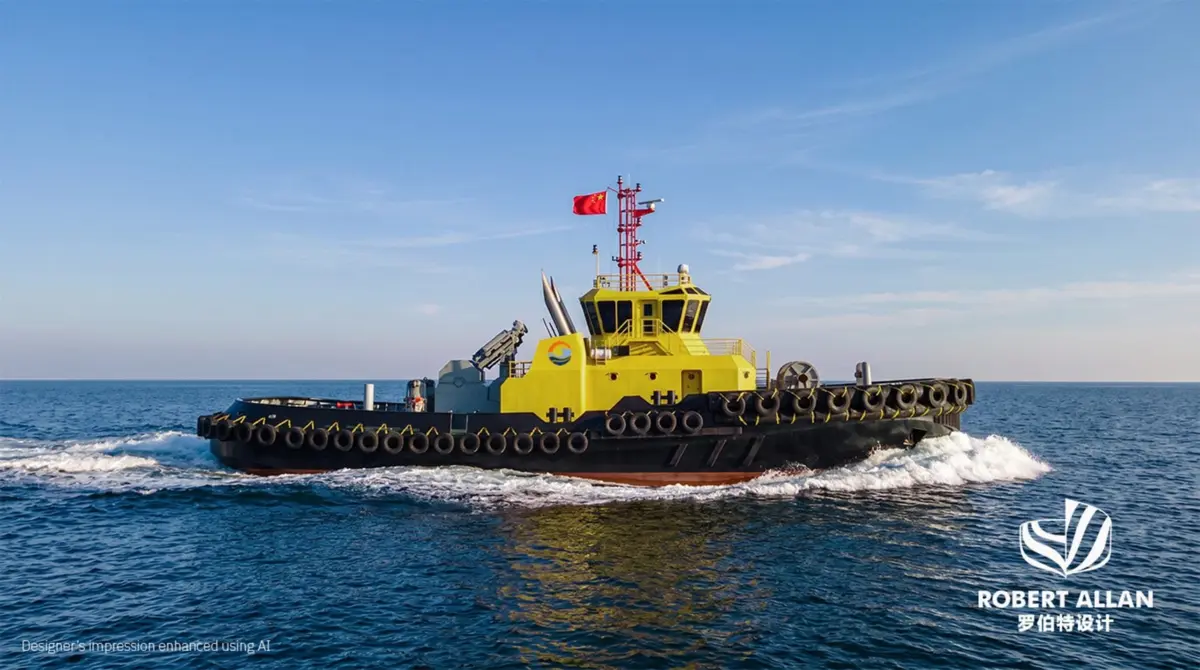
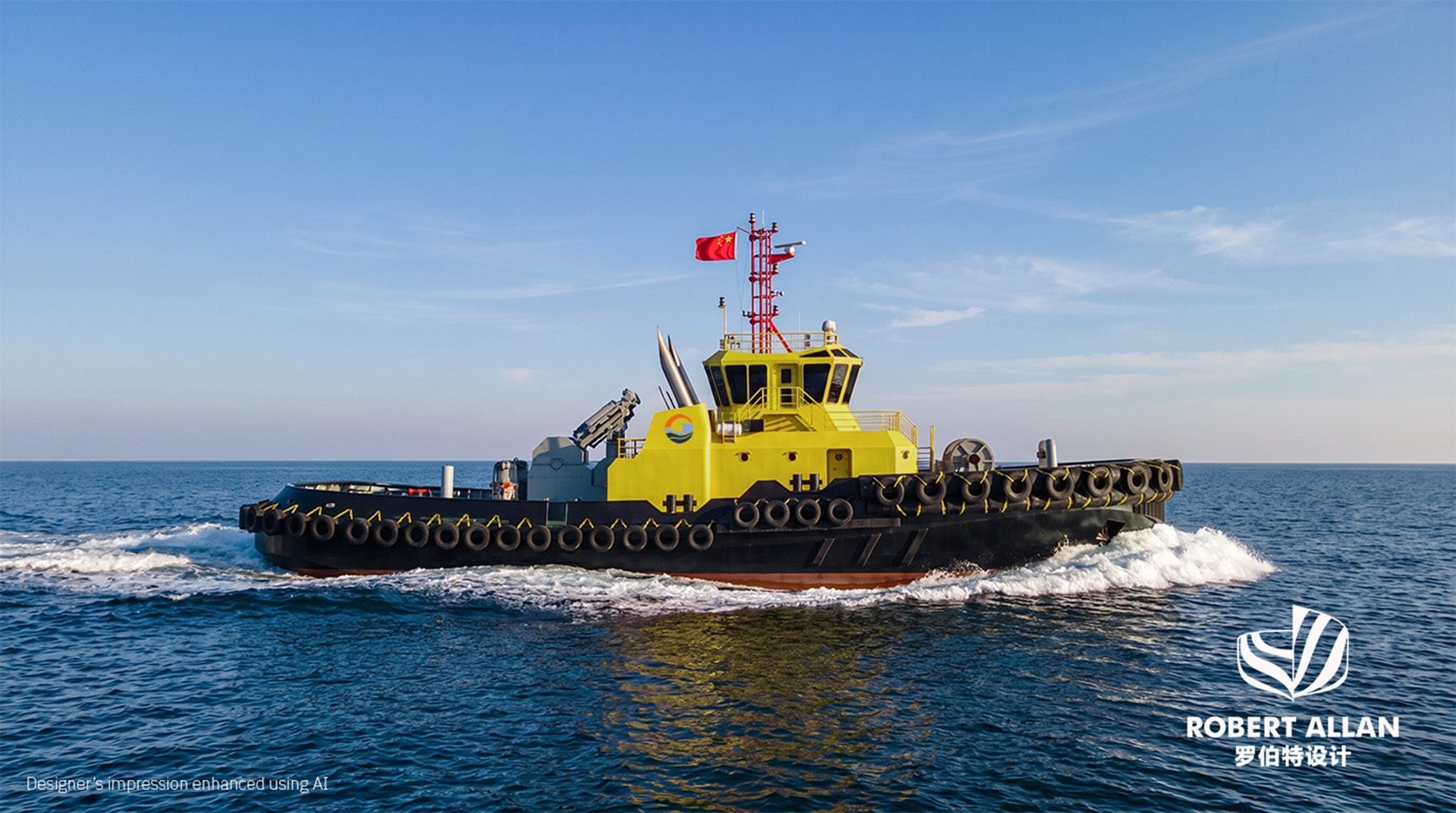
In a development that underscores the evolving demands of East Asia’s maritime logistics sector, world-renowned naval architecture firm Robert Allan Ltd. has been awarded a prestigious contract to design a new RAmparts 4300 Azimuth Stern Drive (ASD) tug for the Guangzhou Port Group. This agreement marks a historic milestone: the vessel will be the very first Robert Allan Ltd.-designed tug to join Guangzhou Port’s extensive and highly active fleet.
The vessel will be constructed by Lianyungang Hongyun Industrial Co., Ltd., a shipyard recognized for its precision engineering and capability in specialized steel shipbuilding. With delivery scheduled for May 2028, this high-performance vessel is specifically engineered to meet the rigorous, multi-faceted operational challenges of the Pearl River Delta—one of the densest and most economically vital shipping corridors in the world.
Representing a significant step forward in harbor and offshore towing capabilities, the new RAmparts 4300 ASD tug is designed to achieve an impressive bollard pull of approximately 92 tonnes. This immense towing power, combined with a robust hull form and advanced maneuverability, will grant Guangzhou Port unprecedented operational flexibility. Beyond standard harbor ship-assist duties, the vessel is configured to perform demanding coastal towing, offshore oilfield support, and occasional anchor-handling operations. By integrating this highly capable vessel into its fleet, Guangzhou Port aims to elevate its operational safety margins, enhance handling efficiency for ultra-large container vessels (ULCVs), and expand its service portfolio into the challenging waters of the South China Sea.
Detailed Chronology
The pathway to this contract reflects a meticulous planning, evaluation, and design selection process tailored to the long-term strategic master plan of the Guangzhou Port Group.
[Late 2023 - Mid 2024]      [Late 2024]                  [Early 2025]             [May 2028]
   Feasibility Studies  -->   Tender & Design Selection -->  Contract Award   -->   Target Delivery
   & Fleet Assessment        (RAL RAmparts 4300 Selected)   & Engineering         & Commissioning
Phase 1: Fleet Assessment and Feasibility Studies (Late 2023 – Mid 2024)
As global shipping lines continued to deploy larger, deeper-draft vessels to the Port of Guangzhou, the port authority recognized a growing capacity gap in its existing tug fleet. Standard harbor tugs lacked the bollard pull and offshore stability required to safely assist modern megamaxes under adverse weather conditions, such as the seasonal typhoons that impact the South China Sea. Port engineers initiated feasibility studies for a multi-purpose, high-bollard-pull vessel capable of transitioning seamlessly from tight harbor maneuvers to open-ocean towing and offshore support.
Phase 2: Design Selection and Competitive Tenders (Late 2024)
The port authority issued a competitive international tender for a specialized vessel design. The criteria demanded proven reliability, high maneuverability, multi-role versatility, and a hull form optimized for both speed and static pulling power. Robert Allan Ltd.’s RAmparts series—a globally recognized benchmark in tug design—emerged as the superior choice. The RAmparts 4300 configuration was selected due to its balance of displacement, stability, and deck space, which are critical for anchor-handling and offshore supply tasks.
Phase 3: Contract Award and Engineering Commencement (Early 2025)
With the design contract officially awarded to Robert Allan Ltd., the project has transitioned into the detailed engineering and customization phase. Naval architects in Vancouver are working in close collaboration with the technical department of Guangzhou Port and the shipbuilders at Lianyungang Hongyun Industrial Co., Ltd. This phase involves tailoring the vessel’s internal layouts, machinery specifications, and emissions control systems to comply with both China Classification Society (CCS) standards and local environmental regulations.
Phase 4: Keel Laying, Construction, and Commissioning (2025–2028)
Construction is slated to begin at the Lianyungang Hongyun shipyard following the finalization of the production design package. Over the next three years, the build will progress through steel cutting, block assembly, machinery installation, and outfitting. Rigorous sea trials—including extensive bollard pull testing, speed trials, and maneuverability assessments—will be conducted prior to the vessel’s formal delivery and commissioning, which is strictly targeted for May 2028.
Supporting Context & Technical Metrics
To appreciate the significance of this contract, one must examine the operational environment of Guangzhou Port and the specific engineering characteristics of the RAmparts 4300 design.
Guangzhou Port: A High-Density Maritime Gateway
Located at the heart of the Pearl River Delta, the Port of Guangzhou is a vital engine for China’s export-driven economy. Handling hundreds of millions of tonnes of cargo annually, it ranks among the top five busiest ports globally. The port’s geographic footprint spans several terminal areas, including the deep-water Nansha Port, which regularly hosts container vessels exceeding 24,000 TEU, massive LNG carriers, and capesize bulk vessels.
Navigating these behemoths through the restricted, tide-influenced channels of the Pearl River estuary requires exceptional tugboat support. Furthermore, the region’s proximity to active offshore oil and gas fields in the South China Sea means that port-owned vessels are frequently called upon to assist in offshore logistics, emergency response, and infrastructure maintenance. The introduction of a 92-tonne bollard pull tug represents a massive upgrade in the port’s capacity to manage these complex, high-risk operations.
| Parameter | Metric / Specification |
|---|---|
| Vessel Design Series | Robert Allan Ltd. RAmparts 4300 |
| Projected Bollard Pull | ~92 Tonnes |
| Anticipated Delivery Date | May 2028 |
| Shipbuilder | Lianyungang Hongyun Industrial Co., Ltd. |
| Primary Operational Roles | Harbor Assist, Coastal Towing, Offshore Support, Anchor Handling |
| Propulsion Configuration | Azimuth Stern Drive (ASD) |
The Anatomy of the RAmparts 4300 Design
The RAmparts series is a highly successful family of ASD tugs developed by Robert Allan Ltd. Each design within the family is optimized for specific operational profiles, with the RAmparts 4300 representing one of the larger, more robust variants in the series.
Hull Form and Hydrodynamic Efficiency
The 43-meter hull of the RAmparts 4300 is engineered to offer a high degree of stability and seaworthiness. Utilizing advanced Computational Fluid Dynamics (CFD) modeling, Robert Allan Ltd. has refined the underwater hull profile to minimize resistance during transit while maximizing the effective thrust generated by the azimuth thrusters. The deep draft and generous beam provide excellent sea-keeping characteristics, reducing ship motions and ensuring a safer working environment for the crew during offshore operations.
Propulsion and Maneuverability
The core of the vessel’s performance lies in its Azimuth Stern Drive propulsion system. By utilizing twin Z-drive units capable of 360-degree rotation, the tug can direct its thrust in any direction, providing unmatched agility. This capability is critical when working in close proximity to the hulls of giant container ships or navigating confined port basins. The projected 92-tonne bollard pull is achieved through the synergy of high-output medium-speed diesel engines, optimized propeller nozzle designs, and efficient power transmission systems.
                    [Fore Deck] ---> Heavy-Duty Escort Winch
                         |
[Main Engines] ---> [Z-Drive Thrusters (360°)] ---> Vector Thrust (92t Bollard Pull)
                         |
                    [Aft Deck]  ---> Towing Winch & Stern Roller (Anchor Handling)
Multi-Role Deck Configuration
Unlike dedicated harbor tugs, the RAmparts 4300 features an expansive aft deck configured for multi-role versatility:
- Offshore Oilfield Support: The deck is reinforced to carry specialized cargo and equipment destined for offshore platforms.
- Anchor-Handling Capabilities: Equipped with a heavy-duty towing/anchor-handling winch, a stern roller, and shark jaws/towing pins, the vessel can assist in the positioning and securing of semi-submersible drilling rigs, barges, and marine construction equipment.
- Coastal Towing: High-capacity winches with robust brake holding capacities allow the vessel to undertake long-distance coastal tows safely, even in rough sea states.
Official Statements and Strategic Alignment
The partnership between a Canadian naval architecture pioneer, a prominent Chinese state-owned port operator, and an established domestic shipyard highlights the increasingly collaborative nature of modern maritime engineering.
Robert Allan Ltd. on Market Expansion and Design Philosophy
In comments reflecting the company’s strategic goals, representatives from Robert Allan Ltd. emphasized the importance of entering the Guangzhou Port fleet. The Vancouver-based firm has long enjoyed a strong reputation globally, but securing a direct design contract with one of China’s premier municipal port groups represents a major milestone.
A spokesperson for the company noted:
"The RAmparts series has earned an international reputation for combining robust towing performance, operational flexibility, and proven seaworthiness. This contract with Guangzhou Port is a testament to the global trust in our designs. We are thrilled to see our first vessel join this vital fleet and look forward to working closely with Lianyungang Hongyun Industrial Co., Ltd. to deliver a world-class vessel that will serve the Pearl River Delta for decades to come."
Guangzhou Port’s Fleet Modernization Strategy
For the Guangzhou Port Group, this acquisition is not merely about adding another vessel to the roster; it is a calculated step toward future-proofing its operations. As maritime supply chains face pressure to increase efficiency, decrease turnaround times, and maintain impeccable safety records, having a highly capable, versatile tug is seen as a key competitive advantage.
According to regional maritime analysts, the decision to opt for an internationally recognized Robert Allan Ltd. design constructed at a specialized domestic yard reflects a desire to blend cutting-edge western hydrodynamic design with the cost-efficiencies and rapid production capabilities of Chinese shipbuilding.
Future Outlook and the Evolving East Asian Towage Sector
As the maritime industry looks toward the late 2020s and early 2030s, several macro trends are reshaping the design and deployment of support vessels. The construction of the RAmparts 4300 for Guangzhou Port serves as a prime indicator of these shifting industry dynamics.
The Push for Ultra-High Bollard Pull
The steady scaling up of container vessels, LNG carriers, and bulkers shows no signs of reversing. Vessels exceeding 400 meters in length and drawing over 16 meters of water require immense force to control, particularly during docking maneuvers in high winds or strong cross-currents. Consequently, port authorities worldwide are phasing out older 50-to-60-tonne bollard pull tugs in favor of units in the 80-to-100-tonne range. The RAmparts 4300, with its 92-tonne capability, aligns perfectly with this trend, ensuring that Guangzhou Port remains fully equipped to handle the next generation of mega-vessels.
[Standard Harbor Tugs]  (50-60t Bollard Pull) ---> Inadequate for modern Megamaxes
[RAmparts 4300 ASD]     (92t Bollard Pull)    ---> Optimized for ULCVs & Offshore Support
Environmental Compliance and Decarbonization
An increasingly critical factor in newbuild contracts is environmental performance. Chinese ports are implementing stringent emissions controls to reduce the environmental footprint of maritime operations. The RAmparts 4300 designed for Guangzhou is expected to feature advanced emissions-reduction technologies, such as Selective Catalytic Reduction (SCR) systems, to comply with China Stage I/II or IMO Tier III marine engine emissions standards. This ensures that the vessel will not only be powerful but also environmentally sustainable, aligning with China’s national "Dual Carbon" goals (peaking carbon emissions by 2030 and achieving carbon neutrality by 2060).
Broader Market Implications
The successful delivery of this vessel in May 2028 is likely to set a new benchmark for other major ports along the Chinese coastline, including Ningbo-Zhoushan, Shanghai, and Qingdao. As these hubs face similar operational pressures, the integration of multi-role, high-bollard-pull ASD tugs designed by specialized international firms like Robert Allan Ltd. is expected to accelerate.
Ultimately, this project highlights a clear trajectory for the global towage industry: a shift toward highly versatile, powerful, and environmentally compliant vessels capable of bridging the gap between harbor operations and deep-sea utility. When the new RAmparts 4300 joins the Guangzhou Port fleet in 2028, it will stand as a symbol of this ongoing evolution, securing the port’s position as a safe, efficient, and forward-looking global maritime hub.
For further inquiries regarding the RAmparts 4300 ASD tug design or other high-performance vessel configurations developed by Robert Allan Ltd., interested parties are encouraged to contact the company’s media and client relations department at [email protected].