








Executive Overview
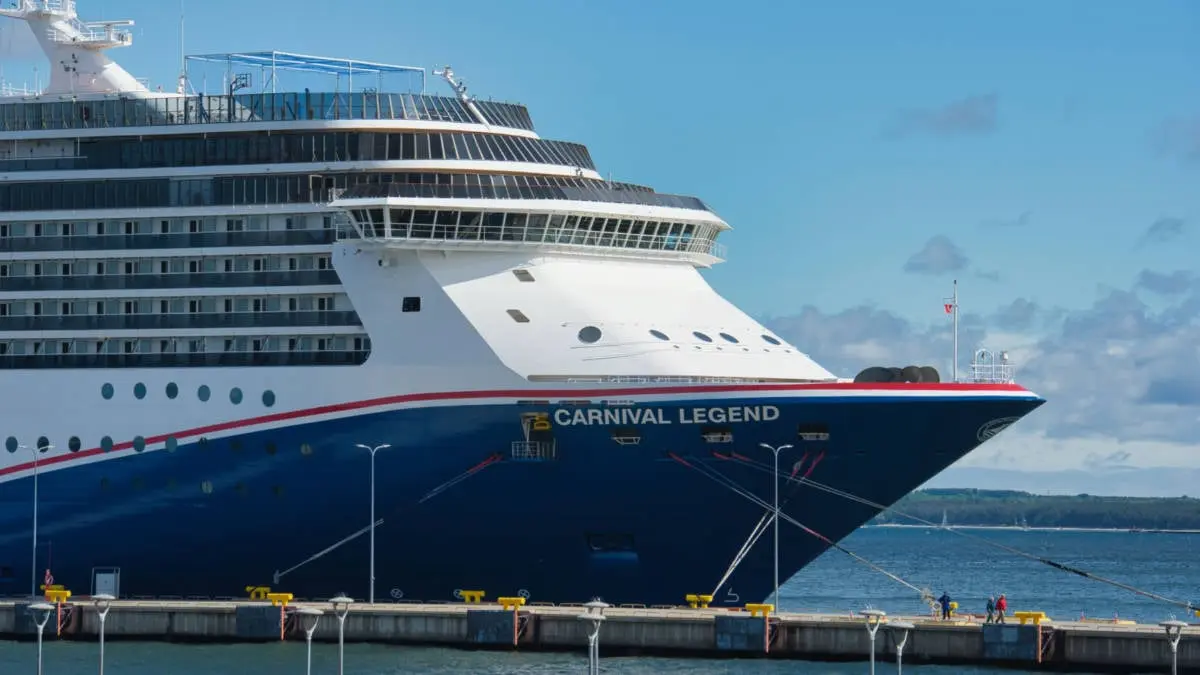
In the fast-paced and tightly scheduled world of modern commercial cruising, the safety and well-being of passengers and crew remain the paramount operational priority. On Saturday, August 29, 2026, this reality was brought into sharp focus as the Carnival Legend—a vessel operated by major cruise line operator Carnival Cruise Line—was forced to execute a sudden and precise medical diversion in the tumultuous waters of the English Channel.
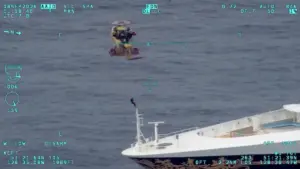
The emergency response involved the rapid deployment of an HM Coastguard search-and-rescue helicopter to conduct a high-stakes medevac operation approximately eight nautical miles south of Lizard Point, Cornwall. The passenger, whose identity, exact age, and medical condition have been withheld to respect medical privacy regulations, was successfully hoisted from the cruise liner and transferred to shore-based medical care in Newquay.
Despite the operational interruption, the ship’s master and crew managed the situation with exceptional efficiency, ensuring that the vessel suffered no discernible delays in its broader itinerary. The Carnival Legend successfully maintained its trajectory toward its final port of call in Dover, England, where it was scheduled to conclude its comprehensive 10-night British Isles voyage on Sunday, August 30, 2026.
This incident underscores the complex, behind-the-scenes logistics required to manage medical emergencies at sea, highlighting the seamless cooperation between commercial maritime fleets and national emergency response agencies. It also serves as a reminder of the inherent unpredictability of health crises, even within the highly controlled, leisure-oriented environment of a modern luxury cruise ship.
Detailed Chronology of Events
The unfolding of events on the morning of Saturday, August 29, 2026, required split-second coordination between the bridge team of the Carnival Legend, corporate fleet operations, and the United Kingdom’s HM Coastguard.
Morning Operations and the SOS
The Carnival Legend was midway through a designated sea day, traversing the stretch of water between the Isle of Man and Dover, Kent. The vessel was locked into a roughly 670-mile transit across some of the United Kingdom’s busiest and most historically challenging maritime navigation lanes.
At approximately 9:40 a.m. local time, the shipboard medical team determined that a passenger onboard was suffering from a medical condition that exceeded the advanced diagnostic and therapeutic capabilities of the ship’s onboard medical facility. Recognizing the need for immediate, specialized hospital intervention, the ship’s command notified maritime authorities.
The Coastguard Intervención
Upon receiving the distress call, HM Coastguard operations centers immediately evaluated the ship’s position. Satellite tracking data analyzed after the event confirmed that the Carnival Legend was positioned approximately eight nautical miles south of Lizard Point, Cornwall—a notoriously jagged and weather-beaten stretch of the British coastline.
To minimize the time-to-treatment for the patient, the ship’s captain executed a calculated navigational adjustment, subtly diverting from the planned course to creep closer to the sheltering contours of the British coastline. This maneuver reduced the response radius for incoming aviation assets.
An HM Coastguard search-and-rescue helicopter was scrambled from its regional base, rapidly vectoring toward the coordinates provided by the cruise liner. Upon arrival at the scene, the aircrew established communications with the Carnival Legend bridge team. Despite the inherent complexities of matching speeds with a moving cruise ship—which creates turbulent wind eddies around the vessel’s upper structures—the hoist operator and pilot successfully executed the winch rescue.
Shore Transfer and Continuity
Once secured in the helicopter cabin, the patient was transported swiftly across the Cornish peninsula to Newquay, where waiting units from the local Ambulance Service stood by. The individual was immediately transferred to a regional medical facility for definitive care.
With the operation completed with textbook precision, the Carnival Legend re-established its primary heading. Marine tracking data verified that the diversion had added minimal time to the overall voyage, allowing the ship to steam toward Dover without jeopardizing the disembarkation schedule for the following morning.
Supporting Context & Metrics: The Itinerary and Vessel Profile
To fully comprehend the operational scope of the August 29 incident, it is essential to examine the profile of the vessel involved and the specific journey it was undertaking.
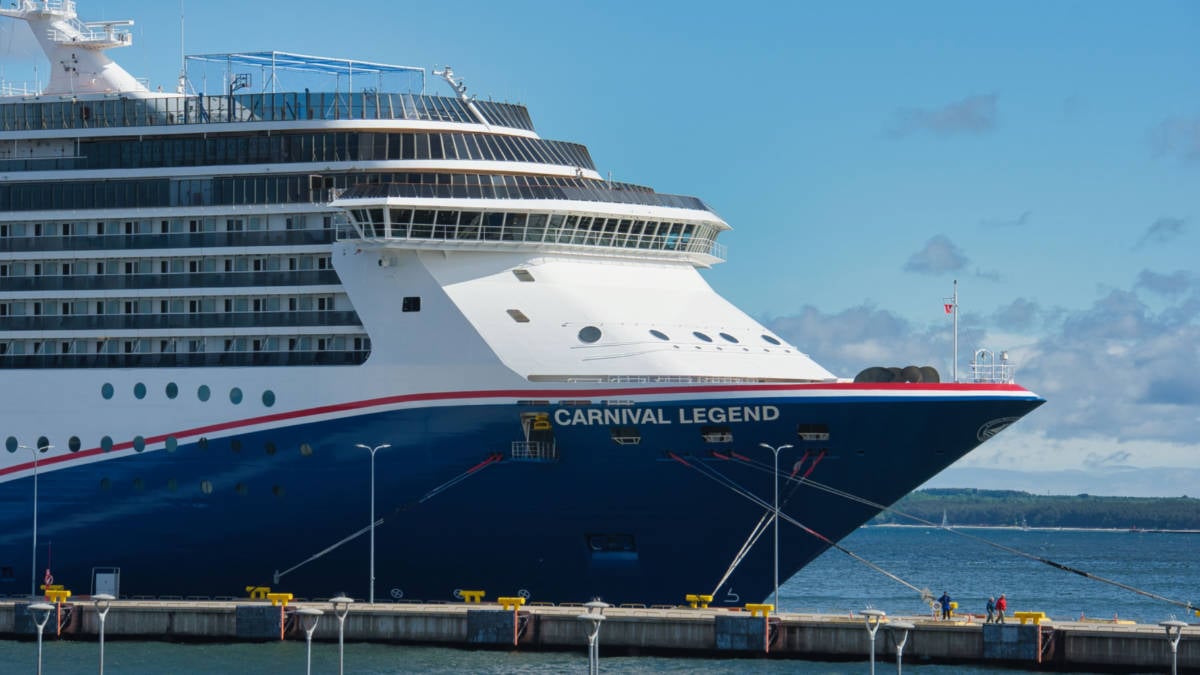
Vessel Specifications: Carnival Legend
- Class: Spirit-Class Cruise Ship
- Passenger Capacity: 2,124 guests (double occupancy)
- Crew Complement: Approximately 930 international crew members
- Operator: Carnival Cruise Line (a subsidiary of Carnival Corporation & plc)
- Known For: Delivering classic ocean liner styling combined with modern resort amenities, featuring iconic architectural layouts and extensive global deployment.
The 10-Night British Isles Voyage
The medical emergency occurred near the very conclusion of a highly ambitious, port-dense itinerary. The voyage details included:
- Embarkation Port: Dover, England
- Departure Date: Thursday, August 20, 2026
- Scheduled Return Date: Sunday, August 30, 2026
- Duration: 10 Nights
Throughout this nearly two-week journey, the Carnival Legend functioned as a floating city, navigating the complex coastal waters of the British Isles. The itinerary was designed to showcase the cultural and geographical diversity of the region, featuring scheduled stops at:
- Cork (Cobh), Ireland
- Holyhead, Wales
- Dublin, Ireland
- Liverpool, England
- Greenock (Glasgow), Scotland
- Belfast, Northern Ireland
- Douglas, Isle of Man
The final stretch of the voyage required a full, uninterrupted day at sea on Saturday, August 29, navigating from the Isle of Man back down through the Irish Sea, around Land’s End, and into the English Channel toward Dover. It was during this final sea day transit that the medical emergency materialized, putting the ship’s emergency protocols to the test.
Official Statements and Industry Standards
In the wake of the rescue operation, official communications from both emergency services and maritime observers have highlighted the professionalism displayed by all parties involved, while maintaining a strict adherence to privacy protocols.
HM Coastguard Statement
In an official media release distributed shortly after the operation, HM Coastguard detailed the timeline and location of the intervention:
"At 9:40 a.m. today (29 August), HM Coastguard’s assistance was requested for the medical evacuation of a passenger on board a vessel around eight (8) nautical miles south of Lizard Point, Cornwall. An HM Coastguard helicopter was sent and the person was handed over to the Ambulance Service at Newquay."
The Ethics of Privacy in Maritime Incidents
Inquiries directed to Carnival Cruise Line and local authorities regarding the identity, age, and specific diagnosis of the evacuated passenger were met with a standard, legally mandated refusal to disclose detailed medical information.
Industry standards dictate that cruise lines take extraordinary measures to protect the personal privacy of guests and their families, particularly during moments of high personal vulnerability and stress. Publicly disseminating diagnostic details not only violates medical confidentiality laws (such as HIPAA in the United States and GDPR equivalents in Europe) but also compounds the emotional distress of traveling companions.
Maritime analysts note that the complete lack of sensationalized reporting from official channels reflects a mature, safety-first ecosystem where human dignity is prioritized over public curiosity.
Future Outlook and the Reality of At-Sea Medical Care
While the general public often views cruise ships purely as floating resorts dedicated to leisure, entertainment, and relaxation, maritime operators must function simultaneously as self-sustaining municipalities capable of handling unexpected crises.
The Role of Onboard Medical Facilities
Every major cruise ship in the modern fleet—including the Carnival Legend—is outfitted with a fully functional medical center that rivals land-based urgent care clinics. These facilities are typically staffed by:
- Licensed, board-certified emergency physicians
- Critical care registered nurses
- Advanced diagnostic equipment (including X-ray machines, blood analyzers, and cardiac monitoring systems)
- Pharmaceutical dispensaries capable of stabilizing acute trauma and cardiac events
Despite these robust resources, cruise ship medical centers are not designed to function as tertiary-care hospitals. When a patient requires advanced surgical intervention, specialized neurological care, or intensive, long-term ventilation that surpasses onboard capabilities, a medical evacuation (medevac) becomes the only viable option.
A Broader Pattern of Fleet Emergencies
The incident involving the Carnival Legend is far from an isolated event. Statistically, across a global fleet carrying tens of millions of passengers annually, medical evacuations are a routine, if serious, operational reality. Recent maritime archives maintained by industry trackers like Cruise Hive illustrate the frequency and variety of such operations:
- August 25, 2026 (Long Beach, California): A guest onboard the Carnival Firenze required an urgent rescue-boat evacuation while the ship was maneuvering in port, demonstrating that medevacs can occur dockside as well as in open water.
- July 15, 2026 (Northern California): HM Coastguard equivalents in the Pacific theater executed a dramatic aerial hoist, airlifting a female passenger from the Carnival Luminosa just one hour into a new sailing.
These interventions span a wide gamut of medical emergencies, ranging from acute cardiovascular events (such as heart attacks and stroke symptoms) to surgical emergencies like appendicitis, severe respiratory infections, and complications arising from unexpected medical developments during travel.
Conclusion: A Testiment to Preparedness
The seamless execution of the medevac off Lizard Point on August 29, 2026, serves as a testament to the rigorous training regimens maintained by both commercial cruise operators and national rescue services. Weather conditions in the English Channel and around the Cornish coast can turn treacherous with little warning, yet specialized flight crews routinely brave heavy winds, rolling seas, and low visibility to execute these life-saving missions.
As the Carnival Legend successfully concluded its 10-night British Isles journey in Dover, the collective response of the ship’s crew and HM Coastguard provided a reassuring reminder of the invisible safety net that spans the world’s oceans, ensuring that help is never truly out of reach.