






Executive Overview
For seasoned wilderness adventurers, the Canadian backcountry represents a sanctuary of quiet lakes, dense boreal forests, and profound isolation. Yet, as global climate patterns shift and fire seasons grow increasingly volatile, this pristine wilderness can transform into a lethal trap within a matter of hours. This harsh reality confronted seventy-year-old Murray Muir and five of his companions during what was intended to be a tranquil, three-week canoeing expedition in northern Ontario’s remote Wabakimi Provincial Park.
Embarking on July 7, the group—all seasoned outdoorsmen in their 60s and 70s—found themselves rapidly outmaneuvered by an aggressive lightning-spawned wildfire system. Boxed in on all sides by smoke, shifting winds, and racing walls of flame, the party was forced to make life-or-death decisions on the shores of Grayson Lake. With escape routes severed and the skies too choked with smoke for immediate aerial evacuation, the group retreated to a tiny, exposed rocky projection they would later dub “Salvation Point.”
Submerged in frigid lake waters and battered by hurricane-force winds carrying burning embers, the party endured a sleepless night of psychological and physical endurance. Their ordeal underscores a critical lesson for modern backcountry travelers: satellite communicators and SOS devices are indispensable safety tools, but they are not silver bullets. When an aggressive wildfire cuts off civilization, wilderness travelers must rely on self-reliance, strategic positioning, and a profound respect for nature’s unpredictability. This account examines their harrowing timeline, the tactical realities of wilderness fire survival, and the growing imperatives for outdoor safety as North America faces an era of hyper-intense wildfire seasons.
Detailed Chronology: From Tranquil Expedition to a Race Against Time
Phase 1: The Gathering Storm (July 7–11)
The expedition began with the quiet optimism typical of experienced wilderness trippers. Muir and his five peers set out on July 7 for an ambitious three-week journey deep into the watery labyrinth of Wabakimi Provincial Park, an expansive protected area known for its rugged beauty and lack of human infrastructure. For the first four days, the trip progressed according to schedule, with the group navigating pristine waterways and setting up camp beneath the expansive northern skies.
However, the weather pattern shifted dramatically on day five. A massive, dry lightning storm rolled across the region. While the electrical display was violent and prolonged, it brought precious little rainfall to the parched boreal canopy. In the tinder-dry conditions of mid-summer, lightning strikes are the primary catalyst for remote wilderness ignitions, acting as silent fuses waiting for the right combination of wind and heat.
By day seven, the reality of the storm’s aftermath materialized. The horizon grew hazy, and the distinctive scent of burning pine drifted across the water. Recognizing that conditions were deteriorating, the group decided to cut their paddling short and set up an early camp on Grayson Lake, hoping to monitor the unfolding situation from a secure vantage point.
Phase 2: The Freight Train Roar (July 11 Evening)
The situation escalated rapidly following dinner. What had been a distant, hazy threat transformed into an immediate, roaring crisis.
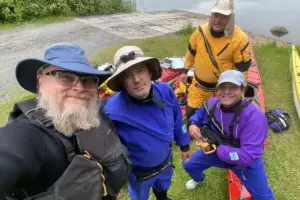
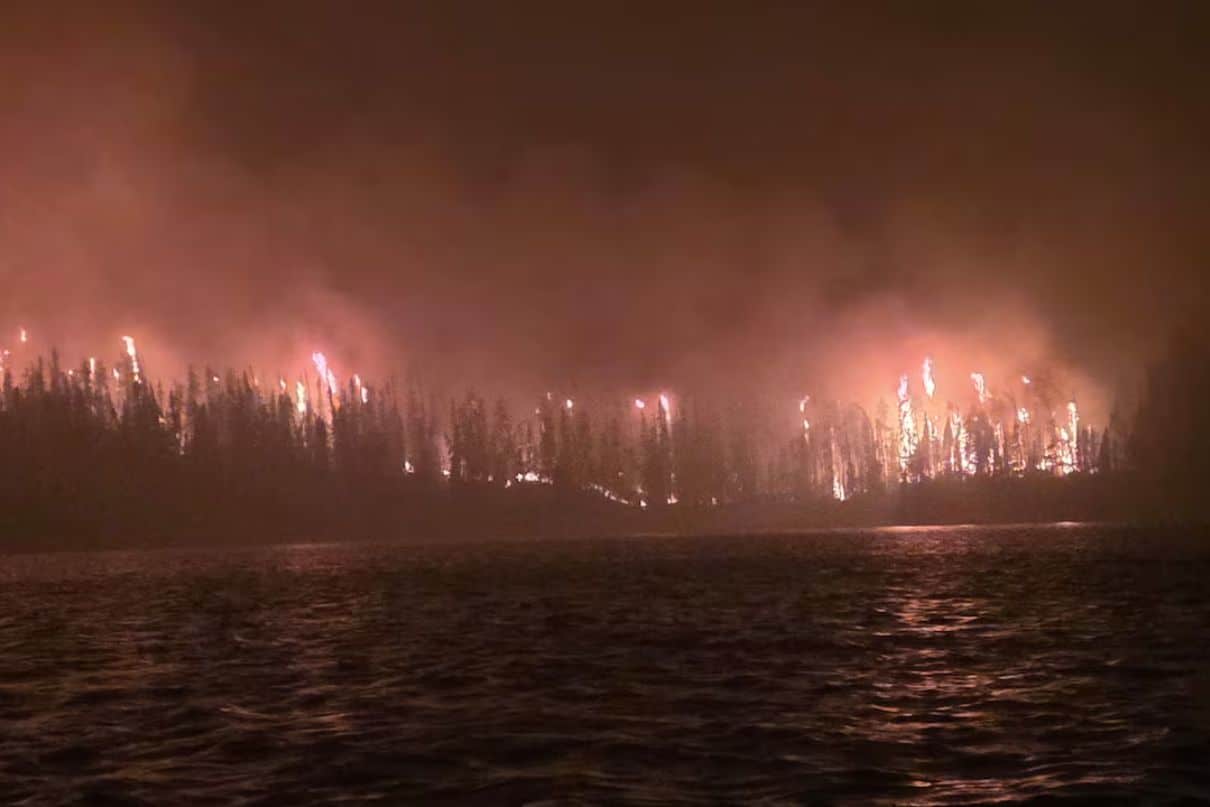
"It got smoky to the north, and then we heard this freight train sound," Muir recalls, describing the classic auditory signature of a crown fire consuming mature timber. "It’s just like really roaring. And then we could see the flames leaping on the treetops."
Realizing they were in the direct path of an advancing wall of fire, the group abandoned camp with practiced efficiency. They packed their essential gear, piled into their canoes, and launched onto Grayson Lake to find a safer staging ground.
Using a Garmin inReach satellite communicator, the group checked local mapping and fire tracking data, confirming their worst fears: they were completely surrounded. Wildfires were active to the south, east, and north. Compounding the danger, high-velocity winds whipped up across the lake, preventing them from paddling toward the larger, deep-water sections of Grayson Lake where floatplane pickups are traditionally staged. They were physically boxed in.
Phase 3: Salvation Point (July 11–12)
As the group attempted to navigate the lake, fire blocked their progress across the main body of water. Cut off from further travel, they made a tactical retreat to a small, exposed rocky point projecting into the lake—a geographical feature that would permanently earn the name "Salvation Point."
Recognizing the severity of their entrapment, the group triggered the SOS function on their satellite messenger. Almost immediately after sending the distress signal, a dramatic wind shift occurred, altering the fire’s vector. Islands directly across from their position suddenly exploded into crown fire.
"And that’s when things got the most scary," Muir says. "So for a while, we were getting rained down by big flakes of ashes. And along with the trees bursting into flames in front of us, there was a real surge in the wind. It just blew like crazy. And it whipped up the waves in front of us."
With superheated air, toxic smoke, and flying embers threatening to ignite their nylon gear and clothing, the six men executed emergency survival protocols. They waded into the lake, dunking their bodies in the cold water, and sprinkled moisture across their canvas and synthetic packs to prevent them from catching fire from falling embers.
As walls of flame marched down both eastern and western shores of the lake, the group hunkered down for a sleepless, terrifying night.
"Every once in a while, some trees would get ripping and burning, and the sky would light up, and then you’d try to relax, and then you’d think, oh, gee, how close is it getting?" Muir reflects.
Phase 4: Evacuation and Relief (July 12–13)
Dawn broke over a surreal landscape. Miraculously, the wind had spared "Salvation Point," leaving it as one of the very few untouched patches of green along the charred shoreline of Grayson Lake.
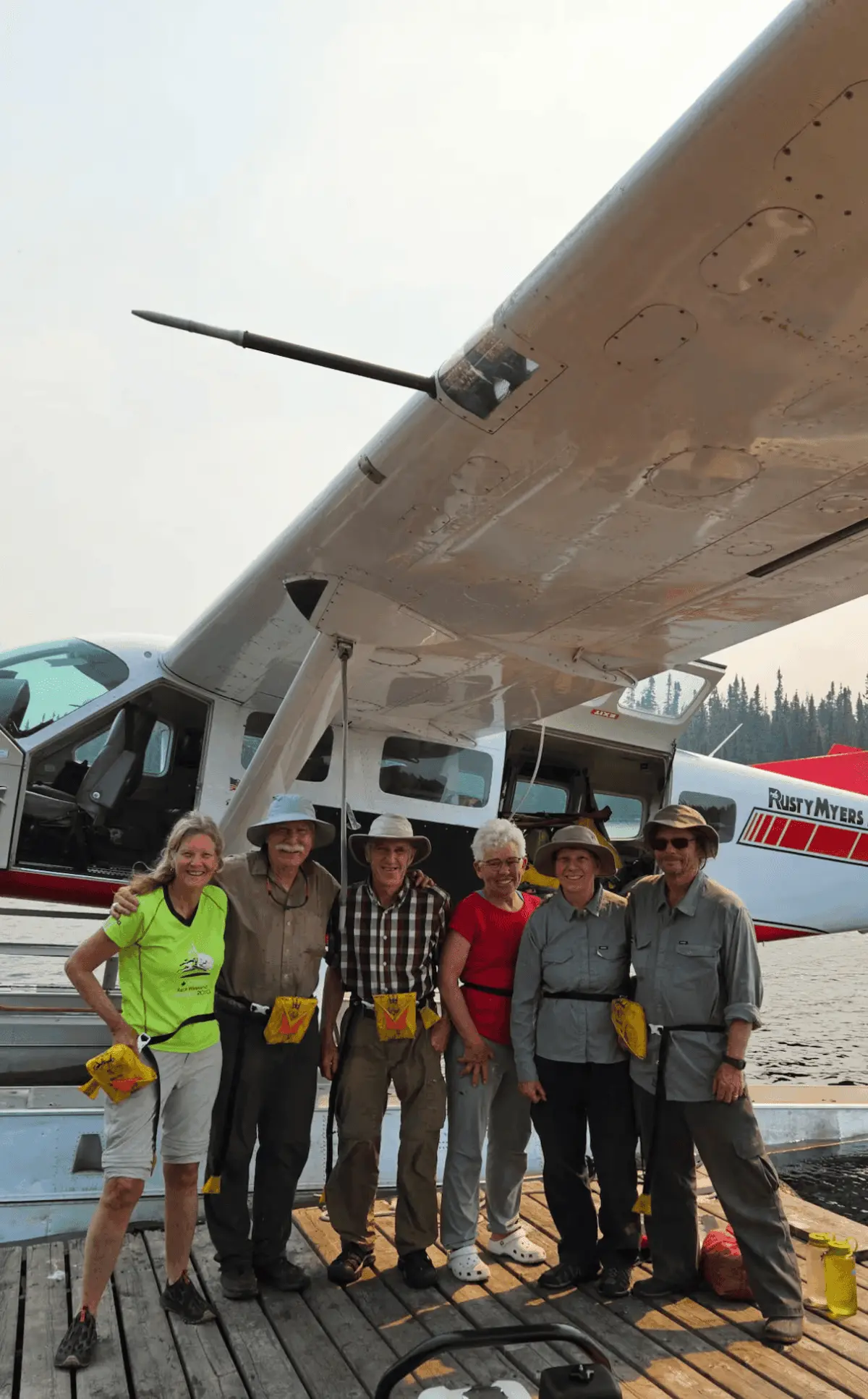
With the immediate intensity of the fire front temporarily abated by morning humidity, the group broke camp and paddled out to the larger, safer sections of the lake. They made their way to a pre-arranged wilderness lodge, where they established temporary shelter and awaited rescue. Two days after triggering their SOS beacon, a chartered floatplane touched down on the smoke-filtered water, successfully airlifting the exhausted party out of the danger zone.
Supporting Context & Metrics: The Modern Backcountry Fire Crisis
The ordeal experienced by Muir and his companions is part of a broader, deeply concerning trend across North American wilderness areas. Climate change has fundamentally altered the cadence, intensity, and geographical reach of boreal wildfires.
The Boreal Vulnerability
Northern Ontario’s boreal forest is a fire-adapted ecosystem, meaning periodic burns are natural and necessary for forest regeneration. However, rising average temperatures and extended drought periods have dramatically increased the frequency of "high-intensity crown fires"—fires that burn through the canopy of the forest rather than simply clearing the underbrush. Crown fires move at astonishing speeds, sometimes exceeding speeds of 10 kilometers per hour under high winds, making them virtually impossible to outrun on foot or by paddle once they close the distance.
The Limits of Satellite Technology
In the era of consumer satellite messengers (such as Garmin inReach, ZOLEO, and SPOT), backcountry travelers often possess a false sense of absolute security. The mindset that "help is just a button press away" can lead to poor decision-making regarding risk tolerance.
As Muir’s experience painfully demonstrates, technology has physical limitations:
- Aerial Impairment: Thick particulate smoke, high winds, and active flame fronts prevent bush planes and rescue helicopters from flying safely. Pilots cannot land on smoke-choked lakes or navigate zero-visibility corridors.
- Response Latency: Even when an SOS is successfully transmitted and acknowledged by emergency services, emergency response times in remote northern territories can range from 24 to 72 hours depending on aircraft availability and regional emergency workloads.
- The Self-Reliance Mandate: Backcountry travelers must operate under the assumption that they are entirely on their own for the first 48 to 72 hours of any major disaster.
Official Guidelines and Expert Insights
To better understand how backcountry travelers can mitigate wildfire risks, safety organizations such as the National Outdoor Leadership School (NOLS) have published rigorous risk-management frameworks tailored specifically to wilderness fire hazards.
Choosing a Safe Haven
When trapped by a fast-moving wildfire, evacuation is always the primary objective. However, if escape routes are compromised, survival depends on locating a defensible space:
- Water Bodies: A large lake or wide river provides an ultimate thermal barrier against radiant heat. As Muir noted, maintaining a buffer of 300 meters of water between a person and a crown fire is often the margin between life and death.
- Geological Barriers: Large boulder fields, barren rocky points, and expansive gravel bars lack combustible vegetation and offer natural safety zones.
- Previously Burned Areas: Walking into an area that has already burned within the current season provides an immediate zone of zero fuel.
Mitigating Smoke Inhalation
Smoke toxicity is one of the most overlooked hazards of backcountry fires. Fine particulate matter ($PM_2.5$) penetrates deep into lung tissue, causing acute respiratory distress, disorientation, and long-term damage.
- NOLS guidelines recommend avoiding prolonged or heavy physical exertion if visibility drops below three miles due to smoke.
- Given the increasing predictability of smoky summers, modern outdoor gear checklists should routinely incorporate lightweight N95 or P100 respirators specifically rated for wildfire smoke.
Redundant Route Planning
Brooke Orte of NOLS emphasizes the importance of pre-trip planning in an era of heightened fire danger:
"If fire danger is high or there are fires currently burning, make sure your plan includes multiple routes with a variety of exit points from the area. For paddlers, that includes knowing where floatplanes can land and establishing communication check-ins with base contacts."
Furthermore, modern wilderness trippers must cultivate the psychological flexibility to cancel, postpone, or completely reroute trips when provincial fire bans or active regional blazes threaten their itineraries. The cultural pressure to "complete the trip" must be systematically replaced by a culture of dynamic risk assessment.
Future Outlook: Adapting to the New Normal in the Backcountry
As North America enters an era where severe wildfire seasons are no longer anomalies but standard seasonal realities, the culture of backcountry recreation must evolve accordingly.
Policy and Infrastructure Adjustments
Parks Canada and provincial bodies like Ontario Parks are facing unprecedented challenges in managing backcountry access during extreme fire ratings. In the coming years, we can expect:
- More aggressive and widespread temporary park closures during peak drought periods.
- Stricter enforcement of fire bans, coupled with heavy penalties for unauthorized campfires.
- Enhanced satellite communication requirements for commercial outfitters and remote expedition leaders.
Evolution of Wilderness Gear
The packing lists of tomorrow’s canoeists and backpackers will inevitably shift. Beyond traditional rain gear, water filters, and first-aid kits, survival-minded paddlers are likely to integrate:
- Compact Air-Quality Monitors and Respirators: Essential for evaluating local toxicity and preserving respiratory function during prolonged smoke lock-ins.
- Advanced Fire-Resistant Shelters: Lightweight, heat-reflective emergency tarps capable of withstanding high radiant heat environments.
- Enhanced Multi-Band Communicators: Devices capable of receiving localized emergency broadcasts and meteorological updates directly from forestry services.
Conclusion
The story of Murray Muir and his companions on Grayson Lake serves as both a cautionary tale and an inspiring testament to human resilience. Trapped by an unyielding wall of fire, facing days of isolation with no guarantee of immediate rescue, these six men relied on calm tactical thinking, situational awareness, and a stubborn refusal to panic.
As our wild spaces face mounting pressures from a changing climate, their survival stands as a vital reminder: while we can study the maps, monitor the weather, and pack the latest technology, the true cornerstone of wilderness survival remains the calm, unyielding human spirit.