







Executive Overview
Standup paddleboarding (SUP) has cemented its place as one of the fastest-growing outdoor recreational activities globally. Once viewed as an elite surfing subset, the sport has exploded into the mainstream, fueled by lightweight inflatable boards, aggressive mass-market retail pricing, and an accessible entry barrier. Today, a casual trip to a big-box retailer like Costco, Walmart, or The Home Depot yields a complete, affordable paddleboard kit complete with a board, pump, paddle, and safety leash.
Yet, this democratization of the sport has collided with a dangerous knowledge gap. As more novices hit the water, fatal accidents are surging. According to data from the U.S. Coast Guard, standup paddleboarding fatalities spiked by an alarming 164 percent between 2023 and 2024.
While much of the public safety discourse traditionally focuses on the absence of personal flotation devices (PFDs)—and rightfully so, given that the vast majority of drowning victims are unvested—a subtler, more insidious mechanism of death is claiming lives on rivers and lakes: leash entrapment.

A safety tether intended to keep a paddler connected to their board during a wipeout is, under specific conditions, transforming into a tethered anchor. When a standard ankle leash snags on a submerged branch, bridge piling, or root wad in a moving current, the force of the water pins the swimmer beneath the surface. With the anchor point downstream and the current pressing relentlessly against their body, victims often lack the leverage, reach, or presence of mind to detach the ankle cuff.
As maritime authorities, safety advocates, and rescue personnel grapple with this rising tide of preventable tragedies, a concerted effort is underway to educate the public. The message is urgent: while a leash is a vital lifesaver in certain environments, wearing the wrong type of leash on moving water can be fatal. It is time for an industry-wide reckoning regarding SUP safety standards, equipment selection, and mandatory water-awareness education.
Detailed Chronology of a Crisis: The Willamette River Tragedy
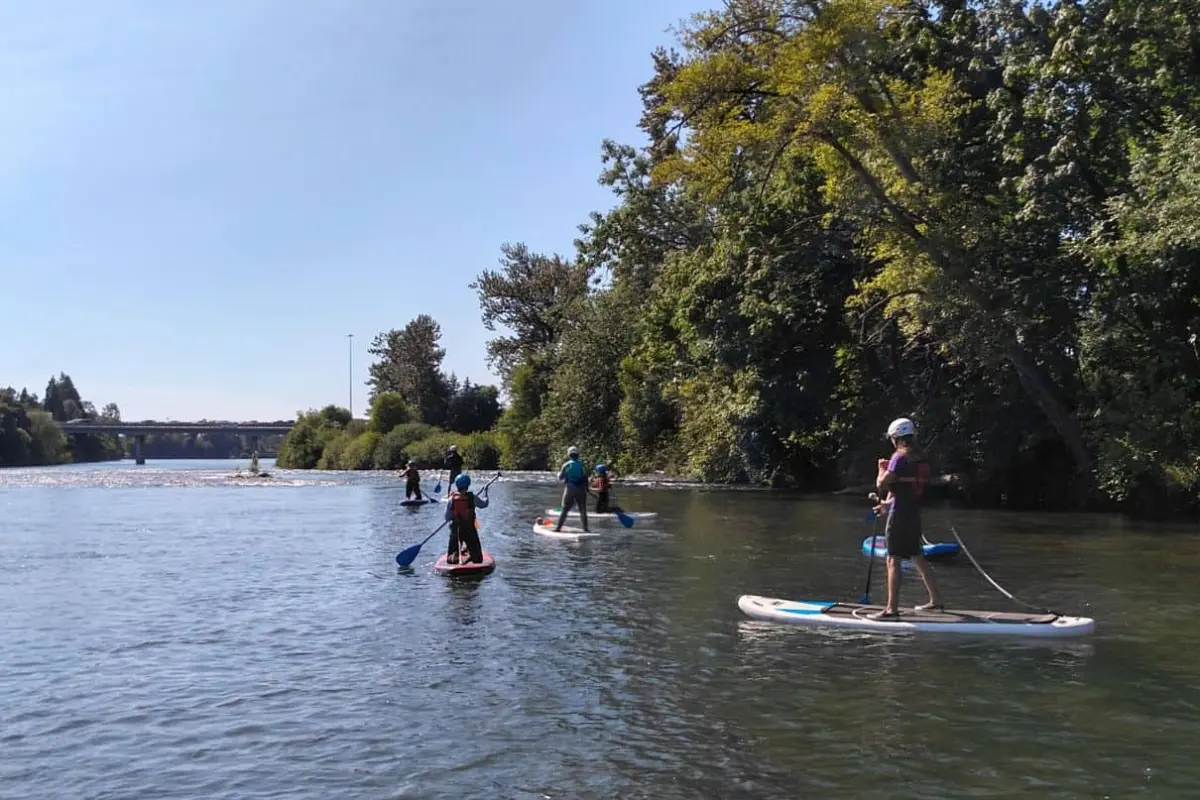
The inherent dangers of mismatched safety gear were thrust into the national spotlight on a routine July afternoon on Oregon’s scenic Willamette River. A 26-year-old resident of Harrisburg, Department of Transportation and local records indicate, took to the water on his standup paddleboard, eager to enjoy the summer current.
What should have been a tranquil afternoon turned catastrophic in seconds. As the paddler navigated a stretch of the river, a submerged tree—a classic "strainer" or "hazard tree" common in Pacific Northwest waterways—loomed just beneath the surface. The paddleboard struck the hidden timber, instantly unbalancing the man and knocking him off the deck into the cold, rushing current.

By all standard protocols, the paddler was doing what safety advocates advise: he was wearing a leash connected to his ankle, ensuring his board wouldn’t drift away in the wind. However, this safety precaution became his undoing. As he fell, the ankle leash swept past the submerged branches and snagged tightly on the unseen wooden debris.
With the board tethered securely to the snag underwater and the river’s current pressing heavily against his frame, the man was trapped beneath the surface. The mechanical advantage of the current meant that even though he was only feet away from salvation, the immense water pressure on his body made reaching down to unfasten the Velcro ankle cuff nearly impossible.
This tragic event was not an isolated anomaly; it represents a grim archetype for a rapidly growing category of drowning accidents. According to data compiled by the Oregon State Marine Board (OSMB), 13 paddleboard-related deaths have occurred across the state since 2020. Of those 13 fatalities, an astonishing five involved leash entanglements.
Emergency responders and water safety experts point out that these incidents share horrifying commonalities: experienced or novice paddlers alike are caught off guard by the speed of the water, the hidden nature of underwater obstacles, and the absolute finality of an ankle-bound tether when it encounters a fixed obstruction.
Supporting Context & Metrics: The Anatomy of SUP Risk
To understand the scope of the modern paddleboarding safety crisis, one must look closely at the numbers and the structural shifts within the outdoor recreation market.
The Statistical Surge
The U.S. Coast Guard’s recreational boating statistics paint a sobering picture. Between 2023 and 2024, SUP-related fatalities experienced a staggering 164 percent increase nationwide. This spike vastly outpaces the growth rate of overall participation, suggesting that the risk profile per participant is worsening.
In Oregon, the local statistics mirror this national pressure. Thirteen fatalities since 2020 on a state level indicate that paddleboarding is no longer merely a low-risk, passive pastime. Furthermore, the fact that nearly 40 percent of Oregon’s SUP fatalities (5 out of 13) are directly linked to leash entanglements points to a specific, addressable equipment failure mode that the paddlesports industry must address.
The Mass-Market Phenomenon
Ashley Massey, public information officer for the Oregon State Marine Board, notes that the root of the problem lies in the intersection of mass-market accessibility and a deficit of formal training.
"Over the past decade, paddleboarding has become the fastest-growing paddlesport in the world," Massey explains. "SUPs have become more accessible than ever, available at big-box stores such as Walmart, Costco, and The Home Depot."
While this accessibility gets people outdoors, it fundamentally alters the onboarding process for new watermen and waterwomen. Historically, paddlesports like kayaking, canoeing, and whitewater rafting required specialized specialty retail purchases, often accompanied by introductory classes, club memberships, or direct mentorship from experienced paddlers.
Conversely, a consumer can purchase a high-pressure inflatable SUP off a pallet, inflate it in their backyard, and launch it into a dynamic river system within hours—all without ever reading a safety manual, understanding flow dynamics, or knowing how to identify hazards like strainers, hydraulics, and low-head dams.
"Picking up a paddleboard at Walmart isn’t going to help you learn necessary skills like reading the river," Massey cautions.
Official Statements and Regulatory Realities
One of the most profound challenges in mitigating SUP accidents is a regulatory vacuum. While federal and state agencies exercise strict oversight over traditional watercraft equipment, standup paddleboarding occupies a regulatory gray area.
The PFD Mandate vs. The Leash Void
Government entities such as the U.S. Coast Guard and Transport Canada enforce rigorous manufacturing standards and usage requirements for Personal Flotation Devices (PFDs). By law, paddleboards are classified as vessels in many jurisdictions, meaning a PFD must be on board for every person. For children, wearing them is frequently mandatory.
Despite these clear-cut life jacket regulations, SUP leashes remain entirely unregulated. There are no mandatory manufacturing standards, no standardized testing protocols for release mechanisms, and no legal requirements dictating when, where, or what type of leash must be worn.
"This is where skill becomes important," says Massey. "Choosing a leash requires discernment."
Navigating the Three Types of SUP Leashes
Because the market is saturated with different gear options, understanding the distinctions among the three primary categories of SUP leashes is a matter of life and death.
- Straight Leashes: Designed primarily for ocean surfing, these single, uncoiled lines attach via a Velcro cuff to the ankle or calf. Their purpose is to keep the board at a safe distance during a wipeout, preventing it from springing violently back toward the surfer in heavy surf breaks. They are exceptionally prone to catching on kelp, rocks, and debris, making them hazardous in inland or river environments.
- Coiled Leashes: Featuring a telephone-cord-style coil, these leashes are engineered to reduce drag and prevent the cord from tangling around the paddler’s feet during flatwater excursions. Massey stresses that coiled leashes are strictly intended for flat water—such as sheltered lakes, ponds, or slow-moving bays—only when there is absolute zero risk of encountering underwater debris, aquatic vegetation, or submerged hazards.
- Quick-Release Leashes: Engineered explicitly for moving water, these systems fundamentally alter how a paddler is connected to their craft. Instead of binding to an ankle or calf where the release mechanism is submerged and out of reach during an emergency, a quick-release leash attaches to a waist belt or a specialized PFD harness. It features an easily accessible toggle, pin, or pull-tab positioned right on the chest or hip. With a single, instinctive pull, the paddler can instantly sever the connection to the board, freeing themselves from potential underwater snags.
"Among the three corded options, you can’t go wrong with a quick-release leash," Massey emphasizes. For paddlers who already own standard ankle leashes, aftermarket waist belts are widely available, allowing users to convert their existing ankle tether into a safer waist-mounted quick-release system.
Alternatively, safety experts note that on fast-moving rivers with high concentrations of log jams and strainers, the safest approach may be wearing no leash at all, provided the swimmer is an expert in self-rescue and swimming in swift water.
Future Outlook: Education, Advocacy, and Changing the Culture
As the recreational community mourns losses like the recent tragedy on the Willamette River, the path forward requires a multi-pronged approach involving manufacturers, regulatory bodies, and individual paddlers.
Shifting Industry Standards
There is mounting pressure on equipment manufacturers to rethink what accessories are packaged with entry-level boards. Shipping a generic, straight, or coiled ankle leash with an all-purpose SUP kit—without prominent warnings regarding river use—is increasingly viewed by safety advocates as an irresponsible practice. Moving forward, the industry must move toward bundling quick-release waist belts or providing clear educational inserts that dictate appropriate usage environments.
The Campaign for PFD Compliance
Beyond leash safety, the battle for basic drowning prevention continues to center on PFD wear rates. Coast Guard statistics reveal that approximately 83 percent of fatal boating accident victims were not wearing a life jacket. While paddleboarders are legally compliant simply by having a PFD strapped to their board cargo net, the reality of a high-speed fall means that retrieving a stowed life jacket while struggling against a current or recovering from a concussion is nearly impossible. Cultural norms must shift so that wearing an inflatable belt-pack PFD or a low-profile vest becomes as second-nature as wearing a seatbelt in an automobile.
Cultivating Water Literacy
Ultimately, gear and regulations are only as effective as the person utilizing them. Waterways are dynamic, living systems. Factors such as heavy rainfall, seasonal snowmelt, recent wildfires, and high-flow events constantly alter riverbeds, washing down timber, creating log jams, and shifting underwater channels.
Gaining the ability to "read" water—identifying hydraulic features, eddy lines, strainers, and undercut rocks—is as critical to a paddler’s survival as owning a paddle. Organizations like the Oregon State Marine Board, alongside local rescue outfits and paddling clubs, are pushing for expanded educational outreach, digital safety campaigns, and accessible river-safety clinics.
As standup paddleboarding continues to captivate millions of outdoor enthusiasts seeking solace and adventure on the water, closing the education gap is paramount. By understanding the lethal mechanics of leash entrapment, upgrading to appropriate quick-release systems for moving water, and respecting the raw power of changing waterways, the paddling community can honor the memory of those lost and ensure that the sport remains a source of joy rather than tragedy.