





Executive Overview
The global maritime industry operates as the silent engine of international trade, transporting over 80 percent of the world’s goods across vast and often unforgiving oceans. Yet, this vital network is constantly exposed to a spectrum of operational, mechanical, and human risks. The National Transportation Safety Board (NTSB) has released its highly anticipated Safer Seas Digest 2025, a comprehensive compendium of 49 marine casualty investigations completed in the preceding year. The report serves as a stark warning to shipowners, regulatory bodies, and mariners worldwide.
From the catastrophic collapse of Baltimore’s Francis Scott Key Bridge to the deep-ocean implosion of the experimental Titan submersible, the digest details a year marked by high-profile disasters. However, the NTSB’s findings reveal a more insidious truth: the line between a routine voyage and a fatal catastrophe is incredibly thin. Major marine casualties are rarely the result of single, unprecedented acts of God. Instead, they are almost always the culmination of mundane, compounding errors—an unlatched watertight door, a brief glance at a smartphone, a skipped maintenance interval, or a poorly coordinated emergency response plan.
By analyzing these 49 incidents, the NTSB aims to transform tragic losses into actionable safety intelligence. The report spans a diverse array of maritime sectors, including deep-draft container ships, towing vessels, commercial fishing boats, passenger vessels, and luxury yachts. Through detailed accident reconstructions, the Safer Seas Digest 2025 outlines critical lessons in voyage planning, watertight integrity, fire containment, and human factors, providing a definitive roadmap for a safer maritime future.

Detailed Chronology of Flagship Casualties
The Safer Seas Digest 2025 is anchored by several landmark investigations that captured global attention and prompted intense scrutiny of modern maritime safety standards, vessel design, and regulatory oversight.
+------------------------------------------------------------------------------------+
|                                KEY CASUALTIES AT A GLANCE                          |
+------------------------------+-------------------------+---------------------------+
| Vessel Name                  | Event Type              | Primary Finding           |
+------------------------------+-------------------------+---------------------------+
| MV Dali                      | Bridge Strike           | Power loss / Infra gap    |
| Titan Submersible            | Deep-Ocean Implosion    | Engineering / Testing flaw|
| Grande Costa D’Avorio        | Shipboard Fire          | Training / Response gap   |
| William B. Klunk             | Barge Collision         | Fatigue / Distraction     |
| Papa Rod                     | Collision at Sea        | Sleep / Lack of Alarm     |
| Lovebug                      | Partial Sinking         | Compromised Integrity     |
+------------------------------+-------------------------+---------------------------+
The MV Dali and the Vulnerability of Critical Infrastructure
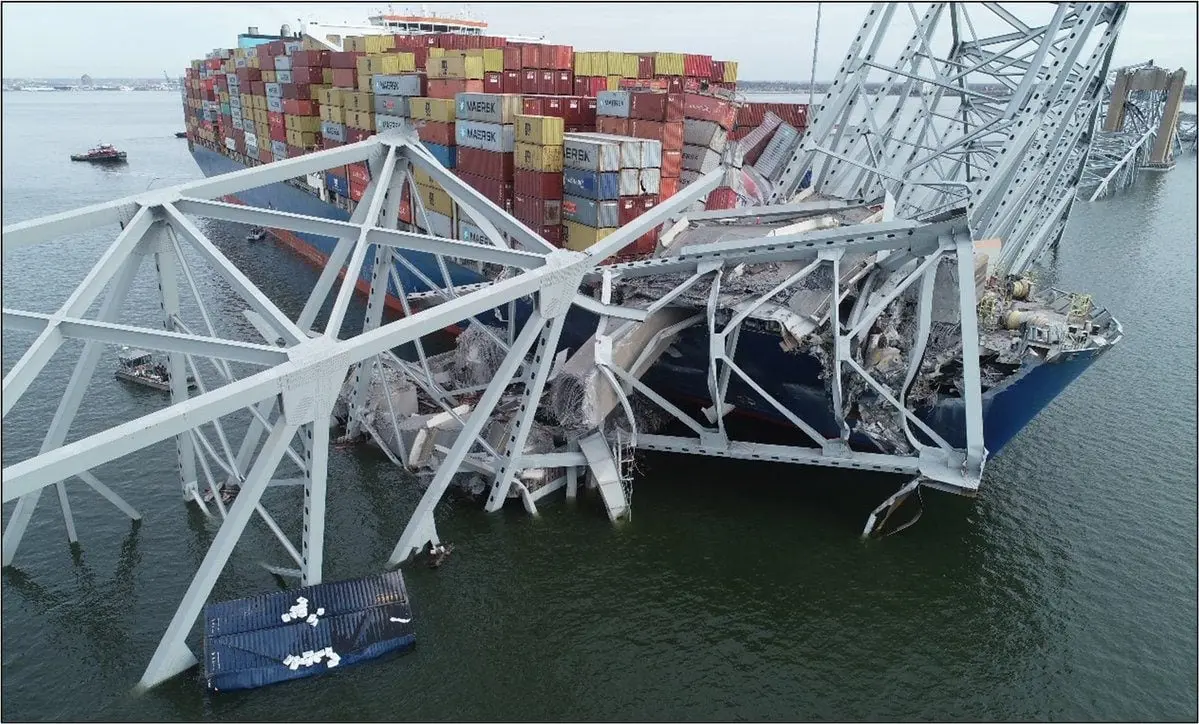
In the early hours of March 26, 2024, the 984-foot Singapore-flagged container ship Dali lost electrical power and propulsion shortly after departing the Port of Baltimore. Drifting helplessly in the Patapsco River, the massive vessel struck a support pier of the Francis Scott Key Bridge. The impact caused the continuous truss bridge to collapse into the river within seconds, claiming the lives of six road construction workers who were on the span at the time.
[Port Departure] ──> [Total Power Loss] ──> [Loss of Propulsion/Steering] ──> [Bridge Impact] ──> [Instant Collapse]The NTSB’s exhaustive investigation into the Dali disaster focused heavily on the vessel’s electrical distribution system. Investigators traced the blackout to the unexpected opening of electrical breakers, which isolated the ship’s generators and instantly cut power to steering gear and main propulsion systems. Despite the crew’s frantic efforts to restore power, the vessel’s immense momentum carried it directly into the bridge pier.
The disaster exposed a critical disconnect between the ever-increasing size of modern ocean-going vessels and the aging civil infrastructure built decades ago to span navigable waterways. The NTSB issued nearly two dozen safety recommendations in the wake of the accident. Most notably, the board issued urgent safety recommendations targeting state and federal transportation agencies, demanding immediate risk assessments for bridges over navigable waterways where protective barriers—such as fenders or dolphins—have not been upgraded to withstand strikes from modern, ultra-large cargo vessels.
The Titan Submersible: The Cost of Bypassing Rigor
The June 2023 implosion of the Titan submersible during a deep-sea descent to the wreck of the RMS Titanic remains one of the most controversial maritime disasters of the modern era. All five people on board, including OceanGate CEO Stockton Rush, were killed instantly when the experimental carbon-fiber and titanium hull failed catastrophically at a depth of approximately 3,500 meters.
The NTSB, participating in a joint investigation with the U.S. Coast Guard Marine Board of Investigation, identified systemic engineering and operational failures. The digest notes that the submersible’s design failed to meet basic strength and durability requirements, largely due to significant shortcomings in OceanGate’s engineering and manufacturing processes.
Investigators found that:
- The carbon-fiber hull design had not undergone rigorous, independent peer review or classification society certification.
- The vessel was subjected to inadequate non-destructive testing, leaving microscopic structural fatigue undetected after repeated deep-ocean cycles.
- The operator’s emergency-response planning departed significantly from established search-and-rescue guidance, which severely hampered initial rescue coordination when the vessel lost contact with its support ship, the Polar Prince.
The Titan tragedy highlighted the dangers of operating experimental passenger-carrying craft in international waters, where regulatory oversight is sparse and operators can bypass traditional maritime safety classifications under the guise of innovation.
The Grande Costa D’Avorio: The Perils of Shipboard Firefighting
In July 2023, a devastating fire erupted aboard the Italian-flagged roll-on/roll-off (Ro-Ro) container ship Grande Costa D’Avorio while it was loading cargo at Port Newark, New Jersey. The fire, which began in a vehicle cargo hold, quickly escalated into a multi-alarm inferno. Two Newark firefighters, Augusto Acabou and Wayne Brooks Jr., lost their lives, and six other emergency responders were injured during the grueling, days-long effort to extinguish the blaze.
[Vehicle Cargo Ignition] ──> [Rapid Spread in Ro-Ro Deck] ──> [Land-Based Firefighter Entry] ──> [Tactical Failure/Casualties]The NTSB’s investigation revealed critical gaps in the coordination between shipboard crews and land-based emergency responders. The board determined that local, land-based firefighters lacked the specialized training, equipment, and tactical procedures required to safely combat fires within the highly complex, insulated, and confined spaces of a Ro-Ro vessel.
Furthermore, the response was marred by ineffective communication, a lack of familiarity with shipboard ventilation systems, and delays in deploying shipboard carbon dioxide suppression systems. The NTSB issued 11 new safety recommendations aimed at standardizing marine firefighting training for municipal fire departments and improving ship-to-shore emergency coordination protocols.
Supporting Context & Metrics: A Taxonomy of Maritime Risk
To understand the broader trends shaping maritime safety, the Safer Seas Digest 2025 categorizes its 49 completed investigations into distinct accident types. This categorization allows safety professionals to identify where systemic risks are most heavily concentrated.
                       ACCIDENT TYPES BY CATEGORY (NTSB 2025)

  Contacts with Fixed Objects  ▓▓▓▓▓▓▓▓▓▓▓▓▓▓▓▓ (16)
  Fires and Explosions         ▓▓▓▓▓▓▓▓▓▓▓ (11)
  Groundings and Strandings    ▓▓▓▓▓▓▓ (7)
  Collisions                   ▓▓▓▓▓ (5)
  Flooding or Hull Failures    ▓▓▓▓▓ (5)
  Other / Machinery Failures   ▓▓▓▓▓ (5)
The Human Factor: Fatigue, Distraction, and Watchkeeping Failures
While mechanical breakdowns and structural failures often dominate headlines, the NTSB’s data confirms that human performance remains the single most critical variable in maritime safety. Several smaller-scale casualties detailed in the digest illustrate how quickly everyday operational lapses can spiral into major accidents.
Case Study 1: The Collision of the Papa Rod and the Appaloosa
In May 2024, the commercial fishing vessel Papa Rod was transiting the Gulf of Mexico on autopilot when it struck the anchored bulk carrier Appaloosa at full speed. The investigation revealed that the sole watchstander on the Papa Rod had fallen asleep at the helm. Crucially, the fishing vessel was not equipped with a Bridge Navigational Watch Alarm System (BNWAS) or any secondary watch alarm that could have monitored the operator’s alertness and awakened the crew before the collision. This incident underscores the NTSB’s long-standing push to mandate active watch alarms on all commercial vessels, regardless of size.
Case Study 2: The William B. Klunk Barge Strike
Distraction and fatigue converged in a dramatic incident on the Lower Mississippi River near Baton Rouge, Louisiana. The towing vessel William B. Klunk, pushing a massive 22-barge tow, struck several moored barges.
[18 Hours Awake] + [4 Hours Sleep in 36 Hours] + [Cell Phone Use (40s Pre-Crash)] ──> [Zero Control Inputs] ──> [Barge Strike]The NTSB’s digital forensics investigation revealed that the pilot had been actively using his personal cell phone just 40 seconds prior to the collision. Furthermore, the pilot had received only four hours of continuous sleep during the 36 hours preceding the accident and had been awake for nearly 18 consecutive hours at the time of the crash. The pilot made no rudder or throttle adjustments in the critical minutes leading up to the impact, demonstrating a total loss of situational awareness.
Case Study 3: The Sinking of the Luxury Yacht Lovebug
The loss of the private yacht Lovebug in the Chesapeake Bay provides a textbook lesson in the critical importance of watertight integrity. The vessel developed a sudden, severe list and partially sank, despite there being no hull breach or grounding incident.
Salvors later discovered that the vessel’s stern garage door had been left partially open, and a critical watertight door leading directly into the engine room had been left unsecured. When water began to enter the stern garage due to wave action, it flowed unimpeded into the engine room, rapidly compromising the vessel’s stability. The NTSB concluded that the failure to maintain a closed, watertight envelope was the direct cause of the vessel’s loss.
Official Statements and Safety Recommendations
The NTSB’s mandate is strictly investigatory; it does not possess regulatory enforcement power. Instead, its primary tool for change is the issuance of formal safety recommendations, which carry immense authority and often shape future international and domestic maritime laws.
In publishing the Safer Seas Digest 2025, NTSB leadership emphasized that safety is an active, daily discipline rather than a passive state of compliance.
"The tragedies compiled in this digest were almost entirely preventable," the NTSB stated in its introductory remarks. "Whether analyzing a complex, multi-billion-dollar infrastructure collapse like the Dali or a collision involving a local towing vessel, the lessons remain remarkably consistent. Industry leaders, operators, and mariners must cultivate a culture of active safety management. This means prioritizing maintenance, enforcing strict policies on electronic distractions, ensuring realistic crew rest cycles, and maintaining absolute respect for watertight integrity."
Key Recommendation Areas Highlighted in the Digest
- Bridge Protection and Waterway Risk Management: The NTSB is urging the American Association of State Highway and Transportation Officials (AASHTO) and the Federal Highway Administration (FHWA) to revise bridge design standards to account for the physical realities of modern vessel sizes.
- Specialized Marine Firefighting Training: The board is calling for nationwide standards to ensure that local fire departments servicing major ports receive hands-on training for vessel-specific hazards, including marine communication protocols, shipboard stability during water-deluge operations, and thermal imaging in steel structures.
- Submersible Regulation and Oversight: The NTSB recommends that the U.S. Coast Guard work with international maritime bodies to close regulatory loopholes that allow commercial, passenger-carrying submersibles to operate in international waters without undergoing rigorous certification by recognized classification societies.
- Cell Phone and Distraction Policies: The NTSB continues to push for vessel operating companies to implement strict, enforceable policies regarding the use of personal electronic devices by watchstanders and pilots while on duty.
Future Outlook: Engineering a Safer Maritime Industry
As the maritime sector navigates the mid-2020s, it faces a dual challenge: adapting to rapid technological advancements while managing the risks of an aging global infrastructure. The Safer Seas Digest 2025 serves as a critical bridge between legacy operational challenges and the future of maritime transit.
                           THE DUAL CHALLENGES OF FUTURE SEAS

         Legacy Vulnerabilities                    Emerging Risk Profiles
  ┌─────────────────────────────────┐       ┌─────────────────────────────────┐
  │ • Aging civil infrastructure    │       │ • Alternative fuel propulsion   │
  │ • Crew fatigue and distraction  │  VS   │ • Mega-ship stability / scale   │
  │ • Inadequate watch alarms       │       │ • Lithium-ion battery cargo     │
  │ • Substandard hull maintenance  │       │ • Autonomous navigation systems │
  └─────────────────────────────────┘       └─────────────────────────────────┘
The Challenge of Scale and Infrastructure
The Dali disaster has permanently altered the conversation surrounding maritime infrastructure. As shipbuilders construct larger container ships to maximize fuel efficiency and cargo capacity, ports and waterways must undergo parallel upgrades. The future will likely see a surge in the construction of protective "dolphins," artificial islands, and advanced fender systems around critical bridge supports worldwide. Furthermore, the industry is exploring advanced, automated tug-assistance protocols for mega-ships navigating congested or restricted harbors.
The Green Transition and New Hazards
The NTSB’s digest notes that the transition to green energy introduces novel safety hazards. The transport of electric vehicles (EVs) powered by lithium-ion batteries has emerged as a major risk factor for shipboard fires, particularly on Ro-Ro vessels. Lithium-ion battery fires are notoriously difficult to extinguish, prone to thermal runaway, and capable of generating toxic, explosive gases.
The maritime industry must rapidly develop specialized fire detection and suppression systems—such as high-expansion foam and localized thermal monitoring—specifically designed to handle battery fires at sea.
Technology-Driven Safety Solutions
To combat the persistent threat of human error, fatigue, and distraction, the maritime industry is increasingly turning to technology.
- Advanced Watchstanding Systems: Next-generation Bridge Navigational Watch Alarm Systems (BNWAS) are incorporating eye-tracking cameras and biometric sensors to detect early signs of microsleep or cognitive distraction in watchstanders.
- Predictive Maintenance Diagnostics: Artificial intelligence and IoT sensor networks are being deployed to monitor main engines, generators, and steering systems in real time. By predicting mechanical failures before they occur, these systems can prevent the sudden losses of power and propulsion that led to the Dali disaster.
- Digital Voyage Planning and Collision Avoidance: Integrated bridge systems are utilizing machine learning to analyze weather patterns, currents, and vessel traffic, providing pilots with optimized, low-risk routing options and active collision-avoidance alerts.
Ultimately, the Safer Seas Digest 2025 reinforces a fundamental truth of the maritime profession: safety is not a static destination, but a continuous journey of vigilance, learning, and adaptation. By studying the hard-won lessons of past tragedies, the maritime community can protect its most valuable asset—the lives of the mariners who guide the world’s commerce across the global ocean.