







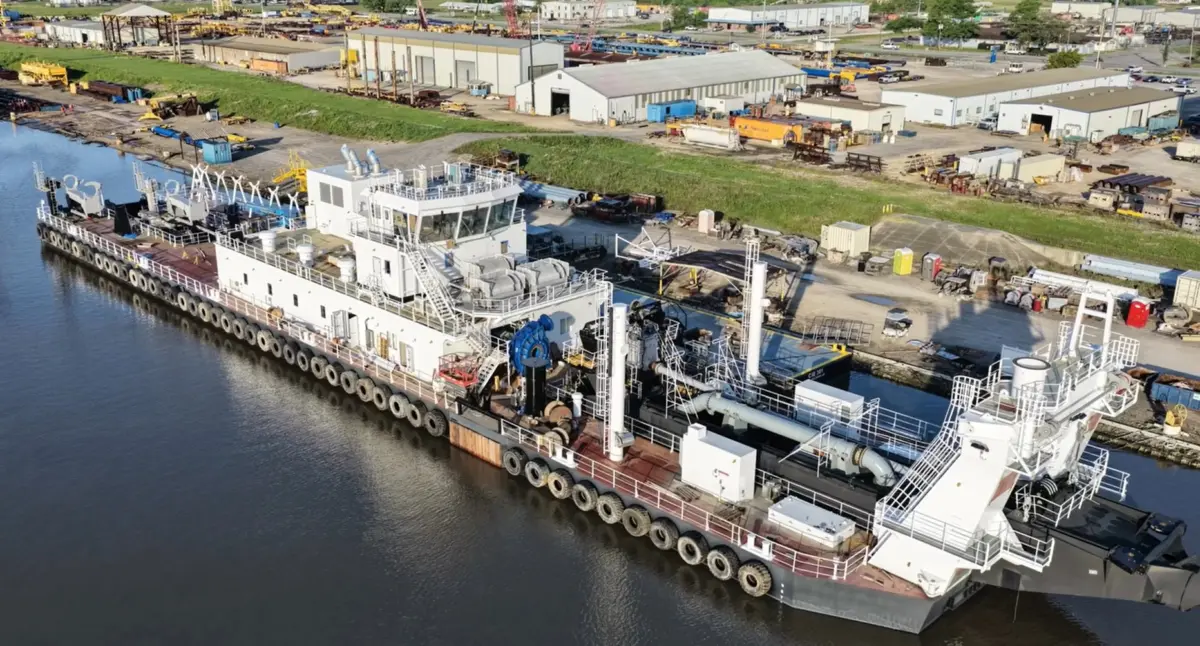
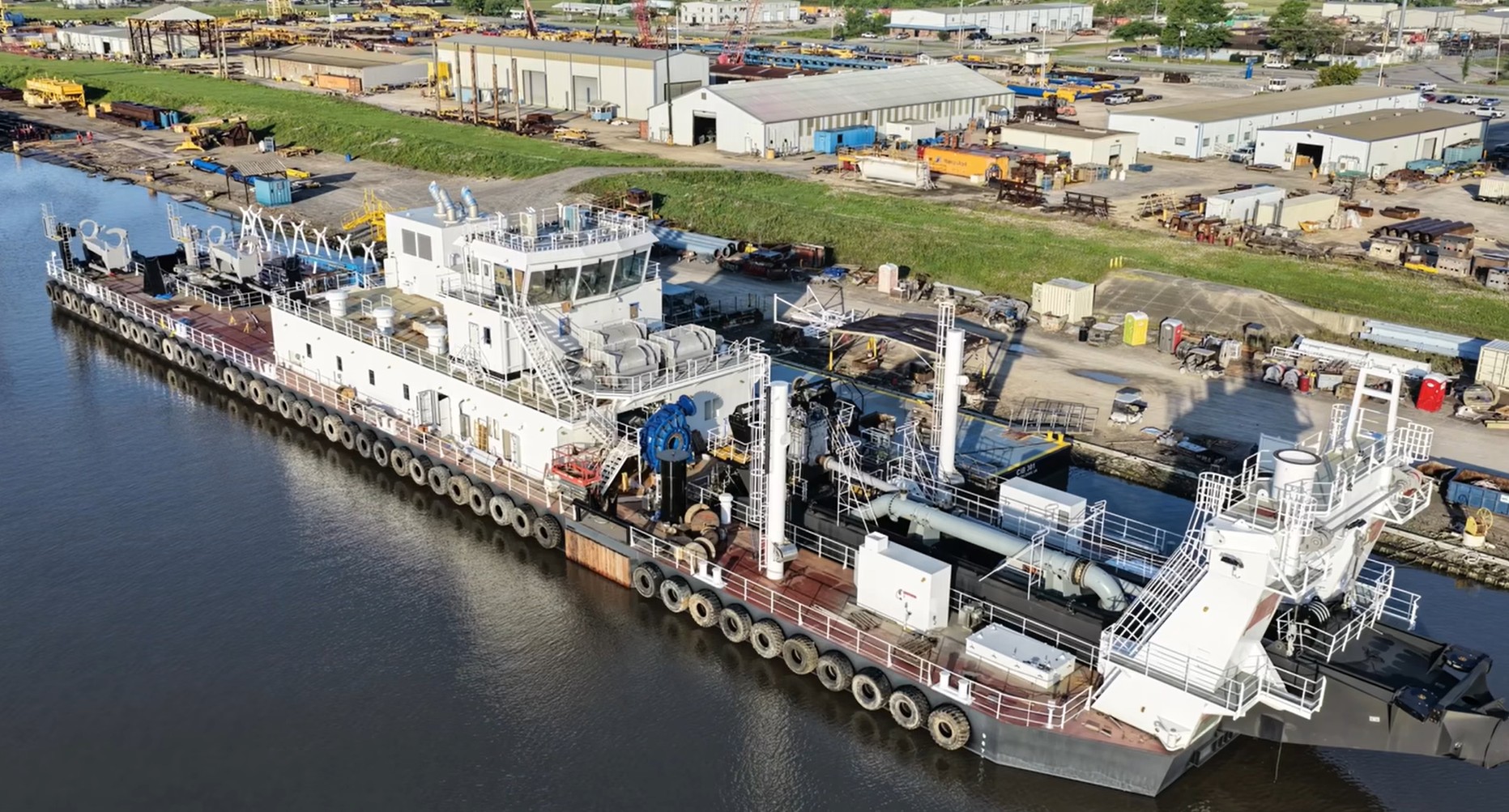
BELLE CHASSE, LOUISIANA — In the high-stakes arena of heavy marine construction and coastal infrastructure development, few milestones command as much attention as the imminent delivery of a premier-class dredge. C&C Marine and Repair, a recognized leader in American shipbuilding and marine fabrication, is officially entering the final phase of construction on a massive, highly anticipated 30-inch cutter suction dredger (CSD). Engineered from the keel up for demanding large-scale capital and maintenance dredging operations, this colossal vessel underscores the company’s engineering prowess and its ongoing commitment to supporting the vital waterways of the Americas.
Measuring an impressive 360 feet in overall length with a generous 56-foot breadth, the non-self-propelled CSD represents a pinnacle of modern dredging architecture. Designed to tackle some of the most challenging underwater excavation landscapes—ranging from densely compacted sands to stubborn, cohesive soils—the vessel is poised to become a formidable asset for future coastal protection, navigation channel deepening, and port expansion initiatives. As final outfitting, systems integration, and dockside testing wind down at the company’s sprawling Louisiana shipyard, maritime industry stakeholders are closely watching the completion of this state-of-the-art workhorse.
Executive Overview: A New Benchmark in American Dredging Capability
The completion of this 30-inch cutter suction dredger marks a defining moment for C&C Marine and Repair, reinforcing its reputation as a premier destination for complex marine asset manufacturing. In an industry where reliability, excavation power, and operational efficiency dictate project profitability, the introduction of a heavy-duty CSD of this scale carries significant market implications.
Equipped with a powerful rotating cutterhead designed to break apart consolidated seabed materials, the vessel effortlessly converts solid earth into a pumpable slurry. This material is then driven through an expansive 30-inch pipeline system capable of transporting sediment over substantial discharge distances. Beyond its primary cutting and pumping mechanisms, the dredger incorporates an advanced suite of auxiliary systems—including an underwater dredge pump, a robust inboard dredge pump, an efficient spud-carriage system, and specialized anchor booms. Together, these features grant the vessel a high degree of operational autonomy, allowing it to "walk" and reposition itself within a project footprint without requiring continuous external tugboat or support vessel assistance.
The timing of this vessel’s completion aligns with a critical period for American maritime infrastructure. Across the Gulf Coast and broader domestic shipping lanes, federal, state, and private entities face mounting pressures to maintain navigational depths, restore eroding coastlines, and expand port capacities to accommodate larger container vessels. By delivering a robust, high-capacity CSD engineered to handle severe marine environments, C&C Marine is directly addressing the acute demand for advanced, heavy-duty dredging assets in the Americas.
Detailed Chronology: From Concept to Completion at Belle Chasse
The journey of constructing a 360-foot industrial marine vessel is a multi-year feat of project management, heavy engineering, precision steel fabrication, and rigorous quality assurance. While final completion is being celebrated in late August 2026, the genesis of this project stretches back through months of meticulous planning, design optimization, and modular assembly.
Phase I: Engineering Design and Steel Procurement
Long before the first plate of steel was cut, naval architects and marine engineers engaged by C&C Marine spent countless hours refining the vessel’s hull lines, hydrodynamic performance, and mechanical layouts. Designing a cutter suction dredger capable of operating at variable digging depths—from a shallow 10 feet down to an impressive 82 feet—requires exact calculations regarding structural weight distribution, center of gravity, and torsional rigidity. Once the specifications were locked in, procurement teams sourced heavy marine-grade steel capable of withstanding the harsh abrasive forces of pumped sediment and the corrosive marine environment of the Gulf Coast.
Phase II: Modular Fabrication and Hull Assembly
Construction took place at C&C Marine and Repair’s expansive 100-plus-acre shipyard, strategically situated along the Gulf Intracoastal Waterway in Belle Chasse, Louisiana. The shipyard’s layout, featuring extensive waterfront access and heavy-lift capabilities, allows for the simultaneous pre-fabrication of large structural modules. Workers constructed the massive hull in sections, carefully welding internal framing, ballast tanks, and machinery foundations before joining the components together on the slipways.
Phase III: Mechanical Outfitting and Systems Integration
As the structural envelope took shape, the focus shifted to the complex mechanical heart of the dredger. This phase involved the meticulous installation of the main power generation units, high-capacity hydraulic systems, electrical switchboards, and the intricate network of piping that feeds the dredge pumps. The integration of the cutter ladder, the underwater dredge pump assembly, and the heavy-duty spud-carriage system required millimeter-precision alignment. Simultaneously, the vessel’s advanced navigation, monitoring, and automation suites were wired into the central control cabin, giving the future dredge master unprecedented visibility over every operational parameter.
Phase IV: Final Commissioning and Dockside Trials
Now in its final stages of completion, the CSD is undergoing comprehensive dockside commissioning. Engineers and technicians are systematically testing every onboard system—from the swing winches and anchor booms to the high-pressure hydraulic pumps and main diesel or diesel-electric powerplants. These trials ensure that all mechanical, electrical, and fluid systems operate seamlessly under simulated load conditions, guaranteeing that the vessel is fully prepared for its maiden voyage and subsequent operational deployment.
Supporting Context & Metrics: Anatomy of a Heavy-Duty Cutter Suction Dredger
To truly understand the industrial significance of C&C Marine’s latest build, one must examine the specific engineering metrics and operational mechanics that define a modern high-performance CSD.
Dimensional Specifications and Operating Envelope
- Overall Length (LOA): Approximately 360 feet
- Breadth (Beam): Approximately 56 feet
- Dredging Depth Capability: Ranging from roughly 10 feet to a maximum of 82 feet
- Pipeline Diameter: 30 inches
- Vessel Classification: Non-self-propelled cutter suction dredger (requiring towing for transit between distant project sites, but highly self-sufficient while actively dredging)
The Mechanics of Subsurface Excavation
Cutter suction dredgers operate on a continuous excavation cycle. The vessel anchors itself using heavy vertical steel pillars known as spuds—specifically utilizing a spud-carriage system that allows the dredger to step forward incrementally into the cut. While secured by the spud pole, the vessel swings from side to side using heavy-duty winches connected to anchor booms or side wires.
At the business end of the pivoting structural ladder, a robust, high-torque cutterhead rotates relentlessly, biting into compacted sand, clay, gravel, or softer rock formations. The loosened material is immediately drawn into the suction mouth of the intake pipe by a specialized submersible underwater pump mounted directly on the ladder. This underwater pump prevents cavitation issues and boosts the density of the mixture before pushing it up to the inboard dredge pump. From there, the slurry travels through the 30-inch pipeline infrastructure, sometimes over distances of several miles, to designated upland placement areas, beneficial-use marsh creation sites, or open-water disposal zones.
Shipyard Heritage: The C&C Marine Advantage
The successful realization of this project is a testament to the infrastructure and workforce of C&C Marine and Repair. Founded in 1997, the company has steadily expanded its footprint along the Gulf Intracoastal Waterway in Belle Chasse. Spanning more than 100 acres, the shipyard is purpose-built for the construction, conversion, and repair of a diverse array of marine equipment, including inland barges, towboats, offshore supply vessels, and now, world-class dredging plant. By maintaining comprehensive in-house capabilities—spanning steel fabrication, blasting and painting, machining, and electrical outfitting—C&C Marine exercises rigorous quality control from blueprint to delivery.
Official Statements and Industry Perspective
While specific client identities and the precise christening name of the vessel remain closely guarded pending formal delivery ceremonies, industry insiders and company representatives have emphasized the strategic importance of this build.
In recent industry briefings, representatives for C&C Marine highlighted that the construction of a 30-inch CSD reflects a broader trend within the maritime sector: the pressing need for larger, more efficient, and technologically advanced domestic dredging assets. As environmental regulations tighten and project owners demand higher production rates with lower carbon footprints per cubic yard moved, shipyards must innovate to stay competitive.
"Building a vessel of this scale is a complex undertaking that tests every facet of a shipyard’s capabilities—from engineering and steel fabrication to intricate systems integration," noted a project logistics coordinator close to the build. "To see this 360-foot dredger reach its final stages of completion is a proud moment for our entire workforce in Belle Chasse. It proves that American marine manufacturing can deliver world-class infrastructure to meet the rigorous demands of modern capital and maintenance dredging."
Industry analysts point out that the domestic dredging fleet in the Americas has faced an aging demographic, making the injection of newly built, high-capacity plant vital for national economic security. Dredging is the hidden backbone of international commerce; without deep shipping channels and well-maintained ports, international trade grinds to a halt. The addition of this 30-inch CSD ensures that dredging contractors will have the muscle required to keep trade arteries open and coastal ecosystems protected for decades to come.
Future Outlook: Market Impact and Operational Horizons
As C&C Marine enters the final countdown to delivery, the forward-looking trajectory for both the shipyard and the vessel’s eventual operator appears exceptionally bright.
Expanding Market Opportunities in the Americas
The operational profile of the new 30-inch CSD positions it ideally for several high-demand market segments:
- Capital Dredging and Port Deepening: With container ships growing larger year by year, major ports along the U.S. Gulf and Atlantic coasts are continually seeking to deepen their turning basins, berths, and approach channels to 50 feet or more. A deep-digging, high-volume CSD is the primary weapon of choice for these multi-million-dollar mega-projects.
- Coastal Restoration and Beach Nourishment: Coastal erosion in regions like Louisiana is an existential crisis. Powerful dredgers are essential for dredging offshore sand sources and pumping sediment miles inland to rebuild barrier islands, restore vanishing marshes, and protect vulnerable coastal communities from storm surges.
- Routine Maintenance Dredging: Siltation from major river systems continually chokes navigational channels. Reliable, self-positioning dredgers with advanced anchor-boom systems minimize downtime and keep commercial barge traffic moving without costly bottlenecks.
The Next Chapter for C&C Marine
For C&C Marine and Repair, the successful execution of this massive CSD project solidifies its status as a top-tier heavy marine fabricator. Having proven its ability to manage the intricate engineering and construction hurdles associated with a 360-foot specialized vessel, the company is well-positioned to secure future contracts for specialized dredging plant, marine transportation equipment, and offshore energy infrastructure.
As final preparations wrap up in Belle Chasse, Louisiana, the maritime community waits in eager anticipation for the vessel’s official christening and deployment. When this industrial powerhouse finally drops its spuds and engages its cutterhead against the riverbed, it will not only move millions of cubic yards of earth—it will also cement C&C Marine’s enduring legacy of excellence in American shipbuilding.