









Executive Overview
The global ocean is often romanticized as a singular, uniform blue expanse, yet it is a realm of staggering thermal extremes. From the sub-zero brine channels of Antarctica to the scalding, mineral-rich plumes of deep-sea hydrothermal vents reaching upwards of 660°F (350°C), marine environments present life with unrelenting physiological trials. Unlike terrestrial mammals that can seek shade, migrate across landmasses, or adapt through behavioral changes, aquatic species are bound by the thermodynamic properties of water. For them, thermoregulation—the biological orchestration of internal body temperature—is an absolute threshold between life and death.
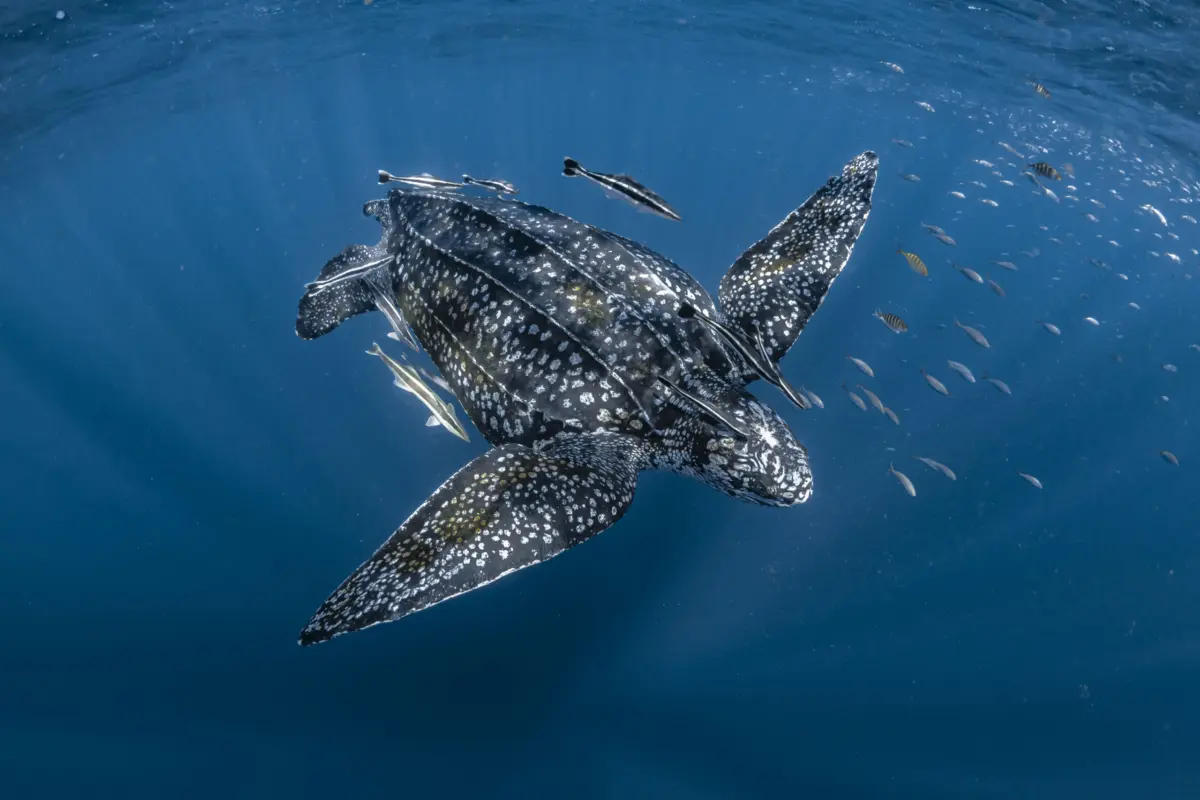
Over millions of years, evolution has forged extraordinary countermeasures against these environmental pressures. From leatherback sea turtles utilizing complex vascular countercurrent networks to Antarctic icefish manufacturing biological antifreeze proteins, the marine world exhibits an astonishing array of adaptations.
However, these evolutionary marvels are now facing an unprecedented stress test. Anthropogenic climate change is accelerating ocean warming, triggering historic marine heatwaves, intensifying hurricanes, and driving systemic ecological disruptions. As marine temperatures decouple from historical baselines, understanding how ocean life manages thermal equilibrium is no longer merely an academic pursuit; it is a critical lens through which we must view the future stability of global marine ecosystems.
Detailed Chronology: A History of Thermal Discovery and Adaptation
To comprehend how contemporary marine life navigates thermal extremes, marine biologists and physiologists have traced the evolutionary timelines that birthed these traits. The study of thermal adaptation in the ocean spans decades of groundbreaking oceanic exploration and physiological discovery.
- 1928: The Discovery of Hemoglobin-Free Vertebrates. Norwegian marine biologist Ditlef Rustad first captured specimens of Antarctic icefish (Channichthyidae) near Bouvet Island, unearthing the first known vertebrates lacking red blood cells entirely. This discovery challenged foundational assumptions about vertebrate physiology and oxygen transport.
- Late 20th Century: Mapping the Riftia Symbiosis. Following the 1977 discovery of hydrothermal vents at the Galapagos Rift, marine scientists mapped the unique biological architecture of giant tube worms (Riftia pachyptila). Researchers discovered how these creatures harness chemosynthetic bacteria to thrive in gradients transitioning from near-freezing seawater to scalding vent waters.
- The 1990s–2000s: Isolation of Antifreeze Glycoproteins (AFGPs). Biochemists isolated and sequenced the specific genetic codes and proteins responsible for preventing ice crystal formation in Antarctic notothenioid fish, revealing how molecular evolution protects organisms in sub-zero polar waters.
- 2025: Genetic Mapping of Asian Noodlefish. Modern genomic sequencing breakthroughs revealed that Asian noodlefishes have completely lost their myoglobin and hemoglobin genes, proving that the evolutionary shedding of oxygen-carrying proteins is not a localized anomaly restricted to polar icefish, but a recurring evolutionary strategy.
- Present Day: The Anthropocene Thermal Crisis. As global carbon emissions push sea surface temperatures to historic highs, modern marine science is locked in a race against time. Researchers are studying these ancient adaptive pathways to forecast which species possess the physiological resilience to survive rapid ocean warming.
Physiological Mechanics: How Marine Animals Defy Thermal Extremes
The survival of marine organisms in extreme environments relies on specialized physiological adaptations that challenge classical biological paradigms.
1. Leatherback Sea Turtles and Gigantothermy
Most marine reptiles are ectothermic (cold-blooded), relying entirely on external environmental heat sources. Yet, the leatherback sea turtle (Dermochelys coriacea) regularly plunges into near-freezing subpolar waters to hunt jellyfish.
To prevent hypothermia, leatherbacks employ a two-pronged defense:
- Countercurrent Heat Exchange: Arteries carrying warm blood from the core run parallel to veins returning cool blood from the flippers. Heat is transferred directly from arterial blood to venous blood, shielding the core organs from thermal shock.
- Gigantothermy: As the largest sea turtle species, leatherbacks possess a low surface-area-to-volume ratio. Combined with thick layers of oily, insulating fat and a leathery, oil-saturated shell, they successfully trap internal metabolic heat.
2. Regional Endothermy in Bluefin Tuna
While the vast majority of fish are ectothermic, apex predators like the bluefin tuna have evolved regional endothermy. Using a dense, intertwined vascular network known as the rete mirabile (the "wonderful net"), these tuna reclaim and retain metabolic heat in targeted regions—including their swimming muscles, viscera, eyes, and brain—while allowing their heart to remain cool. This metabolic investment enables explosive acceleration and precise hunting reflexes in frigid waters, securing their position as apex pelagic predators.
[Warm Core/Muscles] ----(Warm Arterial Blood)----> [ Rete Mirabile ]
                                                         |
                                                 (Thermal Transfer)
                                                         |
[Cold Extremities]  <---(Cool Venous Blood)----- [ "Wonderful Net" ]
3. Biological Antifreeze and Bloodless Fish in Antarctica
In the freezing waters of the Southern Ocean, water temperature frequently dips below the freezing point of standard fish blood (-1.8°C or 28.8°F). Antarctic notothenioids (such as the Antarctic toothfish and icefish) survive by synthesizing Antifreeze Glycoproteins (AFGPs). These proteins bind to nascent ice microcrystals in the bloodstream, physically preventing them from growing and destroying cellular walls.
More remarkably, Antarctic icefish are the only known vertebrates with no red blood cells and zero hemoglobin. Their blood is milky-white and watery. They survive by absorbing oxygen directly from highly oxygenated, freezing polar water via diffusion through their skin and gills, aided by exceptionally large hearts and wide blood vessels that circulate fluid with minimal metabolic resistance.
4. Vent-Dwelling Extremophiles
At the opposite thermal extreme, hydrothermal vents spew mineral-laden water exceeding 660°F. Here, giant tube worms (Riftia pachyptila) anchor themselves in narrow mixing zones where cold ocean water collides with superheated hydrothermal fluid. These eight-foot-long invertebrates lack a mouth or gut; instead, they rely entirely on internal symbiotic bacteria that convert hydrogen sulfide and oxygen into organic nutrients via chemosynthesis.
Supporting Context & Metrics
The physiological resilience of these species operates within strict biophysical parameters that are currently being stretched by human activity:
- Thermal Range: Marine environments span a natural thermal gradient of over 100°F, stretching from approximately 28°F (-2.2°C) in polar brine channels to over 400°F (and up to 660°F under extreme pressure) at hydrothermal vent nozzles.
- Metabolic Cost: Regional endothermy requires immense energy expenditure; bluefin tuna must consume vast quantities of forage fish to maintain their specialized muscle and brain temperatures.
- Ocean Heat Content: According to climate data tracking, more than 90% of excess heat trapped by anthropogenic greenhouse gas emissions has been absorbed by the global ocean, accelerating the frequency and severity of marine heatwaves.
- Extinction Pressures: Rapidly shifting isotherms are forcing mobile species to migrate poleward at rates faster than their ecosystems can adapt, while sessile species, such as coral reefs and benthic invertebrates, face catastrophic mass-mortality events.
Official Statements and Expert Perspectives
Marine conservationists and leading physiologists emphasize that while evolutionary adaptations are profound, they possess hard biological limits that cannot keep pace with the current velocity of climate change.
"While our ocean may seem like one giant body of water, its temperatures fluctuate widely," notes conservation outreach leadership at Ocean Conservancy. "Unlike humans, marine animals can’t just blast the air conditioning or put on a jacket when they get uncomfortable. Rather, years of evolution have equipped these creatures with several remarkable ways to regulate temperature and survive in extreme conditions."
Scientists monitoring polar and deep-sea ecosystems underscore that evolutionary marvels like antifreeze proteins and hemoglobin-free blood are finely tuned over millennia. Rapid, human-driven thermal shifts risk rendering these intricate adaptations obsolete.
"The climate crisis is here," conservation advocates warn. "It will only get worse without immediate action. Thermoregulation can be the difference between life and death in extreme environments throughout the ocean. While these adaptations showcase incredible evolutionary wonders, they also help scientists understand how species respond to a changing climate."
Future Outlook: The Anthropocene Ocean and the Need for Action
The study of marine thermoregulation reveals the breathtaking ingenuity of natural selection, but it also sounds an urgent alarm. The historical stability that allowed species like the leatherback turtle, the bluefin tuna, and the Antarctic icefish to refine their specialized physiological traits is disappearing.
Marine heatwaves, ocean acidification, and shifting current dynamics are compressing the habitable zones of species worldwide. When the thermal buffer of the ocean breaks down, the cascading impacts ripple through the entire marine food web, threatening global fisheries, coastal communities, and marine biodiversity.
Mitigating this ecological crisis requires more than passive scientific observation; it demands decisive policy intervention. Protecting the ocean’s future relies on aggressive global action to curb greenhouse gas emissions, transition away from fossil fuels, and establish robust, climate-resilient marine protected areas. The physiological boundaries of ocean life have been pushed to their absolute limits—now, the responsibility lies with humanity to change the trajectory of our warming planet.