






Executive Overview
In a significant development for the United Kingdom’s industrial logistics and materials sector, ParkerSteel—a premier steel stockholder and processor headquartered in the southeast of England—has officially launched a major new import and storage operation at the Port of Sheerness. Developed in a strategic partnership with the Peel Ports Group, this new maritime supply chain artery is engineered to streamline the importation, warehousing, and onward distribution of structural and processing-grade steel products.
For ParkerSteel, a company with roots stretching back over a century to 1904, the venture represents a watershed moment in its operational history. As demand for high-grade steel accelerates across the construction, manufacturing, and heavy engineering sectors in the southeast, the company faced the classic industrial bottleneck: how to scale import volumes without compromising delivery velocity or inflating operational overhead. By establishing a dedicated maritime footprint at Sheerness, ParkerSteel has effectively bypassed traditional logistical pinch points, securing an agile, port-centric hub that marries deep-water vessel handling with direct-to-site distribution capabilities.
This comprehensive report examines the anatomy of the ParkerSteel-Peel Ports partnership. It explores the foundational heritage of both entities, the complex logistical drivers that necessitated the Sheerness development, the operational mechanics of the new facility, and the broader economic implications for the UK’s manufacturing and construction supply chains as they navigate an increasingly volatile global trade environment.
Detailed Chronology: From Canterbury Roots to the Port of Sheerness
A Century of Industrial Evolution
To understand the significance of the Port of Sheerness operation, one must first examine the trajectory of ParkerSteel. Founded in 1904, the enterprise has spent more than 120 years embedding itself into the structural fabric of British engineering and construction. Operating primarily out of its strategic headquarters and processing facility in Canterbury, Kent, the company has evolved from a traditional regional metal merchant into a technologically advanced steel service center.
Over the decades, ParkerSteel’s growth strategy has been deliberately underpinned by heavy, sustained capital expenditure in advanced machinery, automated processing lines, and high-capacity stockholding infrastructure. Whether supplying bespoke reinforcement bars for complex civil engineering projects or bulk structural sections for commercial developments, the company built its reputation on precision, reliability, and scale. However, this very growth created a new set of operational challenges.
The Bottleneck of Regional Demand
In recent years, the southeastern corridor of England has experienced a sustained surge in construction and manufacturing activity. From major infrastructure overhaul programs to commercial real estate expansions, the appetite for raw and processed steel has grown exponentially.
Historically, ParkerSteel’s supply chain relied on a network of smaller regional ports and overland transport legs. As import volumes climbed to meet surging regional demand, these legacy pathways began to exhibit strain. The company required a maritime logistics solution that could achieve three critical objectives:

- Accommodate larger, more economically efficient bulk cargo vessels.
- Provide expansive, secure on-port storage facilities to buffer against global supply chain fluctuations.
- Enable a seamless, direct transition from vessel discharge to onward customer delivery, eliminating unnecessary handling steps and reducing carbon emissions.
The Sheerness Solution
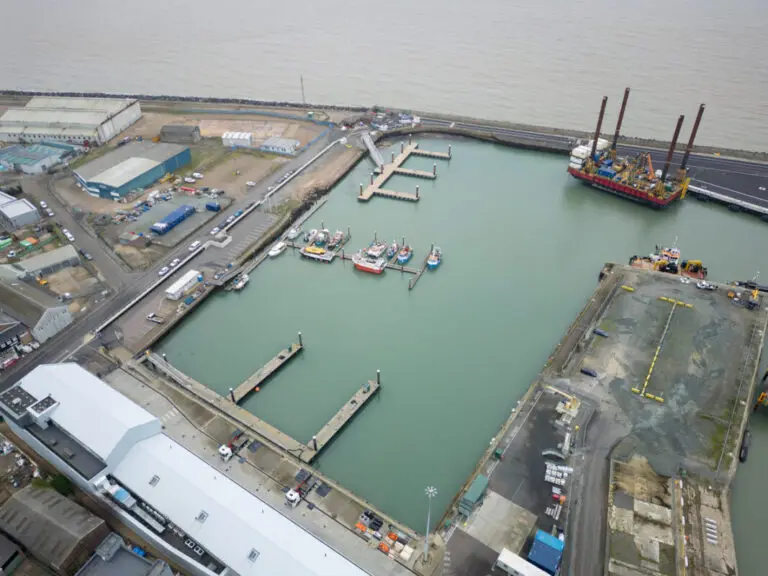
The search for an optimal port solution led ParkerSteel to the Port of Sheerness, a key facility within the Peel Ports Group network situated on the Isle of Sheppey in Kent. Sheerness presented an almost ideal geographic and operational match. Geographically, it sat comfortably within striking distance of ParkerSteel’s Canterbury nerve center, maintaining regional proximity while unlocking vastly superior maritime capabilities. Operationally, the port possessed the deep-water access required to berth larger cargo ships, alongside the vast expanses of secure real estate needed for bulk metal storage.
Collaborative planning between ParkerSteel and Peel Ports commenced well in advance of the first vessel arrival. Teams from both organizations worked in tandem to design a bespoke port-centric handling protocol. This involved aligning customs clearance procedures, heavy-lift stevedoring schedules, dedicated staging areas for steel bundles, and integrated transport management systems.
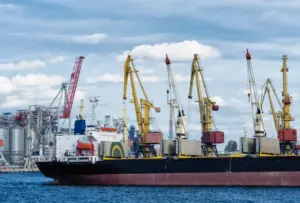
The fruition of this meticulous planning materialized with the successful discharge of ParkerSteel’s first three consecutive vessels at Sheerness. These initial shipments not only validated the engineering and logistical frameworks put in place by the partners but also instantly established a high-capacity, dependable import pipeline into the heart of southeast England.
Supporting Context & Metrics: The Mechanics of Modern Steel Logistics
The Strategic Value of Port-Centric Logistics
In contemporary supply chain management, "port-centric logistics" has transitioned from a theoretical buzzword to an essential operational philosophy. By integrating warehousing, processing, and distribution activities directly within the port boundary, businesses can radically compress lead times and eliminate unnecessary road miles.
For heavy, low-margin, high-volume commodities like steel, every extra mile of inland transit and every additional touchpoint exponentially increases logistics costs and carbon liabilities. By anchoring its import operations at Sheerness, ParkerSteel has capitalized on Peel Ports’ extensive expertise in handling ferrous and non-ferrous metal cargoes.
[Global Steel Mills]
        │ (Bulk Vessels)
        ▼
[Port of Sheerness] (Deep-water berth & on-port storage)
        │ (Direct-to-site distribution)
        ▼
[ParkerSteel Canterbury & End Users] (Construction, Manufacturing, Engineering)
The Port of Sheerness is uniquely equipped for this type of operation. As part of Peel Ports—one of the UK’s leading port operators—Sheerness boasts specialized handling equipment, robust security protocols for high-value industrial materials, and seamless connectivity to the UK motorway network via the A249 and M2 corridors.
Economic and Environmental Imperatives
Beyond mere financial efficiency, the ParkerSteel-Peel Ports alliance addresses critical environmental and sustainability mandates. The construction and manufacturing sectors are under intense regulatory and societal pressure to decarbonize their supply chains.
By utilizing larger vessels to bring in heavier payloads per voyage, ParkerSteel is immediately optimizing the carbon intensity of the ocean freight leg. Furthermore, by establishing on-port storage at Sheerness, the company reduces the need for complex, multi-stage freight forwarding. Steel can be unloaded directly from ship to shore, stored temporarily in designated terminal bays, and loaded straight onto articulated haulage vehicles bound directly for construction sites and manufacturing plants across the southeast.
This streamlined pathway drastically curtails double-handling—a major source of product damage and operational delay in the metals industry—while shrinking the carbon footprint associated with regional distribution.
Official Statements and Industry Perspective
The formalization of the partnership has drawn positive commentary from the leadership teams of both organizations, highlighting the mutual strategic benefits and the shared vision for future growth.
Melvin Parker, speaking on behalf of ParkerSteel, underscored the geographical and operational rationale that drove the decision to partner with Peel Ports at Sheerness:
"We wanted a location close to Canterbury and ideally a port that could take the larger vessels. Sheerness ticked both boxes. We also wanted to store steel at the port and deliver direct to customers."
This succinct assessment encapsulates the core objectives of the project: proximity, vessel capacity, storage integration, and direct distribution. For ParkerSteel, the ability to control the supply chain from the quayside to the customer’s delivery bay provides an invaluable competitive advantage in a crowded regional marketplace.
Peel Ports Group echoed this sentiment, emphasizing the collaborative ethos that defined the implementation phase. Representatives from Peel Ports noted that the port’s strategic location, combined with its specialized terminal infrastructure and deep institutional knowledge of handling steel cargoes, made it the ideal incubator for ParkerSteel’s expansion. The seamless integration achieved during the arrival of the first three vessels stands as a testament to the cross-functional coordination between the port operator and the steel stockholder.
Industry analysts have similarly lauded the venture as a textbook example of how traditional industrial sectors can future-proof their operations through strategic infrastructure partnerships. In an era defined by geopolitical trade shifts, port congestion, and driver shortages, securing a dedicated, highly optimized import gateway is a masterclass in risk mitigation.
Future Outlook: Strengthening the Industrial Corridor
Scaling Operations for Long-Term Growth
The successful arrival and discharge of the first three vessels at the Port of Sheerness mark not the culmination of the project, but rather its operational baseline. Both ParkerSteel and Peel Ports Group have confirmed their intention to deepen their partnership as import volumes scale in tandem with regional economic demand.
As the southeast of England continues to roll out ambitious housing developments, transport upgrades, and commercial construction projects, the demand for structural steel, reinforcing mesh, plates, and sections will remain robust. ParkerSteel’s newly established hub at Sheerness provides the headroom necessary to absorb these future volume spikes without inducing operational bottlenecks.
Technological and Logistical Innovations on the Horizon
Looking ahead, both organizations are exploring avenues to further optimize the Sheerness terminal. Discussions are underway regarding the potential integration of advanced digital tracking systems, automated inventory management feeds, and enhanced intermodal transport links, including the potential expansion of rail freight capabilities where viable.
By leveraging cutting-edge port technology and real-time data sharing, ParkerSteel and Peel Ports aim to create a fully visible, end-to-end digital supply chain. This will allow customers to track their steel consignments from the moment they are loaded onto ships overseas to the exact hour they arrive at a job site in Kent, London, or the wider Home Counties.
Conclusion: A Blueprint for Industrial Resilience
The partnership between ParkerSteel and Peel Ports Group at the Port of Sheerness is far more than a simple commercial lease or logistical arrangement; it is a strategic alignment of two heritage organizations committed to modernizing the UK industrial supply chain.
By combining ParkerSteel’s century-old market expertise and processing prowess with Peel Ports’ world-class maritime infrastructure, the collaboration has forged a resilient, high-capacity trade corridor. As the southeast of England builds out its economic future, the steel flowing through Sheerness will serve as the literal framework of that growth—proving that heritage and innovation, when properly aligned, can build a formidable foundation for the decades to come.