



For Yak Van Dam, the world was once measured in cubic meters per second, hydraulic drops, and the smooth hum of a paddle slicing through alpine currents. Growing up against the rugged backdrop of rural New Zealand, Van Dam rejected the conventional pull of the corporate world early on. He found his true north on an outdoor education course, discovering an innate affinity for river running. That initial spark ignited a 16-year career as a professional whitewater guide. He chased the planet’s wildest waterways—from iconic New Zealand runs like the Kaituna River and the thunderous chutes near Huka Falls to the glacial flows of Switzerland’s Vorderrhein.
However, the river is an unforgiving master. Six years ago, during a weekend off from guiding in Europe, a brief excursion into Italian canyoning permanently altered the trajectory of Van Dam’s life. A slip from a 42-foot ledge and a subsequent impact against the rock face left him paraplegic. The sudden, violent cessation of his life’s calling plunged him into a prolonged period of grief, medical rehabilitation, and deep introspection. For years, the whitewater community he had loved and served seemed like a closed chapter—a bittersweet memory of an untamed life he could no longer touch.
Yet, human resilience often finds a way to rewrite the script. Five years after the accident, a serendipitous encounter with packrafting breathed new life into Van Dam’s relationship with the water. What began as a cautious attempt to join friends on a gentle river float evolved into a full-scale return to extreme sport. Today, Van Dam is back in the rapids, navigating Class III whitewater, reclaiming his independence, and inspiring a global audience. His triumphant return is chronicled in the award-winning short film Riverbound: The Story Has Just Begun, which secured the Spirit Award at the New Zealand Mountain Festival and features prominently in the 2026 Paddling Film Festival. This is the story of a river runner who refused to let the water have the final word.
Detailed Chronology
The Formative Years: A Life Forged in White Water
Long before he became a fixture on international river circuits, Yak Van Dam’s destiny was tied to the topography of his homeland. Raised in rural New Zealand, a country internationally renowned for its dramatic landscapes and high-energy river systems, Van Dam realized during his youth that office walls and sedentary routines were entirely incompatible with his temperament.
During an outdoor education course, he experienced his first taste of river running. The raw power, unpredictability, and sheer kinetic energy of the water captivated him instantly. By the time he completed his formal guide training and experienced his first commercial raft descent, his career path was set in stone. Over the next decade and a half, Van Dam immersed himself completely in the global paddling subculture.
His resume expanded to include some of the most technical and demanding waterways in the Southern Hemisphere. He mastered the technical drops of New Zealand’s North Island, navigating the relentless volume of the Kaituna River and the explosive hydraulics surrounding Huka Falls. He understood the water’s language—reading eddies, predicting holes, and managing risk for clients who trusted him with their safety in volatile environments. Eventually, his pursuit of global rivers led him to Europe, where he took up guiding posts on Switzerland’s formidable Vorderrhein.
The Accident: A 42-Foot Fall in Italy
The defining pivot of Van Dam’s life occurred six years ago. Stationed in Switzerland for the season, Van Dam and three close friends decided to spend a weekend off exploring the rugged terrain of neighboring Italy for a session of canyoning—a sport that combines hiking, climbing, swimming, and jumping down steep river gorges.
On paper, it was a routine adventure for seasoned outdoor professionals. In reality, the margin for error in alpine environments is razor-thin. While attempting the second jump of the excursion, tragedy struck. Launching from a 42-foot ledge, Van Dam slipped mid-air. He struck the cliff face on the descent before plunging into the water below.
The impact caused severe trauma to his spinal cord. Evacuated to a medical facility, Van Dam faced the sobering diagnosis that would terrify any athlete: he was paralyzed from the chest down, resulting in paraplegia. What followed was an arduous, six-month hospitalization in Switzerland, marked by grueling physical therapy, emotional reckoning, and the painful processing of a life irrevocably altered.
False Hope and the Brutal Reality of Traditional Kayaking
During his months in the Swiss hospital, Van Dam’s psychological survival hinged on the hope of returning to the sport he loved. Because his spinal injury was relatively low on the vertebral column and he retained some residual hip movement, he clung to an optimistic hypothesis.
"I thought, kayaking is going to be easy because you just use your hips," Van Dam reflects.
In his mind, while confined to a hospital bed, he had already designed a workaround. He envisioned sliding into a traditional whitewater kayak, utilizing his remaining core and hip mobility to roll, edge, and maneuver through rapids just as he had always done.
The hospital’s rehabilitation pool offered the first testing ground for this theory. Eagerly getting back on the water, Van Dam attempted to execute a standard kayak roll—a foundational survival skill in whitewater. Instead of a fluid recovery, he instantly flipped, fell out of the boat, and floundered. The cold reality crashed over him: traditional kayaking, given his specific physical limitations and lack of lower-body stability, was fundamentally unviable without extensive, highly specialized, and restrictive modifications.
"The realization was brutal," Van Dam admits. "Kayaking, which I was going to do in my head while lying in bed, was just gone."
For a significant period following that pool session, the psychological weight proved too heavy. Whitewater vanished entirely from his mental landscape. The rivers he once called home felt like distant, forbidden territories.
The Packrafting Renaissance: A New Vessel for a New Era
Five years post-accident, the door to the river cracked open once more, though through an entirely unexpected medium. Friends in the outdoor community introduced Van Dam to packrafting—an emerging discipline utilizing ultra-lightweight, highly buoyant inflatable rafts originally designed for backcountry expeditions where hikers cross water obstacles.
Initially, Van Dam approached packrafting with modest expectations. He viewed it purely as a safe, accessible vehicle to tag along on river trips, allowing him to share space on the water with his friends without putting himself in undue danger. He did not anticipate the design dynamics of the inflatable craft.
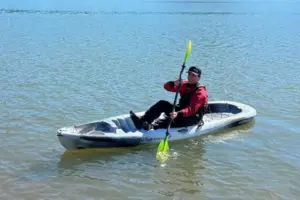
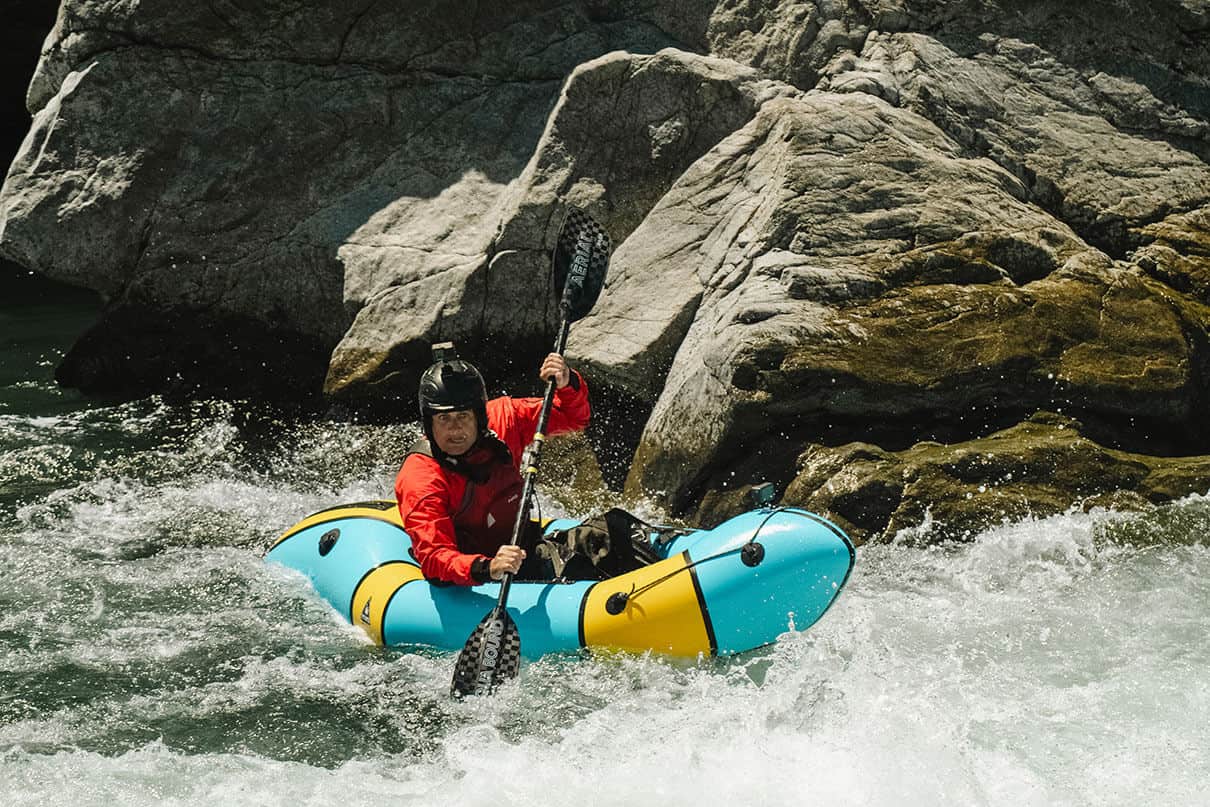
Seated in his Alpacka raft, Van Dam began testing the boundaries of the vessel. He crossed an eddyline—the friction boundary between fast-moving current and stationary water—and executed rudimentary eddy turns and river ferries. To his astonishment, the raft’s incredible primary and secondary stability, combined with its open deck configuration, offered a radically different physical experience than a traditional rigid kayak. When he intentionally tested the boat’s limits and capsized, he discovered he could easily climb back inside the buoyant craft while still in the water.
The progression was swift and exhilarating. What started as a cautious float session escalated rapidly.
"It got bigger and bigger until the finale was running a Class III section [of the Upper Buller]," Van Dam recounts. "It blew my mind where we took it. It was game on. All because we were in packrafts, which cater to what I need to be on the whitewater."
Supporting Context & Metrics
The Mechanics of Adaptive Packrafting
To understand the significance of Van Dam’s return to Class III whitewater, one must examine the biomechanical challenges of spinal cord injuries in dynamic sports. Traditional whitewater kayaking relies heavily on lower-body connection—knees locked into thigh braces and feet pressed against foot pegs—to transfer body weight and edge control to the hull of the boat. For a paraplegic athlete with little to no sensation or motor control below the waist, maintaining this connection is nearly impossible, rendering traditional kayaks dangerously unstable.
Packrafts, conversely, operate on entirely different physical principles:
- High Buoyancy and Stability: The wide, inflatable pontoons of modern packrafts provide massive primary stability, making them exceptionally difficult to flip compared to low-volume composite kayaks.
- Open Cockpit Design: Without the restrictive spray skirts and tight knee-lock systems of traditional kayaks, packrafts allow athletes with limited lower-body mobility to enter, exit, and reposition themselves safely.
- Self-Bailing and Recovery: Modern whitewater packrafts often feature self-bailing floors, allowing water taken on in rapids to drain instantly, while the light weight of the boat makes re-entry from the water manageable for upper-body strength alone.
Psychological Metrics of Recovery and Community Reintegration
The psychological transition from elite professional guide to wheelchair user is fraught with isolation. For Van Dam, the loss of mobility meant the sudden termination of his career, his primary social circle, and his daily communion with nature.
Studies in adaptive sports psychology consistently highlight that returning to high-risk, high-reward outdoor recreation post-injury is not merely about physical exercise; it is a vital catalyst for rebuilding self-efficacy, autonomy, and social identity. For years, Van Dam experienced the grief of exclusion.
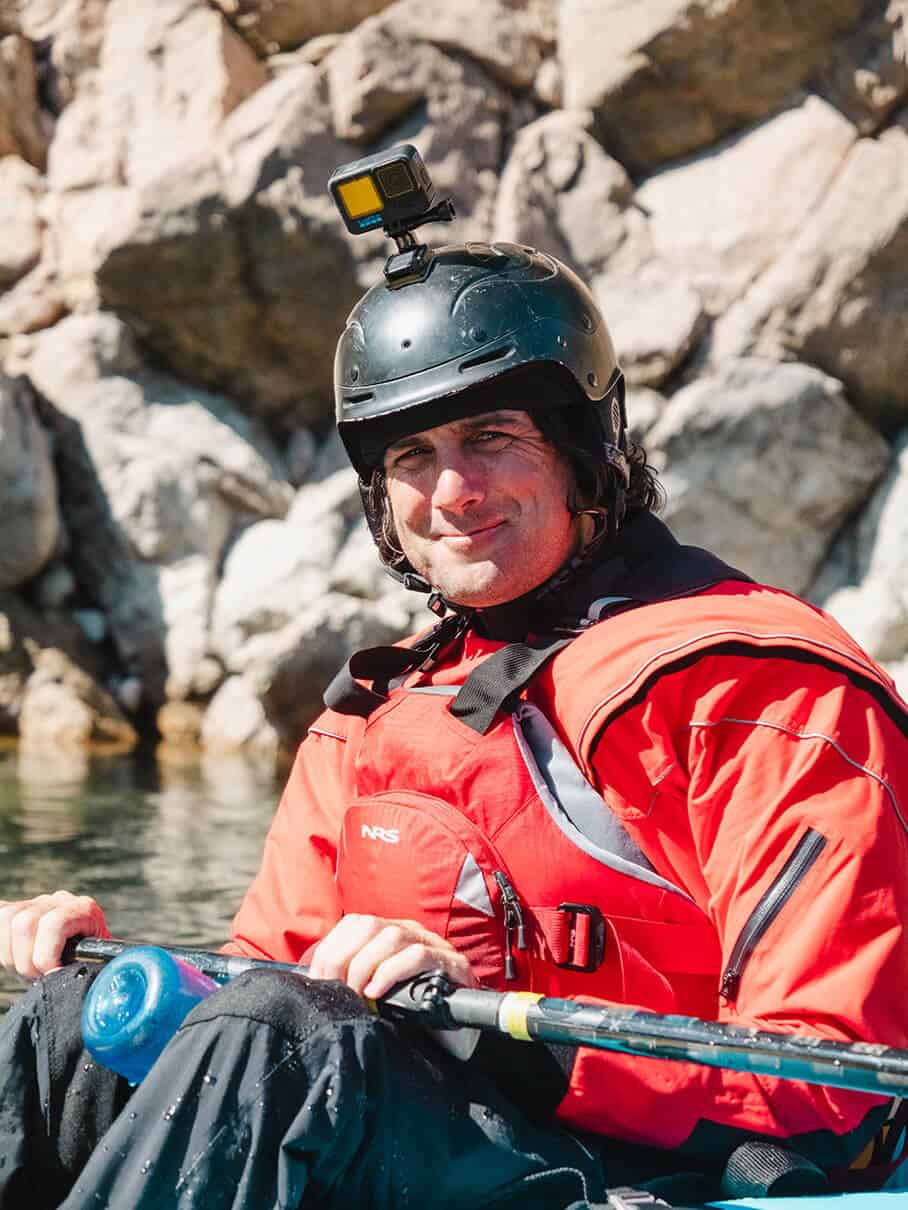
"There have been a lot of tears being in a wheelchair and missing out on a lot of the stuff I used to do," he shares. "I was worried that would be the case again. But it was the opposite. It was just celebrations, high fives, such great moments, and you just keep ticking goals off and achieving stuff."
Crucially, packrafting acted as a social bridge. As word spread through the New Zealand paddling community that Van Dam was back on the water—not as a spectator, but as an active participant running technical rapids—the phone lines opened up again. The familiar invitations returned: "We’re going packrafting. Do you want to come?"
Official Statements & Testimonies
Yak Van Dam on the emotional contrast of his return:
"There have been a lot of tears being in a wheelchair and missing out on a lot of the stuff I used to do. I was worried that would be the case again. But it was the opposite. It was just celebrations, high fives, such great moments, and you just keep ticking goals off and achieving stuff."Van Dam on the physical realization in the Swiss hospital pool:
"I thought, kayaking is going to be easy because you just use your hips… The realization was brutal. Kayaking, which I was going to do in my head while lying in bed, was just gone."Van Dam on discovering the potential of packrafts:
"It got bigger and bigger until the finale was running a Class III section [of the Upper Buller]. It blew my mind where we took it. It was game on. All because we were in packrafts, which cater to what I need to be on the whitewater."Van Dam on his renewed appreciation for the natural world:
"While I’ve finally got the shoulders I always wanted, what’s changed most is my perspective. Having that taken away—the freedom of just being on the river, looking at nature—and then going back to it, I’m appreciating it so much more."
Future Outlook
Cultural Impact and Cinematic Recognition
Yak Van Dam’s journey from a life-altering trauma in an Italian canyon to the roaring hydraulics of New Zealand’s Upper Buller River has resonated far beyond local paddling circles. His story has been immortalized in the documentary film Riverbound: The Story Has Just Begun.
The film captures the raw vulnerability of his post-accident depression, the meticulous trial-and-error of finding an adaptive vessel, and the sheer euphoria of his return to Class III whitewater. Its critical acclaim—highlighted by the prestigious Spirit Award at the New Zealand Mountain Festival—underscores a growing cultural appetite for authentic narratives concerning disability, resilience, and adventure sports. As the film tours internationally through the 2026 Paddling Film Festival, Van Dam’s story serves as an educational and motivational touchstone for athletes, outdoor enthusiasts, and individuals navigating life-altering injuries worldwide.
The Evolution of Adaptive Outdoor Sports
Van Dam’s success with packrafting signals a broader paradigm shift in the outdoor recreation industry. For decades, extreme sports have often been perceived as exclusive domains reserved for the fully abled. However, advancements in equipment design—such as specialized packrafts, sit-ski engineering, and adaptive mountain biking technology—are systematically dismantling those barriers.
As community networks expand and equipment manufacturers continue to innovate with adaptive athletes in mind, figures like Van Dam are redefining what is possible in technical environments. For Yak Van Dam, the chapter that closed in an Italian gorge six years ago has given way to an unexpected prologue. Armed with renewed perspective, unmatched upper-body strength, and an Alpacka raft, he is no longer just looking back at the rivers he left behind—he is actively charting new currents into the future.