








Executive Overview
As the hospitality landscape faces a profound technological and consumer shift, the fundamental pillars of guest acquisition are being rewritten. Artificial intelligence models now increasingly act as the primary gatekeepers, deciding which properties are recommended to travelers and which fall by the wayside. Yet, according to Hilton President and CEO Christopher Nassetta, the core inputs that drive a recommendation remain remarkably steadfast. Reliability, deep-rooted corporate culture, and the pursuit of a lifetime relationship with the guest continue to be the ultimate currency in earning recommendations—even as the identity of the recommender undergoes a digital evolution.
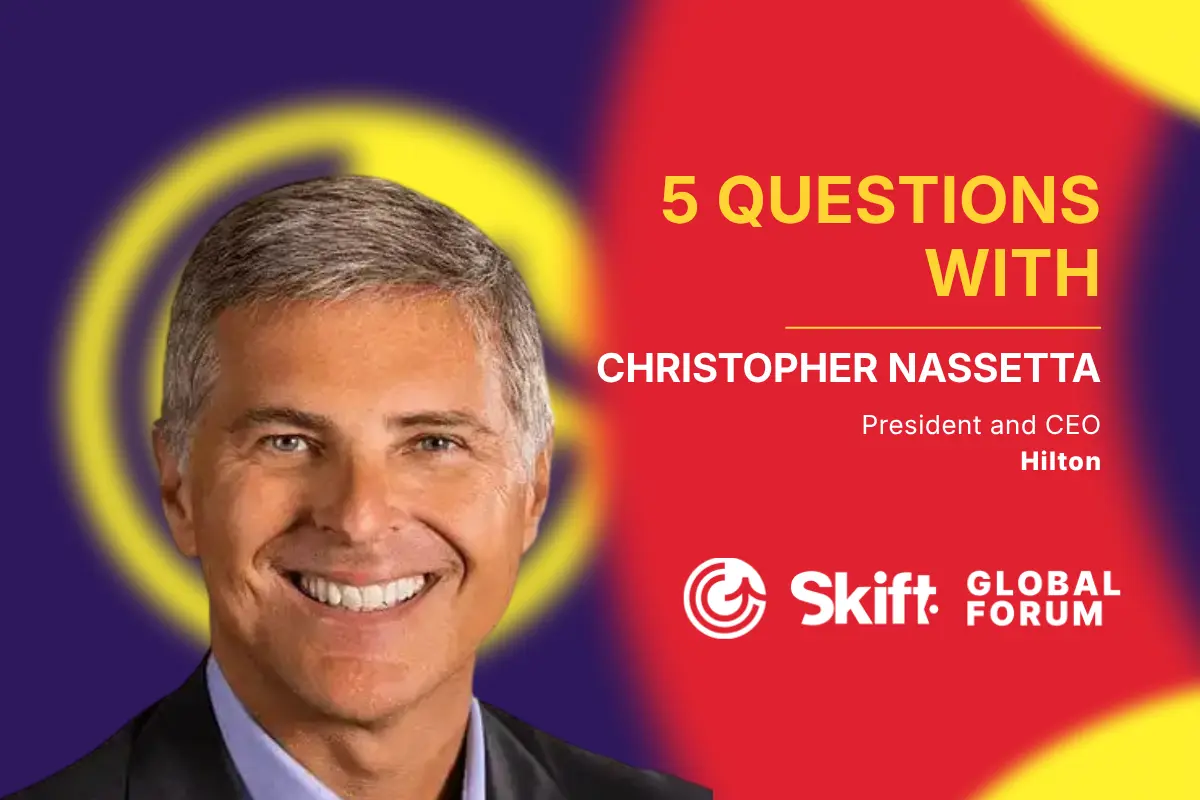
Ahead of his keynote appearance at the Skift Global Forum in New York City, Nassetta sat down to discuss how Hilton is navigating this era of intelligent search, managing a sprawling portfolio of 28 distinct brands, and adapting to a rapidly fragmenting consumer journey. While the tools of discovery are shifting from traditional search engines to complex, algorithmic AI models, Hilton’s overarching strategy hinges on the belief that digital innovation is only as powerful as the human hospitality backing it up.
This deep dive explores Nassetta’s perspectives on the intersection of AI and guest loyalty, the surprising resilience of midweek business travel driven by small and medium-sized enterprises (SMBs), and the broader socio-economic mission of hospitality in an increasingly divided world.
Detailed Chronology: The Evolution of Hilton’s Digital and Portfolio Strategy
To understand where Hilton stands today in the face of generative AI and fragmented consumer behavior, it is necessary to examine the long-term strategic trajectory that the hospitality giant has methodically executed over the past two decades.
- The Foundation of Scale (Pre-2010s): For much of its history, Hilton expanded through organic growth and strategic acquisitions, gradually building a multi-brand ecosystem. However, recognizing that the future of hospitality would rely on proprietary digital infrastructure rather than outsourced systems, the company embarked on a multi-year journey to build an industry-leading, proprietary technology platform. This technological backbone was designed to allow the company to innovate faster, scale more effectively, and deliver synchronized value across a rapidly growing portfolio of hotels.
- The Loyalty Engine Realignment (2010s–2020): During this period, Hilton Honors transformed from a traditional transactional points program into an all-encompassing loyalty engine. The strategy shifted from securing one-off, transactional stays to capturing a guest’s entire travel lifetime—spanning family vacations, milestone celebrations, and corporate travel. The loyalty platform became the vital connective thread linking disparate hotel brands under one unified ecosystem.
- Portfolio Diversification and Brand Proliferation (2020–Present): As consumer travel behavior became increasingly nuanced and segmented, Hilton aggressively expanded its footprint to reach 28 distinct brands. This deliberate architecture was crafted to meet guests precisely where they are, offering options across a wider spectrum of price points, geographic destinations, and trip purposes.
- The AI Integration Era (2023–Present): With the rapid emergence of generative AI and algorithmic search platforms, Hilton began integrating intelligent tools into its digital ecosystem. This included the development of proprietary capabilities like the Hilton AI Planner, which merges comprehensive property content with hyper-local destination intelligence. Designed to assist travelers during the "dreaming and booking" phases, these tools offer personalized recommendations directly from the brand, positioning Hilton to thrive as AI reshapes digital discovery.
Supporting Context & Metrics: Navigating a Fragmenting Market
The travel industry is currently navigating a paradox: while the customer journey grows increasingly complex, fragmented, and digitally mediated, fundamental market behaviors are revealing unexpected areas of strength.
The Resurgence of Midweek SMB Travel
For several years following the post-pandemic travel rebound, industry commentary was overwhelmingly dominated by luxury travel resilience. High-end consumers continued to spend heavily on experiential travel, masking shifts in other sectors. However, internal data from Hilton points to a major behavioral pivot that challenges prevailing assumptions: a powerful resurgence in midweek business travel, spearheaded by small and medium-sized enterprises (SMBs).

This broadening of demand across midscale and upper midscale hotels signals a healthier, more balanced travel economy. Growth is no longer concentrated exclusively at the top tier of the market. Instead, a much wider cross-section of businesses is getting back on the road, providing a durable foundation for occupancy rates and RevPAR (Revenue Per Available Room) metrics across Hilton’s expansive portfolio.
The Fragmented Consumer Journey
Modern travelers do not march down a linear path from inspiration to booking. They bounce across social media feeds, meta-search engines, AI chat interfaces, and direct brand apps. To capture this fragmented demand, Hilton’s multi-brand strategy acts as a diversified financial and operational hedge. Whether a traveler seeks an economy stay for a quick weekend road trip or a luxury resort for an anniversary, the presence of 28 distinct brands under the Hilton umbrella ensures that the customer never has to leave the ecosystem.
Official Statements: Chris Nassetta on AI, Culture, and Hospitality
In his detailed remarks, Nassetta addressed the foundational shifts occurring within travel technology and corporate ethos, offering an authoritative look into Hilton’s strategic philosophy.
On AI and the New Gatekeepers
When asked how Hilton has adapted to AI models increasingly deciding who gets recommended, Nassetta emphasized that the foundational rules of guest acquisition have not fundamentally changed—only the intermediary.
"Ultimately, earning a place in an AI recommendation comes down to the same thing that has always earned guest loyalty: being relevant to the traveler and delivering the industry’s most reliable and friendly stays. When we deliver on that promise, it turns into positive reviews that reverberate across the network, including into the AI models that increasingly shape how people search," Nassetta stated.
Rather than viewing AI strictly as an external disruption, Hilton is actively engineering its own proprietary solutions to capture traveler intent early in the booking funnel.
"At the same time, we’re investing in our own AI capabilities, including the Hilton AI Planner, which combines our property content with local destination information to give travelers more personalized recommendations directly from us as they dream about and book their future trips. Hilton’s digital advantage is not any single tool or technology. It is the result of a long-term strategy to build an industry-leading proprietary technology platform that allows us to innovate faster, scale more effectively and deliver greater value across a rapidly growing portfolio of hotels."
On Evolving the Guest Relationship Through Culture
The shift from transactional interactions to lifetime loyalty requires more than software; it demands an internalized corporate culture that prioritizes human connection. Nassetta noted that operational excellence begins internally with how team members are treated.
"The relationship has moved from being largely transactional to an intentional, long-term effort to earn and maintain a guest’s loyalty across a lifetime of travel. A guest used to choose us one stay at a time. Now, thanks to the strength of our global network and loyalty platform, customers are choosing Hilton for all their travel needs across family vacations, business trips, milestone celebrations, and more."
"Maintaining that relationship seems simple—it’s all about delivering the most reliable, friendly stays—but that takes a lot of work to perfect, and it starts with our culture. When our team members feel like they belong at Hilton, like they’re contributing to something bigger than themselves, they create better guest experiences, which in turn builds loyalty. So in our view, being the best place to work enables us to be the best place to stay."
On the Purpose of Travel in a Divided World
Beyond revenue metrics and technological integration, Nassetta used his platform to highlight a philosophical dimension of the travel industry that he believes receives insufficient attention: hospitality as a force for global unity.
"We don’t talk nearly enough about the role travel plays in bringing people together. Conrad Hilton believed hospitality could be a force for good in the world, and I think that idea is just as relevant today as it was more than a century ago when he founded the company. When people travel, they experience new places, cultures and perspectives. Those experiences build understanding in ways few other industries can."
Citing massive international events like the recent World Cup and the upcoming 2028 Olympic Games in Los Angeles, Nassetta underscored the irreplaceable value of human interaction across cultural divides.
"Travelers from around the world stayed in our hotels, connected with our Team Members and experienced communities that may have looked very different from their own. Those interactions might seem small in the moment, but they matter. A conversation in a hotel lobby, a welcome from a Team Member, a shared experience between people from different backgrounds, that’s hospitality at its best. And in a world that can often feel divided, creating those connections may be one of the most important things our industry does."
Future Outlook
As the travel industry looks toward the remainder of the decade, the convergence of algorithmic discovery and human-centric hospitality will define the market leaders.
Hilton’s strategic bets offer a clear roadmap for legacy hospitality brands facing digital disruption:
- Embrace AI Without Losing Authenticity: While automated planning tools and AI-driven recommendation engines will dictate the initial discovery phase, the ultimate retention of the customer relies entirely on operational execution—delivering reliable, friendly stays that generate positive sentiment across digital networks.
- Monetize the Entire Travel Lifecycle: Moving beyond single-stay transactions via robust loyalty programs and diverse brand portfolios will be essential for capturing fragmented consumer demand across all life stages and trip types.
- Champion the Social Value of Travel: In an era characterized by geopolitical fragmentation and digital isolation, the physical hospitality environment provides a vital public square for cross-cultural understanding. Brands that successfully lean into this mission will secure not only commercial loyalty, but enduring cultural relevance.
Industry stakeholders and leaders looking to explore these themes further will hear from Christopher Nassetta—alongside other industry luminaries such as Accor’s Sébastien Bazin, Uber’s Dara Khosrowshahi, Wyndham’s Geoff Ballotti, and Carnival Cruise Line’s Christine Duffy—live at the upcoming Skift Global Forum in New York City.