






Executive Overview
In a move that solidifies the long-term trade corridor between North American natural gas production and South American energy markets, Houston-based Cheniere Energy has finalized a 22-year liquefied natural gas (LNG) sale and purchase agreement (SPA) with Petróleo Brasileiro S.A. (Petrobras). Under the terms of the agreement, the Brazilian state-controlled energy giant will purchase approximately 800,000 tonnes per annum (MTPA) of LNG from Cheniere’s marketing arm on a free-on-board (FOB) basis.
This multi-decade commitment highlights the enduring global demand for natural gas as a transitional fuel and a critical tool for grid stabilization. For Cheniere, the world’s second-largest LNG operator, the contract provides highly predictable, long-term cash flows to support further brownfield expansions across its Gulf Coast liquefaction platforms. For Petrobras, the deal secures a reliable, flexible supply of natural gas to backstop Brazil’s highly volatile, hydro-dependent power grid.
The agreement comes at a pivotal moment for Cheniere, following the successful completion of its major Stage 3 expansion at the Corpus Christi facility in Texas and the historic departure of its 5,000th LNG cargo. As geopolitical tensions and climate volatility continue to reshape global energy flows, this partnership underscores the strategic importance of U.S. LNG infrastructure in underwriting international energy security deep into the second half of the 21st century.
Detailed Chronology
The Genesis of US LNG Exports (2016–2023)
To understand the significance of the Cheniere-Petrobras agreement, one must trace the rapid ascension of the U.S. LNG export market. Prior to 2016, the United States was primarily viewed as an energy importer. However, the shale revolution unlocked vast reserves of cheap domestic natural gas, prompting Cheniere to pioneer the conversion of import terminals into export facilities.
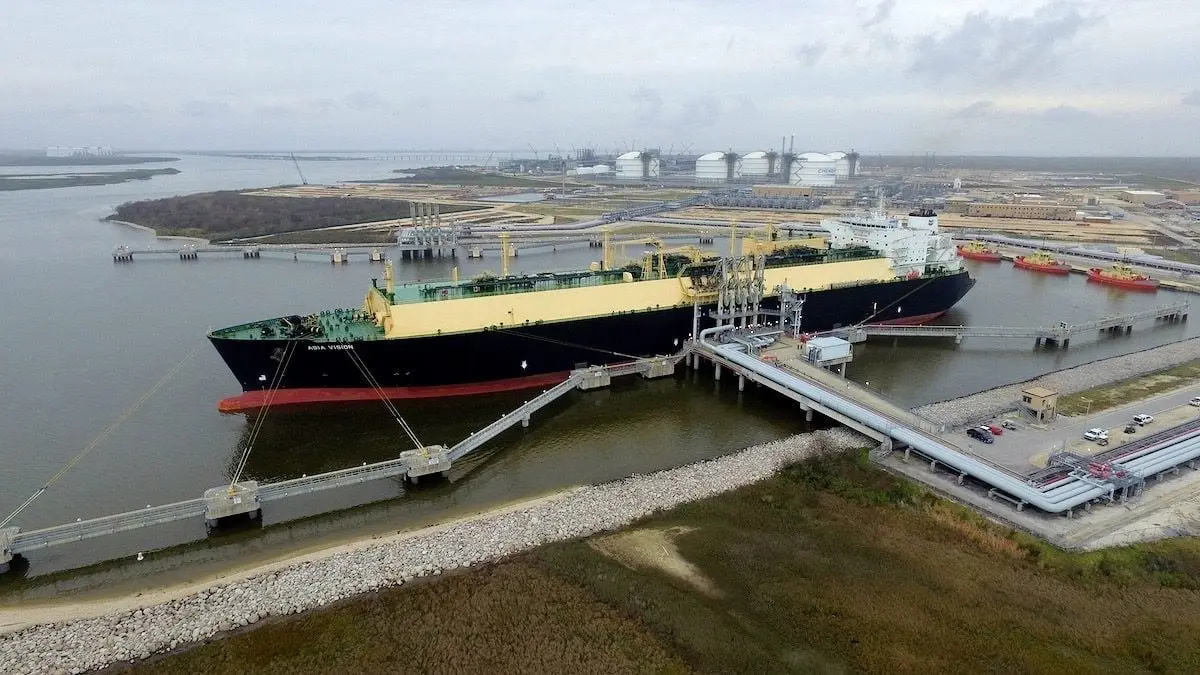
In February 2016, Cheniere made history by shipping its first commissioning cargo from the Sabine Pass LNG terminal in Louisiana. Over the subsequent seven years, the company aggressively expanded its footprint, constructing six liquefaction trains at Sabine Pass and developing a second major greenfield export facility in Corpus Christi, Texas.
The Milestone Summer of 2024
The late summer of 2024 served as a operational watershed for Cheniere, characterized by massive capacity additions and historic shipping milestones:
- August 28, 2024: Cheniere achieved substantial completion of the seventh and final midscale liquefaction train under its Corpus Christi Stage 3 expansion project. This expansion boosted the facility’s nominal production capacity by more than 20%, adding roughly 10 MTPA of nominal capacity to the site.
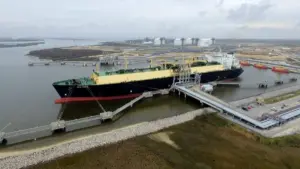
- August 29, 2024: Just one day after wrapping up the Stage 3 expansion, the LNG carrier Yari departed Sabine Pass laden with Cheniere’s 5,000th cargo. Bound for Asian markets, the milestone cargo was achieved just over eight years after the company’s inaugural export in 2016—a velocity of scale unprecedented in the global energy infrastructure sector.
Contractual Integration (2026)
Building on the momentum of its completed capital projects, Cheniere turned its attention to securing commercial commitments for its next phase of growth. The signing of the 22-year SPA with Petrobras represents a major milestone in this effort. While the exact commercial start date and pricing mechanisms remain confidential, the agreement has been integrated into Cheniere’s long-term marketing portfolio, providing the financial foundation required for the company to advance its proposed brownfield expansions at both Sabine Pass and Corpus Christi.

Supporting Context & Metrics
The Mechanics of Free-on-Board (FOB) Agreements
The inclusion of a Free-on-Board (FOB) delivery structure is a critical strategic component of the agreement. In an FOB arrangement:
- Transfer of Liability: Ownership and risk of the LNG cargo transfer to the buyer (Petrobras) at the flange connection of the export terminal’s loading dock.
- Shipping Logistics: Petrobras is entirely responsible for securing, scheduling, and paying for the LNG carriers required to transport the supercooled fuel.
- Destination Flexibility: Unlike Delivered Ex-Ship (DES) contracts, which typically bind a cargo to a specific import terminal, FOB terms grant the buyer absolute destination flexibility.
[Cheniere Export Terminal] ──(FOB Transfer at Flange)──> [Petrobras-Chartered Vessel] ──(Flexible Routing)──> Global Markets / BrazilThis destination flexibility is highly valuable to Petrobras. If domestic hydro reservoirs are full and Brazil does not require the gas for power generation, Petrobras can easily divert the cargoes to higher-priced spot markets in Europe or Asia, effectively acting as an international LNG trader and hedging its financial exposure.
Brazil’s Hydro-Dependent Grid and LNG’s Role
Brazil’s electricity sector is uniquely vulnerable to climate patterns. The country relies on hydroelectric power for approximately 60% to 65% of its total electricity generation. During periods of severe drought—which have increased in frequency due to El Niño patterns and broader climate shifts—reservoir levels drop precipitously, forcing the country to rely on expensive, fossil-fuel-fired thermal power plants to prevent widespread blackouts.
| Year | Hydropower Status in Brazil | Impact on LNG Import Demand |
|---|---|---|
| 2021 | Historic Drought (Worst in 91 years) | Imports surged to record highs to prevent grid collapse. |
| 2022–2023 | Abundant Rainfall / High Reservoirs | Import demand fell; thermal plants stood down. |
| 2024–2026 | Renewed Drought & Hydrological Volatility | Petrobras seeks long-term supply security to mitigate spot-market price spikes. |
For Petrobras, securing a 22-year, 0.8 MTPA supply agreement provides a reliable base load of natural gas. It ensures that when the rains fail, the country has guaranteed access to fuel without being entirely exposed to the highly volatile global LNG spot market.
Cheniere’s Infrastructure Footprint and Expansion Pipeline
The Petrobras contract directly supports Cheniere’s capital deployment strategy. The company’s current operational and development footprint is unparalleled in North America:
- Sabine Pass LNG (Louisiana): Currently operating six liquefaction trains with an aggregate production capacity of approximately 30 MTPA. The company is actively progressing the Sabine Pass Expansion Project, which seeks to add up to 20 MTPA of new capacity.
- Corpus Christi LNG (Texas): Following the completion of Stage 3, the facility operates three large-scale trains and seven midscale trains, yielding a total capacity of approximately 25 MTPA. Cheniere is currently pursuing "Stage 4," a proposed brownfield expansion consisting of two additional midscale trains (Trains 8 and 9) with a capacity of approximately 3 MTPA.
- Debottlenecking & Optimization: Across both facilities, Cheniere is implementing debottlenecking programs to squeeze an additional 5 MTPA of capacity out of existing infrastructure through operational efficiencies, software upgrades, and minor equipment modifications.
Official Statements
The execution of the SPA was met with strong institutional support from Cheniere’s executive leadership, highlighting the long-term mutual benefits of the transaction.
Jack Fusco, Chairman, President, and Chief Executive Officer of Cheniere, emphasized the strategic alignment between the two energy giants:
"We are pleased to enter into this multi-decade agreement with Petrobras, one of the largest energy companies in the world. This agreement provides additional commercial support and fixed-fee cash flow visibility as Cheniere considers further brownfield liquefaction growth."
Fusco also drew attention to the unprecedented duration of the contract, which extends Cheniere’s commercial reach far into the future:
"We look forward to providing our secure and reliable LNG to Petrobras into the second half of this century under this new long-term agreement."
Commercial Analysis of Official Positions
Fusco’s focus on "fixed-fee cash flow visibility" highlights the financial mechanics of modern LNG development. International debt markets typically require developers to secure long-term, creditworthy off-take agreements (SPAs) before extending project financing for new liquefaction trains. By securing a 22-year commitment from an investment-grade counterparty like Petrobras, Cheniere can present a highly de-risked revenue profile to lenders, lowering its cost of capital for future expansions such as Corpus Christi Stage 4 or the Sabine Pass Expansion Project.
Future Outlook
The Global LNG Market Post-2026
The global LNG market is expected to enter a period of structural transformation in the late 2020s. A massive wave of new supply from the U.S. Gulf Coast and Qatar is scheduled to come online, potentially easing the tight market conditions that have persisted since the 2022 European energy crisis.
However, long-term demand remains robust. While European demand may plateau in the 2030s due to aggressive decarbonization policies, emerging economies in Asia and South America are rapidly expanding their gas-to-power infrastructure. The Cheniere-Petrobras deal is a prime example of this trend, demonstrating that large industrial economies are prioritizing energy security and grid reliability over rapid, unhedged transitions to intermittent renewable energy.
Global LNG Demand Drivers (2025–2050):
├── Europe: Declining baseload, high reliance on peak/winter LNG imports.
├── Asia: Massive industrial gasification and coal-to-gas switching (China, India, Southeast Asia).
└── South America: Hydro-balancing, industrial growth, and regional pipeline shortfalls (Brazil, Chile).
Navigating the US Regulatory Landscape
As Cheniere looks to execute its next phase of brownfield growth, it must navigate an increasingly complex regulatory environment in the United States. The Department of Energy (DOE) and the Federal Energy Regulatory Commission (FERC) have faced mounting pressure from environmental groups to increase scrutiny on greenhouse gas emissions, domestic economic impacts, and environmental justice issues associated with new export terminals.
Cheniere’s focus on brownfield expansions—rather than greenfield projects—serves as a strategic advantage in this regulatory climate. Expanding existing facilities typically incurs lower environmental impacts, utilizes existing pipeline corridors, and benefits from faster permitting timelines, positioning the company to rapidly capitalize on commercial agreements like the one signed with Petrobras.
Conclusion
The 22-year SPA between Cheniere Energy and Petrobras is more than a standard commercial transaction; it is a structural link between two of the Western Hemisphere’s most important energy players. By anchoring its future expansion plans with long-term, flexible contracts, Cheniere continues to solidify its position as the undisputed heavyweight of U.S. LNG. Simultaneously, Petrobras secures the operational flexibility and fuel security necessary to guide Brazil through the hydrological uncertainties of the coming decades, ensuring that American natural gas will remain a cornerstone of South American energy security well into the second half of the 21st century.