





By Dan Berkson
Digital Advocacy Manager, Ocean Conservancy
Executive Overview
It is a paradox of modern science that humanity possesses higher-resolution maps of the lunar surface than of the very planet we call home. While astronomers can map the craters and maria of the Moon with astonishing clarity, the deep seafloor—which covers over two-thirds of the Earth’s surface and is roughly ten times larger than the lunar surface area—remains shrouded in mystery.
The reasons are largely environmental. Unlike our airless, waterless satellite, which can be observed directly from orbital spacecraft, the Earth’s ocean floor is hidden beneath miles of opaque, crushing water. The deep sea is a biome defined by extremes: pitch darkness, near-freezing temperatures, and barometric pressures that would instantly crush conventional engineering.

Yet, as human pressures on the planet escalate, exploring and understanding this alien realm is no longer merely an academic pursuit. It is an urgent ecological imperative. From regulating global climate systems to harboring entirely unknown biological ecosystems, the deep sea is the life-support system of our blue planet. However, it is increasingly imperiled by anthropogenic threats—foremost among them, the looming specter of deep-sea mining.
Detailed Chronology: A Century of Unlocking the Deep
To appreciate the modern capabilities of oceanography, one must look back at how scientists have incrementally pushed back the boundaries of the dark. The journey from crude weighted lines to autonomous robotic submersibles is a testament to human ingenuity.
- The Late 1800s: The Dawn of Modern Oceanography
The baseline of modern marine science was established during the historic expedition of the HMS Challenger (1872–1876). Undertaking the first global, comprehensive oceanographic survey, scientists aboard the vessel used heavy dredges and biological trawls to drag the bottom of the sea, pulling up unknown deep-sea samples. This monumental effort proved definitively that life could exist in the freezing, dark depths previously thought to be a biological desert. - The Mid-1900s: The Rise of Indirect Observation
As the twentieth century progressed, exploration shifted from the physical recovery of specimens to indirect sensing. The invention and refinement of sonar technology revolutionized oceanography. For the first time, scientists could map the topography of the seafloor and sample marine sediment without ever laying eyes on it, utilizing sound waves to pierce the murky water column. - The 1960s: The Robotic Revolution Begins
The 1960s ushered in the era of Remotely Operated Vehicles (ROVs). These tethered, highly maneuverable underwater robots allowed researchers to place mechanical "eyes and hands" into the deep ocean. Controlled from a surface vessel, ROVs could withstand pressures that would crush humans, streaming real-time video and collecting delicate biological samples from the ocean floor. - The 1980s: Autonomy Takes the Helm
Building upon tethered technology, the 1980s introduced Autonomous Underwater Vehicles (AUVs). These untethered robotic submersibles operate independently, following pre-programmed mission profiles to navigate underwater canyons, map abyssal plains, and gather oceanographic data without requiring a physical umbilical cord to a ship. - The Modern Era: Precision and Preservation
Today, a sophisticated suite of technologies—including advanced ROVs, AUVs, high-resolution acoustic imaging, and permanent deep-sea observatory networks—allows scientists to study the deep sea with unprecedented precision. Yet, despite these leaps forward, humanity has visually observed less than 0.001 percent of the deep seafloor, leaving a vast frontier waiting to be understood—and protected.
Supporting Context & Metrics: The Realm of the Extremes
Defining the deep sea requires looking past the sunlit coastal waters into the vast, abyssal expanses of our globe. Scientifically, the deep sea begins at 200 meters (656 feet) below the surface—a threshold known as the twilight or disphotic zone. Beyond this depth, sunlight fades to virtually nothing, and the ambient temperature drops to a chilling average of 4°C (39°F).
Perhaps the most formidable obstacle in deep-sea exploration is hydrostatic pressure. Water is heavy—far heavier than air—and pressure increases exponentially with depth. For every 10 meters (32.8 feet) a submersible or diver descends, pressure increases by one atmosphere (equivalent to standard sea-level air pressure).

To put this into perspective:
- At the surface, an organism experiences 1 atmosphere of pressure.
- At 200 meters deep, the pressure climbs to 21 atmospheres—one from the air above and 20 from the crushing weight of the water column.
- At the abyssal depths where scientists deploy modern exploration vehicles, pressures can reach thousands of pounds per square inch, capable of imploding unreinforced steel in milliseconds.
These punishing conditions—near-total darkness, sub-zero temperatures, and immense pressure—explain why the deep ocean remains the least-explored biome on Earth. However, the lack of human visibility does not mean the deep sea is isolated from human activity. On the contrary, the deep ocean is fundamentally linked to the health of the entire biosphere, driving global ocean currents, sequestering carbon, and anchoring marine food webs.
Official Statements and Scientific Insights
The imperative to study and safeguard the deep sea has galvanized international scientific communities and conservation organizations. Experts point out that deep-sea observation networks are critical infrastructure for understanding planetary health.
Initiatives like the Ocean Observatories Initiative (OOI) provide continuous, real-time data streams from strategic locations across the globe. By tracking coastal environments, deep-water marine ecosystems, and the powerful thermohaline currents that regulate global climate, these observatories empower scientists to anticipate environmental shifts. The data harvested from these deep-sea systems is instrumental in predicting seismic events, forecasting severe weather patterns, monitoring the health of commercial fisheries, and preparing vulnerable coastal communities for sea-level rise and flooding.
However, marine scientists and conservation advocates warn that our newfound ability to reach the deep ocean is currently being leveraged for exploitation rather than exploration. Organizations such as Ocean Conservancy have sounded the alarm regarding the rapid expansion of industrial ambitions in the abyss.
In official statements responding to recent policy shifts—including executive actions aimed at fast-tracking maritime mineral extraction—conservation leaders have forcefully condemned the push toward deep-sea mining. Extracting polymetallic nodules from the abyssal plains poses a direct and unprecedented threat to marine biodiversity. Experts emphasize that the physical destruction of delicate, slow-growing benthic habitats, the generation of toxic underwater sediment plumes, and the severe acoustic pollution caused by heavy mining machinery could inflict irreversible damage on ecosystems that took millions of years to form.
Future Outlook: Protecting the Abyss Before It’s Too Late
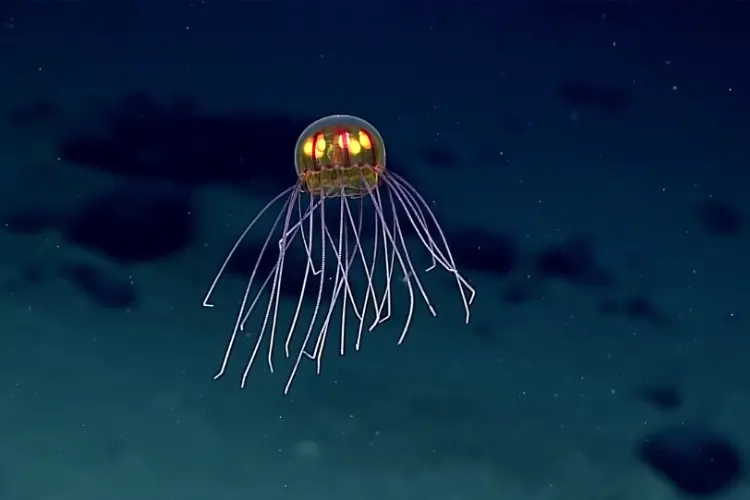
As we look toward the future, the dual tracks of deep-sea exploration and environmental advocacy must run parallel. On one hand, technological advancements will undoubtedly continue to unveil the breathtaking biodiversity of the deep—discovering new species, unearthing geological secrets, and expanding our comprehension of life’s tenacity on Earth.
On the other hand, this very window of discovery threatens to become a window of destruction. If industrial actors are permitted to rush into the abyss for short-term mineral gains, humanity risks destroying unique, irreplaceable ecosystems before we even have the chance to study and understand them. The consequences would ripple upward, disrupting fisheries, destabilizing marine food webs, and removing vital carbon sinks critical to mitigating global climate change.
The deep sea is not a wasteland out of sight and out of mind; it is the beating heart of our planet’s ocean systems. Understanding the abyss has never been more critical, and neither has the fight to defend it.
Take action now to ensure our ocean is protected before industrial mining gains an even larger foothold. Add your voice and urge policymakers to halt deep-sea mining before the damage becomes irreversible.