







Executive Overview
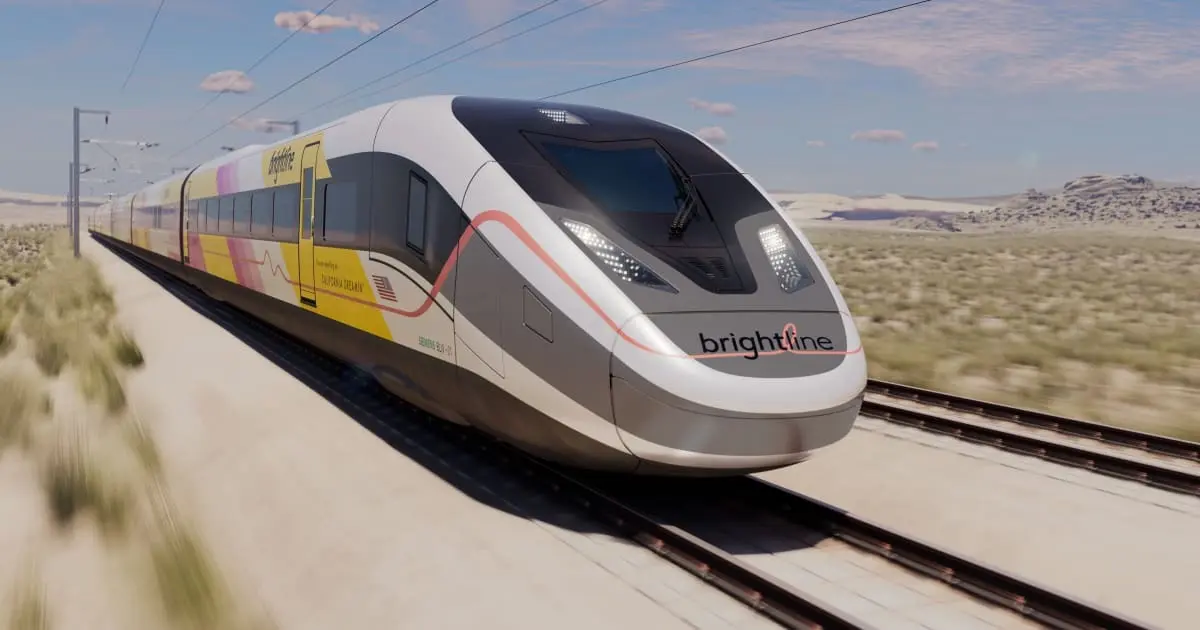
Florida’s premier private intercity passenger rail service, Brightline, has entered into a definitive Restructuring Support Agreement (RSA) with key financial stakeholders—including Assured Guaranty Inc. and an ad hoc group of mutual fund bondholders—designed to dramatically deleverage its balance sheet and inject substantial fresh liquidity into the enterprise.
The comprehensive financial realignment is backed by a committed $490 million in new long-term capital earmarked specifically for Brightline Trains Florida LLC. This capital injection is structured as a combination of $140 million in additional senior debt and $350 million in new junior debt. According to corporate leadership, the agreement will fortify the rail operator’s financial foundation, matching its expanding operational footprint and revenue momentum with a fortified balance sheet.
Crucially, the restructuring is designed to be seamless for the traveling public. To implement the RSA, certain non-operating parent entities of Brightline have initiated prearranged Chapter 11 proceedings in the U.S. Bankruptcy Court for the District of New Jersey. However, Brightline Trains Florida LLC—the operating entity responsible for running the trains—as well as other vital holding companies controlling commuter and expansion development rights (including those for Miami-Dade, Broward, Palm Beach, and Tampa), are not filing for Chapter 11. These entities will continue to operate completely in the ordinary course of business under existing management teams.

Major existing debt instruments, including the $2.2 billion Brightline Trains Florida LLC Issue Series 2024 (Tax-Exempt) Bonds (backed by Assured Guaranty’s bond insurance policy), the $985 million Passenger Rail Expansion Project Series 2025B Bonds, and nearly $1.2 billion in aggregate AAF Operations Holdings LLC tax-exempt bonds, will remain fully outstanding with no reduction in aggregate principal amounts.
Company executives emphasize that this is a balance-sheet restructuring intended to support long-term scalability rather than an operational retrenchment. Bolstered by a 14% year-over-year increase in total revenues through the first eight months of 2026, Brightline stands poised to cement its status as a transformative pillar of modern American passenger rail.
Detailed Chronology and Restructuring Mechanics
The Anatomy of the Restructuring Support Agreement
The path to the RSA represents months of collaborative negotiations between Brightline’s financial stakeholders, institutional bondholders, and primary financial guarantors such as Assured Guaranty. Facing a capital-intensive capital structure following massive infrastructure buildouts—most notably the multi-billion-dollar extension connecting South Florida to Orlando International Airport—the company pursued a prearranged legal framework to right-size its obligations without disrupting passenger operations.
Under the terms of the RSA:
- Fresh Capital Commitment: Supporting stakeholders have pledged $490 million in fresh long-term capital. This is strategically divided into $140 million of senior debt and $350 million of junior debt, providing a substantial cash runway and liquidity buffer.
- Bond Preservation: The structural integrity of Brightline’s massive municipal and tax-exempt bond issuances remains largely untouched. The $2.2 billion Brightline Trains Florida LLC Issue Series 2024 (Tax-Exempt) Bonds, along with the accompanying Assured Guaranty insurance policy, will remain fully in place.
- Unimpaired Expansion and Holding Bonds: Several key debt instruments will remain outstanding with zero reduction in aggregate principal amounts. These include:
- The $985 million Brightline Florida Passenger Rail Expansion Project Series 2025B Bonds.
- The $925 million AAF Operations Holdings LLC Issue Series 2024 (Tax-Exempt) Bonds.
- The $285.7 million AAF Operations Holdings LLC Issue Series 2024A (Tax-Exempt) Bonds.
Legal Path: Prearranged Chapter 11 in New Jersey
To enact the restructuring terms efficiently and secure binding legal validation from its creditor base, certain Brightline parent entities filed prearranged Chapter 11 petitions in the U.S. Bankruptcy Court for the District of New Jersey.
A prearranged bankruptcy allows a company to negotiate terms with its major creditors before filing court papers, drastically shortening the time spent under court supervision and mitigating negative market perceptions. Certain obligations tied to the new financing—specifically those involving the non-operating parent entities—remain subject to formal final approval by the Bankruptcy Court.
Shielding Operations and Development Rights
A core tenet of Brightline’s restructuring strategy is the legal insulation of its operating and future development subsidiaries from the Chapter 11 process.
- Brightline Trains Florida LLC: The core operating company that manages train crews, station operations, maintenance facilities, and daily scheduling will not file for bankruptcy protection. Trains will continue to run on schedule, ticketing systems will remain operational, and customer-facing services will experience zero interruption.
- Brightline Florida Holdings LLC: The indirect holder of development rights for commuter rail service across Miami-Dade, Broward, and Palm Beach counties is excluded from the court proceedings.
- AAF Operations Holdings LLC: The entity holding the vital development rights for the prospective expansion corridor toward Tampa is similarly shielded, ensuring that long-term regional planning remains on track.
Supporting Context and Metrics
The Genesis and Evolution of Brightline’s Corridor
Brightline represents a historic milestone in modern American transportation: the nation’s first privately owned, operated, and maintained intercity passenger rail system developed in more than a century. Operating along an approximately 235-mile corridor, the system forms the backbone of passenger mobility across peninsular Florida.
The network’s timeline reflects rapid, aggressive capital deployment:
- 2018: Initial launch of South Florida operations, establishing high-speed regional links between Miami, Fort Lauderdale, and West Palm Beach.
- 2022: System expansion with the opening of new urban-core stations in Boca Raton and Aventura, enhancing localized connectivity.
- September 2023: The historic launch of service to Orlando International Airport, following the completion of a massive 170-mile extension north from West Palm Beach.
The Orlando expansion was the crown jewel of a staggering $6 billion total project investment. This monumental undertaking involved comprehensive upgrades to rail tracks, advanced signaling systems, dozens of grade crossings, structural bridge renovations, and the construction of state-of-the-art maintenance facilities capable of servicing high-speed trainsets.
Operational Footprint and Financial Vitality
Today, Brightline operates approximately hourly service connecting South Florida and Central Florida from early morning through late evening. The service bridges a critical geographical gap—distances that are too short to justify the friction of commercial air travel, yet excessively tedious and congested when driven by car on highways like Interstate 95 or the Florida Turnpike.
Despite the heavy debt burdens incurred during the construction phase, the operational fundamentals of the business have demonstrated robust health:
- Revenue Growth: Company officials reported a stellar 14% year-over-year increase in total revenues through the first eight months of 2026.
- Ridership Expansion: Passenger volumes have steadily climbed as business commuters, tourists, and leisure travelers integrate the high-speed rail line into their regular travel habits between Orlando and the major South Florida metropolitan hubs.
Official Statements
Corporate leadership has moved swiftly to reassure the public, investors, and municipal partners that the financial restructuring is a sign of proactive corporate governance rather than operational distress.
Patrick Goddard, CEO of Brightline Florida, emphasized the alignment between the company’s operational momentum and the financial backing of its seasoned investors:
"Brightline is a critical part of Florida’s transportation network that has changed the way people move around the state. Today’s agreement brings $490 million in new long-term capital to Brightline from the stakeholders who know this business, and it comes at a time of real momentum. This transaction will be a catalyst for further growth in ridership and revenue. We are grateful to our creditors, advisors, vendors, teammates, and guests for their confidence throughout this process, and we look forward to the bright future ahead."
Echoing these sentiments, Nicolas Petrovic, CEO of Brightline Train Development LLC, underscored that the legal restructuring will have zero bearing on the passenger experience:
"This is a financial restructuring that is not expected to impact operations. It will give Brightline the balance sheet to match the growth we’re already seeing across the business. Brightline continues to grow, and the business is strong."
Financial stakeholders have likewise expressed sustained confidence in the long-term viability of private high-speed rail in Florida. By committing nearly half a billion dollars in fresh capital, major bondholders and institutions like Assured Guaranty are signaling that the structural demand for rapid, sustainable passenger transit along the Florida corridor is enduring and highly bankable.
Future Outlook
With the RSA framework in place and $490 million in fresh capital moving toward final court approval, Brightline enters a new chapter of its corporate evolution. The elimination of near-term liquidity pressure frees management to focus entirely on core operational execution, service reliability, and passenger experience enhancements.
Catalysts for Future Growth
- Ridership Optimization: As familiarity with the Orlando-to-Miami route deepens among domestic and international travelers, marketing and partnership campaigns (particularly with theme parks, cruise lines, and regional airports) are expected to drive higher load factors.
- Commuter Expansion Planning: With development rights for Miami-Dade, Broward, and Palm Beach counties preserved and insulated from the restructuring, Brightline remains positioned to integrate localized commuter rail concepts into its intercity network.
- The Tampa Extension Horizon: The preservation of AAF Operations Holdings LLC ensures that preliminary planning and corridor development rights toward Tampa remain intact, keeping alive the vision of a true statewide high-speed rail spine connecting Tampa, Orlando, and Miami.
As passenger rail continues to capture the imagination of federal policymakers, environmental planners, and transit riders nationwide, Brightline’s successful financial reboot serves as an important case study. By pairing bold private infrastructure investment with pragmatic financial restructuring, Brightline is proving that modern intercity rail can weather capital market cycles while reshaping the geographical fabric of America’s fastest-growing state.