









Executive Overview
In an aggressive push to reshape the future of American tourism, top executives from the nation’s leading hospitality, aviation, and travel distribution sectors have formally requested a commitment from the Trump administration to achieve a monumental milestone: welcoming over 100 million international visitors annually by 2030.
If realized, this ambitious target would elevate the United States to the position of the world’s most-visited country, wresting the prestigious title from France, which has long reigned supreme as the globe’s premier tourist destination.
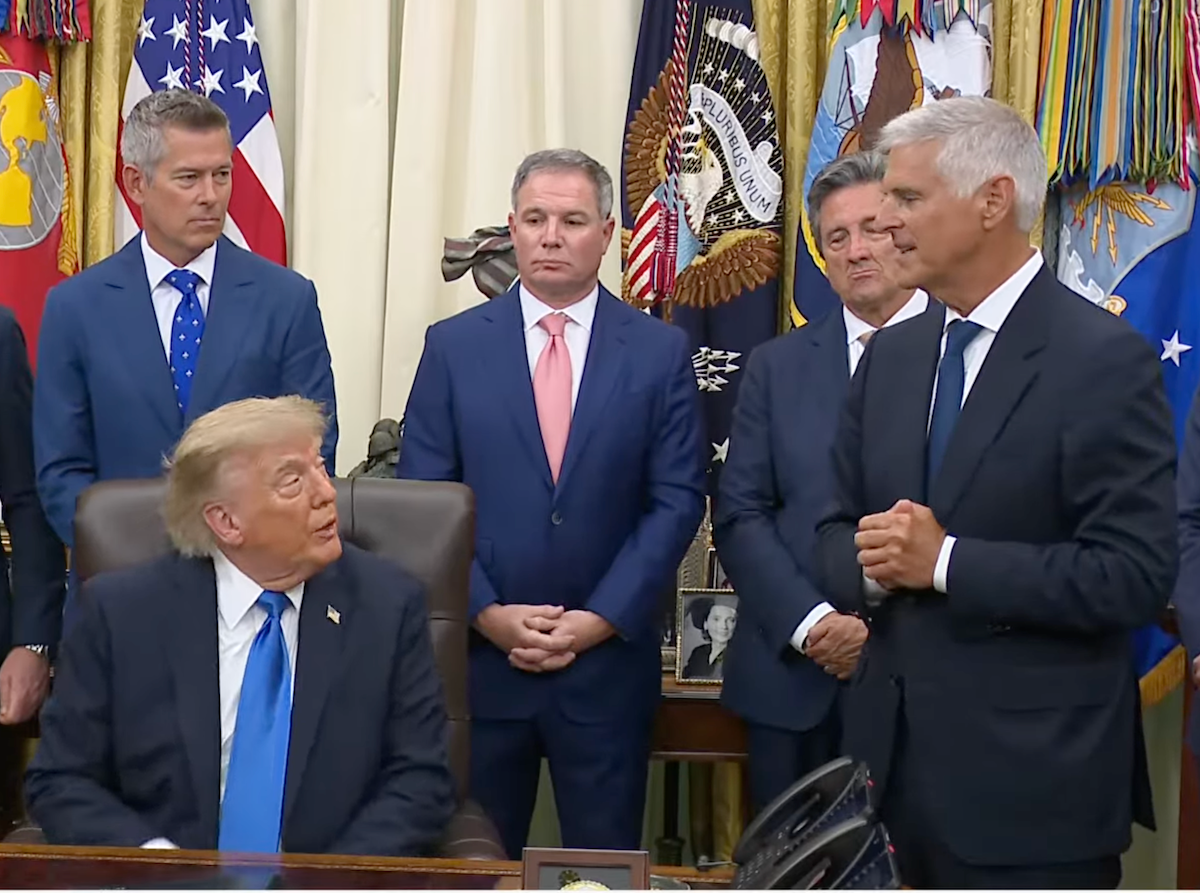
The proposal was unveiled during a high-stakes, closed-door meeting at the White House between President Donald Trump and an elite delegation of travel industry leaders. The contingent included top executives from the U.S. Travel Association, global hospitality giants Hilton and Marriott International, legacy carrier American Airlines, and online travel titan Booking Holdings, alongside other foundational pillars of the American visitor economy.
Reaching the 100 million threshold would represent a staggering 46 percent increase over projected 2025 arrival figures and would outpace the nation’s pre-pandemic peak—recorded in 2019 at approximately 79.4 million visitors—by roughly 25 percent.
While the vision is undeniably bold, it arrives at a complex macroeconomic and geopolitical juncture. The U.S. inbound tourism market has faced stubborn headwinds, struggling with a post-pandemic recovery curve that has lagged behind regional competitors. However, industry stakeholders argue that a concerted public-private partnership, turbocharged by a succession of upcoming mega-events anchored by the 2026 FIFA World Cup, can catalyze an unprecedented renaissance in American travel and tourism.
Detailed Chronology: From Strategy Rooms to the Oval Office
The Genesis of a Grand Strategy
The roadmap toward the 100-million-visitor goal was not born overnight. For months, data scientists, policy analysts, and strategy teams within the U.S. Travel Association and major corporate headquarters had been quietly modeling the long-term carrying capacity and economic multipliers of the American tourism sector. Recognizing that traditional growth trajectories would leave the U.S. trailing behind aggressive European and Asian tourism boards, industry leadership coalesced around a singular, disruptive objective: leapfrogging France by the end of the decade.
The strategy hinged on identifying the structural barriers that have historically suppressed inbound travel to the United States—chiefly, notoriously lengthy visa interview wait times, cumbersome customs processing, and a lack of coordinated, federally funded international marketing campaigns akin to those deployed by competitor nations.

The Wednesday White House Summit
The culmination of these preparatory efforts materialized on a Wednesday in Washington, D.C., when President Trump sat down with the CEO-level delegation from the U.S. Travel Association, Hilton, Marriott, American Airlines, and Booking Holdings.
The meeting, characterized by participants as pragmatic and forward-looking, focused squarely on how the federal government can act as a strategic enabler for the private sector. Rather than asking for direct subsidies, the travel executives framed their pitch around infrastructure optimization, visa processing modernization, and leveraging upcoming international spectacles to permanently alter the global perception of U.S. accessibility.
During the summit, industry leaders laid out the arithmetic of ambition:
- The Current Baseline: Projected 2025 international arrivals hovering around 68.5 million.
- The Pandemic Benchmark: The 2019 high-water mark of 79.4 million.
- The 2030 Target: 100 million-plus international arrivals, injecting hundreds of billions of dollars directly into local economies, creating millions of jobs, and narrowing the U.S. trade deficit through service exports.
President Trump, known for his affinity for scale, grand architectural projects, and economic metrics that break records, expressed receptive interest in the blueprint. The administration acknowledged that regaining and surpassing pre-pandemic dominance requires a unified national strategy that cuts across bureaucratic silos.
Supporting Context & Metrics: The Numbers Behind the Ambition
Deconstructing the 46% Leap
To fully appreciate the magnitude of a 100-million-visitor target, one must examine the baseline metrics governing the current state of American tourism.
| Metric Category | Historical Peak (2019) | Current Projected (2025) | Proposed Target (2030) |
|---|---|---|---|
| Total International Arrivals | 79.4 Million | ~68.5 Million | 100+ Million |
| Global Ranking | #3 (Behind France & Spain) | #3 | #1 (Surpassing France) |
| Percentage Growth Required | N/A | +46% from 2025 | +25% from 2019 Peak |
Achieving a 46 percent surge from projected 2025 levels over a five-year window demands a compound annual growth rate (CAGR) that few mature tourism markets have ever achieved organically. It requires not only capturing pent-up demand from traditional feeder markets like the United Kingdom, Canada, and Western Europe, but aggressively scaling acquisition in hyper-growth economies across the Asia-Pacific region, Latin America, and the Middle East.
The 2026 World Cup Catalyst
A cornerstone of the industry’s pitch to the White House centers on the 2026 FIFA World Cup. As the largest tournament in the history of the sport, the event was co-hosted across 11 dynamic U.S. cities alongside five additional host markets spanning Canada and Mexico.
Industry executives view the World Cup not merely as a multi-week sporting spectacle, but as a generational marketing and operational testbed. The tournament provided an invaluable opportunity to showcase streamlined entry procedures, modern transportation networks, and world-class hospitality infrastructure to billions of television viewers and millions of traveling supporters.
However, the reality on the ground has underscored the friction that still plagues the U.S. travel ecosystem. Despite the euphoric atmosphere generated by the tournament, official data revealed a stark paradox: inbound visitation from overseas markets was actually down year-over-year during the crucial June and July months of the event.
Analysts point to several compounding factors for this summer slump:
- Visa Backlogs: Prospective travelers in high-potential markets such as India, Brazil, and parts of Southeast Asia faced debilitating visa interview wait times stretching past 400 days in some consular districts.
- The "Strong Dollar" Effect: The relative strength of the U.S. dollar made travel to American cities significantly more expensive compared to competing destinations in Europe, Asia, or South America.
- Consumer Price Pressures: Elevated domestic inflation rates translated into higher costs for lodging, dining, and internal transportation within the United States.
Despite these June and July dips, both the Trump administration and industry leaders continue to view the World Cup as an overarching success in terms of demonstrating operational resilience. The event served as concrete proof that U.S. infrastructure can absorb massive global influxes when federal agencies coordinate effectively with municipal and private partners.
Official Statements and Industry Perspectives
The urgency of the 100-million-visitor initiative has galvanized leaders across the travel, aviation, and hospitality sectors. While optimism runs high, stakeholders are under no illusions regarding the policy heavy-lifting required to turn the White House pitch into operational reality.
The U.S. Travel Association’s Stance
Speaking on the condition of anonymity prior to the formal release of white papers, senior officials within the U.S. Travel Association emphasized that American competitiveness is at a crossroads.
"For decades, the United States has rested on its laurels, relying on our natural wonders, cultural influence, and iconic cities to drive tourism organically," a leading travel policy analyst noted. "In the modern global economy, tourism is an intensely managed, highly competitive geopolitical battleground. France, Spain, and emerging destinations across Asia do not leave arrival numbers to chance; they deploy coordinated state-level strategies. Reaching 100 million visitors means we must finally treat international travel as the critical export industry that it is."
Hospitality Giants Weigh In
Executives from Hilton and Marriott International stressed that capacity expansion and workforce development must run parallel to international marketing pushes.
"When you talk about welcoming an additional 30 million travelers over the next several years, you are talking about an immediate strain on hotel inventory, culinary supply chains, and, most importantly, human capital," said a senior executive close to the negotiations. "Our discussions with the administration centered heavily on creating an immigration and labor policy environment that ensures our hotels, theme parks, and restaurants have the skilled workforce required to deliver the gold standard of American hospitality."
The Aviation and Distribution Perspective
Aviation leaders, represented by executives from American Airlines and distribution giants like Booking Holdings, underscored the pivotal role of airlift capacity and frictionless digital infrastructure.
For the U.S. to capture market share, international carriers must be granted the route authorities and slot flexibilities necessary to open new direct corridors connecting secondary and tertiary international hubs directly to American gateway cities. Concurrently, digital travel platforms highlighted the necessity of upgrading government digital portals—such as the Electronic System for Travel Authorization (ESTA)—to make the pre-trip planning experience as seamless as booking a ride-share.
Future Outlook: The Road to 2030
As the dust settles on the Oval Office summit, the real work begins. Translating a bold conceptual target into an executable national strategy will test the resolve of both the Trump administration and the private sector.
Key Policy Pillars for the Next Five Years
To successfully bridge the gap between 68.5 million projected visitors in 2025 and the 100-million-plus goal by 2030, industry consensus points to four non-negotiable policy imperatives:
- Radical Reduction of Visa Wait Times: The State Department must institutionalize permanent processing reforms, including expanded interview waiver authorities, increased staffing at high-volume consular posts, and the integration of artificial intelligence into preliminary vetting workflows.
- Establishment of a Federal Tourism Office: Unlike many of its G7 peers, the United States lacks a cabinet-level or federally funded national tourism board dedicated to international destination marketing. Industry leaders are pushing for a dedicated federal mechanism to co-invest in global promotional campaigns alongside the private sector.
- Modernization of Port-of-Entry Infrastructure: Continued investment in biometric screening, expedited mobile passport applications, and terminal expansions across major international airports (such as JFK, LAX, ORD, and MIA) will be vital to eliminating bottlenecks upon arrival.
- Leveraging the Decade of Mega-Events: The 2026 FIFA World Cup is merely the opening act. The United States is slated to host a succession of monumental global gatherings, including the 2028 Summer Olympic and Paralympic Games in Los Angeles and the celebrations surrounding America’s Semiquincentennial (America250) in 2026. These milestones provide built-in milestones to maintain international media focus and promotional momentum.
Conclusion: Can the U.S. Claim the Crown?
Dethroning France as the world’s most-visited nation is an audacious aspiration. France has long enjoyed structural advantages, including geographic proximity to densely populated European feeder markets, deeply entrenched culinary and cultural tourism branding, and robust state-backed promotion.
Yet, the United States possesses unmatched drawing power. From the neon glow of Times Square and the natural majesty of the Grand Canyon to the cultural capital of Hollywood and the historic routes of the American interior, the global appetite for the "American Experience" remains inherently robust.
If the Trump administration and travel industry executives can successfully align regulatory reform, visa modernization, and aggressive international marketing around the roadmap presented in Washington, the 100-million-visitor target may well transform from an ambitious pitch into a defining economic triumph of the decade. The race for the global tourism crown is officially underway.