







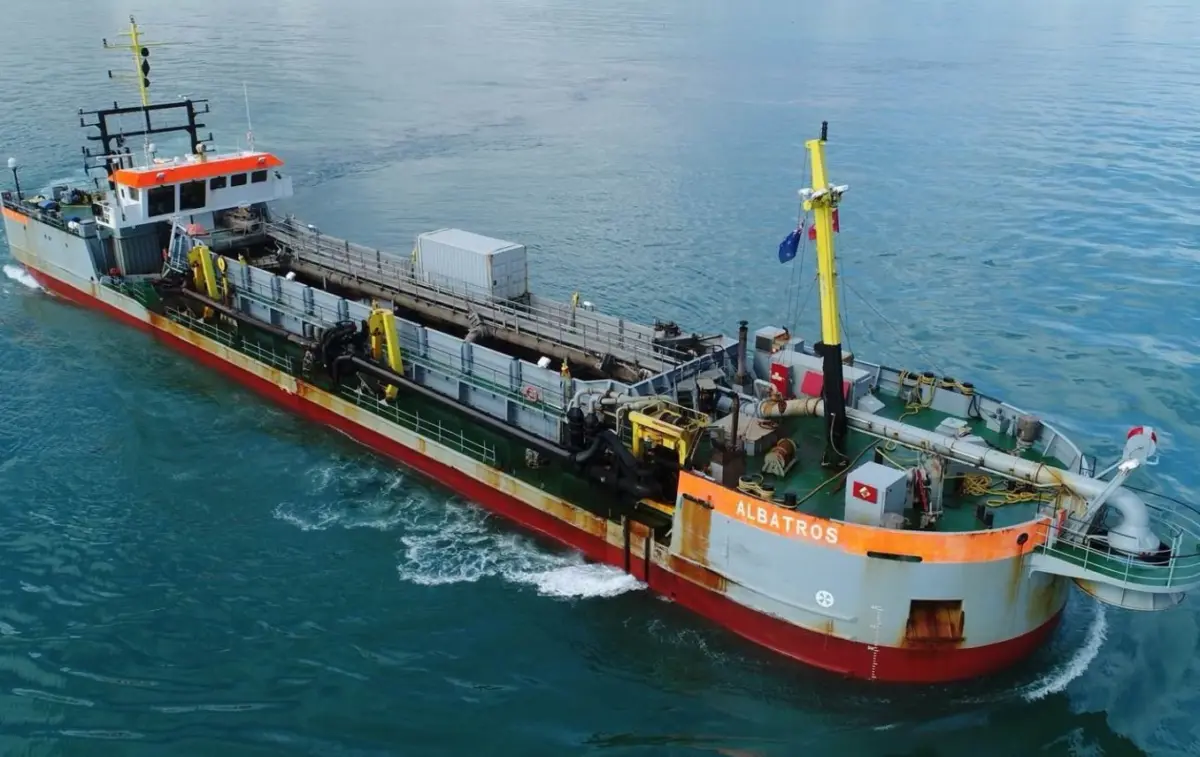
WELLINGTON, NEW ZEALAND — Maritime trade and commercial navigation in the Greater Wellington region are set to enter a period of enhanced operational efficiency as preparations reach their final stages for a major maintenance dredging campaign. Beginning Sunday, August 23, 2026, the trailing suction hopper dredger (TSHD) Albatros, owned and operated by Dutch Dredging, will deploy to the waters of New Zealand’s lower North Island.
The vessel, known for its precision engineering and high-performance capability in complex maritime environments, has been tasked with clearing accumulated sediment that threatens the navigable depths of key shipping lanes within the harbor. For a port city that relies heavily on uninterrupted maritime supply chains, passenger ferries, and international cargo vessels, the arrival of the Albatros marks a vital step in maintaining the economic lifeline of the region.
Executive Overview: Securing Wellington’s Maritime Gateway
The upcoming maintenance dredging project in Greater Wellington harbor is more than a routine clearance of sediment; it is an essential engineering intervention designed to safeguard the region’s economic and logistical connectivity. Over time, natural hydrological processes—including tidal action, coastal currents, and sediment transport—have driven the accumulation of sand mounds across critical sections of the harbor floor.
Left unaddressed, these shifting bathymetric profiles present significant navigational hazards to deep-draft commercial ships, container vessels, and inter-island ferries. The deployment of Dutch Dredging’s TSHD Albatros directly addresses these vulnerabilities. Operating between the designated zones of Falcon Shoal and Hinds Point, the vessel will systematically remove the bottlenecked sand deposits, restoring design depths and ensuring that the port can accommodate modern commercial shipping traffic safely and efficiently.
This authoritative overview examines the multi-layered significance of the operation, detailing the operational chronology, the technical capabilities of the TSHD Albatros, the broader economic and environmental context of capital and maintenance dredging in New Zealand, and the long-term outlook for harbor infrastructure management in the Asia-Pacific region.
Detailed Chronology: Mobilization and Operational Roadmap
The timeline leading up to the commencement of dredging operations on August 23, 2026, reflects meticulous planning and coordination between local port authorities, regional councils, and international marine contractors.
Phase I: Pre-Operational Surveys and Bathymetric Mapping
In the weeks preceding the arrival of the Albatros, hydrographic survey teams conducted comprehensive multibeam echosounder surveys across Greater Wellington harbor. These surveys mapped the exact contours of the seabed, identifying the precise volume, composition, and location of the sand mounds concentrated between Falcon Shoal and Hinds Point. By establishing a high-resolution baseline, engineers were able to optimize the dredging paths, minimizing operational downtime and reducing unnecessary fuel consumption and emissions.
Phase II: Arrival and Equipment Integration
Upon completing international transit and regulatory clearance procedures, the TSHD Albatros docked locally to undergo final safety inspections, crew rotations, and mobilization checks. Dutch Dredging’s technical superintendents worked alongside local maritime pilots to integrate the vessel’s dredging computer systems with Greater Wellington’s vessel traffic services (VTS). This ensures seamless communication between the dredge master, local harbor control, and incoming commercial traffic.
Phase III: Execution of Dredging Operations (Commencing August 23)
Beginning Sunday, August 23, the Albatros will commence round-the-clock dredging operations within the designated project zones. Utilizing its trailing suction pipe and heavy-duty onboard centrifugal pumps, the vessel will vacuum up sand and sediment from the seabed, storing the material in its internal hopper bay. Once loaded to capacity, the vessel will navigate to designated offshore placement sites to discharge the material, subsequently returning to the dredging grounds to repeat the cycle.
+-------------------------------------------------------------------+
|               TSHD ALBATROS: OPERATIONAL CYCLE                    |
+-------------------------------------------------------------------+
|  1. Draghead Lowering  -->  2. Suction & Sediment Collection      |
|           ^                               |                       |
|           |                               v                       |
|  4. Return to Zone     <--  3. Navigation & Offshore Discharge    |
+-------------------------------------------------------------------+
Phase IV: Post-Dredging Verification and Handover
Upon completion of the sediment removal campaign, final hydrographic sweep surveys will be executed. These surveys are mandatory to verify that all targeted shoals between Falcon Shoal and Hinds Point have been reduced to safe navigational depths. Once Greater Wellington harbor authorities sign off on the post-dredging bathymetry, the Albatros will demobilize, leaving behind a restored, deep-water corridor capable of supporting the region’s projected maritime traffic for the foreseeable future.
Supporting Context, Technical Metrics, and Infrastructure
To fully appreciate the scope of the Wellington harbor project, it is necessary to examine the technical profile of the vessel involved and the unique environmental dynamics of the region.
The Engineering Profile of TSHD Albatros
Dutch Dredging’s TSHD Albatros represents a benchmark in modern medium-scale dredging technology. Trailing suction hopper dredgers are self-propelled vessels equipped with large-capacity sediment storage holds (hoppers). As the vessel moves slowly across the dredging area, trailing suction pipes—fitted with specialized dragheads—are lowered to the seabed. Water and sediment are sucked up via powerful onboard dredge pumps and deposited into the hopper, where heavier sand particles settle out while excess water is discharged overboard via overflow systems.
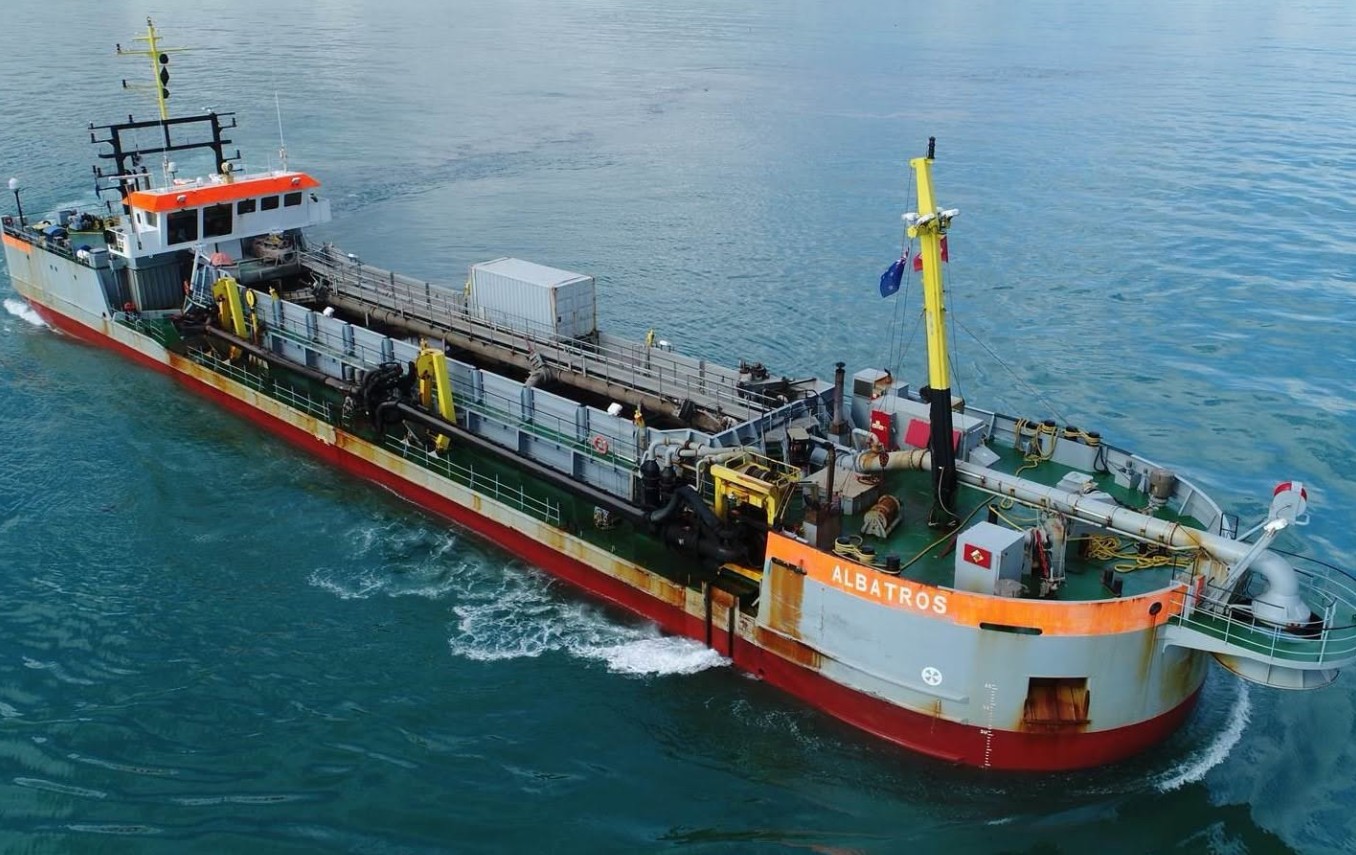
- Vessel Classification: Trailing Suction Hopper Dredger (TSHD)
- Primary Operator: Dutch Dredging (family-owned marine contractor with global expertise)
- Operational Focus: Maintenance dredging, capital dredging, port deepening, and coastal protection
- Key Advantages: High maneuverability, shallow draft capabilities, minimal disruption to active port traffic, and advanced automation for precise depth control.
Hydrodynamics of Greater Wellington Harbor
Greater Wellington harbor is characterized by complex wind patterns, strong tidal currents, and dynamic sediment transport pathways. The stretch between Falcon Shoal and Hinds Point is particularly susceptible to shoaling due to the convergence of littoral drift and riverine sediment inputs.
Without regular maintenance dredging campaigns, natural sand accumulation creates shallow spots that force commercial vessels to lightload—carrying less cargo to reduce their draft—or face the risk of grounding. By maintaining channel depths through targeted interventions like the upcoming Albatros deployment, the port ensures maximum payload efficiency for shipping lines and protects the economic viability of the supply chain.
Official Statements and Industry Perspectives
The commissioning of the TSHD Albatros has drawn positive responses from regional authorities, port operators, and maritime industry associations, all of whom emphasize the critical importance of maintaining reliable marine infrastructure.
Regional Leadership on Port Accessibility
Representatives from Greater Wellington have consistently highlighted the strategic imperative of keeping shipping channels clear. In official project briefings, regional infrastructure planners noted that proactive maintenance dredging is fundamental to sustainable regional development.
"Our harbors are the primary maritime gateways connecting New Zealand to global markets," noted a regional infrastructure spokesperson. "Ensuring that vessels can navigate safely between Falcon Shoal and Hinds Point without tidal restrictions is vital for supply chain resilience, safety, and economic prosperity."
Dutch Dredging’s Global Expertise
Dutch Dredging, known for executing complex maritime projects across Europe, the Caribbean, and the Asia-Pacific region, has expressed pride in its ongoing partnership with New Zealand authorities. Company representatives underscored the importance of executing the Wellington project with high environmental standards and minimal disruption to local marine ecosystems.
“Maintenance dredging requires a delicate balance between engineering precision and environmental stewardship,” said a project manager for Dutch Dredging. “The TSHD Albatros is exceptionally well-suited for this environment. Our crew is prepared to deliver a seamless operation that meets the stringent safety and environmental expectations of the Greater Wellington community.”
Future Outlook: Sustainable Port Management and Regional Growth
As the maritime industry looks toward the latter half of the decade, the demands on port infrastructure in the Asia-Pacific region are evolving rapidly. Larger container vessels, stricter environmental regulations, and the increasing frequency of weather events driven by climate variability mean that port maintenance can no longer be approached as an afterthought.
The Shift Toward Proactive Bathymetric Management
The deployment of the Albatros to Wellington exemplifies a broader industry shift from reactive clearance to proactive, data-driven bathymetric management. By utilizing advanced multibeam sonar mapping, predictive sediment modeling, and highly efficient trailing suction hopper dredgers, port authorities can minimize the environmental footprint of dredging activities while maximizing operational uptime.
Environmental Considerations and Mitigation
Modern dredging campaigns must adhere to rigorous environmental frameworks to protect marine life, water quality, and benthic habitats. During the Wellington harbor project, environmental monitors will oversee operations to ensure compliance with regional consent conditions. Measures such as controlled overflow management, turbidity monitoring, and designated offshore placement sites ensure that the ecological integrity of the harbor is preserved throughout the maintenance cycle.
Long-Term Economic Implications
For Greater Wellington, the successful execution of the August 2026 dredging campaign secures the region’s position as a reliable, deep-water port capable of handling diverse commercial traffic. As global shipping lines continually seek out ports that offer operational certainty, swift turnaround times, and unhindered access, investments in projects like the Albatros campaign pay dividends across the entire regional economy.
Conclusion
As the TSHD Albatros prepares to commence operations on Sunday, August 23, 2026, Greater Wellington harbor stands ready for a crucial upgrade in its navigational infrastructure. By removing accumulated sand mounds between Falcon Shoal and Hinds Point, Dutch Dredging and regional authorities are taking decisive action to safeguard commercial navigation, enhance supply chain resilience, and support sustainable economic growth across New Zealand’s maritime sector. Through professional execution, advanced technology, and stringent environmental oversight, the Albatros project represents a masterclass in modern port maintenance and marine engineering.