











As global travel brands and operators begin finalizing their 2027 capital allocation and technology budgets, corporate boardrooms are experiencing a sharp reckoning regarding artificial intelligence. The initial wave of experimentation—characterized by flashy proof-of-concept demonstrations, generic chatbots, and high-level promises of radical disruption—is giving way to a more pragmatic, hard-nosed era of corporate finance and operational accountability.
Executives are no longer satisfied with asking whether a machine learning model can produce an impressive, curated demo in a controlled environment. Instead, CFOs, chief technology officers, and operational heads are asking a much harder question: What has actually become useful enough that employees depend on it, and which projects are earning their keep on the balance sheet?
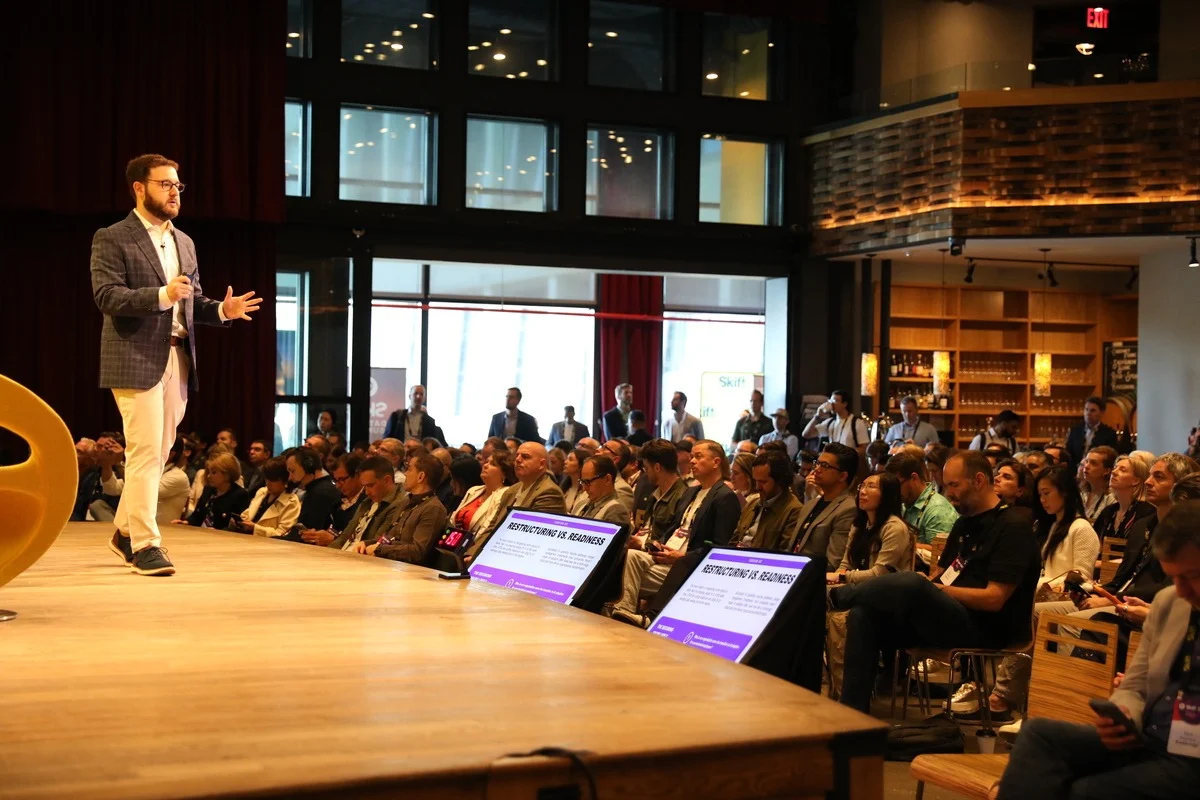
This maturation of enterprise technology will take center stage at the upcoming Skift Data + AI Summit Europe, scheduled for October 6, 2026, in London. Marking the summit’s debut in the European market following its successful June iteration in New York, the event is engineered specifically for the decision-makers holding the purse strings. Its core focus is to dissect the operational friction, organizational hurdles, and commercial consequences of deploying artificial intelligence at scale across the travel and hospitality sectors.
Executive Overview: The Reality Check for Travel Technology Budgets
The chasm between a successful technology pilot and a resilient live service is vast. A pilot affords a company the luxury of operating within a bubble: it tests an innovative idea with limited exposure, a carefully curated dataset, and early-adopter customers who are often forgiving of system quirks.
In stark contrast, a live enterprise service must contend with the chaotic reality of everyday travel operations. This means dealing with incomplete reservation records, fragmented legacy IT systems, overworked human customer service agents, and demanding consumers whose real-world requests rarely follow a predictable, algorithmic pattern.
For travel companies mapping out their multi-million-dollar technology investments for 2027, the primary challenge is ruthlessly separating genuine productivity drivers from expensive distractions. Which experiments looked exceptionally promising on paper but failed to justify a wider rollout? Which tools genuinely improved the end-to-end customer experience without inflating operational overhead?
To answer these questions, the industry must move beyond vague mandates to "use AI" and instead focus on precise, measurable operational outcomes.

Detailed Chronology: From Experimental Sandboxes to Enterprise Infrastructure
The evolution of artificial intelligence within the travel sector has accelerated rapidly over the past several years, moving through distinct phases of adoption, realization, and structural recalibration.
Phase 1: The Demo Era and Isolated Sandboxes (2023–2024)
The immediate aftermath of generative AI’s mainstream breakthrough triggered a land grab across aviation, hospitality, and online travel agencies (OTAs). Companies rushed to establish innovation labs, partnering with a dizzying array of software vendors to test large language models. The primary metric of success during this phase was speed-to-market with a demo. Few organizations paused to evaluate integration complexities, data governance frameworks, or long-term total cost of ownership (TCO).
Phase 2: The Operational Reality Check (2025)
As pilots rolled out to broader internal user groups and select consumer segments, the limitations of unintegrated models became glaringly apparent. Travel companies discovered that automated tools frequently generated hallucinations regarding complex fare conditions, struggled with multi-leg itinerary modifications, and inadvertently created more work for human agents who had to audit and correct AI-generated outputs. Budgets began tightening as executive teams demanded concrete proof of return on investment (ROI).
Phase 3: The Scalability and Governance Imperative (2026 and Beyond)
Today, the industry has entered a consolidation phase. Enterprises are systematically evaluating which systems deserve long-term budget commitments. The focus has shifted toward robust cross-departmental integration, rigorous compliance frameworks (particularly within heavily regulated European markets), and seamless human-in-the-loop escalation paths. The upcoming Skift Data + AI Summit Europe arrives precisely at this inflection point, serving as a critical forum for leaders to compare notes on what works, what failed, and what must be abandoned.
Supporting Context & Metrics: Defining Success Beyond the Automation Rate
As travel organizations refine their evaluation methodologies for 2027, industry analysts and operational leaders emphasize that traditional key performance indicators (KPIs) can be deeply misleading.
The Pitfall of the Headline Automation Rate
A common pitfall in customer service automation is relying solely on the "headline automation rate"—the percentage of inquiries initially handled by an AI chatbot. However, this metric tells only part of the story. If an AI service successfully answers a high volume of basic inquiries but triggers a secondary wave of customer complaints, corrections, or escalations downstream, the net operational savings can quickly evaporate.
Similarly, if internal productivity tools save employees time on a specific task—such as summarizing booking notes or drafting email responses—but those same employees spend equal amounts of time meticulously checking and validating the output, the net productivity gain approaches zero.
Multi-Market and Multi-Language Complexities in Europe
For European travel operators, the deployment challenge is compounded by structural diversity. A rollout cannot simply succeed in a single domestic market; it must prove its efficacy across multiple languages, regulatory environments, and consumer behaviors from its inception. This dynamic fundamentally impacts:
- Quality Assurance Protocols: Testing models for cultural nuance, regional regulatory compliance, and linguistic precision.
- Employee Training Programs: Ensuring that staff across diverse geographies understand how to oversee, audit, and override automated systems.
- Support Infrastructure: Maintaining consistent service delivery standards when regional IT systems differ significantly.
Official Insights: Industry Leaders on What It Takes to Go Live
The London summit will convene a distinguished roster of operators, technology providers, entrepreneurs, and investors to interrogate these challenges from multiple angles.
Starting With the Job to Be Done
Industry experts stress that "use AI" is far too broad to function as an operating goal. Teams need granular, evaluative targets: answering a booking question with verified accuracy, measurably reducing the time required to process a complex cancellation request, or streamlining how frontline employees access internal policy documentation.
By defining the objective around a specific job, organizations can accurately measure the true cost of achievement—including the hidden labor required to manage, monitor, and mend the technology.
Scaling Beyond the First Team
A successful trial in a single hotel brand or airline subsidiary does not guarantee viability across an entire enterprise. Different business units often utilize disparate reservation engines, data storage architectures, and legacy workflows. Furthermore, operational processes that run smoothly for one team frequently rely on tribal knowledge that was never formally documented.
Industry leaders such as Ben Dias of IAG and Nicolas Maynard of Accor bring critical insight into how massive, multi-brand travel groups navigate these structural divides. Their perspectives address fundamental questions:
- What technological components should be centrally shared across the corporate ecosystem?
- Where must local adaptation take priority?
- Who ultimately holds the authority to decide whether a tool is robust enough for enterprise-wide deployment?
In a dedicated session titled "What It Actually Took to Go Live," leaders including Kari Anna Fiskvik of Strawberry and Benjamin Cany of Amadeus unpack the granular, unglamorous mechanics required to transition a promising technical concept into a dependable, daily tool for frontline staff.
Managing Failure and Governance
Because the travel industry is inherently built around exceptions—missed connections, sudden weather disruptions, dynamic inventory shifts, and bespoke traveler requests—deployment planning must account for system failure by design.
When an automated model encounters a scenario it cannot resolve, the operational handoff is critical. Can a human employee instantly access and comprehend what the AI has already attempted? Or is the unfortunate traveler forced to repeat their entire story from scratch? The answers to these questions dictate both the quality of the customer experience and the ultimate cost of service operations.
These operational choices intersect directly with corporate governance, data privacy, and regulatory compliance. Sheena Varma of American Express Global Business Travel brings vital expertise in ensuring that privacy, security, and compliance guardrails are baked into a service during its initial design phase—long before deployment, when engineering teams still possess the flexibility to make practical adjustments to data permissions and algorithmic oversight.
The Commercial Test: Growth vs. Operations
While many internal AI projects are designed to streamline administrative overhead and operational workflows, others are deployed to actively protect and grow top-line revenue.
Leaders from the digital discovery and booking space—including Bryan Batista of Skyscanner and Peer Bueller of KAYAK—are spearheading discussions on how AI influences traveler conversion rates and customer lifetime value. On the hospitality side, Joe Pettigrew of L+R and Carlo Del Mistro of Stiplo examine how automated visibility and dynamic content generation impact hotel distribution economics.
Crucially, these commercial investments must pass rigorous economic scrutiny. Does a novel AI-driven interaction reliably result in a completed transaction? Does it measurably improve customer retention? Are the unit economics sustainable once the full computational, maintenance, and integration costs are factored into the P&L?
To address these questions, financial strategists and investors—including Richard Clarke of Bernstein, Antoine Nussenbaum of Felix Capital, and pioneering startup founders—will provide an unvarnished assessment of what is genuinely worth building, buying, or backing. For executives preparing next year’s operational budgets, learning which failing or stagnant projects to defund and sunset may ultimately prove more valuable than finding the next shiny technology to launch.
Future Outlook: The 2027 Budgetary Horizon
As the travel industry looks toward 2027, the honeymoon phase of artificial intelligence has officially concluded. The coming year will separate sustainable, deeply integrated enterprise platforms from expensive, isolated novelties.
The upcoming Skift Data + AI Summit Europe on October 6, 2026, in London, is intentionally designed to reflect this operational reality. By capping vendor attendance and curating a room dominated by hands-on operators, the event aims to strip away the marketing hype and focus entirely on pragmatic execution.
For travel executives, technologists, and financial planners, the mandate is clear: bring the difficult deployment decisions your team is currently grappling with, alongside the colleagues responsible for executing them. The ultimate benchmark of success for the summit—and for the industry’s digital strategy as a whole—will be how much more clearly leaders can allocate capital, structure operations, and drive profitability when they return to their desks the next day.


