Executive Overview
For decades, the global superyacht community has searched along the Eastern Seaboard of the United States for an ideal convergence: state-of-the-art maritime infrastructure capable of handling vessels exceeding 400 feet, combined with a rich, walkable onshore cultural footprint that keeps both billionaire owners and hard-working crews content. Too often, marinas offer one or the other—industrial-grade docking facilities sequestered away from civilization, or picturesque historic ports with shallow drafts, obsolete electrical grids, and zero tolerance for multi-million-dollar behemoths.
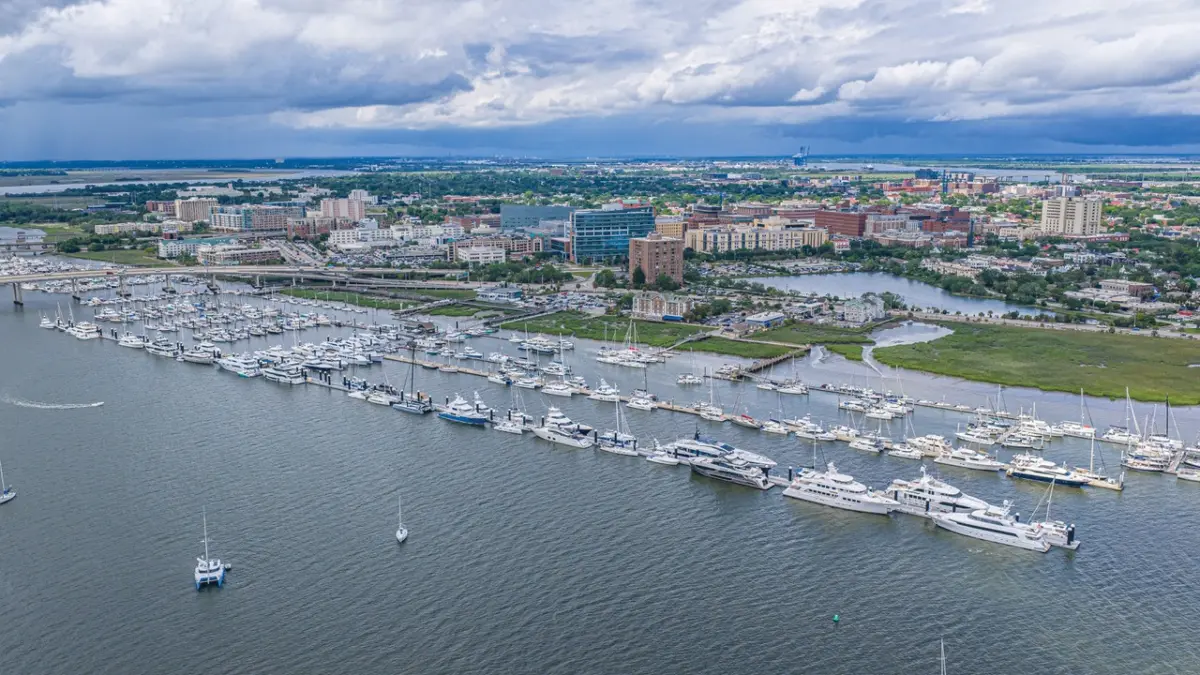
Enter Safe Harbor Charleston City, located on the historic downtown peninsula of Charleston, South Carolina. Under the stewardship of General Manager David Isom, this facility has redefined what a transient and long-term superyacht stopover can achieve. Anchored by a legendary Megadock boasting roughly a mile of linear dockage, the marina has successfully courted some of the largest private yachts on earth, including the 454-foot Lürssen masterpiece Rising Sun.
Yet, the magic of Charleston City is not merely measured in steel piles, high-speed fuel pumps, and high-voltage frequency converters. It lies in a philosophy articulated cleanly by Isom: keeping the crew happy by getting them off the boat. By blending heavy-duty engineering with immediate access to a living museum of 17th-century architecture, world-class dining, and vibrant local commerce, Safe Harbor Charleston City has positioned itself as the crown jewel of Southern yachting. This report examines the engineering marvels, historical roots, technological upgrades, and economic implications that make Charleston an indomitable force in modern luxury maritime logistics.
Detailed Chronology: From Colonial Seaport to Modern Superyacht Haven
To truly appreciate the engineering feats of Safe Harbor Charleston City, one must understand the unique historical timeline that shaped the harbor it calls home.
1670–1900: The Foundations of a Maritime Powerhouse
Charleston’s history as a nautical hub dates back to its founding in 1670 as Charles Town, named in honor of King Charles II of England. Originally situated on the west bank of the Ashley River before relocating to its current peninsular spot (known as Oyster Point) in 1680, the city quickly evolved into the wealthiest and most bustling port in the southern British American colonies. Its natural deep-water harbor made it a natural magnet for international trade, shipping indigo, rice, and later cotton across the Atlantic.
Throughout the 18th and 19th centuries, the waterfront was a chaotic, high-stakes arena of merchant ships, naval vessels, and commercial wharves. The architecture that defines modern Charleston—grand single houses, cobblestone alleyways, and imposing civic brickwork—was built on the fortunes generated by this maritime trade.
The 20th Century: Preservation Meets Modernity
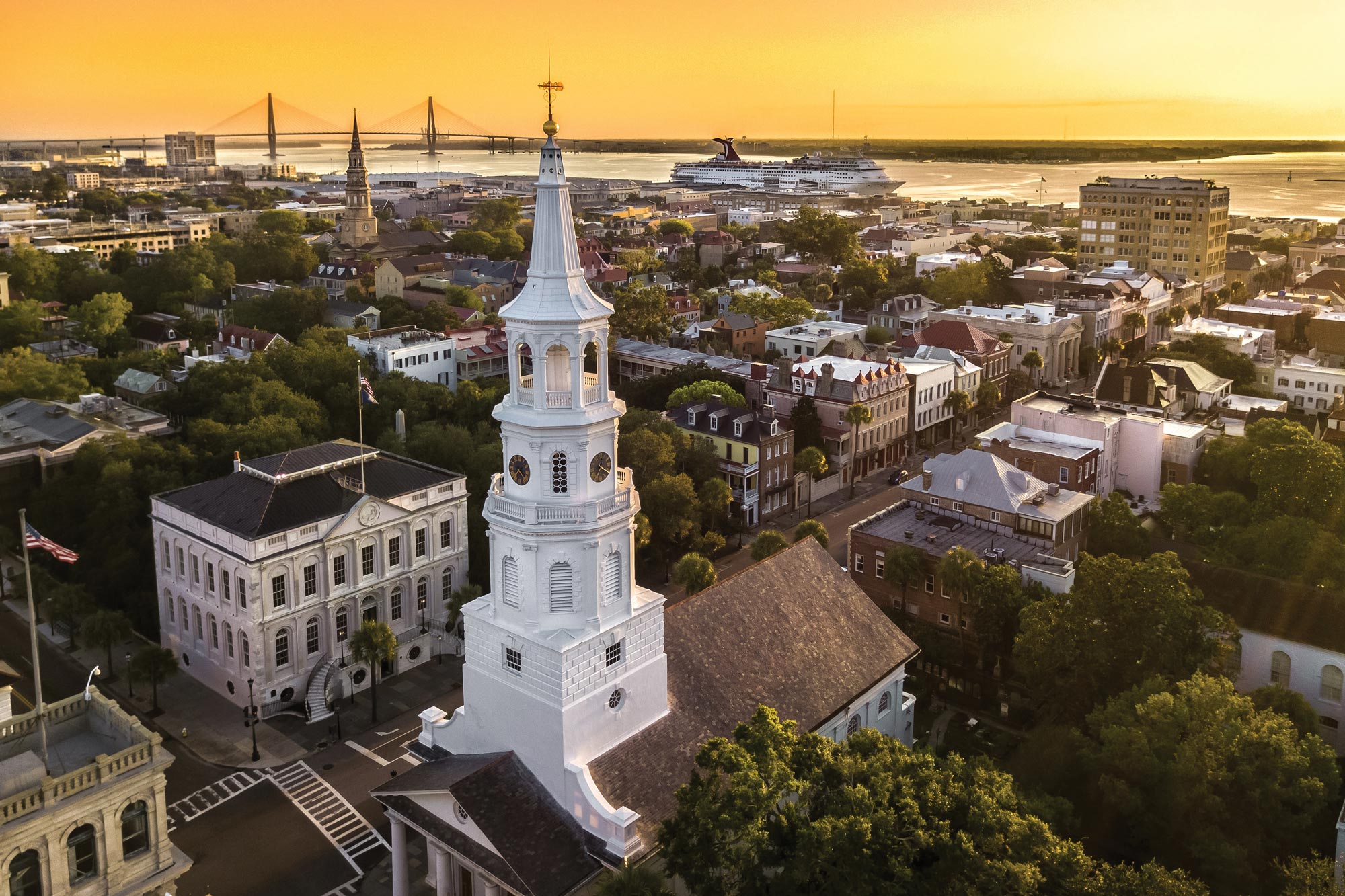
As shipping technologies evolved, the traditional downtown wharves required modernization to remain relevant. However, unlike many industrial ports that paved over their past, Charleston pioneered a different path. In 1920, visionaries established the Preservation Society of Charleston, marking the very first grassroots organization in the United States dedicated to safeguarding historic buildings from demolition.
This deep-seated reverence for architectural heritage meant that any future waterfront development would have to tread carefully, balancing modern industrial demands with strict historical preservation. Over the decades, the city transitioned from a pure shipping port into a cultural and tourist destination, laying the groundwork for a specialized recreational marine industry.
The Megadock Era and Recent Infrastructure Investments
In recent years, the evolution of Safe Harbor Charleston City has accelerated to keep pace with the exponential growth in global superyacht sizes. Recognizing that modern yachts require specialized electrical, fueling, and safety accommodations, the marina ownership and management team launched a series of aggressive capital improvement projects.
Most recently, the facility invested heavily in advanced frequency converters to accommodate foreign-flagged superyachts operating on European electrical standards—a critical upgrade that allows international crews to plug into American shore power without shutting down their onboard generators. Simultaneously, the marina reinforced its famed Megadock infrastructure, cementing its reputation as a hurricane-hole safe harbor capable of weathering severe Atlantic storms while keeping vessels safely secured.
Supporting Context & Metrics: Engineering the Impossible
Superyacht management is an exercise in extreme logistics. A vessel measuring upwards of 450 feet is essentially a floating luxury hotel, consuming massive quantities of fuel, electricity, provisions, and technical support. Safe Harbor Charleston City has engineered its physical plant to meet these monumental demands head-on.
The Engineering Anatomy of the Megadock
The backbone of the facility is its sprawling Megadock system, which provides roughly one mile of continuous linear dockage. To anchor this massive footprint against strong tidal currents, heavy winds, and storm surges, engineers utilized industrial-grade construction techniques typically reserved for commercial deep-water shipping terminals.
- Piling Specifications: The Megadock is supported by 67 massive piles. Each pile consists of a 36-inch-diameter steel pipe driven 100 feet into the harbor floor. This robust foundation ensures structural integrity even when multiple multi-hundred-foot vessels are moored simultaneously.
- Fueling Capacities: Time is money in the charter and private yacht sectors. Safe Harbor Charleston City features 15 high-speed fuel dispensers capable of pumping an astonishing 150 gallons per minute directly in-slip. This eliminates the logistical nightmare of shuffling massive hulls to separate fuel docks, drastically reducing turnaround times.
- Power Solutions: Standard American shore power operates at 60 Hz, whereas many European-built superyachts utilize 50 Hz electrical systems. To bridge this gap, the marina installed high-capacity frequency converters. This infrastructure investment allows foreign-flagged yachts to seamlessly integrate into local shore power, enabling crew members to safely service engines while remaining comfortably moored in the water.
The Economic and Cultural Ecosystem
Beyond the docks, the marina’s strategic location on the downtown peninsula offers immense operational advantages. Captains and owners value the property because it solves the eternal maritime dilemma of crew morale.
Statistically and psychologically, isolated crews breed internal friction. By positioning the marina steps away from Charleston’s bustling commercial corridors—such as Market Street, King Street, and Meeting Street—Safe Harbor Charleston City provides direct access to world-class dining, luxury retail, and local markets. Crew members can easily transition from maintenance duties to shore leave, returning refreshed and ready to manage the vessel’s next voyage.
Official Statements: Insights from Management
The operational philosophy of Safe Harbor Charleston City is rooted in practicality, empathy for crew dynamics, and a deep understanding of luxury hospitality. David Isom, general manager of the facility, pulls no punches when discussing what makes a successful superyacht stopover.
"The captain is the happiest when the crew get off the boat," Isom states frankly. "If the crew get stuck in the boat, that’s when all the drama happens."
By maintaining a prime geographic foothold on the downtown peninsula, Isom and his team ensure that crew members never feel trapped.
"We have shuttles to Market Street, King Street, Meeting Street—that’s world-class restaurants, world-class shops, all kinds of vendors that set up and sell historical artifacts from Charleston," Isom explains, highlighting the dynamic nature of the local scene. "It changes all the time. There’s a new restaurant popping up every few months, it seems."
Addressing the technical hurdles of hosting international superyachts, Isom emphasizes how recent infrastructure upgrades have transformed the guest experience. Referring to the newly installed shore power frequency converters, he notes:
"The crew love it. It solves the problem, and it gives them a chance to service the engines while they’re in the water."
Furthermore, when extreme weather threatens the Eastern Seaboard, Charleston proves its mettle not just as a leisure destination, but as a secure haven.
"Charleston is the perfect place to get weathered in because of the robust Megadock system," Isom says. "You’re protected. And it’s Charleston. There’s so many things to do and see."
Future Outlook: The Next Horizon for Charleston Yachting
As the global superyacht fleet continues to expand both in total hull count and average LOA (Length Overall), facilities capable of servicing these giants will command an increasingly elite market share. Safe Harbor Charleston City is well-positioned to capitalize on this trajectory.
Technological Evolution and Sustainability
Looking ahead, the marina is examining further integration of green technologies. As environmental regulations tighten across international waters, superyacht owners are placing a higher premium on shore-side infrastructure that supports sustainable operations. Future upgrades may include enhanced high-capacity blackwater pump-out systems, expanded solar generation for marina facilities, and advanced smart-grid electrical management to optimize energy distribution across multiple large-scale vessels.
Preserving Historic Integration
The unique charm of Charleston lies in its strict commitment to historical preservation. The Charleston City Market—standing on land deeded to the city with the perpetual covenant that it must always serve as a public market—remains a cornerstone of the visitor experience, offering everything from handmade sweetgrass baskets to bespoke local artwork. Future development around the waterfront will undoubtedly continue to respect this delicate balance between modern luxury maritime commerce and 17th-century heritage.
Conclusion
Safe Harbor Charleston City has transcended the traditional definition of a marina. By marrying heavy industrial engineering—exemplified by its 100-foot steel piles, rapid in-slip fueling, and specialized power conversion units—with the unmatched cultural backdrop of America’s most historic southern seaport, the facility offers an irreplaceable sanctuary for the world’s finest yachts. For owners seeking security, crews seeking diversion, and captains seeking operational efficiency, Charleston remains the undisputed capital of the Lowcountry maritime world.