Executive Overview
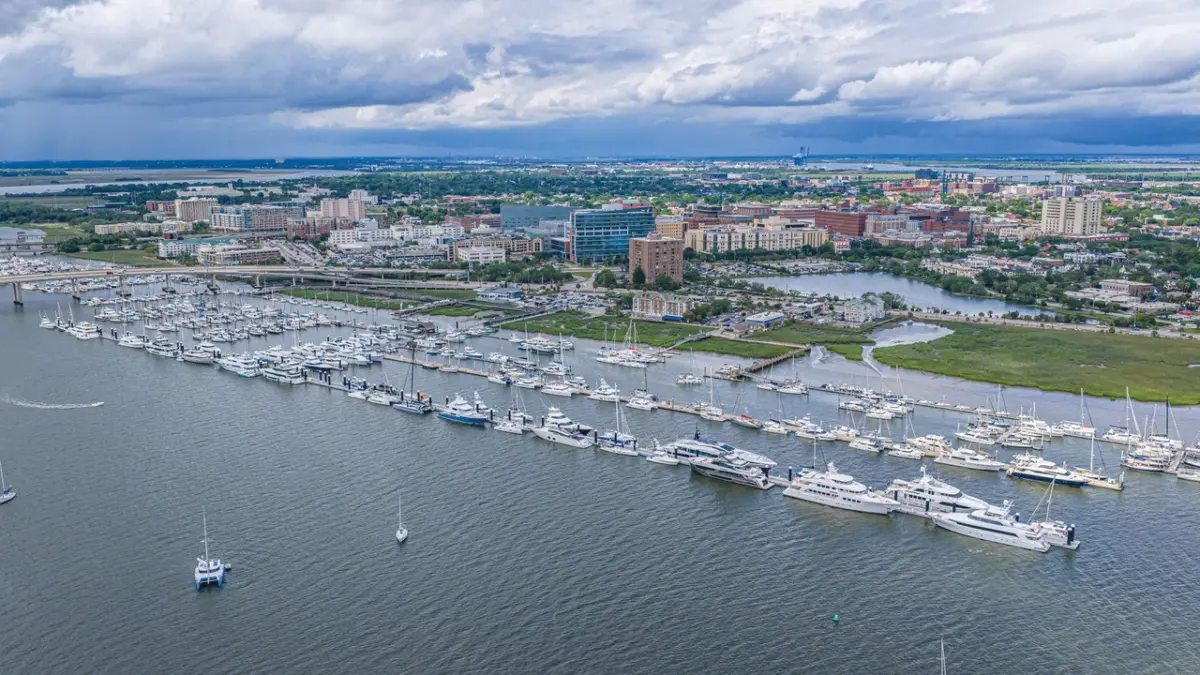
In the upper echelons of the global maritime community, finding a berth that can safely accommodate vessels stretching past the 400-foot mark is a perennial challenge. Superyacht captains, owners, and management agencies constantly balance logistical capability, engineering infrastructure, shore-side amenities, and security. Enter Safe Harbor Charleston City, a premier facility located on the historic downtown peninsula of South Carolina’s most populous city.
Far more than a standard refueling stop along the Atlantic Intracoastal Waterway, this marina has engineered its identity around a staggering convergence of world-class scale and centuries-old charm. Featuring a renowned Megadock boasting nearly a mile of continuous linear dockage, cutting-edge high-speed fuel delivery systems, newly installed heavy-duty frequency converters, and an unprecedented engineering framework built to withstand punishing weather, the facility redefines what a domestic superyacht hub can be.
Yet, the magic of Charleston extends far beyond industrial specifications. Situated steps from cobblestone streets, Revolutionary-era architecture, and a rapidly expanding culinary and cultural scene, the marina offers an antidote to the classic maritime dilemma: cabin fever. By bridging top-tier heavy engineering with immediate access to a living museum of American history, Safe Harbor Charleston City has cemented its status as an indispensable anchor for the world’s most elite floating palaces.
Detailed Chronology & Evolution of a Maritime Giant
The rise of Charleston as a premier superyacht destination did not happen overnight. It is the result of decades of strategic waterfront development, historical preservation, and targeted infrastructure upgrades designed to capture an increasingly lucrative slice of the global luxury maritime sector.
The Foundation of a Deep-Water Haven
Long before modern steel-hulled motor yachts roamed the Atlantic, Charleston Harbor was recognized as one of the most vital strategic ports in the American colonies. Founded in 1670 as Charles Town, the harbor served as a bustling commercial gateway. However, the modern era of megayacht accommodation required a complete reimagining of the downtown peninsula’s deep-water fringes.
Decades ago, local maritime stakeholders recognized that while South Carolina offered an idyllic cruising ground between the Northeast and the Caribbean, it lacked a facility capable of hosting the massive vessels emerging from European shipyards like Lürssen, Feadship, and Abeking & Rasmussen. The conceptualization and eventual construction of the Charleston City Megadock changed that calculus entirely, transforming an underutilized industrial waterfront into a high-end superyacht haven.
Upgrading the Muscle: The Engineering Leap
As superyachts grew in both length and displacement through the late 1990s and 2000s, marine infrastructure had to adapt or become obsolete. Safe Harbor’s acquisition and subsequent multi-million-dollar capital investments vaulted the marina into a new operational tier.
A critical milestone in this evolution was the implementation of industrial-grade infrastructure capable of supporting vessels whose displacements rival small commercial ships. The installation of massive 36-inch steel pipe piles—each plunging 100 feet into the harbor floor—created an unshakeable skeletal backbone for the Megadock. This engineering feat ensured that even during severe storm events or heavy tidal surges, multi-hundred-million-dollar assets would remain secure.
The Power Paradigm Shift
Historically, a major operational hurdle for foreign-flagged superyachts visiting United States ports has been shore power compatibility. European vessels operate on 50Hz electrical grids, whereas North American infrastructure runs on 60Hz. Traditionally, this meant foreign superyachts were forced to run their diesel generators continuously while docked, resulting in localized emissions, continuous engine wear, and unnecessary fuel consumption.
Recognizing this friction point, Safe Harbor Charleston City recently executed a massive infrastructure upgrade by investing in high-capacity shore-power frequency converters. This technological integration allows foreign-flagged vessels to seamlessly plug into the dockside grid, converting American electricity to match their onboard systems. It is an evolutionary step that has fundamentally shifted how captains view the marina—not merely as a temporary pitstop, but as a fully serviced maintenance and layover base.
Supporting Context & Metrics: Engineering and Infrastructure
To truly understand the operational capacity of Safe Harbor Charleston City, one must examine the raw engineering metrics that separate it from standard recreational marinas. The facility is designed from the pilings up to handle the most demanding specifications in the maritime industry.
The Megadock Specifications
- Linear Dockage: Approximately one mile of continuous linear dockage, allowing multiple giga-yachts to moor simultaneously without rafting or spatial conflicts.
- Structural Piles: A total of 67 heavy-duty structural piles. Each pile is constructed from a 36-inch diameter steel pipe driven 100 feet deep into the seabed, providing exceptional lateral stability and load-bearing capacity.
- Vessel Capacity: Proven capability to safely berth ultra-luxury giants, most notably demonstrated by welcoming the legendary 454-foot (138-meter) Lürssen superyacht Rising Sun.
Fueling Logistics
Time is money in the superyacht sector, where fueling operations can often bottleneck a vessel’s tight itinerary. Safe Harbor Charleston City addresses this with a dedicated heavy-duty fueling infrastructure:
- High-Speed Dispensers: Fifteen dedicated high-speed fuel dispensers stationed directly on the dock.
- Pumping Capacity: Capable of delivering fuel at an astonishing rate of up to 150 gallons per minute in-slip. This ensures that massive fuel tanks—often holding tens of thousands of gallons—can be topped off rapidly, minimizing turnaround times for captains eager to get back underway or hunker down before inclement weather.
The Safe-Haven Factor
Geographically positioned along the mid-Atlantic coast, Charleston serves as an optimal hurricane hole and weather shelter. The robust engineering of the Megadock, combined with the natural geographical protection of the harbor islands, makes it a preferred destination for vessels caught in the crosshairs of unpredictable seasonal weather.
As David Isom, general manager at Safe Harbor Charleston City, observes:
"Charleston is the perfect place to get weathered in because of the robust Megadock system. You’re protected. And it’s Charleston. There’s so many things to do and see."
Official Statements & Industry Perspectives
The success of any superyacht facility ultimately hinges on human psychology, crew welfare, and the delicate balance between operational discipline and shore-side decompression. General Manager David Isom offers a candid, unfiltered look into the operational philosophy that drives the marina’s daily management.
The Crew Welfare Equation
In the hyper-competitive, high-stress world of superyacht management, crew burnout is an ever-present hazard. Confined quarters, demanding owners, and relentless maintenance schedules can quickly turn a dream job into a pressure cooker. Isom understands this dynamic better than most, offering a pragmatic assessment that resonates throughout the industry:
"The captain is the happiest when the crew get off the boat. If the crew get stuck in the boat, that’s when all the drama happens."
By acknowledging that crew morale directly correlates to shore-side accessibility, Safe Harbor Charleston City has positioned itself as a premier destination for crew rehabilitation. When deckhands, engineers, and stews step off the gangplank, they are not stranded in an industrial shipping container yard or a remote rural inlet; they step directly into one of the most culturally vibrant, historically rich urban centers in the American South.
Bridging the Industrial and the Artisanal
Isom highlights the seamless logistical support provided by the marina’s recent technological upgrades, particularly concerning foreign-flagged technical constraints:
"The crew love it. It solves the problem, and it gives them a chance to service the engines while they’re in the water."
By eliminating the noise, exhaust, and vibration of running onboard generators 24/7, the newly installed frequency converters allow marine engineers to execute vital in-water mechanical servicing. This dual focus—industrial technical enablement paired with effortless urban access—creates a symbiotic relationship between vessel maintenance and human leisure.
The Historic District: A Living Museum Steps from the Slip
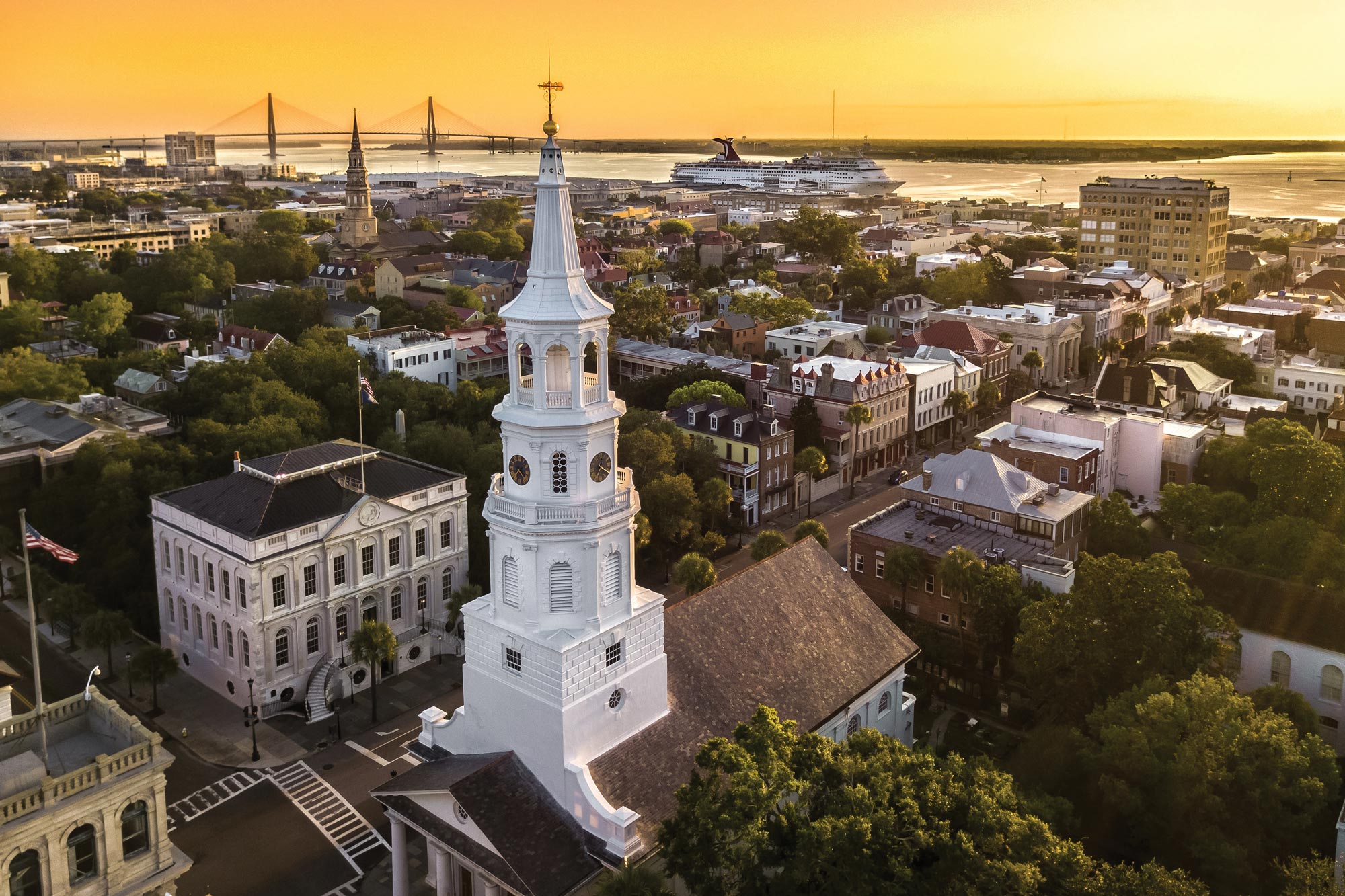
While the engineering metrics and technical capabilities draw the vessels in, the surrounding environment ensures they stay. Safe Harbor Charleston City sits immediately adjacent to Charleston’s legendary Historic District, an area functioning as a living, breathing museum of American heritage.
Architectural Preservation and Colonial Roots
Dating back to its establishment in 1670, Charleston served as a cornerstone of the original British colonies. Today, the city boasts one of the most densely concentrated collections of preserved 18th- and 19th-century architecture in the Western Hemisphere. Visitors and yacht crews strolling just blocks from the Megadock are treated to an architectural tapestry featuring:
- Colonial and Federal-style mansions with expansive, double-tiered piazzas designed to catch the Atlantic sea breezes.
- Gently weathered cobblestone streets flanked by wrought-iron gates and gas lanterns.
- Historic churches whose steeples have defined the Lowcountry skyline for centuries, earning Charleston its enduring moniker, "The Holy City."
Crucially, Charleston pioneered the American preservation movement. Formed in 1920, the Preservation Society of Charleston stands as the oldest community-based historic preservation organization in the United States. Its early victories in saving endangered colonial structures set the national standard for historic zoning and architectural safeguarding, ensuring that the historic fabric witnessed by today’s superyacht guests remains largely identical to that seen by merchants and statesmen centuries ago.
The Charleston City Market Experience
A short shuttle ride or walk from the marina brings visitors to the iconic Charleston City Market, a historic landmark stretching four city blocks through the heart of the downtown peninsula.
The market building itself is a historical gem, constructed on land originally gifted to the city under a legally binding covenant dictating that the space must always remain dedicated to public commerce. Today, the bustling sheds house a vibrant array of local vendors selling handcrafted artwork, boutique apparel, and iconic Lowcountry artifacts—most notably, authentic, hand-woven sweetgrass baskets. Crafted using techniques passed down through generations from West African basket-makers, these collectible baskets represent a direct, tangible link to the region’s complex cultural history.
A Dynamic Culinary and Retail Scene
Far from being a static historical exhibit, Charleston pulses with modern energy. As Isom notes regarding the immediate downtown catchment area (accessible via dedicated marina shuttles to Market Street, King Street, and Meeting Street):
"We have shuttles to Market Street, King Street, Meeting Street—that’s world-class restaurants, world-class shops, all kinds of vendors that set up and sell historical artifacts from Charleston. It changes all the time. There’s a new restaurant popping up every few months, it seems."
From James Beard Award-winning culinary institutions serving hyper-local Lowcountry cuisine (such as she-crab soup, shrimp and grits, and freshly caught Atlantic seafood) to avant-garde cocktail bars and high-end luxury boutiques, the downtown peninsula delivers an elite urban lifestyle experience mere minutes from the gangway.
Future Outlook: The Next Horizon for Charleston’s Maritime Economy
As the global superyacht fleet continues to expand in both average hull length and total operational numbers, the demand for sophisticated, deep-water home ports along the United States Eastern Seaboard will only intensify. Safe Harbor Charleston City is uniquely positioned at the vanguard of this secular industry trend.
Anticipating Industry Demands
The intersection of heavy marine engineering and luxury tourism will dictate the success of premier marinas over the coming decade. Future expansions and infrastructural refinements are anticipated to focus heavily on:
- Green Energy Integration: Expanding shore-side electrical capacities to support increasingly sophisticated battery hybrid and zero-emission propulsion systems currently being integrated into next-generation superyacht builds.
- Enhanced Security and Privacy Protocols: As giga-yachts carrying high-net-worth principals, royal families, and corporate titans increasingly favor domestic cruising itineraries, private, secure ingress and egress points at facilities like the Charleston Megadock will become paramount.
- Seamless Concierge-to-City Logistics: Further refining high-end white-glove concierge services that seamlessly bridge onboard superyacht management teams with Charleston’s burgeoning luxury hospitality, private aviation, and provisioning sectors.
Conclusion: An Unrivaled Maritime Destination
Safe Harbor Charleston City has successfully transcended the traditional limitations of marina architecture. By fusing industrial-strength engineering—exemplified by 100-foot steel piles, high-speed in-slip fueling, and advanced frequency converters—with immediate proximity to a world-class historic, cultural, and culinary capital, the facility offers a complete ecosystem for the superyacht community.
For owners seeking a secure weather haven, captains chasing operational efficiency, and crews yearning for world-class shore leave far away from the confines of the hull, Charleston stands out not merely as a stop along the coast, but as an unmatched crown jewel of the American waterway.