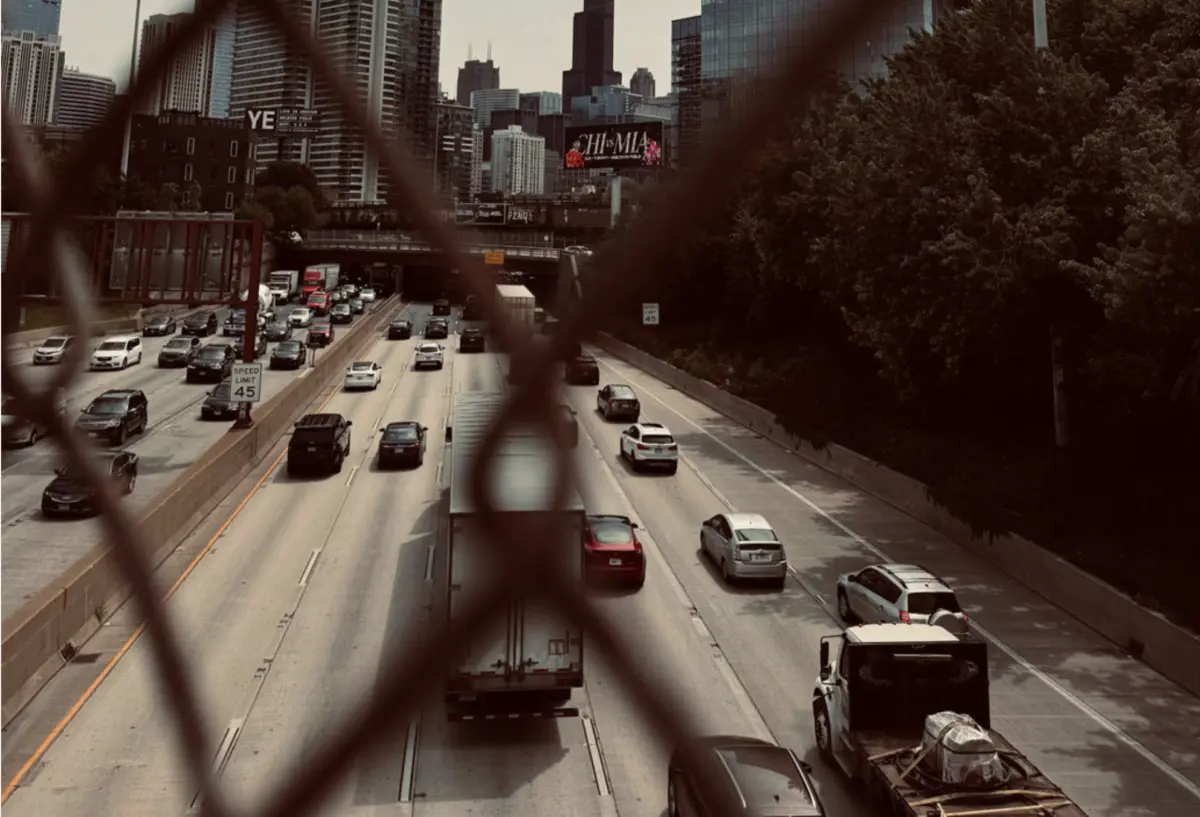
For decades, the standard narrative surrounding American transportation has been painted in broad, unambiguous strokes: the United States is a nation of drivers, a culture intrinsically in love with the open road, the personal automobile, and the sprawling suburban independence it supposedly guarantees. However, a groundbreaking new study from the Climate and Community Institute (CCI) shatters this long-standing myth, revealing an underlying reality defined by coercion rather than choice.
According to the comprehensive research—detailed in the report Cheated by Car Dependence: Drivers and Non-Drivers in the United States—an overwhelming majority of American motorists feel they have zero autonomy regarding how much they drive. Far from viewing their vehicles as vessels of freedom, nearly three-quarters of self-identified drivers state explicitly that they are trapped in a system that forces them behind the wheel for nearly every daily task. Even more telling, more than half of all surveyed drivers are actively crying out for viable, attractive transportation alternatives that would allow them to leave their keys on the hook.
This manufactured auto-centricity is not merely an inconvenience; it is a structural crisis. Pushed by decades of policy and heavily influenced by profit-seeking automotive and fossil fuel lobbies, federal, state, and local governments have systematically funneled the lion’s share of public infrastructure funding into highways, stroads, and asphalt parking lots. The consequence is a built environment that actively penalizes anyone who cannot—or simply prefers not to—drive.
Behind these staggering statistics lie deeply human stories: workers falling into financial precarity just to cover unexpected car repairs, immigrants chasing the false promise of suburban mobility only to find themselves isolated in transit-poor deserts, and the roughly one in three Americans who lack car access entirely and must navigate a hostile, disconnected landscape. As transportation experts and policy advocates point out, this is no longer just an issue of traffic or urban planning—it is a civil rights, economic, and class struggle against corporate-engineered captivity.
Detailed Chronology: The Evolution and Awakening of Car Dependency
The Roots of Forced Mobility
To understand the current crisis of car dependence, one must look back at how the American landscape was systematically re-engineered over the course of the 20th century. Following World War II, federal policy underwent a radical pivot. The passage of the Federal-Aid Highway Act of 1956 catalyzed the largest public works project in U.S. history, dedicating billions of dollars to construct the Interstate Highway System.
Simultaneously, local zoning laws shifted dramatically. Cities across the country embraced Euclidean zoning, legally separating residential neighborhoods from commercial hubs, schools, and workplaces. This design philosophy rendered walking, biking, and traditional transit functionally impossible for vast segments of the population. By subsidizing suburban expansion and penalizing dense, mixed-use urban development, policymakers created a self-fulfilling prophecy: Americans had to buy cars because no other survival mechanism was left on the table.
The Modern Reckoning: The CCI Survey
Fast forward to the contemporary era, and the cracks in this asphalt-paved foundation have widened into chasms. The recent survey conducted by the Climate and Community Institute (utilizing polling data from Data for Progress) marks a watershed moment in transportation research. By shifting the focus away from traditional "mode share" statistics—which merely count how many people drive to work—and instead asking citizens what they want, the study exposes the deep disconnect between public desire and public policy.
Conducted prior to the geopolitical shocks in the Middle East that sent global gas prices soaring, the survey captured a foundational public mood of quiet desperation. When asked about their daily travel habits, 73 percent of drivers reported feeling that they had no choice but to drive as frequently as they did. Furthermore, 53 percent expressed an explicit desire for alternative transportation modes.
Researchers note that this second figure is almost certainly an undercount. Decades of living under car hegemony have conditioned many Americans to suffer from what policy experts call an "imagination problem"—an inability to conceptualize cities where driving is genuinely optional and public alternatives are fast, clean, and reliable.
The Breaking Point: Affordability and Isolation
As the 2020s progressed, the financial toll of this mandatory driving system became increasingly unsustainable for working-class families. The CCI report highlights that two in five American adults struggle to absorb unexpected transportation expenses, such as a sudden transmission failure or skyrocketing insurance premiums. An identical percentage reported having to make drastic, painful adjustments to their household budgets simply to keep their vehicles operational and commute to their jobs.
Meanwhile, for the roughly one-third of the U.S. population that cannot drive—due to age, disability, income, or personal choice—the auto-centric landscape functions as a daily obstacle course. Non-drivers face systemic isolation, enduring unreliable bus networks, dangerous pedestrian crossings, and sprawling distances that render basic errands nearly insurmountable. Rather than living in a society designed for all people, millions of Americans find themselves stranded by design.
Supporting Context & Metrics: The Numbers Behind the Crisis
The data compiled in the Cheated by Car Dependence report provides a rigorous empirical backbone to what many Americans have felt intuitively for years.
The Illusion of Choice (73%): Nearly three out of four drivers feel they possess zero agency over their driving habits. The system demands their participation under threat of job loss, social isolation, and economic stagnation.
The Appetite for Alternatives (53%): Over half of all drivers want out, signaling a massive, untapped public mandate for investments in mass transit, commuter rail, protected bike lanes, and walkable neighborhoods.
The Financial Strain (40%): Two in five adults face severe financial anxiety regarding unpredictable car repair costs, highlighting the regressive nature of a system that treats multi-thousand-dollar steel boxes as a prerequisite for basic economic survival.
The Excluded Third (~33%): One in three U.S. residents lacks reliable access to a car or cannot drive at all, making them collateral damage in a built environment optimized exclusively for private automobiles.
Federal Funding Imbalance: The federal government routinely guarantees up to 80 percent of transportation funding explicitly for automotive infrastructure, while making funds allocated for active and shared transit vulnerable to bureaucratic clawbacks and political obstruction.
Official Statements and Expert Perspectives
The researchers and policy experts behind the CCI study emphasize that America’s transportation crisis is not a natural phenomenon, but a political choice engineered by powerful special interests.
"Whether you get around mostly by car or you don’t drive at all, most people in the U.S. are united by feeling unhappy with their daily transportation options," said Emmett Hopkins, transportation policy manager at the Climate and Community Institute and co-author of the study. "Broadly speaking, they want the same thing: more good transportation options that don’t [leave] a car as the only choice — or basically, the forced choice."
Hopkins points out that America’s status quo is sustained by "profit-seeking forces" that have successfully lobbied lawmakers for generations to prioritize automotive and fossil fuel interests over the well-being of everyday citizens.
"This call to offer more people more choices is really a call to stand up for working people against corporate power determining what options they have in their lives," Hopkins added.
Co-author Kira McDonald underscored the methodological breakthrough of the report, noting that traditional transportation planning has long relied on flawed metrics.
"A ludicrous percentage of adults use cars to get to work — [but that’s] because we are under-investing in other modes," McDonald explained. "The novel contribution of this report was to supplement those statistics with survey data, and ask people what they actually want."
McDonald also addressed the institutional bias embedded within government agencies. Federal funding formulas heavily favor asphalt over alternatives, creating a self-reinforcing cultural myth that America is naturally a "nation of drivers."
Meanwhile, co-author Ruth Rojas brought a deeply personal lens to the study, drawing from her own background growing up in an immigrant family in a transit-poor, spread-out town. Her qualitative research focused on non-drivers and communities where car ownership is marketed as the ultimate symbol of the American Dream.
"[I personally came from] an immigrant family who didn’t have access to cars in a small town that was very spread out and didn’t have public transit," Rojas shared. "My family really bought into that idea that cars meant freedom, cars meant getting a job, cars meant more economic growth… The narrative ends up being that cars give us a perceived freedom. What gets left out is everybody who doesn’t — or maybe can’t — drive them."
Future Outlook: A Roadmap to Transportation Liberation
Escaping the trap of forced car dependence will require a radical reimagining of American governance, infrastructure funding, and urban planning. The CCI report outlines a multi-tiered framework for systemic reform, beginning at the highest levels of federal power and extending down to municipal street corners.
1. Federal and State Overhaul
First and foremost, the executive branch and federal agencies must systematically dismantle the auto-centric rules, guidelines, and cultural assumptions that govern transportation spending. Congress must exercise its power of the purse to rewrite federal funding bills, ensuring parity between highways and multi-modal transit networks. State Departments of Transportation (DOTs), which currently function largely as highway expansion agencies, must be fundamentally restructured to prioritize safety, environmental sustainability, and travel choice.
2. Grassroots Organizing and Countering Corporate Power
Because the current paradigm is fiercely protected by corporate lobbies—encompassing auto manufacturers, oil conglomerates, and sprawling real estate developers—technocratic policy adjustments alone will not suffice. Experts argue that real change will require robust grassroots organizing. Uniting motorists who feel trapped with non-drivers who are systematically excluded creates a powerful, cross-demographic political coalition capable of challenging entrenched interests.
3. Local Implementation and "Induced Demand" for Freedom
On the ground, local governments must act swiftly to redesign cities for people rather than vehicles. This includes building protected bike networks, expanding reliable bus and rail rapid transit, and fostering dense, walkable mixed-use developments.
Crucially, local leaders must not be deterred by initial pushback against pedestrianization or transit-priority lanes. As McDonald notes, the public often suffers from a localized form of induced demand for alternative mobility: once people experience the tangible benefits of living outside the shadow of car dependency, public approval skyrockets.
"I think there’s a kind of induced demand [among] people who want to live outside of car dependency, but they don’t know it yet, because they haven’t experienced it," McDonald concluded. "These policies always see their popularity improve after implementation."
Ultimately, the path forward requires breaking the psychological and physical chains of forced car dependency. By recognizing that the average American driver is not a willing enthusiast but a captive consumer, policymakers have both a moral obligation and a clear public mandate to unlock the nation’s transportation future.