








Executive Overview
The global maritime industry is standing at a critical decarbonization crossroads. As the International Maritime Organization (IMO) tightens its greenhouse gas emission targets and commercial fleets grapple with the physical and economic limits of transitional fuels—such as liquefied natural gas (LNG), methanol, and ammonia—an alternative energy paradigm is emerging.
In a landmark move that could redefine offshore energy logistics and marine propulsion, Hornbeck Offshore Services, Inc. has announced a strategic partnership and equity investment in Houston-based nuclear technology developer Deployable Energy, Inc. The collaboration, formalized through a memorandum of understanding (MOU), aims to explore the integration of Deployable Energy’s proprietary "Unity Nuclear Battery"—a 1-megawatt-electric (MWe) transportable microreactor—across a spectrum of maritime and offshore applications.
This alliance combines Hornbeck’s extensive operational footprint as a premier operator of high-specification offshore service vessels (OSVs) with Deployable Energy’s cutting-edge transportable nuclear technology. By targeting a minimum 20% reduction in the total cost of ownership (TCO) compared to conventional marine diesel or grid-connected alternatives, the partnership seeks to unlock commercial viability for nuclear power in civilian shipping, floating data centers, defense logistics, and offshore power generation.
Detailed Chronology of the Alliance
The partnership represents a highly coordinated effort to transition marine nuclear technology from defense-dominated applications to the commercial mainstream.
[Strategic Investment & MOU Signed]
                │
                ▼
[Establishment of Joint Working Group]
                │
                ▼
[Phase 1: Feasibility & Economic Studies] (Focus: U.S. Jones Act Markets)
                │
                ▼
[Phase 2: Front-End Engineering & Design (FEED)]
                │
                ▼
[Phase 3: Regulatory Approvals & Class Society Engagement]
                │
                ▼
[Phase 4: Pilot Deployment & Commercial Integration]
1. The Strategic Investment and MOU
On Monday, the companies announced the signing of a binding MOU alongside a strategic equity investment by Hornbeck Offshore into Deployable Energy. While the precise financial terms of the transaction remain confidential, the investment provides Deployable Energy with critical runway to advance its engineering designs, while giving Hornbeck an early-mover advantage and equity upside in a potentially disruptive energy technology.
2. Establishment of the Joint Working Group
A dedicated, multidisciplinary joint working group has been established to spearhead the collaboration. This group will initially focus on U.S.-based maritime applications, analyzing five core pillars:
- Vessel Integration: How to physically install, secure, and operate the Unity Nuclear Battery aboard existing and future vessel designs.
- Economics & Financial Modeling: Developing granular CAPEX and OPEX models to validate the targeted 20% TCO reduction.
- Licensing & Regulatory Compliance: Navigating the complex overlapping jurisdictions of the U.S. Coast Guard (USCG), the U.S. Nuclear Regulatory Commission (NRC), and international maritime authorities.
- Financing Structures: Exploring maritime debt, green bonds, and infrastructure funds tailored for commercial nuclear assets.
- Commercial Agreements: Drafting the contractual frameworks for "Power-as-a-Service" (PaaS) and bareboat charter models involving nuclear-powered assets.
3. Phased Development Pathway
The commercialization pipeline is structured into distinct, risk-mitigated phases. The process begins immediately with comprehensive feasibility studies and front-end engineering and design (FEED). Once the technical and economic baselines are validated, the companies will proceed to detailed engineering, regulatory filings, and ultimately, a physical demonstration deployment.
Supporting Context & Metrics: Inside the "Unity Nuclear Battery"
To appreciate the disruptive potential of this partnership, one must understand the technical architecture of Deployable Energy’s flagship product and the shifting economics of marine operations.
The Unity Nuclear Battery: Technical Specifications
Unlike traditional pressurized water reactors (PWRs) utilized in military submarines and aircraft carriers—which require custom-built hulls and complex, on-board refueling infrastructures—the Unity Nuclear Battery is designed around a modular, plug-and-play philosophy.
| Parameter | Specification |
|---|---|
| Electrical Output | 1 Megawatt-electric (MWe) |
| Refueling Interval | 5+ Years |
| Form Factor | Compact, modular, and transportable |
| Integration Philosophy | Plug-and-play auxiliary power; no structural hull redesign required |
| Scalability | Multi-unit configurations (e.g., 5x units for a 5-MWe demand) |
| Regulatory Status | Achieved Criticality; received Approval in Principle (AiP) |
The "Plug-and-Play" Advantage
Historically, commercial nuclear shipping failed due to the high cost of custom vessel designs (such as the NS Savannah or Otto Hahn) and the operational headache of port-state nuclear clearances. Deployable Energy bypasses this bottleneck by designing the Unity Nuclear Battery to be integrated into standard vessel architectures as an independent power module.
If a reactor requires maintenance or reaches the end of its five-year fuel cycle, it does not undergo a complex, multi-year shipyard refueling overhaul. Instead, the entire modular unit can be swapped out at a licensed facility, minimizing vessel downtime.
Targeting a 20% Reduction in Total Cost of Ownership
The economic thesis of the partnership relies on decoupling maritime operations from volatile fossil fuel markets and carbon pricing mechanisms.
Conventional Marine Diesel vs. Unity Nuclear Battery (TCO Analysis)

Conventional Diesel:
[High Fuel Volatility] + [Carbon Tax/EU ETS Costs] + [Frequent Bunkering Logistics] = High & Volatile OPEX

Unity Nuclear Battery:
[High Initial CAPEX] + [Virtually Zero Fuel Cost for 5 Years] + [Zero Carbon Liabilities] = ~20% Lower TCO
For offshore service vessels operating dynamic positioning (DP) systems, or floating data centers requiring uninterrupted, high-load baseload power, the fuel savings over a five-year period are projected to easily offset the amortization of the microreactor’s capital cost.
Targeted Applications and Market Demands
The joint working group has identified several high-value maritime segments where the Unity Nuclear Battery could solve immediate energy and operational challenges.
                    ┌──────────────────────────────┐
                    │  Targeted Applications of   │
                    │  the Unity Nuclear Battery   │
                    └──────────────┬───────────────┘
                                   │
         ┌─────────────────────────┼─────────────────────────┐
         ▼                         ▼                         ▼
┌─────────────────┐       ┌─────────────────┐       ┌─────────────────┐
│  Floating Data  │       │ Offshore Power  │       │ Defense & Govt  │
│     Centers     │       │   & Logistics   │       │    Logistics    │
└─────────────────┘       └─────────────────┘       └─────────────────┘
1. Floating Data Centers
The exponential growth of artificial intelligence (AI) and cloud computing has triggered an unprecedented crisis in terrestrial grid capacity. Technology giants are actively searching for off-grid, zero-carbon baseload power. Floating data centers, positioned in coastal waters, offer a compelling solution: they utilize seawater for highly efficient cooling and can now leverage modular, on-board nuclear reactors for continuous, uninterrupted electricity without straining local municipal grids.
2. Offshore Power Barges and Platforms
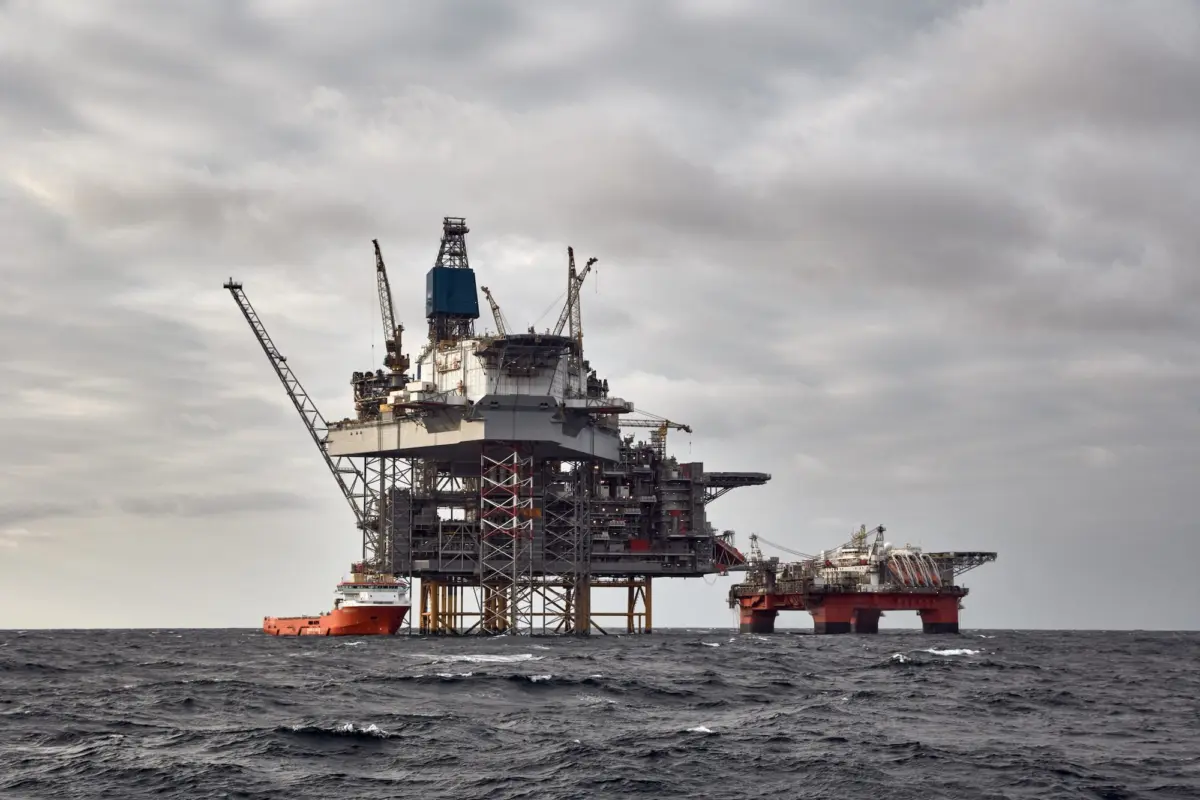
In the deepwater oil and gas sector, as well as emerging offshore hydrogen production hubs, platforms rely on heavy diesel or gas turbines for power. A nuclear power barge equipped with a cluster of Unity microreactors could act as a localized, zero-emission microgrid, transmitting power via subsea cables to multiple platforms, drastically reducing the carbon footprint of offshore extraction.
3. Defense and Government Logistics
As a major contractor for the U.S. Navy and Military Sealift Command, Hornbeck Offshore is uniquely positioned to address defense logistics. The U.S. military is actively seeking tactical energy resilience. Microreactor-powered logistics vessels and autonomous supply ships would possess near-infinite operational endurance, eliminating the vulnerability of critical fuel supply chains in contested waters.
Official Statements and Strategic Vision
The leadership of both organizations framed the partnership as a historic step toward the commercialization of civilian maritime nuclear energy.
Bobby Gallagher, CEO and co-founder of Deployable Energy, emphasized the significance of securing a major commercial maritime partner:
"We are proud to partner with one of the leaders in the US maritime sector and one of the largest Jones Act vessel owners to usher in a commercial maritime nuclear industry. Hornbeck’s operational expertise, combined with our technological milestones, provides the perfect launchpad to prove that commercial nuclear power at sea is not only safe and clean, but highly competitive economically."
Todd M. Hornbeck, Chairman, President, and CEO of Hornbeck Offshore, highlighted the transformative operational benefits of the technology:
"Our industry is confronting a massive energy transition challenge. Compact nuclear power has the potential to fundamentally improve the economics, endurance, and energy resilience of our fleet and the wider offshore energy markets. By investing in Deployable Energy, we are positioning Hornbeck at the absolute forefront of next-generation marine technology."
Regulatory, Safety, and Geopolitical Hurdles
Despite the immense promise, the path to commercial deployment of maritime microreactors is fraught with unprecedented regulatory, legal, and social hurdles.
                    ┌──────────────────────────────┐
                    │    Critical Hurdles to       │
                    │   Commercial Deployment      │
                    └──────────────┬───────────────┘
                                   │
         ┌─────────────────────────┼─────────────────────────┐
         ▼                         ▼                         ▼
┌─────────────────┐       ┌─────────────────┐       ┌─────────────────┐
│ Regulatory &    │       │ Port-State      │       │ Liability &     │
│ Classification  │       │ Access Controls │       │ Security Risks  │
└─────────────────┘       └─────────────────┘       └─────────────────┘
1. The Regulatory and Classification Maze
Deployable Energy holds a unique competitive advantage: it is currently the only commercial microreactor developer to have both successfully reached criticality with its reactor design and received an Approval in Principle (AiP) from a major maritime classification society.
However, an AiP is merely the first step. To achieve full class certification, the design must undergo rigorous, multi-year safety case reviews, hazard identification (HAZID) analyses, and physical testing. Furthermore, the U.S. NRC and USCG will need to establish a joint regulatory framework to license civilian nuclear mariners and certify reactor operations within U.S. territorial waters.
2. Port-State Access and International Waters
Under the United Nations Convention on the Law of the Sea (UNCLOS) and the IMO’s SOLAS Chapter VIII (Nuclear Ships), nuclear-powered commercial vessels are subject to strict port-state control inspections. Historically, many nations have banned nuclear-powered vessels from entering their ports. Hornbeck and Deployable Energy’s initial focus on domestic U.S. Jones Act applications is a deliberate strategic move to bypass international treaty complications, focusing instead on a single, cohesive regulatory jurisdiction.
3. Liability, Security, and Public Perception
The commercialization of maritime nuclear power requires resolving critical liability questions. On land, nuclear liabilities are managed under frameworks like the Price-Anderson Act in the United States. A corresponding international or domestic maritime liability framework must be established to reassure insurers and port authorities.
Additionally, physical security and non-proliferation protocols must be designed to protect the microreactors from piracy, sabotage, and collision-induced damage. Deployable Energy’s design addresses this through robust passive safety systems—ensuring the reactor can shut down and cool itself indefinitely without operator intervention or external power in the event of a catastrophic hull breach.
Future Outlook: The Global Maritime Nuclear Landscape
The Hornbeck-Deployable Energy partnership does not exist in a vacuum. It is part of a accelerating global race to commercialize small modular reactors (SMRs) and microreactors for marine applications.
In the United Kingdom, consortia led by Core Power are collaborating with Southern Company and TerraPower to develop molten salt reactors for large container ships. In South Korea, shipbuilding giants like Samsung Heavy Industries are partnering with Seaborg Technologies to develop floating nuclear power plants.
What distinguishes the Hornbeck-Deployable Energy initiative is its immediate focus on the U.S. Jones Act market and high-specification offshore service vessels. By targeting smaller, 1-MWe modular units, the partnership is betting that incremental, highly flexible deployments will clear regulatory hurdles far faster than massive, gigawatt-scale floating nuclear stations or large-scale nuclear propulsion for ultra-large container ships.
If successful, this phased development process will not only decarbonize Hornbeck’s fleet but will establish a blueprint for the integration of zero-emission, high-endurance power across the global blue economy. The journey from a signed MOU to an operational nuclear-powered vessel will be long and heavily scrutinized, but the strategic commitment of a major Jones Act shipowner suggests that the commercial maritime nuclear age is no longer a distant sci-fi concept, but an impending operational reality.