






Executive Overview
The contemporary maritime industry is at a critical juncture. Across the United States, a bipartisan consensus has emerged around a singular, urgent national security and economic objective: the revitalization of domestic shipbuilding and maritime industrial capacity. Decades of outsourcing, industrial decline, and supply chain consolidation have left the U.S. commercial and naval fleets facing severe capacity constraints. While the geopolitical imperative to build more vessels faster is clear, the practical execution of this mandate remains bottlenecked by two critical deficits: physical waterfront infrastructure and a skilled manufacturing workforce.
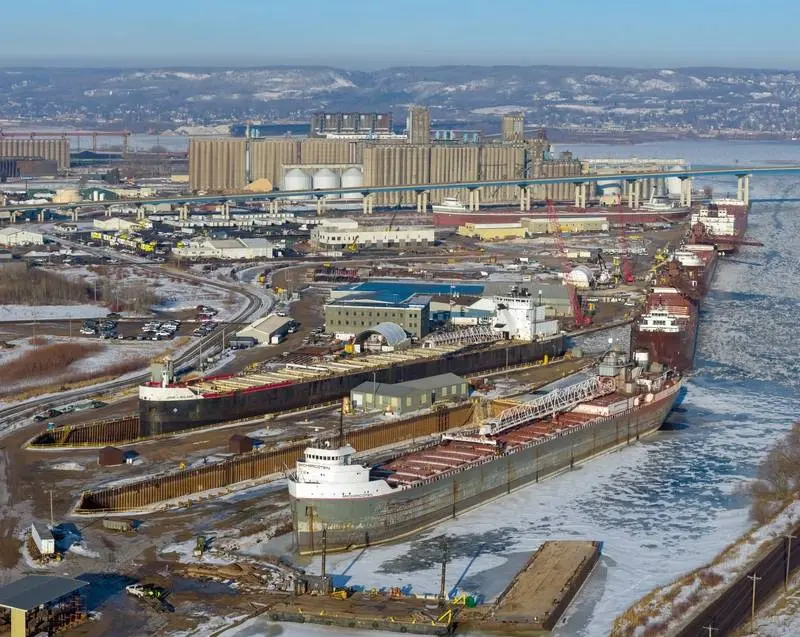
On the shores of Lake Superior, in the historic industrial hub of Superior, Wisconsin, Fraser Shipyards is emerging as a compelling blueprint for how this national industrial renaissance can be realized. Founded in 1888, the 138-year-old institution is undergoing a profound transformation. Rather than relying on incremental upgrades to legacy infrastructure, Fraser is positioning itself to leapfrog traditional manufacturing methodologies entirely.
Through a landmark collaboration agreement with South Korean shipbuilding titan HD Hyundai, Fraser Shipyards aims to import world-class digital workflows and advanced manufacturing technologies to the Great Lakes. Led by CEO Patrick Kelly, Fraser’s strategic plan—dubbed the "Shipyard of the Future"—seeks to leverage the yard’s unique assets: a highly balanced commercial and defense portfolio, an unprecedented 85-acre footprint of undeveloped waterfront property, and a seasonal surplus of elite midwestern trade talent. This initiative represents a vital test case for whether American shipyards can successfully integrate global best practices to outcompete international rivals and restore domestic maritime dominance.
Detailed Chronology: From Gilded Age Pioneer to Modern Industrial Catalyst
1888–2020: The Foundation of Great Lakes Maritime Logistics
Fraser Shipyards’ history is deeply intertwined with the industrialization of the American Midwest. Established in 1888 within the Duluth-Superior Harbor Complex—the largest freshwater port in the world—the yard was positioned to support the massive bulk transportation network of the Great Lakes. For over a century, the facility served as a vital maintenance hub for the "Lakers"—the massive bulk carriers transporting taconite (iron ore), grain, coal, and limestone that fueled the industrial revolution and American manufacturing.
Operating under the umbrella of Fraser Industries, which also includes Lake Assault Boats and Northern Engineering, the shipyard survived economic depressions, global conflicts, and shifts in global shipping dynamics by maintaining a reputation for robust, cold-weather engineering and heavy steel fabrication.
2021–2023: Strategic Realignment and Exponential Growth
The year 2021 marked a major turning point for Fraser Industries. Under restructured leadership and a modernized corporate strategy, the company began aggressively diversifying its portfolio. Historically reliant on winter repair contracts for Great Lakes vessels, the yard expanded its focus to include specialized new construction, municipal fire and police boats, research vessels, and prime military subcontracts.
This diversification strategy yielded immediate financial and operational results:
- Revenue Expansion: Between 2021 and 2024, Fraser Industries successfully doubled its annual revenue.
- Footprint Expansion: The yard doubled its active new-construction production footprint to accommodate overlapping commercial and defense builds.
- Diversification of Materials: The shipbuilder successfully balanced its operations to work equally in both heavy steel and lightweight, high-speed marine-grade aluminum.
Fraser Industries Portfolio Evolution (Post-2021)
├── Fraser Shipyards (Great Lakes vessel repair, commercial & defense newbuilds)
├── Lake Assault Boats (High-speed patrol, police, and fire vessels)
└── Northern Engineering (Machining & repair for maritime, rail, pipeline, & paper)
2024: The HD Hyundai Strategic Alliance
In late 2024, Fraser Shipyards announced a collaborative agreement with HD Hyundai, the heavy industries division of the world’s largest shipbuilding conglomerate. The agreement was the culmination of a rigorous six-to-nine-month evaluation process during which HD Hyundai vetted shipyards across North America.
HD Hyundai’s selection of Fraser was driven by a unique combination of factors:
- Access to deepwater Great Lakes launch infrastructure.
- Robust local municipal utilities (high-capacity electricity and natural gas infrastructure).
- Significant physical expansion capacity.
- A highly skilled, pre-existing local workforce.
The collaboration is designed to systematically transfer advanced shipyard processes, automated welding technologies, and digital twin manufacturing workflows developed in South Korea to the Lake Superior facility.
Supporting Context & Metrics: Analyzing the Fraser Model
To understand the strategic significance of Fraser’s expansion, one must analyze the specific metrics that differentiate it from peer yards on the East, West, and Gulf Coasts.
The Land and Labor Paradox
| Metric | Current Status | Future Potential / Underutilized Asset |
|---|---|---|
| Industrial Property | 15 Acres Active | 85 Acres Undeveloped (Zoned Industrial) |
| Core Year-Round Workforce | ~200 Skilled Tradespeople | Scalable to 600+ with existing local talent |
| Winter Surge Workforce | ~600 Skilled Tradespeople (Jan–March) | 400 highly skilled workers released off-season |
| Production Balance | 50% Repair / 50% New Construction | Balanced revenue mitigates defense budget cyclicality |
| Material Capability | 50% Steel / 50% Aluminum | Dual-material fabrication lines prevent bottlenecks |
U.S. shipyards are currently constrained by a severe shortage of skilled labor, particularly certified welders, pipefitters, marine electricians, and riggers. Yet, Fraser operates within a unique regional labor paradox.
During the peak Great Lakes winter repair season (January through March), when vessels are laid up due to lake ice, Fraser’s workforce surges from 200 to over 600 workers to handle heavy maintenance. Once the shipping season resumes in the spring, approximately 400 elite tradespeople are released back into the regional labor market due to a lack of sustained, year-round local fabrication work.
Fraser’s primary strategic objective is to secure year-round new construction contracts—including multi-year U.S. Navy and commercial builds—to permanently retain this surplus workforce of 400 skilled professionals on a year-round basis.
Fraser Shipyards Seasonal Labor Dynamics:
[Jan - Mar: Peak Winter Repair] ──> 600+ Workers (Fully Staffed)
[Apr - Dec: Normal Operations]   ──> 200 Workers (400 Skilled Tradespeople Released)
Goal: Use HD Hyundai Tech & Navy Contracts to sustain 600+ Year-Round Workers
Case Study in Engineering: The MV Niigaan Enaazhek
The technical capabilities of Fraser’s current workforce are demonstrated by the recent delivery of the MV Niigaan Enaazhek. Built for the Beausoleil First Nation, this double-ended roll-on/roll-off (RoRo) ferry operates year-round in the harsh, ice-bound environments of Georgian Bay, Ontario.

MV Niigaan Enaazhek Technical Profile:
├── Propulsion: Dual Voith Schneider Propellers (VSP)
├── Maneuverability: 360-degree rapid thrust control (turn-on-a-pinwheel)
├── Ice Rating: Ice Class 1A (engineered for continuous winter operations)
├── Capacity: 150 Passengers / 36 Vehicles
└── Service Cycle: 12 Daily Round Trips, 365 Days/Year
The vessel is the only double-ended ferry operating on the Great Lakes equipped with dual Voith Schneider Propellers (VSP). The VSP system combines propulsion and steering into a single unit, utilizing vertical blades to generate thrust in any direction instantly. This provides the vessel with unparalleled maneuverability in confined, ice-choked waters.
The successful construction, ice-class certification, and delivery of this highly complex commercial vessel serve as proof of concept for Fraser’s ability to execute sophisticated marine engineering projects.
Official Statements: High-Tech Leapfrogging and Global Competition
In discussing the strategic partnership with HD Hyundai and the vision for the "Shipyard of the Future," Patrick Kelly, CEO of Fraser Shipyards, emphasized that the goal is not merely incremental modernization, but a fundamental technological leap.
"What we are now able to say to prospective lenders, investors, and grant programs around the country is that we have partnered with some of the best technology providers in the world, if not the best. We’re not trying to incrementally modernize yesterday’s yard; we are leapfrogging technologies already deployed."
— Patrick Kelly, CEO
This "leapfrogging" strategy is centered on HD Hyundai’s close collaboration with Siemens to develop fully integrated digital enterprise platforms for shipyards. By utilizing product lifecycle management (PLM) software, digital twin simulations, and automated, robotically assisted fabrication lines, Fraser intends to design and construct vessels in a virtual environment before cutting a single piece of steel or aluminum. This methodology dramatically reduces scrap material, eliminates assembly misalignments, and optimizes worker hours per compensated gross ton (CGT).
Kelly framed the initiative as a direct response to the widening gap between domestic and international shipbuilding productivity:
"If we’re trying to outcompete the Chinese, next-generation technology will get us there. Fraser is just part of the solution, but if we can be a demonstration facility, bring it on. We have the welders, the electricians, the pipefitters—all the folks that are in short supply in maritime and shipyards around the country, I have in surplus here. We just have to find a way to utilize their skills year-round in ship repair and ship construction."
— Patrick Kelly, CEO
Future Outlook: The Road to the "Shipyard of the Future"
The roadmap for Fraser Shipyards over the next several years is highly ambitious, focused on capital investment, infrastructure development, and market expansion.
Fraser Shipyards Growth Timeline (2025–2027+)
├── 2025: Finalize HD Hyundai technology integration & digital twin workflows
├── 2026: Deliver 30-vessel pipeline (including 4 U.S. Navy contracts)
└── 2026-2027: Execute 100,000-sq.-ft. facility expansion & Navy production center
Phase 1: Near-Term Infrastructure Expansion (12–24 Months)
The immediate priority for Fraser is the design and construction of a new 100,000-square-foot indoor fabrication facility at its Superior, Wisconsin site. This facility will be custom-built to integrate HD Hyundai’s advanced production flows. By moving more of the assembly process indoors, Fraser will mitigate the harsh Lake Superior winters, allowing for climate-controlled, year-round block assembly and painting, which significantly improves coating longevity and structural weld integrity.
Phase 2: Defense Sector Penetration
Following the initial facility expansion, Fraser plans to construct a dedicated production center optimized for U.S. Navy and Coast Guard vessels. The shipyard is already scheduled to deliver 30 new vessels in 2026, a portfolio that includes critical patrol, research, and support craft associated with four distinct U.S. Navy contracts. The long-term objective is to secure prime contracts for larger auxiliary and combatant vessels, utilizing the yard’s deepwater access and unconstrained acreage.
Phase 3: Regional Scaling and Great Lakes Integration
Looking beyond the Superior harbor, Fraser’s leadership envisions a hub-and-spoke model. By establishing advanced fabrication techniques at their flagship yard, they plan to expand operations to other strategic locations across the Great Lakes. This regional network will allow Fraser to distribute large-scale shipbuilding components across multiple facilities, maximizing regional economic impact and creating a highly resilient maritime industrial cluster.
Conclusion
The partnership between Fraser Shipyards and HD Hyundai represents a vital test case for the revitalization of the American industrial commons. By pairing a 138-year-old legacy shipyard’s physical assets and skilled workforce with cutting-edge South Korean manufacturing technology, Fraser is demonstrating that the path to rebuilding domestic maritime capacity does not require starting from scratch. Instead, the future of American shipbuilding may well be forged by modernizing historical institutions, turning idle acreage on the shores of Lake Superior into a cornerstone of national economic and strategic resilience.