






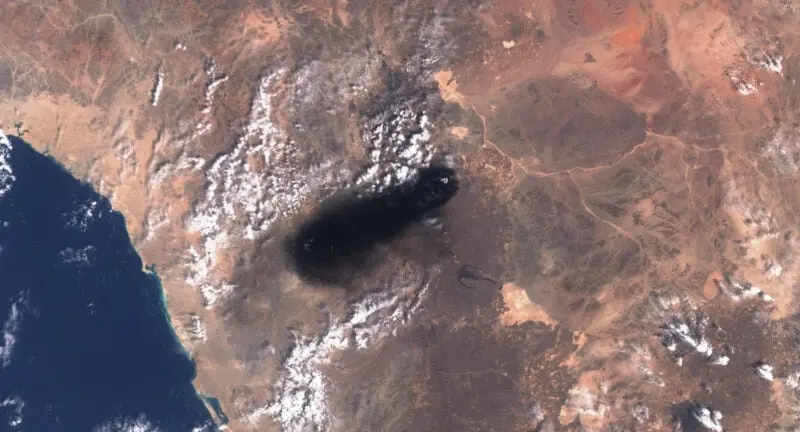
BAGHDAD & RIYADH — A dangerous new front has opened in the Middle East’s widening energy war. Iraq is scrambling to contain the diplomatic and military fallout after intelligence confirmed that a series of devastating drone strikes targeting Saudi Arabia’s critical East-West pipeline were launched from within Iraqi territory.
The revelation has shattered Baghdad’s delicate policy of regional neutrality, exposing the central government’s inability to control Iran-backed militias operating within its borders. It also threatens to drag Iraq directly into the ongoing conflict between Riyadh and Tehran, while throwing global oil markets into a fresh state of anxiety.
Executive Overview
On September 12, 2026, Iraqi Prime Minister Ali Al-Zaidi took the drastic step of firing the operations commander of Maysan province, a southern region bordering Iran, and ordering an immediate, high-level military investigation. This decisive action followed definitive findings that the unmanned aerial vehicles (UAVs) used to strike Saudi Arabia’s East-West pipeline on September 11 had been launched from a site deep within Maysan.
The target of the attack—the 745-mile East-West pipeline—is not merely a piece of Saudi infrastructure; it is the kingdom’s primary economic artery. Designed to bypass the highly volatile Strait of Hormuz, the 7 million barrel-a-day (b/d) conduit had been operating at maximum capacity due to ongoing maritime disruptions in the Persian Gulf. By striking this pipeline, the attackers demonstrated a sophisticated understanding of global energy vulnerabilities, effectively neutralizing Riyadh’s primary bypass route and leaving global oil markets highly exposed.
The geopolitical implications are severe. Iraq, long a battleground for influence between the United States, Saudi Arabia, and Iran, is facing intense international pressure to rein in local Shiite militias. These paramilitary groups, largely integrated into the state-sanctioned Popular Mobilization Forces (PMF) but operating with significant autonomy, have increasingly turned Iraqi soil into a launchpad for Iranian proxy operations.
With Yemen’s Houthi rebels simultaneously advancing along the Red Sea coast toward the Bab al-Mandeb Strait, the global energy architecture faces an unprecedented double-chokepoint crisis.
                    [ GLOBAL ENERGY CHOKEPOINTS IN CRISIS ]

       Suez Canal / Red Sea                 Persian Gulf
               │                                 │
               ▼                                 ▼
       ┌───────────────┐                 ┌───────────────┐
       │ Bab al-Mandeb │                 │Strait ofHormuz│
       │(Houthi Threat)│                 │(Tanker Crisis)│
       └───────▲───────┘                 └───────▲───────┘
               │                                 │
               └─────────[ East-West Pipeline ]──┘
                         (Targeted in Iraq Strike)
Detailed Chronology of the Crisis
The escalation unfolded rapidly over a 48-hour period, catching regional security analysts and energy traders by surprise.

Thursday, September 10, 2026: Market Precipitators
Speculation regarding an imminent escalation in the Gulf region begins to circulate in financial hubs. Brent crude futures surge, climbing nearly $5 a barrel to approach $110, as intelligence reports hint at increased militia movement along the Iran-Iraq border and renewed drone deployments.
Friday, September 11, 2026: The Strikes and Shutdown
- 04:00 AST: Multiple low-flying, GPS-guided attack drones penetrate Saudi airspace, evading localized air defense systems.
- 05:30 AST: The drones strike key pumping stations along the East-West pipeline in the Riyadh and Madinah regions. The attacks cause localized fires and structural damage to the pumping infrastructure.
- 09:00 AST: The Saudi Ministry of Foreign Affairs releases a statement confirming the attacks. As a precautionary measure to assess structural integrity and prevent further disaster, Saudi Aramco shuts down the entire 7 million b/d pipeline.
- Late Friday Evening: Joint Saudi-US intelligence sharing traces the flight telemetry of the drones. Radar footprints and debris analysis reveal the drones did not originate from Yemen—as had been the case in previous years—but were launched from southeastern Iraq.
Saturday, September 12, 2026: Baghdad’s Scramble
- 02:00 AST: Emergency meetings are convened in Baghdad. Prime Minister Ali Al-Zaidi is presented with undeniable evidence of the launch site in Maysan province.
- 06:00 AST: PM Al-Zaidi issues a formal decree summarily dismissing the military operations commander for Maysan province. He announces the formation of an emergency joint committee to investigate the security breach.
- 09:00 AST: Reports emerge from border officials that Iraq has ordered the immediate closure of the Shalamcheh border crossing with Iran. Security sources confirm the closure is a precautionary move to restrict the movement of militia personnel and hardware.
- 12:00 AST: Brent crude stabilizes at approximately $105 a barrel, as traders weigh the swift political reaction from Baghdad against the reality of a temporarily disabled Saudi pipeline.
Supporting Context & Strategic Metrics
To understand the gravity of the current crisis, it is essential to analyze the structural role of the East-West pipeline and the broader maritime crisis in the region.
The Strategic Lifeline: Saudi Arabia’s East-West Pipeline
The East-West pipeline, also known as the Petroline, spans from the Eastern Province oil fields of Abqaiq to the Red Sea port of Yanbu. It was built specifically to safeguard Saudi oil exports against a potential blockade of the Strait of Hormuz by Iran.
| Metric | Details |
|---|---|
| Total Capacity | 7.0 Million Barrels per Day (b/d) |
| Operational Status (Pre-Attack) | 100% Capacity (due to Hormuz crisis) |
| Length | 1,200 kilometers (745 miles) |
| Key Terminals | Abqaiq (East) to Yanbu (West/Red Sea) |
| Primary Vulnerability | Remote pumping stations susceptible to drone strikes |
During peaceful periods, the pipeline rarely operates at full capacity, as shipping directly from the Persian Gulf is more cost-effective for Asian markets. However, the current conflict has brought tanker traffic in the Strait of Hormuz to a near-standstill. Consequently, Saudi Aramco had ramped the East-West pipeline to its maximum limit of 7 million b/d to keep global markets supplied via the Red Sea.
The Double-Chokepoint Squeeze
The strike from Iraqi soil coincides with a highly aggressive push by Iran-backed Houthi forces in Yemen. Houthi militants have made significant territorial gains along the Red Sea coast, advancing toward the critical Bab al-Mandeb Strait.
[Persian Gulf / Hormuz] ──(Blocked)──> [East-West Pipeline] ──(Damaged)──> [Red Sea / Bab al-Mandeb] ──(Houthi Threat)──> Global MarketsIf the Houthis secure control over the coastal heights overlooking the Bab al-Mandeb, they will possess the capability to target shipping transiting toward the Suez Canal. This creates a worst-case scenario for global energy security:
- The East Gate (Hormuz) is choked by Iranian naval activity and sea mines.
- The West Gate (Bab al-Mandeb) is threatened by Houthi anti-ship missiles and explosive boats.
- The Overland Bypass (East-West Pipeline) is vulnerable to drone strikes launched from Iraq.
This multi-front threat effectively neutralizes Saudi Arabia’s geographical advantage, leaving its oil production isolated and vulnerable.
Official Statements and Geopolitical Reactions
The diplomatic fallout from the Maysan province launch has triggered a flurry of statements from regional capitals, highlighting the high stakes involved.
Baghdad: A Fight for Sovereign Integrity
In a statement broadcast on state television, Prime Minister Ali Al-Zaidi sought to project strength while reassuring regional partners:
"The territory of Iraq must not, and will not, be used as a launching pad for attacks on our neighbors. We have initiated a thorough investigation at the highest levels of our security apparatus to identify those responsible for this unauthorized and hostile act. The dismissal of the Maysan operations commander is a clear signal that negligence or complicity will not be tolerated."
However, analysts in Baghdad point out that Al-Zaidi’s government exists in a delicate balance. Firing a regional commander is a relatively low-cost political move; directly confronting the powerful, heavily armed militias responsible for the launch is an entirely different challenge.
Riyadh: Demanding Accountability
The Saudi Ministry of Foreign Affairs issued a stern statement, placing the responsibility on both the host nation and its state sponsor:
"The Kingdom of Saudi Arabia condemns in the strongest terms this cowardly act of aggression against global energy security. While we appreciate the immediate steps taken by Prime Minister Al-Zaidi’s administration, Iraq must take concrete, verifiable actions to disarm these rogue factions. We hold the sponsor of these militias fully accountable for this dangerous escalation."
Saudi officials have quieted their public rhetoric to give Al-Zaidi room to maneuver, but behind closed doors, Riyadh is reportedly warning Baghdad that further attacks originating from Iraqi soil will meet with direct military retaliation—a move that would drag Iraq into a devastating regional war.
Future Outlook
The coming weeks will be critical in determining whether the Middle East can avoid a wider, systemic conflict that could push oil prices well past the $120-a-barrel mark.
The Militia Dilemma in Iraq
Prime Minister Al-Zaidi’s decision to close the Shalamcheh border crossing with Iran is a bold tactical move, but its long-term viability is questionable. Iraq’s borders are notoriously porous, and the militias enjoy deep-seated political patronage within the Iraqi parliament. If Al-Zaidi pushes too hard against these groups, he risks a domestic political backlash or even armed clashes in the streets of Baghdad. If he fails to act, he faces economic isolation from the Gulf Cooperation Council (GCC) and potential sanctions from Western allies.
                  ┌──────────────────────────────┐
                  │   PM Al-Zaidi's Dilemma      │
                  └──────────────┬───────────────┘
                                 │
         ┌───────────────────────┴───────────────────────┐
         ▼                                               ▼
┌─────────────────────────────────┐             ┌─────────────────────────────────┐
│ Confront Militias               │             │ Do Nothing / Fail to Act        │
├─────────────────────────────────┤             ├─────────────────────────────────┤
│ • Domestic political backlash   │             │ • Economic isolation from GCC   │
│ • Risk of civil unrest/clashes  │             │ • Potential Western sanctions   │
│ • Preserves foreign relations   │             │ • Risk of Saudi airstrikes      │
└─────────────────────────────────┘             └─────────────────────────────────┘
Saudi Air Defense and Infrastructure Hardening
The vulnerability of the East-West pipeline’s pumping stations will force Saudi Arabia to reallocate its air defense assets. While the kingdom has focused its US-supplied Patriot and THAAD missile batteries on its southern border with Yemen, it must now secure its northern and western frontiers against threats originating from Iraq and Iran. This will likely involve a massive procurement of short-range air defense (SHORAD) and counter-UAS (C-UAS) systems to protect thousands of miles of exposed pipelines.
Global Market Implications
For energy markets, the era of cheap, easily transportable Middle Eastern crude appears to be facing severe structural headwinds. Even if Saudi Aramco quickly repairs the physical damage to the East-West pipeline, the "security premium" on oil is likely to persist. Traders must now calculate the risk of a synchronized, multi-front attack on Middle Eastern energy infrastructure. If both the Strait of Hormuz and the East-West pipeline are compromised simultaneously, the global economy could face a supply deficit of up to 10 million barrels per day—a shock that would trigger widespread inflation and economic stagnation worldwide.
The drone strikes in Maysan province have demonstrated that in modern asymmetric warfare, geography is no longer a shield. For Iraq, the challenge is proving it can function as a sovereign state rather than a launching pad for regional conflict. For the rest of the world, the crisis is a stark reminder of the fragile lines that keep the global economy fueled.