









Executive Overview
The global automotive landscape is currently undergoing a profound structural transformation, driven by the rapid rise of electric vehicles (EVs). Yet, even as climate imperatives demand an accelerated transition away from internal combustion engines, the geopolitical and economic barriers surrounding the EV market are higher than ever. In the United States, legacy automakers and policymakers have long maintained a united front against the prospect of Chinese electric vehicles entering the domestic market. The official narrative often frames this resistance around national security, supply chain resilience, and the protection of domestic manufacturing jobs.
However, recent comments from top industry executives reveal a more vulnerable underlying motivation: legacy automakers are profoundly afraid of being outcompeted on price, technology, and consumer appeal.
This anxiety was laid bare during recent remarks by Hyundai Motor CEO Jose Munoz, who issued a stark warning to the United States. Speaking in San Jose, California, Munoz cautioned that without the continuation of stringent tariffs and protective trade barriers, Chinese automakers could easily replicate their aggressive European market expansion inside the United States.
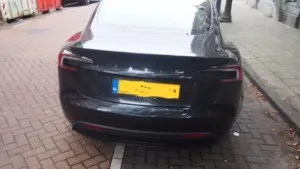
Munoz’s concerns highlight an uncomfortable irony for the traditional automotive sector. For years, critics of EV mandates have argued that most consumers simply do not want electric cars. Yet, the intense lobbying to keep Chinese EVs out of Western markets suggests the exact opposite: that these vehicles are viewed as an existential threat precisely because they are too compelling, too technologically advanced, and far too affordable. As legacy brands struggle to maintain their footing in regions where Chinese EV makers compete on a level playing field, the debate over trade barriers has morphed into a high-stakes test of global market competitiveness versus institutional protectionism.
Detailed Chronology
To understand how the global automotive industry reached this precarious crossroads, it is necessary to examine the timeline of events that brought Chinese electric vehicles from regional novelties to dominant global contenders.
Phase 1: The Rise of Domestic Dominance in China (Late 2010s–Early 2020s)
Long before capturing international headlines, Chinese automakers—backed by proactive state industrial policies, robust supply chain integration, and massive investments in battery technology—built a hyper-competitive domestic EV market. Companies like BYD, NIO, and Xpeng refined their manufacturing processes, software ecosystems, and cost efficiencies through fierce domestic competition. By the early 2020s, China had secured a near-monopoly on critical battery components and processing, establishing an unassailable cost advantage over legacy Western and Asian manufacturers.
Phase 2: The European Incursion (2023–2025)
Armed with mature technology and significant economies of scale, Chinese EV manufacturers turned their sights toward international expansion, with Europe serving as their primary testing ground. Offering vehicles equipped with cutting-edge infotainment systems, impressive range, and luxury-tier features at a fraction of the cost of traditional European brands, Chinese automakers rapidly gained market share.

Alarmed by this sudden shift, the European Commission launched an anti-subsidy investigation into Chinese battery-electric vehicles in late 2023. By late 2024 and into 2025, the European Union implemented provisional and definitive countervailing duties (tariffs) ranging up to 35% on top of the bloc’s standard 10% import duty, alongside minimum pricing commitments designed to curb the influx of heavily subsidized imports.
Phase 3: Divergent Paths in the UK and EU (2025–Early 2026)
As the European Union fortified its borders, a natural economic control group emerged right next door: the United Kingdom. Unlike the EU, the UK chose not to implement punitive tariffs or sweeping trade barriers on Chinese electric vehicles. The resulting divergence in market dynamics provided a masterclass in consumer demand and market economics. While Chinese brands captured roughly 9% of the EU auto sales market in the first half of 2026, their market share in the UK surged to an impressive 15%.

Phase 4: Hyundai’s Wake-Up Call and the U.S. Warning (September 2026)
Against this backdrop of shifting European market shares, Hyundai Motor CEO Jose Munoz took the stage in San Jose, California, in September 2026. Breaking the silence of several traditional non-Chinese Asian and Western automakers, Munoz openly warned U.S. stakeholders that the existing 100% tariff wall protecting the American market must not be lowered. Pointing to the struggles Hyundai was experiencing in profitability and market share across Europe—and contrasting the heavily regulated EU with the barrier-free UK market—Munoz signaled that legacy automakers view Chinese EV expansion not as a fair-market challenge, but as an existential crisis requiring permanent governmental guardrails.
Supporting Context & Metrics
The debate surrounding Chinese EVs is ultimately rooted in hard economic realities, manufacturing efficiency, and consumer economics. The metrics emerging from international markets tell a compelling story of why legacy executives are sounding the alarm.
The Cost and Pricing Disparity
According to market data cited by Reuters, Chinese electric vehicles sold in European markets—including automotive-heavy nations like Italy, Spain, and France—are routinely 30% to 40% cheaper than rival models produced by legacy European, American, and Asian manufacturers.
Crucially, this staggering price advantage exists despite the trade barriers, tariffs, and minimum pricing floors imposed by the European Union. This indicates that Chinese automakers possess fundamental cost structures—driven by vertically integrated supply chains, cheaper domestic raw materials, and advanced manufacturing robotics—that allow them to absorb or bypass traditional trade penalties while remaining remarkably profitable.
Market Penetration: EU vs. UK Control Group
The contrasting fortunes of the European Union and the United Kingdom offer quantifiable proof of how trade barriers shape consumer choice:
- The European Union (Protected Market): Despite the introduction of punitive tariffs and complex regulatory hurdles, Chinese-built vehicles managed to account for 9% of all auto sales in the EU during the first half of 2026. For legacy brands accustomed to dominating their home turf, a 9% erosion in market share over a short period represents a major strategic threat.
- The United Kingdom (Open Market): Operating without the heavy tariff walls of its continental neighbors, the UK market experienced an even more dramatic shift. Chinese-built electric vehicles captured 15% of total auto sales during the same timeframe. In high-profit segments where UK consumers prioritize value and technology, Chinese brands have risen to become top sellers simply because they offer superior product propositions without artificial trade impediments.
The Innovation Gap
Beyond price, legacy executives are privately—and occasionally publicly—terrified of the technology gap. As Hyundai’s Munoz noted during his San Jose address, "The level of innovation, the level of improvement, the technology is unbelievable."
Chinese EV manufacturers have outpaced legacy competitors in key consumer-facing metrics:
- Software and Infotainment: Highly responsive, OTA (over-the-air) updateable operating systems that integrate seamlessly with consumer electronics.
- Charging Speeds: Widespread adoption of 800V architectures allowing ultra-fast charging capabilities that routinely outperform older Western platforms.
- Vertical Integration: Control over the entire vehicle ecosystem, from the lithium-ion cells to the microchips, insulating them from external supply chain shocks.
Official Statements and Industry Discourse
The discourse surrounding Chinese EV imports has created strange bedfellows in global politics and corporate boardrooms. Historically, the automotive industry has championed the tenets of free-market capitalism, globalized supply chains, and open competition. However, the existential threat posed by affordable electrification has led many industry leaders to pivot toward protectionist advocacy.
When Hyundai CEO Jose Munoz addressed the audience in California, his framing was revealing. Describing the UK market—where Chinese automakers dominate top-seller lists due to the absence of trade barriers—Munoz stated: "The UK, which in the past was a very profitable, very strong market, has become like China… All the top sellers are Chinese because there are no barriers."

This statement underscores a fundamental anxiety: legacy automakers define a "healthy" market as one protected by high barriers to entry that shield established players from disruptive new entrants.
In the United States, this sentiment is echoed loudly across the political spectrum. Both Democratic and Republican administrations have embraced aggressive protectionism. The current U.S. policy maintains a prohibitive 100% tariff on Chinese electric vehicles, effectively locking them out of the world’s most lucrative automotive market. While political leaders often frame these measures through the lens of national security and safeguarding domestic union jobs, statements from automotive executives lay bare the commercial panic beneath the surface.
Industry analysts note the profound irony of this posture. For years, legacy executives excused slow EV adoption rates by claiming that consumer demand for electric cars was weak and that buyers preferred gasoline-powered vehicles. Yet, the frantic lobbying to keep Chinese EVs out of Western markets reveals the hollowness of that argument. If consumers truly did not want electric vehicles, allowing superior, affordable Chinese EVs into the market would pose zero threat to legacy automakers. The reality—acknowledged through closed-door anxiety and public warnings—is that consumers do want compelling, high-tech, affordable electric vehicles, and legacy brands know they cannot currently compete on a level playing field.
Future Outlook
As the global automotive industry looks toward the remainder of the decade, the trajectory of trade policy and market competition remains fraught with tension.
Will Western Trade Walls Hold?
Political consensus in Washington, D.C., heavily favors maintaining or even expanding trade barriers against Chinese automotive imports. It is exceedingly unlikely that either political party will dismantle the 100% tariff wall in the near term. Protectionist sentiment is deeply entrenched, reinforced by domestic manufacturing lobbies and geopolitical competition.
However, the warnings issued by executives like Hyundai’s Jose Munoz suggest that legacy automakers are nervous about the durability of these walls. As Chinese automakers continue to refine their vehicles, reduce costs, and expand their manufacturing footprints outside of mainland China—such as building assembly plants in Mexico, Southeast Europe, or South America—they may find alternative pathways to bypass direct import tariffs into protected markets.
The Imperative for Legacy Adaptation
Ultimately, trade barriers and tariffs can only buy legacy automakers time; they cannot provide a permanent shield against technological evolution. If traditional Western and Asian automakers spend the next five years relying solely on government protection rather than aggressively restructuring their operations, cutting production costs, and modernizing their software architectures, they will face a severe reckoning.
When—or if—the barriers eventually come down, consumers will gravitate toward the best products at the most competitive price points. The panicked warnings from industry leaders serve as an unintentional endorsement of Chinese EV dominance: a clear admission that without government intervention, the legacy auto industry as we know it may not survive the transition to the electric future.