








Executive Overview
Nestled gracefully in the south of Cumbria, where the rugged southern foothills of the Lake District National Park gently bleed into the sprawling vistas of the Yorkshire Dales, lies the market town of Kendal. For generations, this historic settlement has served as the quintessential jumping-off point for outdoor enthusiasts, hikers, and weekend holidaymakers eager to conquer England’s most dramatic peaks and tranquil bodies of water. Yet, to treat Kendal merely as a logistical corridor or a transient pitstop is to overlook a destination of profound historic depth, thriving artistic vitality, and an independent commercial spirit that uniquely distinguishes it from the region’s more purely tourist-centric villages.
Affectionately and historically known as the “Auld Grey Town” due to the pervasive local use of rugged limestone and slate in its architectural foundations, Kendal boasts a rich heritage rooted deeply in the medieval wool trade and fortified by its iconic 13th-century castle. Today, however, it operates as a vibrant, living community that balances working-town authenticity with a burgeoning cultural and gastronomic footprint. Drawing upward of 25,000 weekend visitors during world-renowned events such as the annual Kendal Mountain Festival—which injects millions into the local economy—the town manages a rare feat: it sustains a bustling high street and a diverse culinary ecosystem while retaining a fiercely local identity.
Easily accessible via direct rail links from major transit hubs like London and Glasgow, and strategically situated just a few miles from the M6 motorway, Kendal offers an immersive respite from the densely packed tourist traffic of the neighboring national parks. This comprehensive report explores the multifaceted appeal of Kendal, charting its industrial origins, its modern artisanal renaissance, its culinary landmarks, and its strategic position in the evolving landscape of Northern English tourism.
Detailed Chronology: From Medieval Wool Hub to Modern Cultural Enclave
To truly understand Kendal’s current character, one must trace its evolution across centuries of commerce, architectural transformation, and cultural adaptation. The town’s historical trajectory is a testament to resilience and industrial adaptability.
Early Foundations and the Wool-Making Era
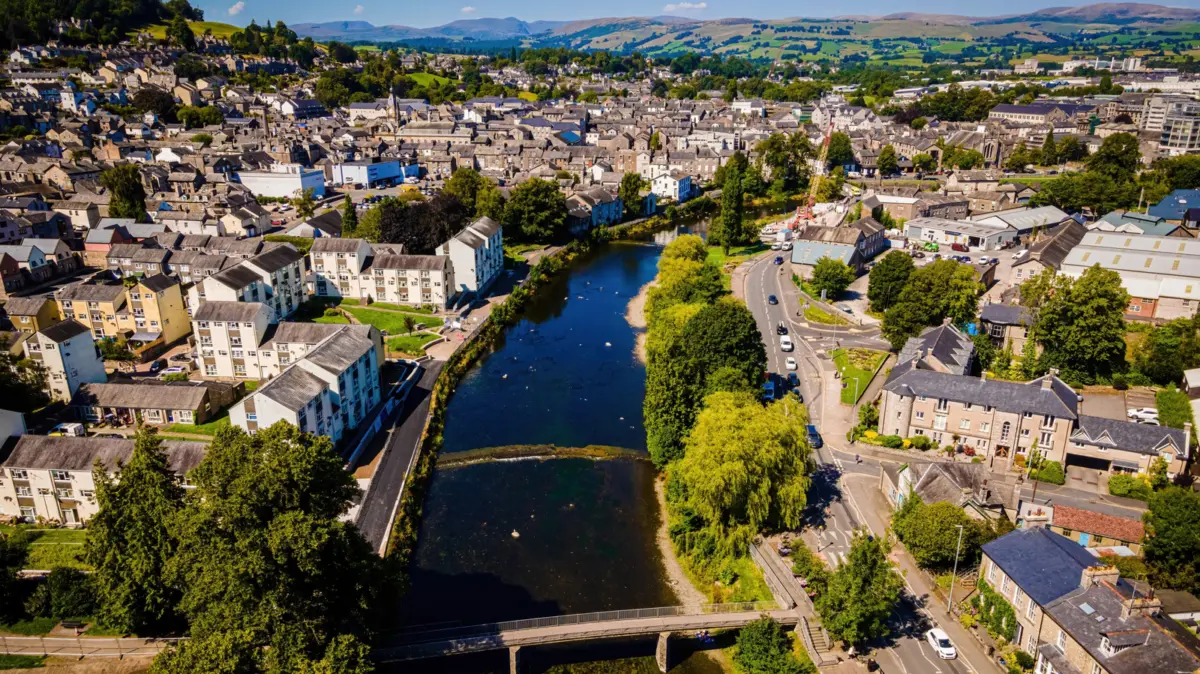
Kendal’s origins are firmly anchored in its geography. Situated along the fertile banks of the River Kent, the settlement established itself early on as a strategic agricultural and trading post. However, it was the medieval period that catalyzed Kendal’s economic prominence. Driven by the region’s abundant sheep farming, the town transformed into a powerhouse of the British wool and textile trade.
During the 14th century, Flemish weavers settled in the area, introducing advanced cloth-making techniques. This gave rise to "Kendal Green," a famous woolen fabric worn widely throughout England, referenced even in the works of William Shakespeare. The wealth generated during this epoch laid the foundation for the town’s dense network of historic yards, narrow alleyways, and stone structures that still define the urban layout of the town center today.
The Rise of the "Auld Grey Town" and Fortified History
As the wool trade flourished, so too did the town’s physical footprint. The construction of Kendal Castle in the late 12th and early 13th centuries—perched strategically on a drumlin overlooking the valley—provided a defensive anchor for the expanding population. Though the castle eventually fell into ruin, its stone remnants remain a focal point for contemporary walkers and historians alike.

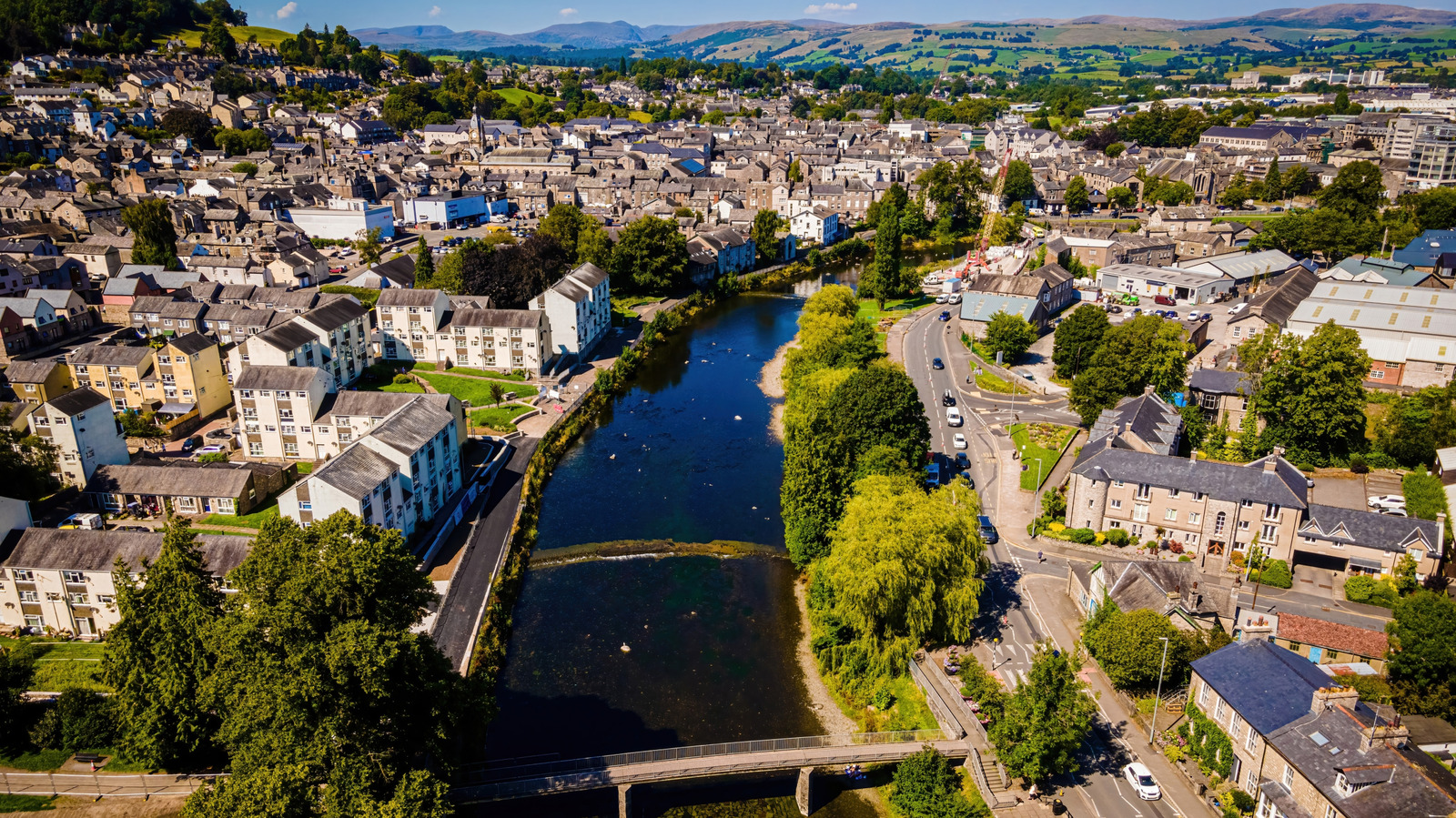
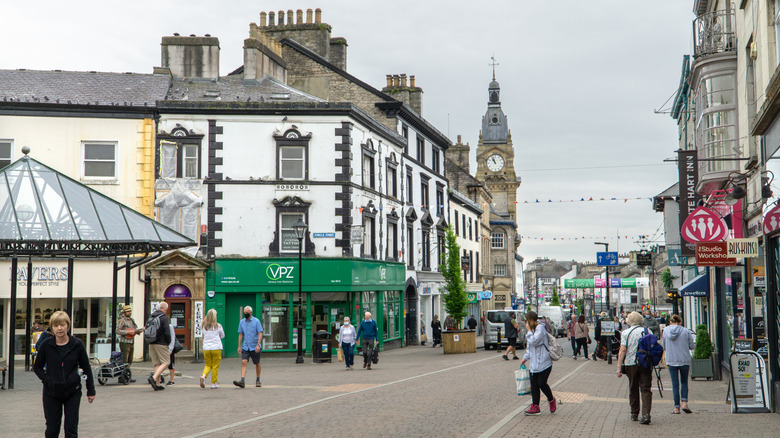
The distinctive aesthetic of the town solidified over the succeeding centuries. Master builders utilized local limestone and dark slate extracted from the surrounding hillsides, bestowing upon Kendal its enduring moniker, the "Auld Grey Town." This uniformity of material created an architectural harmony that has weathered the industrial age and the transition into a modern service and tourism-based economy.
Industrial Evolution and the Legendary Mint Cake
By the 18th and 19th centuries, Kendal had diversified its industrial output, incorporating paper manufacturing, snuff production, and heavy engineering alongside its traditional textile roots. It was also during this period of industrial enterprise that one of the town’s most enduring cultural artifacts was born: Kendal Mint Cake.
Invented serendipitously by Joseph Wiper in 1869, this high-energy confection of sugar, glucose, and peppermint oil was designed to sustain laborers and travelers. Its destiny, however, was sealed on the global stage when polar explorers and mountaineers adopted it as an essential ration. Most famously, Sir Edmund Hillary and Tenzing Norgay packed Kendal Mint Cake in their rucksacks during their historic, successful ascent of Mount Everest in 1953, cementing the town’s quiet contribution to international exploration history.
The Modern Cultural Renaissance
In the latter half of the 20th century and into the 21st, Kendal successfully pivoted away from heavy manufacturing toward the arts, outdoor retail, and cultural tourism. The establishment of institutions like the Abbott Hall Art Gallery and the Brewery Arts Centre transformed the town into a cultural hub for south Cumbria.
Furthermore, the inception and exponential growth of the Kendal Mountain Festival elevated the town’s international profile. What began as a niche gathering of climbers has evolved into a world-class celebration of mountain film, literature, and adventure culture, drawing global talent and tens of thousands of visitors annually, thereby cementing Kendal’s status as a modern-day nexus for outdoor enthusiasts.
Supporting Context & Metrics: Economics, Demographics, and Tourism
Analyzing Kendal requires a look at the quantitative data that drives its local economy and tourism sector. Unlike smaller, highly seasonal hamlets deep within the Lake District, Kendal functions as a year-round economic engine for south Cumbria.
Economic Impact of Events and Tourism
The convergence of outdoor tourism and cultural festivals creates a robust financial ecosystem within the town. According to economic research published by The Westmorland Gazette, the annual Kendal Mountain Festival alone infuses upwards of £3 million directly into the local economy over a single weekend. This influx benefits hospitality providers, independent retailers, accommodation operators, and transport networks.
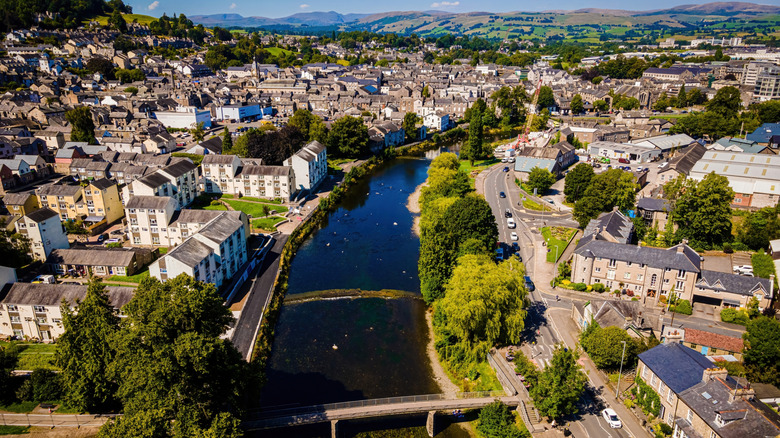
Beyond the festival circuit, Kendal’s retail sector thrives on a dual-market model. It successfully captures passing trade from the estimated millions of annual visitors to the Lake District National Park and the Yorkshire Dales, while simultaneously catering to a stable resident population of approximately 30,000. This balance prevents the town center from succumbing to the seasonal ghost-town effect that plagues smaller, purely resort-based destinations.
Accessibility and Infrastructure Metrics
Kendal’s strategic location near major transport corridors underpins its commercial viability:
- Road Connectivity: Located mere miles from Junction 36 and Junction 37 of the M6 motorway, the town acts as an effortless vehicular gateway to the southern and eastern lakes.
- Rail Transit: Direct and connecting rail services link Kendal via Oxenholme The Lake District station (just outside the town center) to major urban terminals including London Euston, Manchester, and Glasgow, facilitating low-carbon weekend travel.
- Retail Diversity: The town center features a healthy distribution of commerce, comprising roughly 40% independent businesses and local artisans alongside resilient national high-street anchors, ensuring high footfall throughout the week.
Official Statements and Local Insights
To fully grasp the essence of Kendal, one must listen to the voices of those who know its streets, alleys, and community fabric intimately.
Reflecting on over a decade of residency in the town, a local Cumbrian writer and long-term observer of the area notes:
"Many visitors use Kendal merely as a jumping-off point for exploring the national parks, yet the town itself deserves more than just a passing glance. Despite its popularity, Kendal is a local rather than a tourist town, and that is perhaps its charm. It offers a respite from the busier national parks while giving visitors the chance to shop, dine, and explore like a local."
This sentiment is echoed by regional business owners and tourism bodies who emphasize the town’s unique synthesis of heritage and contemporary lifestyle. The commitment to maintaining independent retail spaces—such as Herdy, which celebrates the iconic Herdwick sheep of the Lake District through contemporary design, or Maed & Co, which champions regional makers—highlights a collective desire to protect Cumbrian craftsmanship against the homogenizing tide of modern retail globalization.
Culinary proprietors within the historic core similarly point to the atmosphere afforded by the town’s centuries-old architecture. Operators at establishments housed within 17th- and 18th-century structures emphasize that the physical environment is an active participant in the visitor experience. As noted by patrons of historic local institutions like Farrer’s Tea & Coffee House and Ye Olde Fleece inn, the sensory immersion of roasting coffee beans, timber-beamed interiors, and locally sourced Cumbrian produce creates an authenticity that modern developments simply cannot replicate.
Future Outlook: Sustainable Growth, Culture, and Regional Integration
As Kendal looks toward the future, municipal leaders, local businesses, and regional planners face both significant opportunities and distinct challenges. The primary objective moving forward is to manage the delicate equilibrium between welcoming growing numbers of cultural and outdoor tourists and preserving the authentic community character that defines the town.
Sustainable Tourism and Green Mobility
With traffic congestion remaining a persistent challenge across the broader Lake District and Yorkshire Dales corridors, Kendal is increasingly positioning itself as a model for sustainable, car-free regional exploration. Initiatives to enhance cycling infrastructure along the River Kent, improve pedestrian wayfinding through the historic yards, and strengthen green transport links to surrounding trailheads are currently at the forefront of local development strategies. By encouraging visitors to arrive via the West Coast Main Line to Oxenholme and utilize local bus networks, Kendal aims to mitigate its carbon footprint while accommodating rising visitor numbers.
Cultural Expansion and Economic Resilience
The cultural sector is slated for continued expansion. Plans to further diversify the town’s arts programming—anchored by the Brewery Arts Centre and an expanding calendar of independent food, craft, and literary events—ensure that Kendal will maintain its reputation as a year-round destination. Furthermore, as remote working trends continue to redistribute populations across the United Kingdom, Kendal’s combination of high-speed digital infrastructure, rich cultural amenities, and immediate proximity to wild landscapes makes it an increasingly attractive destination for new residents and independent enterprises.
Ultimately, Kendal stands as proof that a historic settlement need not choose between honoring its past and embracing modernity. By fiercely protecting its independent retail spirit, celebrating its industrial and exploratory heritage, and cultivating a dynamic culinary scene, the "Auld Grey Town" has secured its place not just as a gateway to the national parks, but as an essential, vibrant destination in its own right.