






Executive Overview
Public transportation is fundamentally a collaborative enterprise. While transit agencies command the spotlight by delivering daily services, managing routes, and engaging directly with riders, an extensive, highly specialized private-sector ecosystem operates behind the scenes. Hundreds of companies design, manufacture, engineer, finance, and support the rolling stock, physical infrastructure, and digital technologies that keep modern transit networks moving.
Representing this vast network of private enterprises within the American Public Transportation Association (APTA) is the Business Members Board of Governors (BMBG). Comprising over 850 business members—ranging from small, specialized local businesses to massive global enterprises—the BMBG serves as the collective voice of the supply chain. At the helm of this organization is Ray Melleady, President and CEO of Ster Seating.
Melleady’s tenure as BMBG Chair is defined by a singular vision: breaking down traditional silos between public agencies and private suppliers to build a more resilient, innovative, and financially secure transit industry. Drawing on a unique career trajectory that spans decades from working as a diesel technician at SEPTA to leading a major private manufacturing firm, Melleady champions a culture of radical collaboration. In an in-depth dialogue with METRO’s Executive Editor Alex Roman, Melleady detailed how the BMBG is spearheading procurement reform, driving legislative advocacy, tackling cybersecurity and artificial intelligence, and ensuring that private-sector partners have a direct hand in shaping the future of public mobility.
Detailed Chronology: The Evolution of Modern Transit Collaboration
To understand the current momentum of the BMBG, it is essential to trace the historical evolution of the relationship between public transit agencies and their private-sector vendors. For decades, the industry operated under a transactional model: transit agencies drafted specifications, issued requests for proposals (RFPs), selected the lowest bidder, and managed contracts through rigid, often adversarial boundaries.
As transit systems grew more complex—transitioning from legacy diesel fleets to zero-emission battery-electric and hydrogen fuel cell buses, deploying advanced signaling systems, and integrating digital payment platforms—this traditional procurement model began to crack. Agencies faced skyrocketing costs, extended lead times, and brittle supply chains, while manufacturers struggled against a backdrop of hyper-customized vehicle specifications that stifled production efficiencies.
Recognizing these systemic challenges, APTA and the BMBG embarked on a strategic pivot, shifting from a vendor-buyer paradigm to an integrated partnership model:
- The Foundation of the Strategic Plan: The BMBG initiated comprehensive outreach, deploying surveys, in-depth interviews, and interactive working sessions across all sectors and enterprise sizes. This exhaustive listening tour culminated in the formulation of the 2026–2028 Strategic Plan, aligning private-sector priorities directly with APTA’s overarching mission.
- The Rise of the OEM Task Force: To combat the inefficiencies of hyper-customization, the BMBG helped establish the OEM Task Force. This platform brought agency leaders, Original Equipment Manufacturers (OEMs), and tier-one suppliers to the same table to transition bus procurement from custom manufacturing toward standardized platforms with configurable options.
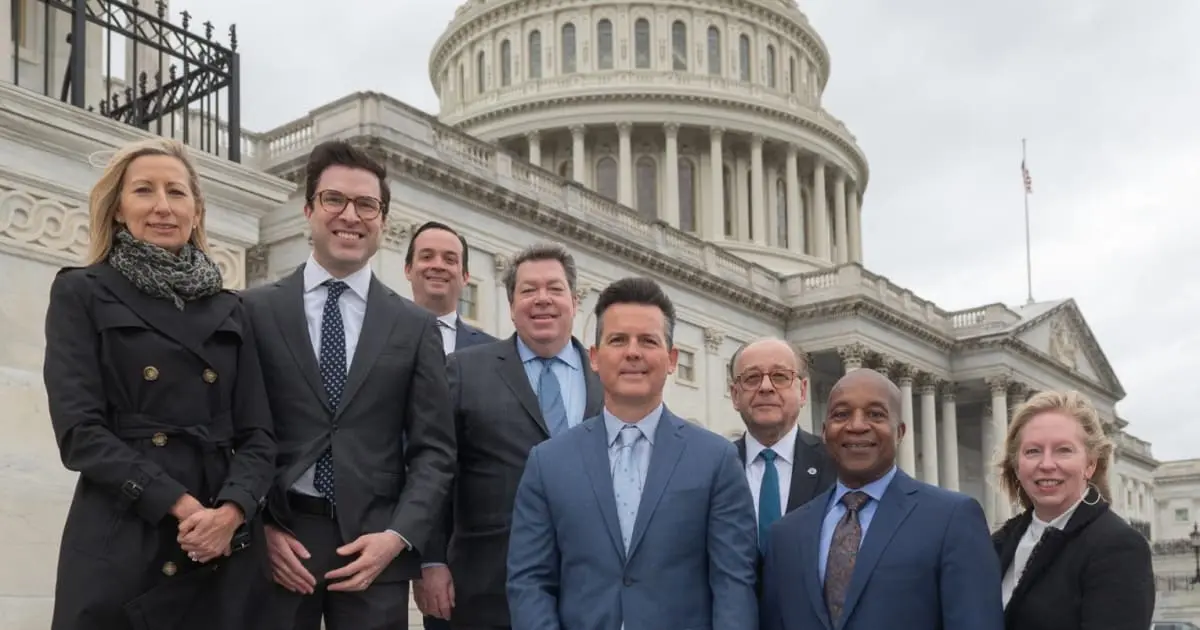
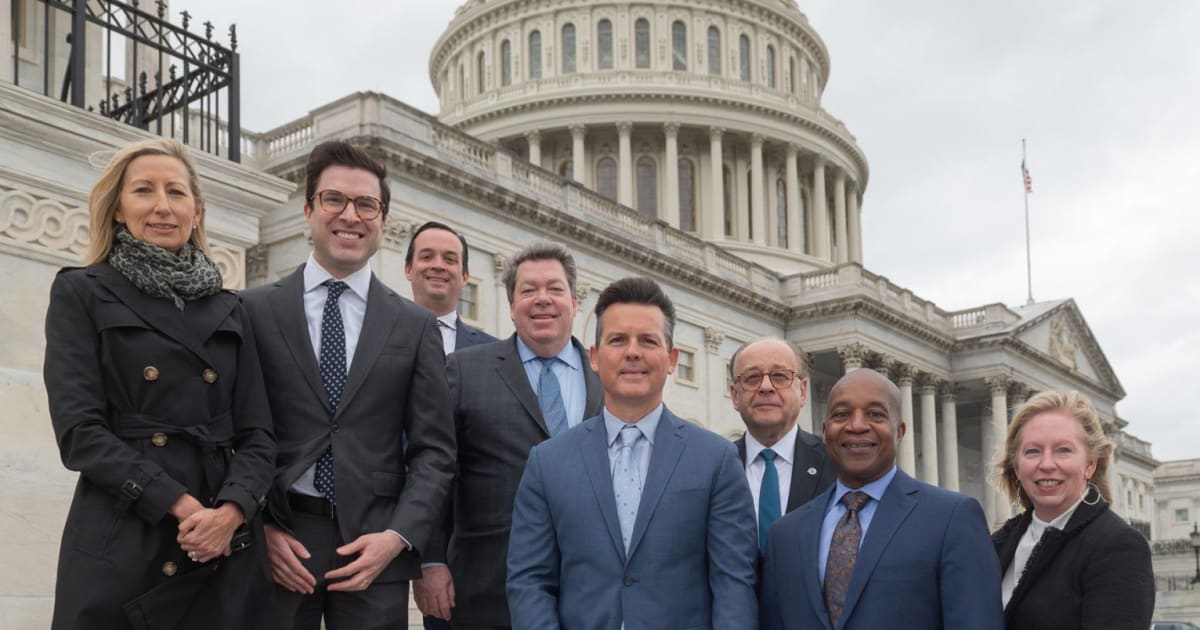
- Legislative Alignment and Fly-Ins: As the industry prepares for critical federal reauthorization cycles, the BMBG has intensified its coordinated advocacy efforts. Through business member fly-ins, Capitol Hill delegations, and district-level economic mapping, the board has systematically united public agencies and private suppliers to present a unified front to lawmakers.
Supporting Context & Metrics: The Anatomy of a Shared Enterprise
Public transportation is not merely a public service; it is a massive economic engine. The health of transit agencies and the health of the private business community are inextricably linked.
Economic Impact and Supply Chain Depth
When a transit agency invests federal capital into expanding or modernizing its fleet, the economic benefits ripple across nearly every state in the nation. A single modern transit bus incorporates components, software, engineering expertise, and raw materials sourced from dozens of different suppliers.
- Over 850 Members: The BMBG represents a diverse coalition of manufacturers, engineering consultants, technology developers, financial advisors, and safety experts.
- The Federal Investment Flow: The vast majority of federal transit funding ultimately flows through private-sector partners who build vehicles, engineer civil projects, install digital infrastructure, and maintain operational continuity.
- Small and Disadvantaged Businesses: A core focus of Melleady’s leadership is elevating historically underrepresented enterprises within the supply chain, ensuring that small and disadvantaged business enterprises (DBEs) have clear entry points, structured feedback channels, and meaningful leadership roles.
Procurement Reform: Shifting from Customization to Configuration
The cornerstone of the BMBG’s current operational focus is procurement modernization. Historically, transit agencies specified vehicles and infrastructure components with unique, bespoke requirements. While well-intentioned, this customization drove up per-unit costs, extended delivery lead times from months to years, and placed unsustainable strain on manufacturing supply chains.
Under Melleady’s guidance, the industry is embracing configuration over custom manufacturing. By agreeing on standardized base platforms with configurable options, agencies secure better pricing, faster delivery schedules, and higher vehicle reliability. Concurrently, manufacturers gain the operational stability required to invest in long-term innovation and workforce development. Furthermore, the BMBG is actively championing risk-sharing contract terms, pre-procurement collaboration, price indexing to protect both parties against raw material cost volatility, and accelerated vendor payment schedules.
Official Statements & Insights from Ray Melleady
In his conversation with METRO, Ray Melleady offered profound insights into the challenges and opportunities facing the public transportation sector. His perspective is uniquely informed by his transition from the public agency side to private-sector manufacturing.
Bridging Public and Private Perspectives
Reflecting on his early days as a diesel technician at SEPTA, Melleady emphasized that the traditional divide between agencies and suppliers is a false dichotomy:
"I started my career as a diesel technician at SEPTA, so I’ve had the good fortune to see this industry from both sides—the agency side and the supplier side. What I’ve learned is that the health of transit agencies and the health of the business community are one and the same. The BMBG’s job is to strengthen that connection so the whole industry benefits."
Correcting Industry Misconceptions
Melleady was direct when addressing the most common misconception regarding business members within APTA:
"Probably the notion that business members are primarily vendors—companies whose engagement begins and ends with a sales relationship. The reality is much richer than that. Business members are the industry’s manufacturing base, its engineering expertise, and much of its innovation capacity. They invest capital years ahead of contracts, develop the technologies agencies will rely on next, and employ skilled workers in communities across the country."
The Power of Unified Advocacy
When discussing federal funding and upcoming reauthorization battles, Melleady highlighted the potency of combining agency narratives with private-sector economic data:
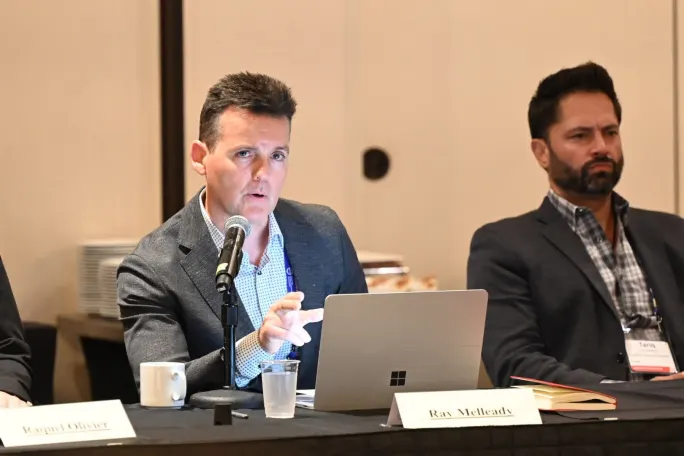
"Transit agencies speak compellingly about ridership and community service. Business members complement that story with the economic case—the thousands of suppliers across nearly every state, the manufacturing and engineering jobs in communities far from any bus route, and the significant economic return generated by every dollar of transit investment. Together, those two narratives resonate across the political spectrum because they’re grounded in jobs, opportunity, and community."
Future Outlook: Navigating Workforce, Technology, and Funding
Looking toward the remainder of his term and the horizon for public transit, Melleady has outlined a proactive agenda to address the industry’s most pressing systemic hurdles.
Workforce Development
The transit industry faces an acute generational talent gap, requiring concerted action to attract, train, and retain skilled professionals. Melleady views workforce development through a deeply personal lens:
"On workforce, business members bring training capacity, apprenticeship models, and career pathways, and I can speak personally to what this industry offers, because it gave a young technician from Philadelphia a career I never could have imagined. We owe the next generation those same on-ramps, and building them is shared work."
Technology, AI, and Cybersecurity
As transit agencies rapidly adopt smart technologies, automated dispatching, and data-driven passenger information systems, the digital surface area for potential vulnerabilities expands exponentially. To prevent reactionary policies, the BMBG has committed to acting as a trusted convener on artificial intelligence and cybersecurity. By developing shared toolkits, industry best practices, and standardized compliance frameworks, the board ensures that agencies and suppliers can integrate cutting-edge tools securely and thoughtfully.
Defining Success
When asked how he wants the impact of his tenure to be measured, Melleady pointed to tangible, structural improvements across the entire ecosystem:
"I’d like them to say the BMBG helped bring agencies and business members closer together—that we built genuine partnerships around issues of common interest, from advocacy to procurement to innovation, and that those partnerships produced real results: fairer contracts, streamlined costs, stronger small business participation, and a more resilient supply chain. More than anything, I’d like members to feel that their voice shaped the direction of this association."
Through sustained dialogue, strategic alignment, and an unwavering commitment to mutual benefit, Ray Melleady and the Business Members Board of Governors are proving that the future of public transportation rests not on separate tracks, but on a unified, collaborative journey.