





Executive Overview
For generations, the hospitality industry has relied on conventional architecture to captivate travelers. Traditional luxury has been defined by high-altitude penthouses, cliffside villas, and sprawling beachfront estates that offer panoramic vistas of skylines, mountains, or coastlines. However, a profound paradigm shift is underway in high-end experiential travel. A select group of visionary developers, marine architects, and hospitality conglomerates are redefining the boundaries of luxury accommodation by sinking their most exclusive suites beneath the surface of the world’s most pristine bodies of water.
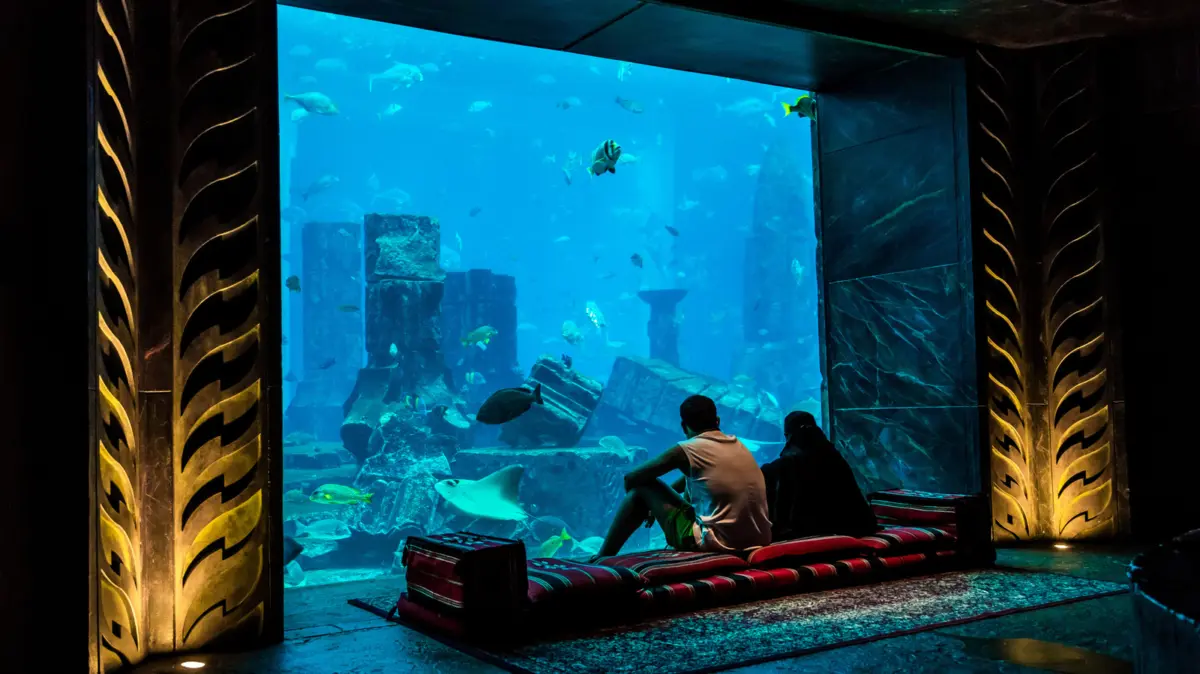
These submerged habitats offer an unprecedented travel experience: a room with a marine view where guests do not merely observe the ocean from a distance, but become temporary residents of the aquatic ecosystem itself. Requiring no scuba certification or advanced swimming skills, these architectural marvels provide front-row seats to vibrant coral reefs, massive aquariums, and the daily migrations of thousands of marine species.
From the opulent, gold-infused suites of Dubai to secluded floating cabins in the Zanzibar Archipelago, subterranean and sub-aquatic lodging represents the absolute pinnacle of elite travel. While these once-in-a-lifetime stays command exorbitant nightly rates—with some reaching up to $50,000 per night—they offer an immersive fusion of hyper-luxury and environmental engagement. This report explores six of the world’s most breathtaking underwater hotels, examining the engineering feats, economic realities, and sensory experiences that define this cutting-edge niche of global tourism.
Detailed Chronology: Evolution of Submerged Hospitality
The concept of human habitation beneath the waves has transitioned from science fiction to reality over the past several decades, driven by advancements in marine engineering, high-strength acrylic manufacturing, and ecological tourism demand.
Phase One: Experimental Beginnings (The Late 20th Century)
The foundation of underwater hospitality was laid not by luxury hoteliers, but by marine scientists and diving pioneers. The earliest iterations of underwater structures were strictly functional habitats designed for scientific research, such as Jacques Cousteau’s Conshelf projects and NASA’s Aquarius reef base.
However, the late 20th century saw the birth of recreational underwater accommodation. A pivotal milestone occurred in Key Largo, Florida, with the establishment of Jules’ Undersea Lodge in the 1980s. Originally built as a marine research laboratory called La Chalupa, the structure was repurposed into the world’s first underwater hotel. It established the baseline concept that civilian travelers could eat, sleep, and socialize beneath the surface, albeit in a rustic, adventure-oriented environment that required guests to scuba dive to their rooms.
Phase Two: The Luxury Boom and Structural Engineering Breakthroughs (2000s–2010s)
As high-net-worth tourism expanded in the 21st century, developers recognized the potential to scale underwater habitation from niche diving camps to ultra-luxury resorts. This transition required massive leaps in material science, particularly the development of thick, optically clear acrylic panels capable of withstanding the immense hydrostatic pressure of deep water without distorting the view.
- 2008: Resorts World Sentosa in Singapore began conceptualizing its massive marine life park, eventually leading to the development of the Ocean Suites—two-story townhomes that integrated luxury residential living with sub-surface aquarium viewing.
- 2009 (Approximate opening of iconic phases): Atlantis, The Palm in Dubai opened its legendary underwater suites, the Neptune and Poseidon, proving that man-made lagoons and massive aquariums could be seamlessly integrated into high-end resort architecture.
- 2014: The Manta Resort on Pemba Island, Tanzania, introduced a different approach to aquatic living by deploying a floating structure with a submerged bedroom pod, eliminating the need for complex seafloor foundations while offering 360-degree open-ocean immersion.
- 2018–2019: The Conrad Maldives Rangali Island raised the global standard with the debut of The Muraka. Costing tens of millions to construct and transport, this two-level structure sank a master bedroom suite 16 feet below the surface of the Indian Ocean, cementing underwater hotels as the ultimate status symbol in luxury travel.
Phase Three: Expansion and Eco-Integration (Present Day)
Modern underwater architecture increasingly emphasizes environmental stewardship. Contemporary projects, such as Australia’s Reefsuites on the Great Barrier Reef, are carefully designed to minimize ecological disruption. These installations utilize advanced anchoring systems that protect fragile coral formations while offering travelers educational and awe-inspiring access to threatened marine ecosystems.
Supporting Context & Metrics: The Engineering and Economics of the Deep
Developing and operating a submerged hotel room is an extraordinarily complex undertaking. The intersection of marine architecture, environmental compliance, and high-end hospitality requires staggering financial investments and precise engineering protocols.
Architectural and Engineering Marvels
The primary challenge of underwater construction is managing hydrostatic pressure—the force exerted by a body of water at rest. For every 33 feet (10 meters) of depth, pressure increases by one atmosphere (approximately 14.7 pounds per square inch).
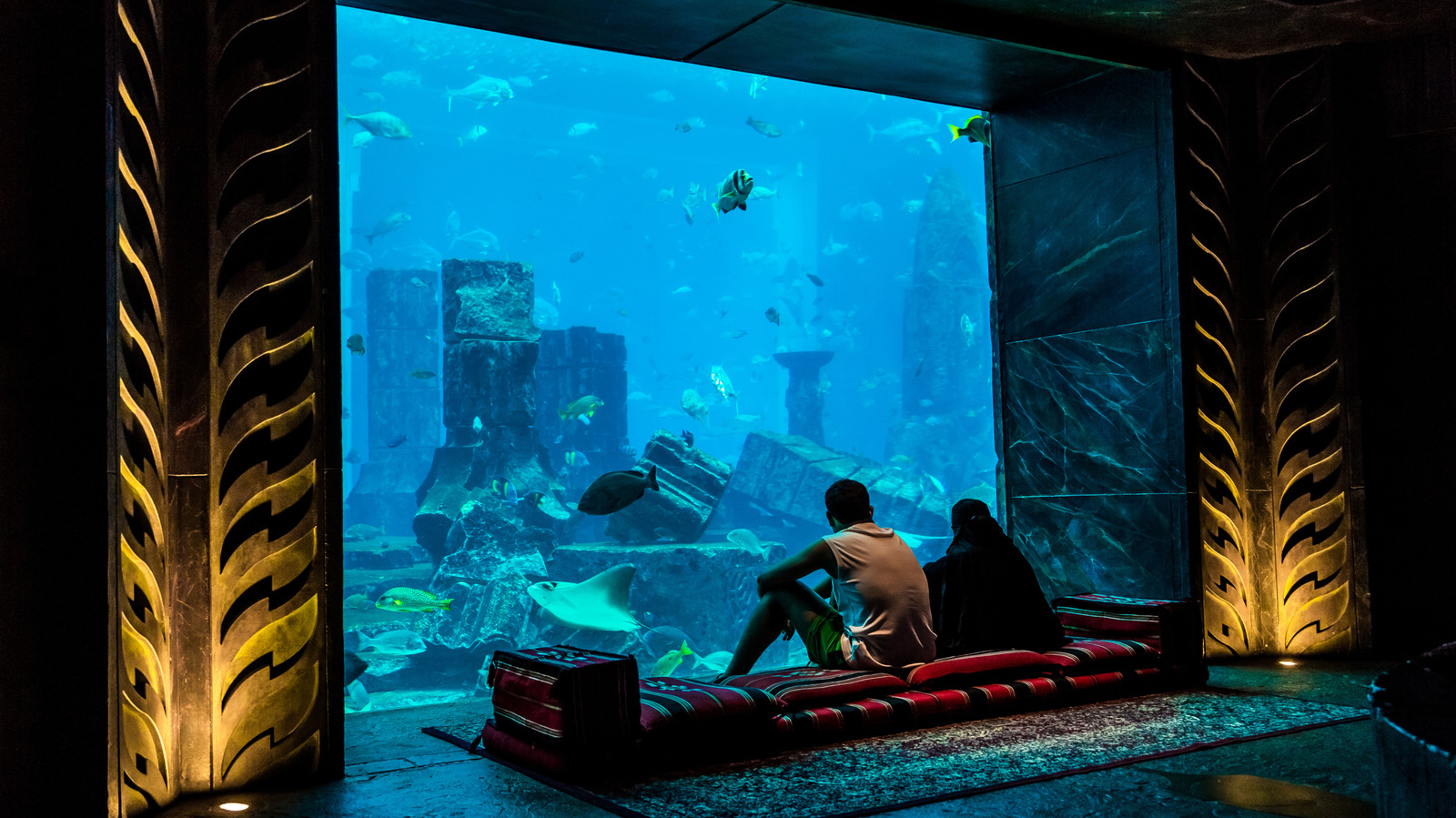
- Acrylic Integrity: Unlike glass, which can shatter catastrophically under extreme point loads, thick optical-grade acrylic behaves elastically, bending slightly under pressure before failing. The viewing domes and walls in properties like The Muraka and Atlantis are often constructed from panels measuring several inches to over a foot in thickness, manufactured in specialized facilities and transported via heavy-lift maritime vessels.
- Anchoring and Ballasting: Submerged structures must be securely anchored to the seabed using massive concrete ballast blocks or drilled steel pilings to prevent buoyancy shifts during storms or tidal surges. Floating structures, such as The Manta Resort, rely on tension-leg mooring systems to keep the sub-surface cabin stable against ocean currents.
- Life Support and Utilities: Just like space stations, underwater hotels require redundant systems for air filtration, humidity control, sewage management, and emergency power generation. Wastewater cannot simply be discharged into the surrounding marine environment; it must be pumped back to land-based facilities for advanced treatment.
Financial Metrics and Market Demographics
The economics of underwater hotels are defined by extreme scarcity and exorbitant capital expenditure (CapEx).
- Construction Costs: A single multi-level underwater suite can cost upwards of $15 million to $50 million to design, manufacture, transport, and install, depending on the depth and environmental complexity.
- Nightly Rates: Due to the limited inventory—most resorts feature only one to eleven such suites—supply is vastly outstripped by global demand from ultra-high-net-worth individuals (UHNWIs), celebrities, and affluent honeymooners. Nightly rates range from a few thousand dollars at mid-tier properties to an astonishing $50,000 per night at The Muraka in the Maldives, making these rooms among the most expensive accommodations on Earth.
- Occupancy and Return on Investment (ROI): Despite the eye-watering price tags, these suites often boast remarkably high occupancy rates, frequently booked months or even years in advance. Beyond direct room revenue, they serve as powerful marketing instruments, generating viral media coverage that drives overall resort bookings.
Official Statements and Industry Insights
The emergence of underwater hospitality has sparked widespread commentary from the architects, marine biologists, and hospitality executives who bring these fantastical visions to life.
Industry analysts emphasize that these builds are as much about psychological escapism as they are about architectural prowess. “When a guest steps into a submerged suite, they are stepping out of the known world,” notes a leading luxury hospitality consultant. “The psychological transition from the bright, chaotic surface world to the hushed, cerulean silence of the deep creates an immediate sense of profound peace and detachment. It is the ultimate luxury.”
Marine biologists and conservationists have also played a crucial advisory role in the development of these properties. Representatives from environmental oversight bodies stress that modern underwater tourism must double as a conservation tool. For instance, operators of properties like Reefsuites on Australia’s Great Barrier Reef work in tandem with marine scientists to monitor local water quality and coral health.
“By bringing travelers face-to-face with the delicate beauty of marine ecosystems, we foster a deep, personal sense of stewardship,” shares a senior marine conservationist affiliated with Indian Ocean resort developments. “When a guest spends a night watching sharks, rays, and schooling fish glide past their bedroom window, they leave not just as vacationers, but as passionate advocates for ocean conservation.”
Future Outlook: Where is Submerged Hospitality Headed?
As technology matures and global interest in experiential luxury accelerates, the future of underwater hotels points toward bolder designs, increased sustainability, and broader geographic expansion.
1. Eco-Restorative Architecture
Future iterations of underwater habitats are moving beyond mere non-intrusion to active ecological regeneration. Architects are designing submerged structures with exterior textures specifically formulated to act as artificial coral reefs. These frames encourage polyp attachment, turning the hotel’s foundations into thriving marine nurseries that enhance, rather than disrupt, local biodiversity.
2. Autonomous and Mobile Sub-Aquatic Pods
While current underwater hotels are permanently fixed to seabeds or anchored to floating platforms, the next frontier may involve mobility. Concepts for luxury autonomous sub-surface pods are currently in early design phases. These vessels would allow guests to cruise slowly beneath the waves, anchoring in different coral gardens and marine trenches over the course of a multi-day itinerary.
3. Expanded Accessibility and Mid-Tier Submerged Experiences
At present, underwater hotel rooms are exclusively the domain of the ultra-wealthy. However, as manufacturing techniques for acrylic panels become more efficient and modular construction methods improve, hospitality developers are exploring ways to scale down costs. While a $50,000-per-night suite will always cater to the elite, future resort developments may incorporate semi-submerged lounges, restaurants, and spa facilities accessible at more moderate price points, allowing a broader demographic of travelers to experience the magic of the deep.
In conclusion, underwater hotels have transformed from eccentric novelties into the crown jewels of modern hospitality. By fusing state-of-the-art marine engineering with uncompromising luxury, these submerged sanctuaries offer travelers a profound connection to the blue planet—proving that when it comes to the future of unforgettable travel, the best views are found far beneath the surface.