




Executive Overview
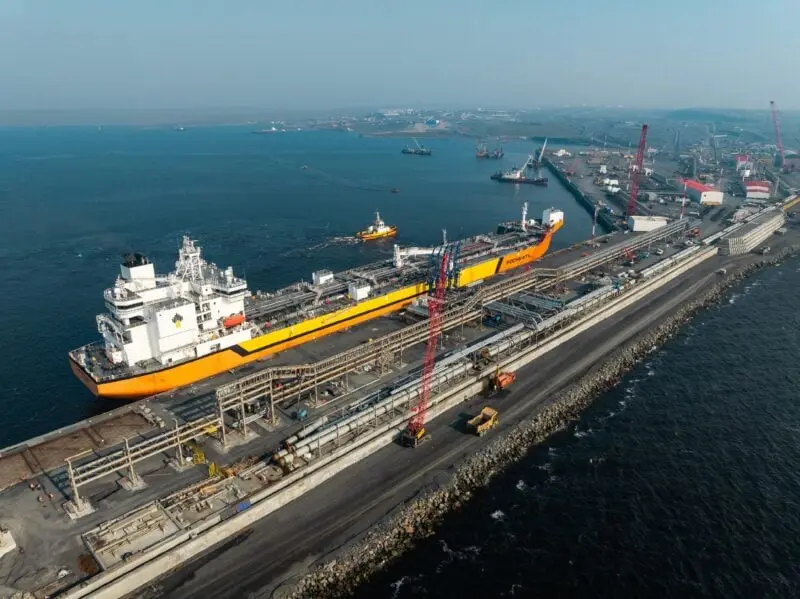
In a move that signals a profound shift in global energy logistics and Arctic geopolitics, Russia has officially commenced the maritime export of crude oil from its sprawling Vostok Oil development. Rosneft, the state-backed energy titan, initiated the loading of the first crude cargo onto the specialized ice-class tanker Valentin Pikul at the newly constructed Bukhta Sever terminal on the Kara Sea. This milestone, formally commissioned by President Vladimir Putin, marks the operational debut of one of the most ambitious and logistically challenging energy projects of the 21st century.
With an estimated investment threshold exceeding $100 billion, Vostok Oil represents Russia’s largest hydrocarbon endeavor since the Soviet-era exploitation of Western Siberia. The project is designed to tap into a colossal resource base exceeding 6 billion tonnes (approximately 44 billion barrels) of high-quality, low-sulfur crude. Rosneft’s long-term strategic target is to scale annual production and export capacity to an unprecedented 100 million tonnes (approximately 2 million barrels per day).
However, the launch of Vostok Oil is far more than a commercial energy story. It is a critical geopolitical test of Russia’s ability to bypass Western sanctions, construct high-tech Arctic vessels domestically, and establish the Northern Sea Route (NSR) as a viable year-round alternative to traditional global shipping lanes. As Western capital and technology have retreated, the project has forced a radical realignment of maritime trade, positioning the Bering Strait and the pristine waters off Alaska as the new frontline of the global energy supply chain.
VOSTOK OIL PROJECT: KEY METRICS AT A GLANCE
┌──────────────────────────────────────┬────────────────────────────────────────┐
│ Metric                               │ Value / Status                         │
├──────────────────────────────────────┼────────────────────────────────────────┤
│ Total Resource Base                  │ > 6 Billion Tonnes (44 Billion Barrels)│
│ Estimated Investment                 │ $100+ Billion                          │
│ Long-Term Annual Export Target       │ 100 Million Tonnes (2 Million bpd)     │
│ Main Export Terminal                 │ Bukhta Sever (Sever Bay, Kara Sea)     │
│ Trunk Pipeline Length                │ 770 Kilometers                         │
│ Under-River Crossing (Yenisei)       │ 5.8 Kilometers                         │
│ Initial Tanker Fleet Target          │ ~50 Vessels (various classes)          │
└──────────────────────────────────────┴────────────────────────────────────────┘
Detailed Chronology: From Western Partnership to Sovereign Isolation
The trajectory of the Vostok Oil project reflects the broader geopolitical rupture between Russia and the West over the past decade. What began as a highly collaborative global joint venture has evolved into a heavily sanctioned, sovereign-driven project executed under extreme economic isolation.
VOSTOK OIL DEVELOPMENT TIMELINE
=================================================================================
2020: Global Partnerships Established
  │   - Trafigura acquires a 10% equity stake in Vostok Oil.
  │   - Rosneft secures a 5% investment from a Vitol-led consortium.
  └───- Early design and engineering works commence with Western assistance.

2022: Geopolitical Rupture & Sanctions
  │   - February: Russia invades Ukraine; sweeping Western sanctions imposed.
  │   - July: Trafigura divests and exits its 10% stake.
  └───- Late 2022: Vitol completes its divestment; Western technology pulls out.

2023: Domestic Infrastructure Push
  │   - Rosneft accelerates construction of the 770-km trunk pipeline.
  └───- Horizontal drilling begins under the Yenisei River near Dudinka.

2024: Commissioning & First Cargo
      - September 6: President Putin formally commissions the project.
      - Late 2024: Zvezda Shipyard delivers the Arc6 tanker Valentin Pikul.
      - Dec 2024/Jan 2025: First loading of crude onto Valentin Pikul at Bukhta Sever.
=================================================================================
The Era of International Investment (2020–2021)
In its inception phase, Vostok Oil was envisioned as a magnet for international capital. In 2020, global commodities trading giant Trafigura acquired a 10% equity stake in the project for approximately €7 billion, signaling immense Western confidence in the venture’s profitability. This was quickly followed by a Vitol-led consortium acquiring a 5% share. These partnerships were critical not only for capital injection but also for securing access to specialized offshore drilling technologies, high-end maritime engineering, and international trading networks.
The Sanctions Shock and Western Divestment (2022)
The geopolitical landscape shattered in February 2022 with Russia’s invasion of Ukraine. In response, the United States, the European Union, and their allies unleashed a barrage of sanctions targeting Russia’s financial sectors, energy technology, and maritime shipping industries.
Faced with mounting regulatory pressures and reputational risks, Western partners executed a rapid exit:
- July 2022: Trafigura announced the sale of its entire 10% stake to Nord Chamber, a newly registered trading entity in Singapore.
- Late 2022: The Vitol-led consortium finalized its divestment, leaving Rosneft without its major Western equity partners.
Concurrently, restrictions on dual-use technology and marine engineering starved Russia of direct access to European and Asian shipyards, forcing a dramatic pivot toward domestic infrastructure and alternative supply chains.
The Construction Blitz and Technological Substitution (2023–2024)
Refusing to mothball the project, Rosneft doubled down on domestic execution. Throughout 2023 and 2024, a massive logistics and construction campaign was launched to bridge the gap left by Western suppliers.
The company focused heavily on completing the Vankor-Payakha-Bukhta Sever trunk pipeline and establishing local supply lines. Over 2 million tonnes of construction materials, heavy machinery, and pipes were ferried to the remote Sever Bay during the short Arctic navigation seasons, requiring over 700 shipping voyages in 2024 alone.
Supporting Context & Metrics: Logistics, Fleet, and Infrastructure
The sheer scale of Vostok Oil’s physical infrastructure highlights the immense engineering feats required to extract and transport oil from one of the most hostile environments on Earth.
THE VOSTOK OIL EXPORT PIPELINE ARCHITECTURE
┌────────────────────────────────────────────────────────────────────────┐
│                    Vankor & Payakha Oil Fields                         │
└──────────────────────────────────┬─────────────────────────────────────┘
                                   │
                                   ▼ (770-km Trunk Pipeline)
┌────────────────────────────────────────────────────────────────────────┐
│             Yenisei River Crossing (5.8-km Buried Section)             │
└──────────────────────────────────┬─────────────────────────────────────┘
                                   │
                                   ▼
┌────────────────────────────────────────────────────────────────────────┐
│             Bukhta Sever Terminal (Kara Sea Export Hub)                │
└──────────────────────────────────┬─────────────────────────────────────┘
                                   │
                ┌──────────────────┴──────────────────┐
                ▼                                     ▼
      Valentin Pikul (Arc6)                 Akademik Gubkin (Aframax)
       (69,000-dwt Tanker)                    (120,000-dwt Tanker)
The Ice-Class Tanker Conundrum and the Zvezda Shipyard
To move millions of barrels of crude through the ice-choked waters of the Kara Sea, Rosneft requires a specialized, highly advanced fleet of ice-class tankers. The delivery of these vessels has become a central battleground in Russia’s fight against sanctions.
The first vessel to load cargo at Bukhta Sever, the Valentin Pikul, is a 69,000-dwt shuttle tanker with an Arc6 ice-class classification under the Russian Maritime Register. This classification enables the 257-meter vessel to navigate independently through thick first-year Arctic ice.
However, its journey to completion exposes the vulnerabilities of Russia’s domestic shipbuilding strategy:
- The South Korean Connection: Construction of the Valentin Pikul took nearly seven years. It relied heavily on engineering, design, and block-construction support from South Korea’s Samsung Heavy Industries (SHI).
- The Sanctions Delay: Following the imposition of Western sanctions, SHI suspended its cooperation on the project. This forced Russia’s Zvezda Shipbuilding Complex in the Far East to complete the final integration, outfitting, and commissioning of the vessel’s complex propulsion systems alone. This caused a delay of over three years, during which the vessel was preemptively placed under direct US sanctions.
- The Waiting Fleet: Anchored nearby to receive the second cargo was the Akademik Gubkin, a larger, approximately 120,000-dwt Aframax tanker, also built at the Zvezda yard.
While Zvezda has successfully delivered these initial vessels, the yard remains bottlenecked by a shortage of specialized foreign components, particularly highly advanced Azipod propulsion units and specialized cryogenic steels.
The Trunk Pipeline and the Yenisei River Engineering Feat
Connecting the remote inland fields of Vankor and Payakha to the ocean terminal at Bukhta Sever required the construction of a 770-kilometer trunk pipeline.
The most formidable engineering challenge of this pipeline was the crossing of the Yenisei River near the port of Dudinka. To protect the pipeline from extreme permafrost shifts, ice scouring, and heavy river currents, Rosneft constructed a 5.8-kilometer section buried deep beneath the riverbed. This directional drilling and trenching project, initiated in 2023, represents one of the longest and most technically demanding under-river hydrocarbon crossings ever completed in the high Arctic.
Official Statements: Rhetoric vs. Reality
The commissioning of the first cargo was accompanied by high-stakes political messaging from Moscow, designed to project strength, self-reliance, and economic resilience to the international community.
During the formal commissioning ceremony on September 6, President Vladimir Putin emphasized the national strategic importance of the launch:
"This is the first—yet very important—step in the implementation of the largest oil and gas project in our country. It proves that despite any external pressure and restrictions, Russia possesses the technology, the engineering talent, and the industrial capacity to execute mega-projects of global significance."
Rosneft Chief Executive Officer Igor Sechin, a close ally of Putin, framed the milestone in historical terms:
"Today marks the birthday of a new Russian oil province. The significance of Vostok Oil to our national economy and global energy security is fully comparable to the discovery and development of the West Siberian oil fields during the Soviet era. We have created a new energy gateway that will serve Russia for decades to come."
The Analytical Counterpoint
While Russian officials celebrate the launch as a triumph over Western sanctions, independent maritime and energy analysts offer a more cautious assessment.
The primary skepticism surrounds scalability and speed. While Rosneft has successfully loaded its first tanker, achieving the targeted export volume of 30 million tonnes initially, and eventually 100 million tonnes annually, requires an immense fleet of dozens of Arc6 and Arc7 tankers.
With Western shipyards completely closed to Russian orders, and Zvezda operating under severe technology constraints, analysts estimate that building the necessary fleet of 50+ specialized vessels could take more than a decade, far lagging behind Rosneft’s official timelines.
Future Outlook: Geopolitical Flashpoints and Shifting Shipping Lanes
The operationalization of Vostok Oil will profoundly redraw the maps of international maritime commerce, environmental risk, and geopolitical competition in the Arctic.
THE ARCTIC SHIFT: NEW ROUTING DYNAMICS
┌────────────────────────────────────────────────────────────────────────┐
│                      Bukhta Sever Terminal                            │
└──────────────────────────────────┬─────────────────────────────────────┘
                                   │
         ┌─────────────────────────┴─────────────────────────┐
         ▼ (Western Route - Frozen)                          ▼ (Eastern Route - Active)
   Traditional European Ports                           The Northern Sea Route (NSR)
   [Blocked by Sanctions & Embargoes]                        │
                                                             ▼
                                                     Bering Strait
                                               (Alaskan/Russian Border)
                                                             │
                                                             ▼
                                                    Asia-Pacific Markets
                                                    (China, India, etc.)
The Northern Sea Route as a Global Superhighway
With European markets closed to Russian crude due to EU import bans, almost all oil flowing out of Bukhta Sever must head east toward energy-hungry markets in Asia, primarily China and India. This makes the Northern Sea Route (NSR) the primary transit corridor for Vostok Oil.
As climate change accelerates ice melt in the Arctic, the navigation window for the NSR is expanding. The addition of Vostok Oil’s massive volumes will turn this historically quiet, ice-covered route into a heavily trafficked commercial corridor. This represents a major strategic victory for Moscow, which claims sovereign control over transit tolls and pilotage along the NSR.
The Bering Strait: A New Maritime Chokepoint
To reach Asian buyers, tankers departing the Kara Sea must transit the narrow Bering Strait, which separates Russia’s Chukotka Peninsula from the US state of Alaska.
THE BERING STRAIT CHOKEPOINT
         [ Arctic Ocean ]
                │
                ▼
      Russia ◄──┼──► Alaska (USA)
  (Chukotka)    │    (Seward Peninsula)
                ▼
        [ Bering Sea ]
                │
                ▼
         [ Pacific Ocean ]
This geographic reality will turn the Bering Strait and nearby Alaskan waters into an increasingly congested maritime gateway. The influx of large, heavy-hulled, ice-class crude tankers transiting these remote and ecologically sensitive waters raises significant concerns for regional stakeholders:
- National Security: The US Coast Guard and the US military will face a dramatic increase in Russian state-backed commercial shipping directly adjacent to US territorial waters. This will necessitate enhanced surveillance, search-and-rescue capabilities, and naval presence in the region.
- Environmental Risks: The Bering Strait is home to vital marine mammal migration routes and indigenous subsistence hunting communities. A major oil spill in these ice-filled, remote waters would be catastrophic, as the infrastructure to respond to a large-scale Arctic spill remains extremely limited on both the Russian and American sides.
Conclusion
The first loading of crude from Vostok Oil is a testament to Russia’s determination to re-engineer its energy economy in the face of unprecedented geopolitical isolation. By carving out a massive new industrial base in the high Arctic and forcing a logistical pivot toward the Bering Strait, Russia is not just exporting oil—it is actively redrawing the strategic, commercial, and environmental boundaries of the Arctic circle. Whether it can scale this $100 billion giant to its full potential without Western technology remains the defining maritime question of the decade.