






Executive Overview
In a strategic move that bridges advanced maritime engineering with global humanitarian aid, Wärtsilä has officially finalized a comprehensive Lifecycle Agreement with Mercy Ships International. Announced and booked in the third quarter of 2026, this multi-year service contract is designed to secure the operational continuity, safety, and reliability of the world’s most sophisticated civilian hospital ships.
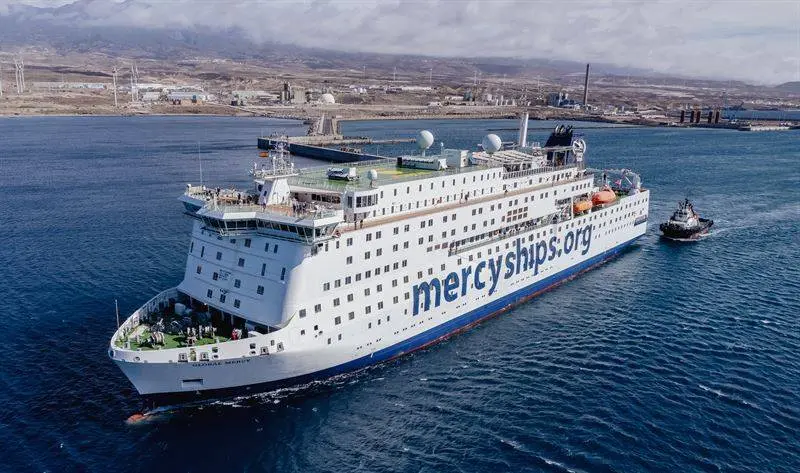
The agreement encompasses a five-year renewal of the existing service framework for the Global Mercy—the largest purpose-built civilian hospital ship in existence—and establishes a new three-year service agreement for the organization’s upcoming newbuild, the Africa Mercy II. Both vessels rely entirely on Wärtsilä’s medium-speed engine technology for propulsion and the massive electrical loads required to run state-of-the-art onboard medical facilities.
For Mercy Ships, an international charity providing free surgical procedures, specialized clinical care, and medical training to underserved communities across Africa, vessel downtime is not merely a financial inconvenience; it is a direct threat to human life. By leveraging Wärtsilä’s digital predictive maintenance solutions, spare parts logistics, and specialized field services, the partnership ensures that these floating medical sanctuaries can operate continuously in demanding coastal environments. The Global Mercy’s recent arrival in Ghana, West Africa, underscores the immediate, real-world impact of this operational security, as the vessel prepares to deliver life-changing surgical interventions and train local clinical workforces.
+-----------------------------------------------------------------------------+
|                          PARTNERSHIP AT A GLANCE                            |
+------------------------------------+----------------------------------------+
| Customer                           | Mercy Ships International              |
+------------------------------------+----------------------------------------+
| Technology Partner                 | Wärtsilä                               |
+------------------------------------+----------------------------------------+
| Agreement Booking Date             | Q3 2026                                |
+------------------------------------+----------------------------------------+
| Global Mercy Contract              | 5-Year Renewal (Lifecycle Agreement)   |
+------------------------------------+----------------------------------------+
| Africa Mercy II Contract           | 3-Year Service Agreement (Newbuild)    |
+------------------------------------+----------------------------------------+
| Primary Technology Scope           | Wärtsilä 32 Engines, Expert Insight,   |
|                                    | Crew Training, Global Spare Parts      |
+------------------------------------+----------------------------------------+
Detailed Chronology
The partnership between Wärtsilä and Mercy Ships International represents a long-term evolution in how non-governmental organizations (NGOs) manage complex maritime assets. To understand the significance of this Q3 2026 agreement, one must examine the timeline of Mercy Ships’ fleet modernization and Wärtsilä’s role in supporting this transition.
The Genesis of Purpose-Built Humanitarian Vessels
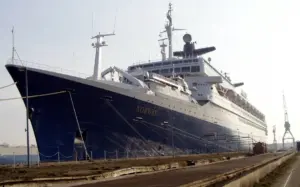
For decades, Mercy Ships operated converted vessels. Ships like the Anastasis (a former Italian cruise liner) and the original Africa Mercy (a converted Danish rail ferry) served admirably but presented significant maintenance challenges due to their aging, legacy propulsion systems and retrofitted hulls.
Recognizing the need for a modern, highly efficient platform designed from the keel up for medical operations, Mercy Ships commissioned the construction of the Global Mercy. Delivered in 2021, the vessel became the world’s first purpose-built civilian hospital ship, equipped with specialized hull stability systems, advanced climate control to maintain sterile operating theaters, and a robust power plant powered by Wärtsilä.
The Deployment of the Global Mercy and the Ghana Mission
Following its delivery and initial commissioning phases, the Global Mercy commenced its humanitarian voyages along the coast of West Africa. The vessel’s arrival in Ghana marked a crucial milestone in its deployment schedule. Operating in West African ports requires self-sufficiency; local shore power (cold ironing) is rarely available or stable enough to support sensitive medical equipment, meaning the ship’s internal power plant must run continuously, 24 hours a day, for months at a time.
The Q3 2026 Lifecycle Agreement
As the initial service agreements for the Global Mercy neared their expiration, both organizations recognized the value of transitioning to a more integrated, digitally enabled lifecycle partnership. At the same time, Mercy Ships’ fleet expansion plans were well underway with the development of the Africa Mercy II.
In the third quarter of 2026, Wärtsilä officially booked the consolidated order. This agreement serves two primary functions:
- Securing the Present: It extends Wärtsilä’s service commitment to the Global Mercy for another five years, ensuring that its active humanitarian missions face zero technical disruptions.
- Insuring the Future: It establishes a proactive three-year service framework for the Africa Mercy II, which is currently under construction and scheduled for delivery in 2028. This ensures that from the moment the newbuild undergoes sea trials, its machinery is backed by OEM expertise and predictive monitoring.
Supporting Context & Technical Metrics
Operating a floating hospital presents unique engineering challenges that set it apart from standard commercial shipping. In a commercial container ship or tanker, an engine room malfunction might result in cargo delays or contractual penalties. On a hospital ship, a sudden blackout during active surgeries could be catastrophic.
Power Generation and the Wärtsilä 32 Engine
The Global Mercy is powered by four Wärtsilä 32 medium-speed diesel engines, each generating 3,360 kW of power. This configuration yields a total installed power capacity of 13,440 kW.
               [ Wärtsilä 32 Engine Plant: 13,440 kW Total ]
                                     │
         ┌───────────────────────────┴───────────────────────────┐
         ▼                                                       ▼
  Propulsion Power                                        Auxiliary Power
(Transit & Maneuvering)                                (Hospital Operations)
         │                                                       │
         ├─ Thrusters & Main Screws                              ├─ 6 Operating Theaters
         └─ Dynamic Positioning                                  ├─ Intensive Care Units (ICU)
                                                                 ├─ HVAC & Clean Air Filtration
                                                                 └─ Diagnostic Labs & Imaging
The Wärtsilä 32 engine is highly regarded in the maritime industry for its reliability, fuel flexibility, and high power-to-weight ratio. On the Global Mercy, these engines do not merely propel the vessel from port to port; they serve as the primary power station for:
- Six State-of-the-Art Operating Rooms: Requiring uninterrupted, surge-free electricity for anesthesia machines, surgical lighting, and life-support systems.
- Intensive Care Units (ICU) and Ward Beds: Supporting up to 200 patients at any given time.
- Specialized Diagnostic Equipment: Including CT scanners, digital X-ray machines, and laboratory analyzers that are highly sensitive to power fluctuations.
- Advanced HVAC Systems: Maintaining strict positive/negative air pressure zones to prevent the spread of pathogens and ensuring sterile, climate-controlled environments in tropical climates where external temperatures regularly exceed 35°C (95°F) with high humidity.
To guarantee redundancy, the power plant is configured to allow engines to be brought online or taken offline seamlessly, ensuring that routine maintenance can be performed on one engine while the remaining units safely carry the hospital’s electrical load.
Digitalization and "Expert Insight"
A cornerstone of the new Lifecycle Agreement is the integration of Wärtsilä’s proprietary Expert Insight service. This predictive maintenance platform represents a paradigm shift from reactive "break-fix" maintenance to proactive, data-driven asset management.
+---------------------------------------------------------------------------------------+
|                         WÄRTSILÄ EXPERT INSIGHT WORKFLOW                              |
+---------------------------------------------------------------------------------------+
|  [Vessel Engines] ──> Real-Time Sensor Telemetry (Temperatures, Pressures, Vibrations)|
|                                           │                                           |
|                                           ▼                                           |
|  [Satellite Uplink] ──> Secure Transmission to Wärtsilä Land-Based Cloud              |
|                                           │                                           |
|                                           ▼                                           |
|  [AI & Machine Learning] ──> Anomaly Detection & Comparison Against Historical Baselines|
|                                           │                                           |
|                                           ▼                                           |
|  [Wärtsilä Expertise Centres] ──> Human Engineers Validate Alerts & Draft Action Plans |
|                                           │                                           |
|                                           ▼                                           |
|  [Shipboard Crew] ──> Proactive, Guided Maintenance Performed BEFORE Failure Occurs    |
+---------------------------------------------------------------------------------------+
Expert Insight utilizes advanced machine learning algorithms and artificial intelligence to analyze real-time operational data transmitted from the engines’ onboard sensors via satellite to Wärtsilä’s Expertise Centres. The system continuously monitors critical parameters, such as:
- Cylinder exhaust gas temperatures
- Lube oil pressure and temperature trends
- Fuel injection profiles
- Turbocharger performance and vibration metrics
By comparing this real-time telemetry against historical data from thousands of operating Wärtsilä engines, the AI can detect micro-anomalies—subtle deviations from normal behavior that are imperceptible to human watchstanders.

Once an anomaly is flagged, Wärtsilä’s land-based maritime experts analyze the data, diagnose the root cause, and provide actionable maintenance recommendations directly to the ship’s chief engineer. This process allows the crew to address wear-and-tear issues during scheduled port stays, preventing unexpected mechanical failures and ensuring the ship remains fully operational during critical medical missions.
The Sub-Saharan Healthcare Deficit
The necessity of keeping these ships operational is highlighted by the stark realities of surgical access in Sub-Saharan Africa. According to data from the Lancet Commission on Global Surgery:
- Over 93% of the population in Sub-Saharan Africa lacks access to safe, timely, and affordable surgical care.
- There is a profound shortage of trained surgical, anesthetic, and obstetric providers, with many nations having fewer than one specialist surgeon per 100,000 people (compared to over 50 per 100,000 in high-income countries).
- Untreated, preventable conditions such as cataracts, cleft lips/palates, clubfoot, and obstetric fistulas lead to lifelong disability, social exclusion, and severe economic hardship.
By deploying the Global Mercy and eventually the Africa Mercy II, Mercy Ships addresses this gap directly. The vessels serve as force multipliers: they perform thousands of free surgeries during each ten-month field service and act as floating teaching academies, training local doctors, nurses, and biomedical technicians to build sustainable local healthcare capacity.
Official Statements
The finalization of the Lifecycle Agreement has been met with strong support from leadership at both Wärtsilä and Mercy Ships International, emphasizing the shared commitment to technical excellence and humanitarian service.
A senior representative from Wärtsilä Marine Services commented on the strategic and ethical alignment of the contract:
"Our partnership with Mercy Ships goes far beyond standard commercial transactions. The work they do in providing life-changing medical care to communities that have been left behind by global healthcare systems is extraordinary. Knowing that our engines and our digital services—specifically Expert Insight—play a direct role in keeping those operating rooms running and those ships safe is a source of immense pride for everyone at Wärtsilä. This lifecycle agreement is designed to give the crew absolute peace of mind, allowing them to focus entirely on their humanitarian mission while we take care of the technical heartbeat of the vessels."
Speaking on behalf of Mercy Ships International, the organization’s technical leadership highlighted the critical operational security provided by the agreement:
"Operating a modern, highly complex hospital ship in challenging maritime environments requires a level of technical reliability that cannot be compromised. A power failure on a commercial cargo ship is a costly delay; a power failure on the Global Mercy during a delicate pediatric surgery is a life-or-death scenario. This agreement with Wärtsilä gives us access to OEM parts, specialized field engineers, and cutting-edge predictive maintenance technology. By identifying potential engine issues before they ever affect our operations, Wärtsilä is helping us protect our patients, our volunteer medical staff, and the communities we serve."
Future Outlook
As Mercy Ships International looks toward the horizon, the operational integration facilitated by Wärtsilä’s lifecycle support will play a pivotal role in expanding the charity’s geographic reach and clinical capacity.
The Path to 2028: Delivery of the Africa Mercy II
The construction and upcoming 2028 delivery of the Africa Mercy II represent the next phase of Mercy Ships’ fleet strategy. Modeled on the design successes and operational lessons of the Global Mercy, the Africa Mercy II will further expand the organization’s capacity.
With two state-of-the-art, purpose-built hospital ships in active service, Mercy Ships will be capable of doubling its impact. The organization will be able to maintain a continuous, year-round presence in multiple African regions simultaneously—for instance, deploying one vessel to East Africa while the other serves West Africa. The three-year service agreement secured for the Africa Mercy II ensures that this new vessel will transition seamlessly from shipyard delivery to active humanitarian service with immediate, world-class technical support.
               [ MERCY SHIPS FLEET EXPANSION TIMELINE ]

   2021                 2026                 2027                 2028
    │                    │                    │                    │
    ├─ Global Mercy      ├─ Wärtsilä Q3       ├─ Ongoing           ├─ Africa Mercy II
    │  Delivered &       │  Agreement Signed  │  Deployments       │  Scheduled
    │  Commissioned      │  (5-yr / 3-yr)     │  (e.g., Ghana)     │  Delivery
    ▼                    ▼                    ▼                    ▼
Navigating the Green Transition and Regulatory Compliance
The maritime industry is undergoing a rapid transition driven by stricter environmental regulations, including the International Maritime Organization’s (IMO) Carbon Intensity Indicator (CII) and Energy Efficiency Existing Ship Index (EEXI). Even though humanitarian vessels operate under unique regulatory frameworks, maintaining optimal fuel efficiency and minimal emissions is a priority for Mercy Ships, both to control operational costs and to minimize their environmental footprint in the coastal communities they visit.
Wärtsilä’s Lifecycle Agreement directly supports these environmental goals. By utilizing "Expert Insight" to maintain engines at peak thermal efficiency, the ships optimize fuel consumption and reduce greenhouse gas emissions. Furthermore, the proactive maintenance of fuel injection systems and turbochargers ensures compliance with local port emission standards, allowing the vessels to operate cleanly near densely populated urban centers.
A Model for NGO Fleet Management
The partnership between Wärtsilä and Mercy Ships International sets a new standard for how non-governmental organizations manage high-value, technically complex assets. Historically, maritime charities have relied on ad-hoc donations of parts and volunteer labor to maintain their fleets. While this volunteer spirit remains the lifeblood of Mercy Ships, the sheer complexity of modern, computerized engine plants and hospital life-support systems demands professional, OEM-backed lifecycle management.
By establishing long-term, predictable service agreements, Mercy Ships can budget its maintenance costs with high precision, ensuring that donor funds are utilized efficiently and transparently. This structured approach to maritime asset management will likely serve as a model for other humanitarian organizations operating specialized vessels, proving that cutting-edge technology and humanitarian compassion can work hand-in-hand to heal the world’s most vulnerable populations.