











Executive Overview: The Arctic Gamble of the Shadow Fleet
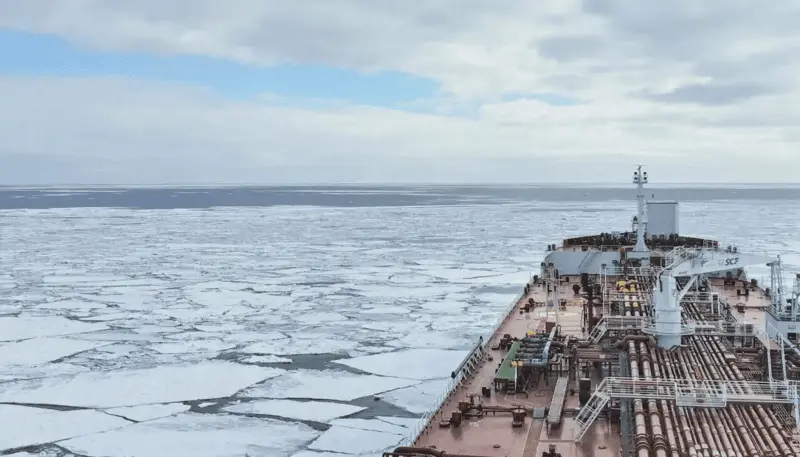
A highly unusual and perilous maritime transit is currently unfolding along Russia’s Northern Sea Route (NSR). The Dakar, a 22-year-old product tanker recently sanctioned by the European Union, is navigating the treacherous, ice-prone waters of the Arctic during the late navigation season. Carrying a volatile cargo of methyl tert-butyl ether (MTBE)—a hazardous gasoline additive—the aging vessel’s voyage highlights a deeply concerning trend: Russia’s escalating reliance on older, lower-specification, and poorly insured "shadow fleet" vessels to sustain its petroleum export economy in defiance of Western sanctions.
As the geopolitical standoff between Moscow and the West intensifies, the Arctic has transitioned from a highly regulated frontier of specialized maritime commerce into an active transit corridor for substandard shipping. Historically, transiting the NSR required specialized, high-ice-class vessels operated by crews with extensive polar training. Today, however, the economic pressures of sanctions have driven Russia to deploy conventional, aging tankers through these fragile waters.
The voyage of the Dakar represents more than just a single high-risk transit; it is an emblem of a systemic shift. Environmental advocacy groups, maritime safety authorities, and geopolitical analysts warn that the influx of these "shadow" tankers into the Arctic dramatically escalates the risk of a catastrophic oil or chemical spill—an event that would be virtually impossible to clean up given the region’s extreme cold, seasonal darkness, and near-total lack of emergency response infrastructure.

+-----------------------------------------------------------------------------+
|                          THE DAKAR: VESSEL PROFILE                          |
+----------------------------------+------------------------------------------+
| Parameter                        | Value / Detail                           |
+----------------------------------+------------------------------------------+
| Vessel Name                      | Dakar                                    |
| Vessel Type                      | Oil / Chemical Products Tanker           |
| Deadweight Tonnage (DWT)         | 21,300                                   |
| Year Built                       | 2004 (Age: 22 years in 2026)              |
| Ice Class                        | Basic Ice Class (Below Arc4 standard)    |
| Primary Cargo (Current Voyage)   | Methyl Tert-Butyl Ether (MTBE)           |
| Sanctions Status                 | Sanctioned by the EU (July 2026)         |
| Key Risk Factors                 | Advanced age, low ice class, late-season |
|                                  | transit, history of flag/name changes    |
+----------------------------------+------------------------------------------+
Detailed Chronology: The Journey of the Dakar and its Toxic Cargo
The voyage of the Dakar is a masterclass in the complex, obfuscated logistics networks utilized by the global shadow fleet to move petrochemical products. The journey began in August, far from the icy waters of the Arctic, and involved a series of maritime maneuvers designed to obscure the origin and final destination of the cargo.
       [ AUGUST ]                       [ SEPTEMBER ]                    [ OCT - NOV ]
   Cargo loaded onto                Ship-to-Ship (STS)                 Dakar enters NSR
  initial vessel in China  ======>   transfer to Dakar   ======>  heading West during late
                                    off Yeosu, South Korea            autumn freeze-up period
Phase 1: Cargo Origination and Ship-to-Ship Transfer
In August, a substantial volume of MTBE was loaded onto an initial transport vessel at a port in China. MTBE is a volatile chemical compound primarily used as a fuel component in gasoline to raise octane levels and reduce engine knocking. Because of its high solubility in water and resistance to biodegradation, any spill of MTBE poses an immediate and long-lasting threat to aquatic ecosystems.
In September, the cargo was transferred to the Dakar via a Ship-to-Ship (STS) transfer off the coast of Yeosu, South Korea. STS transfers in international waters or designated anchorage zones are a standard operating procedure for shadow-fleet operators. This method allows vessels to aggregate cargoes, switch flags, and swap documentation away from the direct scrutiny of port state controls.
Phase 2: The Push Into the Arctic
Following the cargo transfer, the Dakar set a course northward, entering the Northern Sea Route to make a westbound transit along Russia’s vast Arctic coastline. According to vessel tracking and satellite AIS (Automatic Identification System) data, the tanker has been making steady progress, but its presence on the route so late in the year has raised red flags across the maritime industry.

The timing of this voyage is critical. September typically marks the absolute minimum of seasonal sea ice in the Arctic, offering the safest window for navigation. However, by October, the brief polar summer rapidly yields to autumn. Temperatures plummet, freeze-up begins, and young ice starts to form across key choke points along the NSR, such as the Vilkitsky and Sannikov Straits. For a vessel of the Dakar’s specifications, navigating these waters in late autumn is a high-stakes gamble against the elements.
Supporting Context & Metrics: The Scale of the Arctic Shadow Fleet Invasion
The transit of the Dakar is not an isolated incident, but rather part of a structural surge in substandard shipping across the Arctic. Data compiled by the independent environmental and safety advocacy group Bellona reveals a stark escalation in shadow-fleet traffic along the NSR.
The Surge in Numbers
Between the start of the summer-autumn navigation season and mid-September, Bellona identified 50 shadow-fleet oil and chemical tankers operating along the NSR. This represents a massive increase compared to the 38 vessels recorded during the entirety of the previous season.
SHADOW-FLEET TANKERS ON THE NSR (Comparative Seasons)
=====================================================
Previous Season:   ██████████████████████████████ 38
Current Season*:   ████████████████████████████████████████ 50
*Data captured up to mid-September.
An analysis of these 50 vessels reveals alarming physical and operational characteristics:
- Substandard Ice Protection: Of the 50 identified tankers, 26 possessed an ice class of Ice3 or lower, or had no ice-class designation at all. This means more than half the fleet lacks the structural reinforcement necessary to safely withstand contact with floating ice sheets.
- Aging Infrastructure: 33 of the vessels were at least 15 years old. In conventional maritime commerce, tankers over 15 years of age are subject to intense vetting by major oil companies and are rarely used for high-risk transits due to the increased probability of structural fatigue, engine failure, and auxiliary system breakdowns.
The Gap in Ice-Class Capabilities
To understand the risk of the Dakar‘s voyage, it is necessary to examine S&P Global vessel data regarding its ice-class designation. While the Dakar does possess a basic ice class, it is far below the specialized standards required for routine Arctic operations.
ARCTIC ICE-CLASS HIERARCHY & SAFETY THRESHOLDS
=================================================================================
Ice Class Standard   Structural Reinforcement Level     Arctic Suitability
---------------------------------------------------------------------------------
Arc7 / Arc6          Extreme (Double-hull, icebreaker bow)  Year-round / Severe Ice
Arc5 / Arc4          Moderate (Purpose-built for polar)    Summer-Autumn Standard
Ice3 or Lower <===   Light (Minimal frame reinforcement)   High-Risk / Ice-Free Only
No Ice Class         None (Standard steel hull)            Unacceptable Risk
=================================================================================
The Dakar fits squarely into the lower tier of this hierarchy. While its basic ice-class rating distinguishes it from entirely unreinforced vessels, it lacks the heavy-duty framing, thickened hull plating, and specialized winterization of Arc4 or higher vessels. These latter ships are purpose-built to withstand the crushing forces of multi-year pack ice and the sub-zero temperatures that can freeze ballast water and disable deck machinery.
Exponential Growth in Export Volumes
This shift in vessel quality coincides with a dramatic increase in the volume of Russian petroleum being funneled through the Arctic to hungry markets in Asia. According to shipping data compiled by Reuters, during a single month (August), seven tankers transported approximately 6 million barrels of crude oil through the NSR. This single month’s volume represented nearly half of the entire volume shipped via tankers along the route during the whole of the previous year, highlighting how rapidly Russia is scaling up its Arctic export pipeline.
Regulatory Defiance: Sanctions, Flag Hopping, and Russia’s Permissive Rules
The operational history of the Dakar reads like a textbook profile of a shadow-fleet vessel designed to operate outside the boundaries of Western regulatory oversight.
Sanctions and Deceptive Practices
The Dakar is a 21,300-dwt tanker built in 2004. Over its two-decade career, it has repeatedly changed its name, registered owners, and flag states—a practice known as "flag hopping," which is frequently used to evade regulatory scrutiny and complicate ownership tracking.
- EU Sanctions: In July, the European Union officially sanctioned the Dakar. The bloc cited the vessel’s involvement in transporting Russian crude oil, petroleum products, or mineral products, as well as its utilization of what regulators described as "irregular or high-risk shipping practices." These practices typically include turning off AIS transponders (going "dark"), falsifying vessel documentation, and conducting unauthorized ship-to-ship transfers.
- Ukrainian Tracking: The vessel has also been flagged by Ukraine’s sanctions database, which tracks the global network of ships enabling Russia to generate export revenue.
- Regional Presence: While Bellona noted that the Dakar does not regularly operate in high-latitude environments, it did enter the Kola Peninsula area earlier this year, signaling its integration into Russia’s northern logistics network.
       +-------------------------------------------------------------+
       |             THE SHADOW-FLEET TACTICAL PLAYBOOK              |
       +-------------------------------------------------------------+
       |  1. FLAG HOPPING: Frequent registration changes to evade    |
       |     regulatory oversight.                                   |
       |  2. DARK TRANSITS: Disabling AIS transponders to hide       |
       |     vessel coordinates.                                     |
       |  3. EXPLOITING EXEMPTIONS: Using permissive local rules     |
       |     to bypass international safety standards.               |
       |  4. SHIP-TO-SHIP TRANSFERS: Swapping cargo in open water    |
       |     to obscure origin.                                      |
       +-------------------------------------------------------------+
Exploiting Permissive Domestic Regulations
The fact that a vessel like the Dakar is permitted to transit the NSR at all is due to Russia’s domestic regulatory framework. The Russian Northern Sea Route Administration (NSRA) establishes the rules for Arctic transits. Under current guidelines, vessels with lower ice classes are permitted to navigate the NSR during the summer-autumn navigation window (officially designated as July 1 to November 15).
However, these permissions are highly contingent upon actual ice conditions, geographic location, and whether the vessel is escorted by an icebreaker. Critics argue that in its haste to maintain oil export volumes and bypass Western sanctions, Moscow is interpreting these regulations with extreme permissiveness, granting transit permits to vessels that would have been rejected in previous years.
Future Outlook: The Looming Environmental Catastrophe on the Northern Sea Route
The deployment of older, lower-specification tankers like the Dakar on late-season Arctic voyages creates a highly precarious environment. As the winter freeze-up approaches, the margin for error along the NSR narrows to near zero.
The Precedent of the Lynx
The dangers of this regulatory leniency are not theoretical. A stark warning occurred during the previous navigation season when the Lynx, a conventional Suezmax crude oil tanker with no ice-class protection whatsoever, attempted an Arctic transit.
While carrying a full cargo of Russian crude oil toward China, the Lynx encountered unexpected, severe sea ice near 72 degrees north. Lacking the structural strength to push through the ice or withstand its pressure, the massive tanker was forced to halt. It remained stuck for several days in a highly vulnerable position before icebreaker assistance could rescue it. Had the hull been breached by the surrounding ice sheets, the resulting oil spill would have triggered an environmental disaster of unprecedented scale.
       +-------------------------------------------------------------+
       |               ANATOMY OF AN ARCTIC SPILL RISK               |
       +-------------------------------------------------------------+
       |                                                             |
       |   [ ICE SHEETS ] ---> Pressure on hull ---> [ BREACH ]      |
       |                                                 |           |
       |                                                 v           |
       |   [ NO INFRASTRUCTURE ] <--- Extreme Cold <--- [ SPILL ]    |
       |             |                                               |
       |             v                                               |
       |   [ PERMANENT DAMAGE ] (Oil trapped under ice sheets)       |
       |                                                             |
       +-------------------------------------------------------------+
The Worst-Case Scenario: A Spill in the Polar Night
The consequences of an accident involving a vessel like the Dakar are magnified by the nature of its cargo and the geography of the route:
- The Toxicity of MTBE: Unlike heavy crude oil, which can sometimes be partially contained or skimmed from the surface of calm water, MTBE is highly soluble and mixes rapidly with water. In the event of a spill, the chemical would quickly dissolve into the Arctic water column, spreading beneath the ice sheets where containment would be physically impossible.
- The Logistics of Recovery: The NSR spans thousands of miles of remote coastline, far from major ports, salvage tugs, or oil spill response stockpiles. During the late autumn and winter, the region is plunged into the polar night, characterized by 24-hour darkness, sub-zero temperatures, howling blizzards, and heavy pack ice. Under these conditions, deploying boom systems, skimming vessels, or dispersants is impossible.
- The Ecological Impact: A major chemical or oil spill would devastate the fragile Arctic ecosystem. Marine mammals such as bowhead whales, seals, and walruses, which rely on open leads in the ice to breathe, would be exposed to toxic fumes and contaminated waters. Arctic cod and other key species in the regional food web would suffer immediate, long-term declines.
Conclusion: A High-Stakes Geopolitical Gamble
The voyage of the Dakar demonstrates that Russia is willing to accept extraordinary environmental risks to secure its economic survival. By sending aging, sanctioned, and under-reinforced tankers through the world’s most hostile shipping lanes, Moscow is playing a high-stakes game of Russian roulette with the Arctic environment.
As the international community watches the Dakar make its slow, late-season westward journey, the voyage serves as a reminder of the unintended consequences of global sanctions. While economic pressure has successfully restricted Russia’s access to conventional shipping markets, it has also pushed its vital trade routes into the shadows, creating a parallel maritime economy that operates beyond the reach of safety regulations, insurance mandates, and environmental sanity. Without coordinated international action to enforce safety standards on high-latitude transit routes, the question along the Northern Sea Route is not if a major disaster will occur, but when.


