









Executive Overview
The global transportation and public mobility landscape is undergoing a profound, technology-driven evolution. Across North America, transit authorities, original equipment manufacturers (OEMs), and technology innovators are redefining what it means to move people efficiently, safely, and sustainably. From major fleet decarbonization initiatives and next-generation rail vehicle deployments to advanced workforce optimization software and paratransit modernizations, the industry is entering an era defined by high efficiency and environmental stewardship.
In this comprehensive special report, we examine the critical developments shaping the future of mobility. Drawing from recent industry updates featured in METRO’s latest Biz Briefs, this article provides an in-depth analysis of major operational shifts across key agencies and manufacturers, including the Rhode Island Public Transit Authority (RIPTA), Prevost, the Greater Cleveland Regional Transit Authority (GCRTA), Optibus, the Riverside Transit Agency (RTA), the Metropolitan Atlanta Rapid Transit Authority (MARTA), The Routing Company (TRC), and Transit Orange.
Detailed Chronology of Industry Developments
The past several quarters have seen an acceleration of capital investments, regulatory adaptations, and operational enhancements across the transit sector. Below is a detailed chronology of the most impactful developments reshaping public transportation infrastructure.
1. Modernizing Paratransit: RIPTA’s Frontrunner Fleet Overhaul
The Rhode Island Public Transit Authority (RIPTA)—alongside local, federal, and American Public Transportation Association (APTA) officials—unveiled a major upgrade to its paratransit capabilities. The agency introduced 50 new Model 1 Frontrunner vans designed to replace aging vehicles within its RIde paratransit fleet, simultaneously expanding capacity for growing RIde and Flex On Demand services.
The new Frontrunner vans incorporate advanced accessibility features, including a low-floor design, flat entryways, kneeling capabilities, and a low-slope manual ramp. These engineering choices simplify boarding and exiting for passengers utilizing wheelchairs and other mobility devices, while also reducing physical strain on operators deploying the ramps.
Crucially, this fleet expansion supports RIPTA’s broader strategic goal of modernizing operations and reducing its long-term reliance on outsourced taxi services. By increasing its internal fleet size and growing its workforce, RIPTA empowers reservationists with greater scheduling control and resource maximization. In 2025 alone, RIPTA provided over 256,975 RIde and RIde Anywhere paratransit trips, a volume this new investment is designed to service with enhanced reliability and comfort.
2. Regulatory Milestones: Prevost Confirms EPA and CARB Compliance for Volvo D13 Engines
In the heavy-duty motorcoach sector, compliance with stringent environmental standards remains a top priority. Prevost formally confirmed that its EPA 2027 Volvo D13 engine fully complies with upcoming, aggressive emissions mandates established by the U.S. Environmental Protection Agency (EPA) and the California Air Resources Board (CARB).
Announced at the International Motorcoach Group’s (IMG) Strategic Alliance Meeting in Wichita, Kansas, these new standards mandate an 80% reduction in permitted nitrogen oxide (NOx) emissions compared to current limits. Having logged more than 2.5 million test miles across the Volvo Group in both laboratory and real-world conditions, the Volvo D13 and its accompanying aftertreatment system are fully certified. Consequently, model-year 2028 coaches utilizing this powertrain will be fully eligible for registration across the United States and Canada, including California and all CARB opt-in states.
The EPA 2027 update represents a generational leap for the Prevost powertrain. At its center is a simplified "one-box" aftertreatment system that replaces multi-component predecessors. This redesign brings critical service points within reach from the ground, dramatically reducing maintenance downtime. Additional upgrades include a redesigned air intake, air dryer, charge air cooler, translucent coolant surge tank, and a robust 48-volt alternator.
3. Rail Transit Evolution: Cleveland’s RTA Welcomes First Siemens Railcar
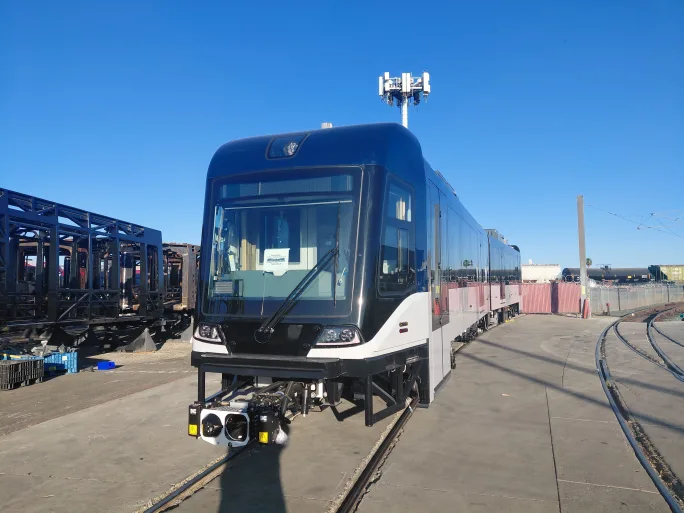
The Greater Cleveland Regional Transit Authority (GCRTA) reached a historic milestone in regional rail transit with the delivery of its very first next-generation Siemens railcar. This delivery marks the physical beginning of a comprehensive $435 million capital investment aimed at replacing the agency’s aging legacy fleet entirely.

Designated as the Siemens Model S200 Light Rail Vehicle (LRV), the newly arrived railcar prioritizes the passenger experience. Engineered for modern urban transit, the LRVs feature 52 easy-to-clean seats for optimal sanitation, expanded standing room, four dedicated wheelchair areas, two bicycle racks, and an advanced passenger infotainment system.
Furthermore, these railcars are custom-built to withstand punishing Midwestern winters. They feature cutting-edge ice-cutting technology, a modernized operator cab equipped with a dedicated heating, ventilation, and air conditioning (HVAC) unit, a heated windshield, and enhanced driver visibility. Before entering official revenue service on the Red Line in Summer 2027—and subsequently the Blue and Green Lines in Summer 2028—each car will undergo rigorous safety and commissioning evaluations at GCRTA’s Brookpark rail yard and across the active transit network.
4. Software Innovation: Optibus Introduces Intelligent Allocation Optimization
On the software front, Optibus announced the launch of "Allocation Optimization," a powerful new capability integrated into the Optibus Operations suite. This technology automates one of the most complex, manual workflows in public transit management: matching drivers and vehicles to scheduled work shifts.
Rather than filling duties one at a time or relying on dispatchers to manually review ranked lists, Optibus’s automated engine evaluates driver availability, personal preferences, established work patterns, and regulatory frameworks through rapid, consecutive optimization runs.
The software seamlessly manages two core workflows: daily operational disruptions (such as absenteeism or vehicle maintenance issues) and long-term roster planning. Embedded within the system is an advanced compliance engine that automatically enforces complex labor rules, including European Union and domestic hours regulations, U.S. union rules, collective bargaining agreements, mandatory rest periods, and maximum daily work-time thresholds.
5. Hydrogen Infrastructure: Riverside Transit and Clean Energy Unveil Zero-Emission Fueling
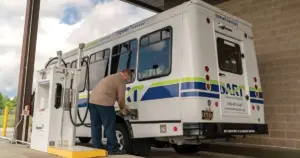
California’s Riverside Transit Agency (RTA), in partnership with Clean Energy, officially unveiled a new hydrogen-fueling station and a fleet of zero-emission hydrogen fuel cell buses at its Riverside headquarters.
This infrastructure milestone signals the beginning of RTA’s transition away from traditional Compressed Natural Gas (CNG) buses toward a fully zero-emission operating model. The project was made possible through a multi-layered funding strategy, highlighted by a competitive $4.89 million award from the Federal Transit Administration’s (FTA) Section 5339 Low or No Emission Grant Program, which enabled RTA to acquire its foundational fleet of five hydrogen fuel cell buses.
6. Microtransit Expansion: MARTA Deploys Dodge ProMasters with Integrated Fare Tech
The Metropolitan Atlanta Rapid Transit Authority (MARTA) introduced a fleet of blue Dodge ProMaster vans designed to bolster accessibility, passenger comfort, and operational efficiency across 12 designated MARTA Reach microtransit service zones. Prominently wrapped in distinct blue MARTA Reach branding, these vehicles are easily identifiable for on-demand riders.
Tailored for dynamic, first-mile/last-mile transit connections, the high-capacity, low-floor vans feature spacious seating configurations and enhanced mobility device securement areas. To streamline the passenger journey, all deployed Dodge ProMasters feature integrated Breeze payment equipment. Riders can seamlessly tap-to-pay using their physical MARTA Breeze Card or mobile payment platforms directly at the vehicle door, reinforcing the efficiency of the shared-ride microtransit service.
7. Modernizing New York Transit: TRC and Transit Orange Partner Up
The Routing Company (TRC) announced a strategic partnership with Transit Orange to modernize demand-response and fixed-route public transportation across Orange County, New York.
Under this agreement, Transit Orange will deploy TRC’s award-winning Pingo platform to manage scheduling, dispatching, real-time vehicle tracking, and automated rider communications across its fixed-route, dial-a-ride, and ADA complementary paratransit services. The cloud-based operating platform delivers intelligent scheduling, optimized routing, fleet visibility, and deep operational analytics. By retiring legacy operational software, Transit Orange aims to elevate service reliability, simplify trip booking for everyday users, and maximize administrative efficiency.
Supporting Context & Metrics
To fully appreciate the scope of these industry developments, it is essential to analyze the quantitative metrics and regulatory drivers governing modern transit operations:
- Emissions Reductions: The transition to EPA 2027 and CARB-compliant engines enforces an 80% reduction in nitrogen oxide (NOx) limits compared to preceding baseline standards, fundamentally reshaping heavy-duty motorcoach manufacturing.
- Capital Investments: GCRTA’s comprehensive rail modernization program represents a $435 million total investment to completely replace its legacy rolling stock with state-of-the-art Siemens LRVs.
- Paratransit Scale: Highlighting the immense demand for specialized transit, RIPTA provided more than 256,975 individual RIde and RIde Anywhere paratransit trips during the 2025 operating cycle.
- Federal Grants: Targeted federal support, such as RTA’s acquisition of $4.89 million in FTA Section 5339 Low-No funding, remains the financial catalyst for accelerating local fleet electrification and hydrogen transition projects.
Official Statements and Industry Perspectives
Public officials and industry leaders have emphasized the transformative nature of these initiatives, framing them as essential steps toward a more resilient, accessible, and sustainable mobility network.
"As demand for accessible transportation continues to grow, this investment will help RIPTA provide more reliable, comfortable, and dignified service for Rhode Islanders with disabilities."
— RIPTA Agency Officials (Commenting on the introduction of the new Model 1 Frontrunner paratransit fleet)"The new standards reduce permitted nitrogen oxides emissions by more than 80% from current limits… bringing service points within reach from the ground and cutting time spent on emissions-related maintenance."
— Prevost Representatives (Speaking at the International Motorcoach Group’s Strategic Alliance Meeting in Wichita, Kansas)"The delivery is part of a comprehensive $435 million investment to replace an aging fleet completely, bringing riders unparalleled safety, comfort, cleanliness, and reliability."
— GCRTA Representatives (Highlighting the arrival of the first Siemens Model S200 Light Rail Vehicle)
Future Outlook: The Road Ahead for Public Mobility
As the transportation sector looks toward the latter half of the decade, several overarching trends are poised to dictate the pace of innovation:
- Mandatory Fleet Decarbonization: With federal and state environmental mandates tightening—exemplified by EPA 2027 rules and regional zero-emission transit goals—agencies and OEMs must continue synchronizing equipment procurement with sustainable infrastructure development, such as RTA’s new hydrogen fueling hub.
- Artificial Intelligence and Automation in Workforce Management: Solutions like Optibus’s Allocation Optimization signal a broader industry shift toward algorithmic scheduling. As transit agencies contend with persistent labor shortages and complex union regulations, automated software that balances operational efficiency with employee retention will become standard operating procedure.
- Seamless Microtransit Integration: The proliferation of microtransit zones serviced by accessible, technology-equipped vans (such as MARTA’s Dodge ProMaster deployment and Transit Orange’s adoption of TRC’s Pingo platform) demonstrates that first-mile/last-mile connectivity is no longer an afterthought. It is a core pillar of modern urban design.
- Passenger-Centric Infrastructure: Whether through low-floor paratransit vans, weather-hardened railcars with advanced ice-cutting technology, or frictionless tap-to-pay systems, the ultimate metric of success for public transit remains the passenger experience.
In conclusion, the convergence of advanced manufacturing, strict environmental compliance, intelligent software, and targeted infrastructure funding ensures that the transportation industry is well-equipped to meet the mobility demands of tomorrow.