Executive Overview
Every seasoned boater, weekend cruiser, and marine professional holds a visceral memory of high-stress maneuvers in tight quarters. The nautical lexicon is filled with cautionary tales of the dreaded “dockmare”—that agonizing high-consequence choreography against crosswinds, adverse tides, and unyielding wooden pilings. For decades, the final approach to a slip has remained the ultimate crucible of seamanship, testing the nerves of novices and veterans alike.
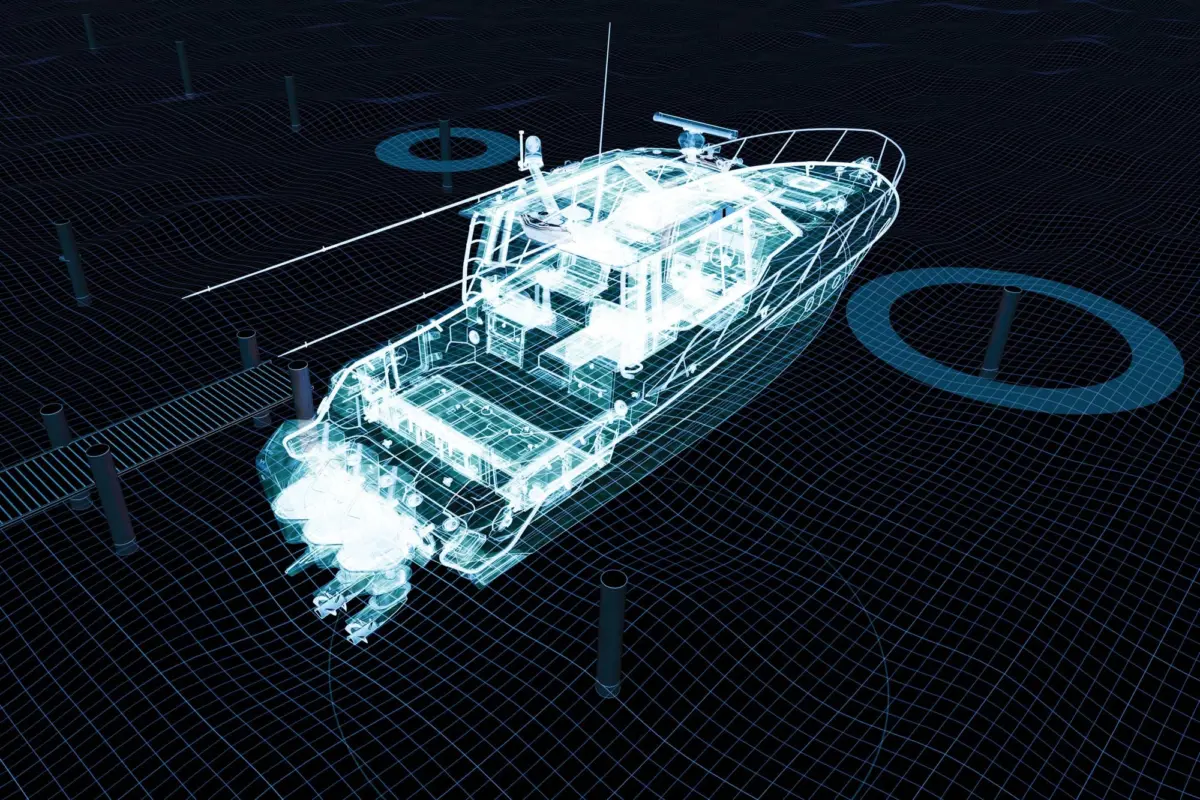
Enter Simrad Yachting’s AutoCaptain, a landmark development in recreational marine technology that fundamentally reshapes how vessels interact with their berths. By pairing an array of six factory-integrated stereo cameras with advanced machine learning algorithms and Mercury Marine’s precision Joystick Piloting technology, AutoCaptain executes fully autonomous docking, undocking, and short-range slow-speed maneuvers.
What separates AutoCaptain from previous generations of sensor-based docking assistants is its origin. Developed under the corporate umbrella of the Brunswick Corporation—which owns both Navico Group (Simrad’s parent company) and Mercury Marine—AutoCaptain is the industry’s first autonomous docking solution engineered from the silicon up by a single corporate entity that builds everything from the hull and propulsion to the steering, sensors, and multifunction glass displays. This end-to-end integration eliminates the finger-pointing common in fragmented aftermarket installations, offering a unified ecosystem designed to mitigate the anxieties of modern boating while pushing marine automation into a new era.
Detailed Chronology & Technological Anatomy
To understand how AutoCaptain transforms the chaos of a crowded marina into a predictable, automated science, one must examine its hardware layout and operational sequence.
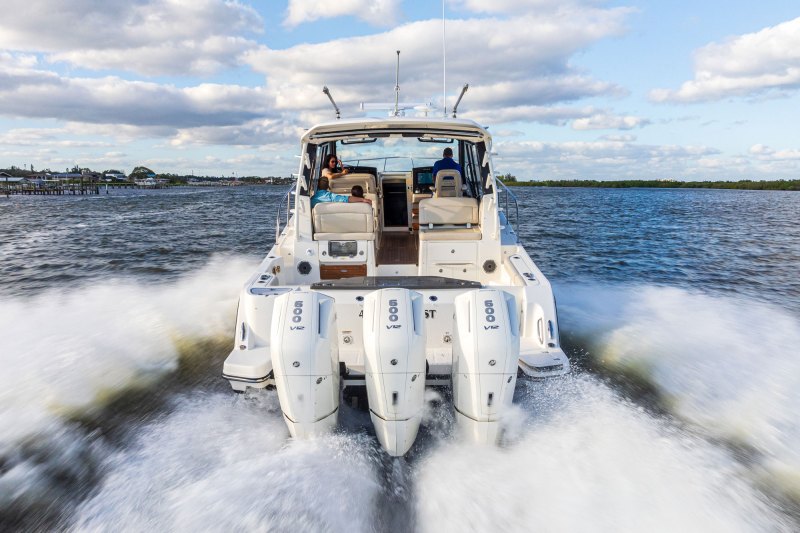
Currently debuting as factory-installed original equipment aboard the luxury-focused Boston Whaler 405 Conquest, AutoCaptain is unavailable as an aftermarket retrofit or dealer add-on. Jeremiah Clark, Navico Group’s vice president of product management for electronics solutions, emphasizes this deliberate choice: “There’s no aftermarket. There’s no dealer install. The only way to get this is with a new boat.”
The Hardware Stack
An AutoCaptain installation requires a tightly synchronized suite of proprietary hardware components distributed across the vessel:
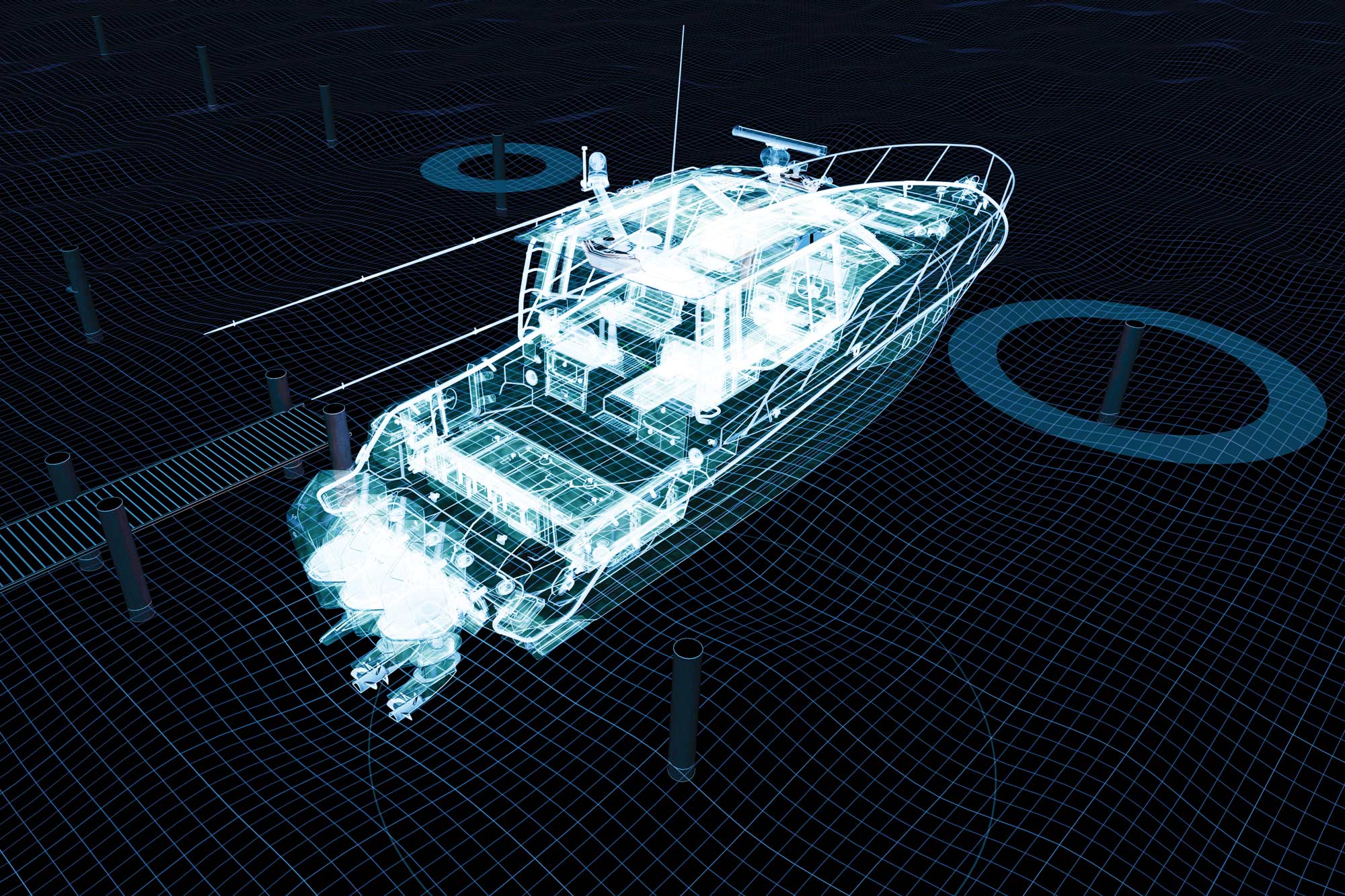
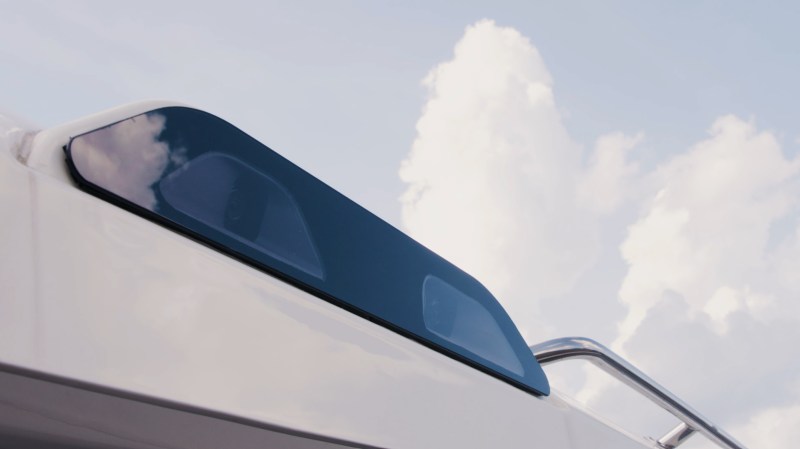
- The Vision Array: Six high-resolution stereo cameras are meticulously mounted into the vessel’s hardtop structure to provide an uninterrupted, 360-degree field of view. Unlike traditional single-lens cameras, stereo vision utilizes dual lenses to calculate distance, depth, and spatial orientation dynamically, mirroring human binocular vision even in low-ambient-light conditions.
- Processing Core: A dedicated high-capacity black-box processor ingests the continuous high-speed video streams from the camera array.
- Command Interface: At least one Simrad NSO 4 or NSS 4 multifunction display running the proprietary AutoCaptain software application serves as the primary visual and touch command center.
- Global Navigation: A high-precision Global Navigation Satellite System (GNSS) receiver maps the vessel’s exact geodetic coordinates relative to its local environment.
- Propulsion & Steering Authority: At least two compatible Mercury outboards tied directly into Mercury’s proprietary Joystick Piloting system. (While a bow thruster can enhance low-speed vectoring, it is not strictly mandatory; as Clark notes, “Anything you can do with a joystick outboard, you can do with AutoCaptain.”)
The Software Architecture and Machine Learning
Beneath the user-facing app lies a complex software stack driven by two primary algorithmic frameworks: object-detection routing and precise path-planning. The system leverages two distinct artificial intelligence methodologies:
- Machine Vision: Allows the black-box processor to visually interpret above-the-waterline objects, identifying docks, pylons, adjacent vessels, breakwalls, and stray floating debris within the live video feeds.
- Machine Learning: Enables the system to evolve independently of hard-coded rules.
When a vessel equipped with AutoCaptain enters a marina for the first time, its cameras construct a ground-up spatial map of the immediate surroundings. Because the system utilizes onboard solid-state storage and advanced machine learning, it retains these spatial maps. Every subsequent visit to the same marina allows AutoCaptain to refine its environmental understanding, resulting in smoother, more efficient docking profiles over time.
Supporting Context & Metrics: Navigating the Autonomous Scale
To contextualize AutoCaptain’s capabilities within the broader spectrum of automation, marine industry leaders look toward established regulatory frameworks adapted from the automotive sector.
Brandon Ferriman, Brunswick’s senior director of program management, classifies AutoCaptain’s current operational parameters as Level 2-plus on the National Highway Traffic Safety Administration’s six-tiered autonomy scale.
“It’s hands-off, but you’re at the wheel,” Ferriman explains, emphasizing that human oversight remains a fundamental requirement of the architecture.
The Operational Workflow
Using AutoCaptain is designed to be intuitive, bridging the gap between high-level computing and straightforward helm ergonomics:
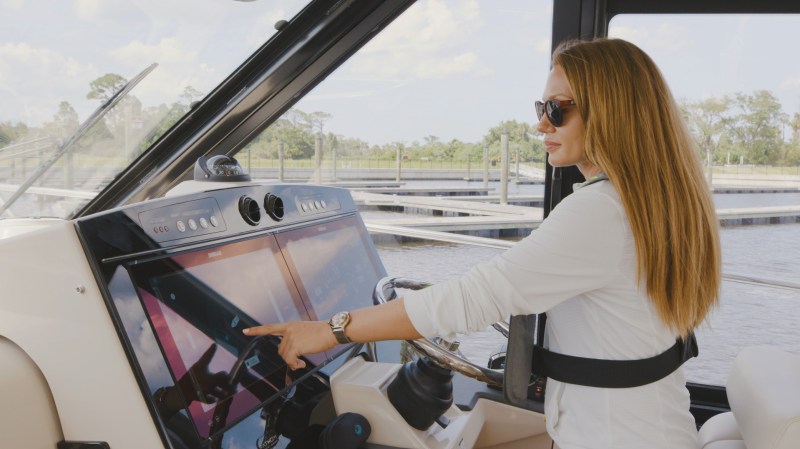
- Initialization: The operator opens the AutoCaptain application on the Simrad NSO 4 or NSS 4 display and formally acknowledges via a prompt that they will remain helmside.
- Destination Input: Using the intuitive touchscreen interface, the captain designates the desired vessel positioning and orientation—such as parking in a starboard-side slip with the bow facing outward.
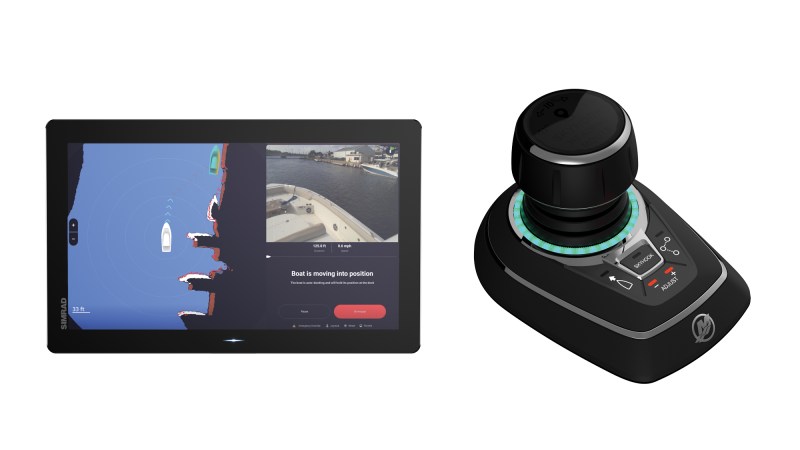
- Screen Layout: The interface divides into a clean three-pane split:
- Port Two-Thirds: A dynamic, camera-generated vector map depicting the immediate vicinity and all mapped obstacles.
- Starboard Upper One-Third: A real-time live camera feed displaying the yacht’s direct line of travel.
- Starboard Lower One-Third: A dedicated dialog box containing prominent "Pause" and "Disengage" controls.
Safety Protocols and the "Pause" Feature
AutoCaptain continuously reconciles real-time camera feeds against its localized GNSS map. If the system detects an unexpected obstacle encroaching on its trajectory—such as a dinghy crossing the slip or a shifting crosscurrent—it instantly recalculates its route. If the processing core encounters an ambiguous scenario where it cannot safely verify a clear path, it triggers Pause Mode before safely handing absolute command back to the human operator.
The Pause feature itself functions as an autonomous, ultra-precise station-keeping mode. When engaged, it mimics Mercury’s popular Skyhook technology, holding the yacht’s position and heading to within a single meter. This serves as an onboard "time-out" option, buying the captain precious seconds to stabilize the vessel or address deck responsibilities.
Conversely, the system instantly reverts to standby mode the moment the human operator intervenes by physically touching the steering wheel, shifting the throttles, manipulating the joystick, or tapping the on-screen disengage button.
Official Statements and Industry Strategy
The strategic rollout of AutoCaptain reflects a calculated shift by Brunswick Corporation toward vertical integration—a "walled garden" approach mirroring consumer technology giants like Apple. By designing the propulsion, steering, electronics, and hull as a single cohesive unit, Brunswick effectively eliminates the inter-brand software conflicts that typically plague marine electronics retrofits.
“We’ve taught it what are boats, what are docks, what are obstacles in the water,” remarks Jeremiah Clark. “But over time, the more of those things it sees, the smarter it actually gets.”
This closed ecosystem pays immediate dividends when troubleshooting or servicing the vessel. Technicians can leverage Mercury’s existing G3 Service Tool to diagnose potential faults across the AutoCaptain network, streamlining maintenance and reducing owner frustration.
Looking forward, Clark stresses that AutoCaptain is designed as an expanding, software-upgradeable platform rather than a static hardware package. Future iterations will not require hardware replacements; instead, new capabilities will be delivered via over-the-air or dealer-applied software updates.
These future developments could potentially integrate other native sensors across Navico’s portfolio, including forward-scanning sonar, side-scan sonar, Doppler-enabled radar systems, and Automatic Identification System (AIS) transceivers.
“We’re open to looking at other sensor technologies,” Clark notes. “And we don’t need a license to talk to our own sensors.”
Future Outlook and Industry Implications
While AutoCaptain represents a major technological leap for recreational boating, industry analysts note clear boundaries regarding its current scope and future trajectory.
Current Limitations
- Regulatory Recognition: AutoCaptain is not currently programmed to interpret or navigate by the International Regulations for Preventing Collisions at Sea (COLREGS). It is strictly engineered for slow-speed, short-range harbor maneuvers rather than long-range, high-speed collision avoidance.
- Platform Constraints: Because the system relies heavily on Mercury’s proprietary Joystick Piloting architecture for vector thrust, RPM management, and independent gear actuation, its immediate roadmap is tied strictly to Mercury-powered vessels. While Brunswick executives acknowledge that sterndrive or inboard integrations are theoretically possible, they have not yet been implemented.
- Physical Requirements: The necessity of mounting a six-camera stereo array restricts AutoCaptain to larger, premium midsize builds featuring structural hardtops. Smaller runabouts and open-cockpit craft lack the physical architecture required to support the camera suite.
Target Demographics and Philosophy
AutoCaptain targets two distinct classes of marine consumers: absolute beginners seeking to lower the intimidation barrier of boat ownership, and seasoned skippers looking to reduce fatigue and augment their close-quarters boat-handling precision during adverse weather conditions.
Despite its advanced capabilities, critics occasionally raise concerns regarding technological overreliance, particularly among novice mariners who might bypass foundational boat-handling education. However, industry defenders point out that nothing prevents AutoCaptain owners from manually practicing the dark arts of traditional docking whenever they choose.
The Broader Horizon
As autonomous systems mature, innovations like Simrad’s AutoCaptain signal a broader shift in marine engineering. By turning the terrifying prospect of a crowded marina into a reliable, automated task, the technology redefines comfort and accessibility on the water.
For the modern yacht owner stepping aboard a Mercury-powered flagship, the days of white-knuckling a parallel approach against a howling crosswind are officially numbered—offering a reassuring glimpse into a smarter, safer future on the water.