











Executive Overview
As urban centers worldwide grapple with the pressing demands of climate change, traffic congestion, and equitable public health, the paradigm of urban mobility is undergoing a profound transformation. The automobile-centric city planning models of the 20th century are increasingly being challenged by robust, multi-modal transportation networks that prioritize active transit. Two recent deep-dives from prominent urban cycling digital chroniclers—Chicagoans Who Bike and the international mobility channel Shifter—offer compelling case studies on the current state of global cycling infrastructure.
These digital dispatches transport observers from the sub-zero winters of the American Midwest to the hyper-dense megacities of East Asia. In the United States, Minneapolis has emerged as an unlikely gold standard, earning high praise even from rival sports territories for its engineering marvels that marry high capacity with year-round utility. Simultaneously, an international lens cast upon Shanghai and other Chinese urban centers reveals a complex historical trajectory: a once-dominant cycling culture that temporarily yielded to rapid modernization and automotive saturation, only to re-emerge with world-class physical infrastructure looking for a cultural renaissance.
This report examines these two distinct urban environments through a rigorous journalistic framework. By analyzing the engineering breakthroughs in Minneapolis and the infrastructural paradoxes of modern China, transportation planners, policymakers, and urban advocates can glean critical lessons on how to build, maintain, and sustain cycling networks for the twenty-first century.
Detailed Chronology
To understand the current state of cycling infrastructure in Minneapolis and Shanghai, it is essential to trace the historical and operational milestones that shaped these two vastly different transit landscapes.
The Evolution of Minneapolis as a Cycling Sanctuary
- Late 20th Century (The Foundation): Minneapolis begins prioritizing off-street trails, gradually knitting together the Grand Rounds National Scenic Byway and converting abandoned rail corridors into multi-use paths like the Midtown Greenway.
- Early 2010s (The Protected Lane Boom): City planners transition from painted sharrows to physically protected bike lanes. The adoption of curb-separated infrastructure establishes a safer environment for a broader demographic of riders.
- Late 2010s to Present (Winter Maintenance Integration): Recognizing that cycling is a year-round necessity rather than a seasonal hobby, the city invests heavily in specialized snow-clearing equipment. Protected lanes are widened and re-engineered to accommodate full-size snowplows, ensuring uninterrupted transit through months of sub-freezing temperatures and heavy snowfall.
- Recent Milestones: Digital creators such as Chicagoans Who Bike spotlight the city, declaring its network arguably the finest in the United States, proving that municipal rivalry takes a back seat to superior urban design.
The Transformation of China’s Two-Wheel Culture
- The Mid-to-Late 20th Century (The Bicycle Kingdom): Chinese megacities—including Beijing, Shanghai, and Guangzhou—rely overwhelmingly on non-motorized transport. At its peak, cycling mode share in major urban areas surges to an astonishing 64%, dwarfing historical and contemporary numbers in famed European cycling havens like Amsterdam and Copenhagen.
- The Turn of the Millennium (The Automotive Surge): Propelled by rapid economic liberalization and industrialization, the Chinese state pivots heavily toward automotive infrastructure, constructing multi-lane highways and ring roads. Cycling mode shares plummet as cars become status symbols and bicycles are frequently viewed as outdated or inconvenient.
- The 2010s (The Dockless Bike-Share Boom): The emergence of dockless bike-sharing giants (such asofo and Mobike) floods Chinese streets with millions of bicycles, democratizing access but occasionally resulting in chaotic sidewalk clutter and regulatory friction.
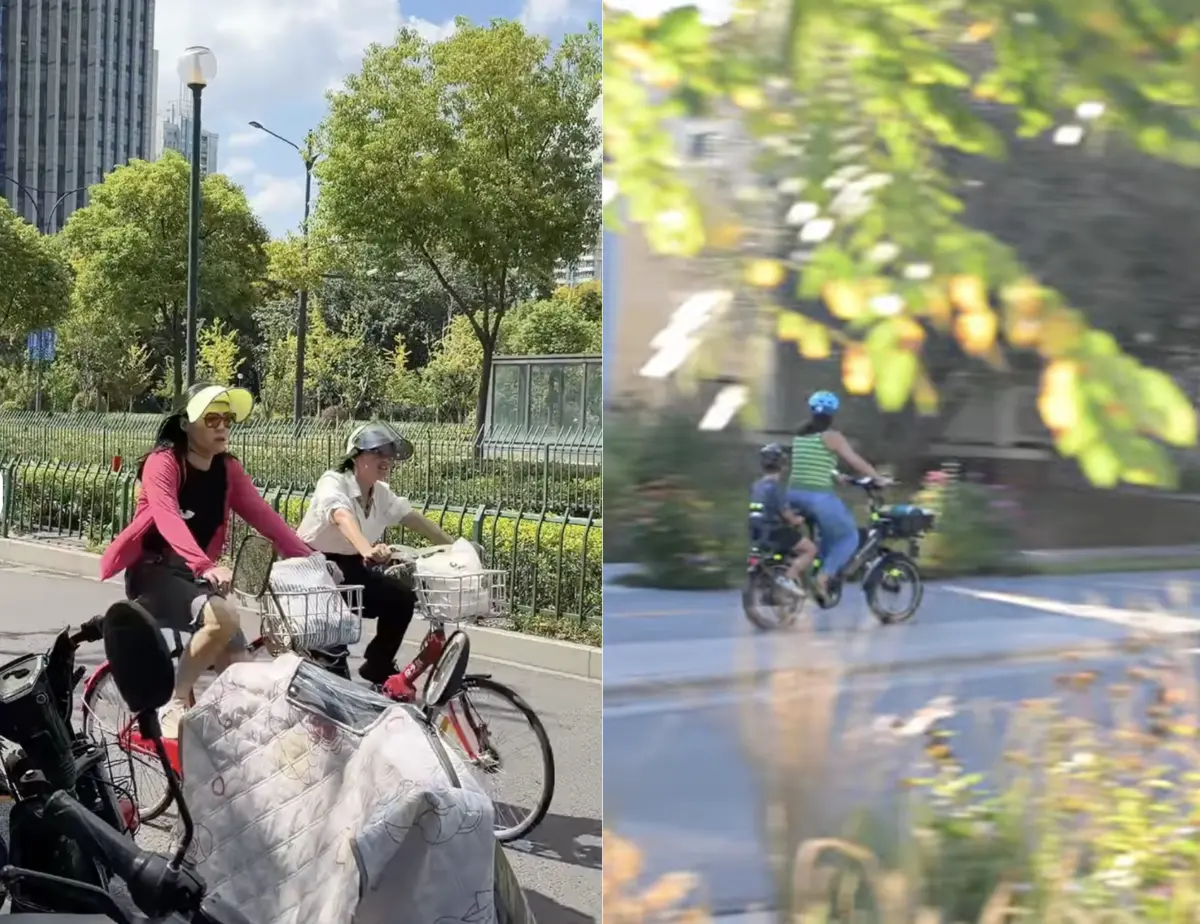
- Present Day (The Hardware-Software Disconnect): As documented by Shifter, modern Chinese megacities boast some of the most advanced, ultra-wide bicycle "hardware" (infrastructure) on earth. However, the cultural "software"—such as pedestrian-cyclist harmony, social prestige associated with riding, and comprehensive safety norms—faces ongoing adaptation challenges, setting the stage for a potential cultural resurgence.
Supporting Context & Metrics
Evaluating the true efficacy of urban cycling networks requires looking beyond anecdotal impressions and examining empirical metrics, infrastructure typologies, and comparative data sets.
Minneapolis: Engineering for All Seasons
What separates Minneapolis from many of its North American counterparts is not merely the mileage of its bike lanes, but the quality and resilience of its design.
- Curb-Level Separation: Unlike flexible plastic bollards that offer minimal protection from errant motorists, Minneapolis’s premier networks utilize concrete curbs, grade separations, and landscape buffers.
- Snowplow Compatibility: A historically fatal flaw in cold-weather cycling infrastructure is winter maintenance; when snow piles up, unprotected lanes become storage zones for plowed snow. Minneapolis addressed this by designing ultra-wide, curb-level corridors explicitly scaled for standard municipal snow-removal machinery.
- Regional Comparison: While Chicago continues to make strides in expanding its protected lane network, transit advocates frequently point across the state line to Minnesota to demonstrate what is achievable when regional political will aligns with engineering innovation.
Shanghai and China: The Hardware-Software Paradox
The international comparison offered by Shifter underscores a fascinating dichotomy in contemporary mobility studies: the distinction between physical infrastructure ("hardware") and cultural adoption ("software").
- Mode Share Dynamics: Historical data reveals that Chinese megacities achieved a staggering 64% cycling mode share decades ago. To contextualize this, Amsterdam—widely regarded as the global epicenter of bicycle culture—typically hovers around 35% to 40% for city-center trips today.
- Infrastructure Scale: Modern Chinese bike paths are often massive, multi-lane thoroughfares completely segregated from high-speed vehicular traffic.
- The Cultural Lag: Despite possessing superior physical hardware, the "software" aspect—meaning the social perception of cycling, the integration of cycling education, and the harmonious coexistence of micro-mobility devices (such as e-scooters and delivery mopeds)—presents ongoing hurdles. E-bikes, while vastly improving mobility for millions, have introduced speed differentials on bike paths that require updated traffic management strategies.
| Metric / Feature | Minneapolis, USA | Shanghai / Beijing, China | Amsterdam, Netherlands |
|---|---|---|---|
| Primary Advantage | Year-round maintenance & physical protection | Massive physical capacity & scale | Deep cultural integration & safety norms |
| Peak Historical Mode Share | N/A (Developing modern network) | Up to 64% (Historical peak) | ~40% |
| Infrastructure Type | Curb-separated, snowplow-optimized tracks | Ultra-wide, multi-lane separated tracks | Network of cycle tracks and quiet streets |
| Primary Challenge | Expanding suburban connectivity | Realigning cultural "software" with hardware | Managing overcrowding and bike parking |
Official Statements and Expert Perspectives
Urban planners, mobility researchers, and digital documentarians have increasingly emphasized that the future of city design hinges on cross-pollinating international best practices.
Reflecting on the infrastructure of Minneapolis, transit analysts from Chicagoans Who Bike noted with a mix of admiration and playful regional rivalry:
"If these ultra-wide, curb-level, full-size-snow-plow-ready paths can overcome the Bears/Vikings rivalry, you know they’ve got to be good. Minneapolis has laid down a masterclass in how to build physical connections that protect human lives across every season."
Addressing the historical and structural evolution of Asian megacities, Tom Flood, creator of the mobility channel Shifter, observed during his exploration of Shanghai:
"People forget that China was once the undisputed ‘Bicycle Kingdom,’ with mode shares that put modern European capitals to shame. Today, cities like Beijing and Shanghai have some of the most impressive bike hardware ever constructed. The challenge now is not building the roads, but updating the cultural software to match the engineering."
Municipal transportation officials in leading North American and European cities echo these sentiments, stressing that building bike lanes is no longer just an environmental talking point, but an essential component of economic resilience, public health, and social equity.
Future Outlook
As urban centers look toward the middle of the 21st century, the lessons drawn from Minneapolis and Shanghai point toward a unified horizon: the complete integration of active transportation into the backbone of metropolitan planning.
The North American Trajectory
For cities like Chicago, Minneapolis serves as a scalable blueprint. The paradigm is shifting away from piecemeal, temporary bike lane installations toward permanent, capital-improvement-grade networks. As climate volatility increases the frequency of severe weather events, municipalities must adopt the Minneapolis standard of winterized, all-season infrastructure. Without reliable year-round maintenance, investments in active transit risk remaining underutilized for a third of the calendar year.
The Global South and Asian Megacity Evolution
In China and other rapidly developing economies, the future of urban mobility depends on reconciling state-of-the-art physical hardware with human-centric traffic management. As the influx of high-speed e-bikes and delivery fleets necessitates smarter path design, urban planners are focusing on speed differentiation, intersection safety, and public education. If these cities successfully upgrade their cultural "software," they are poised to reclaim their status as global leaders in sustainable, high-volume cycling.
Conclusion
Ultimately, whether examining the snowy corridors of the American Midwest or the sprawling avenues of Shanghai, the message is clear: the bicycle is not a relic of the past, nor a recreational luxury, but a cornerstone of modern urban survival. By combining resilient engineering with progressive cultural frameworks, cities around the globe can build transportation networks that are safer, cleaner, and infinitely more connected.


