





Executive Overview
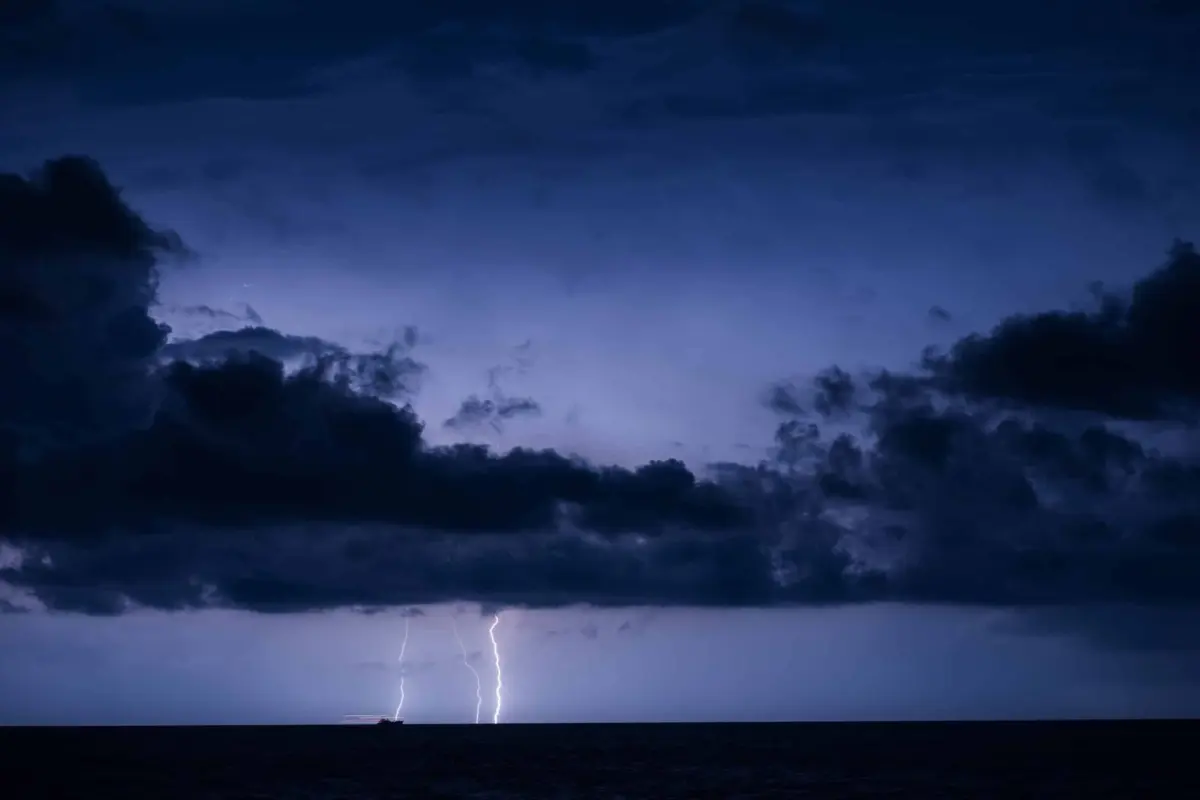
Modern meteorology has advanced significantly, yet marine environments remain notoriously unpredictable. For commercial and recreational anglers alike, a day spent on the water can transform within minutes. Sudden wind shifts, escalating wave heights, and zero-visibility squalls can turn a routine fishing excursion into a high-stakes maritime emergency.
While fishing vessels are engineered to withstand shifting offshore conditions, the velocity at which severe weather can materialize routinely catches even seasoned captains off guard. When a storm breaks, survival and vessel preservation hinge not on raw speed, but on calculated, methodical seamanship.

This comprehensive operational guide details the precise protocols required when caught offshore in severe weather. Drawing on insights from maritime safety authorities and on-water assistance experts, we examine the immediate tactical responses needed to maintain vessel stability, manage engine failures, secure shifting deck loads, and navigate safely back to port once conditions stabilize.
Detailed Chronology: The Lifecycle of an On-Water Storm Response
When a weather system descends upon a fishing vessel, every second counts. However, panicked reactions—such as aggressively accelerating toward the nearest horizon—frequently exacerbate the danger. Surviving a sudden gale requires a disciplined, chronological approach to crisis management.
Phase 1: The Initial Threat Recognition and Speed Reduction
The moment meteorological conditions begin to deteriorate, the primary instinct for many operators is to throttle up and outrun the system. In reality, attempting to outrun a fast-moving squall or severe thunderstorm cell is often a fatal miscalculation.
- Managing Momentum: Running at high speeds in heavy chop causes the hull to slam violently into steep, closely spaced waves. This places catastrophic structural stress on the hull, stringers, and engine mounts.
- The Steering Imperative: Reducing speed immediately allows the operator to retain critical steering control. It prevents the bow from burying itself into the trough of a wave (proning) and gives the hull time to rise dynamically over oncoming swells.
- Vector Adjustment: Captains must avoid running directly perpendicular to heavy waves, particularly in smaller fishing vessels. Taking beam seas (waves hitting the side of the boat) dramatically increases the risk of capsizing. Instead, approach waves at a calculated angle (usually 30 to 45 degrees) to maintain control and dry decks.
Phase 2: Mandatory Personal Flotation Device (PFD) Deployment
As wave action intensifies and vessel movement becomes erratic, mundane tasks—such as searching for safety gear—become exponentially more hazardous.
[STORM DETECTED]
       │
       ├──> 1. Reduce Throttle & Adjust Heading (Avoid Beam Seas)
       ├──> 2. Don Life Jackets Immediately (Preventative Safety)
       ├──> 3. Secure Loose Deck Gear & Heavy Equipment
└──> 4. Monitor GPS, Radar, & VHF Channels- Pre-Emptive Donning: Safety protocols dictate that all passengers must don properly fitted life jackets before conditions become critical. Rummaging through lockers or attempting to buckle inflatable PFDs while pitched across a rolling deck is a leading recipe for man-overboard scenarios.
- Weight Distribution: Improper weight distribution is a primary contributor to vessel instability during heavy seas. Passengers must remain seated low and centered within the vessel to keep the center of gravity as low as possible.
Phase 3: Securing the Deck and Clearing Hazards
Fishing boats are uniquely vulnerable during storms due to the sheer volume of loose gear required for the trade or hobby.
- The Rolling Hazard: Rods, tackle boxes, coolers, ice chests, spare anchors, and gaffs become dangerous projectiles in heavy rolling seas. Unsecured gear shifts unpredictably, altering the boat’s center of gravity, creating severe tripping hazards, and potentially puncturing hulls or damaging bulkheads.
- Clearing Pathways: Stowing equipment securely below decks or lashing items down tightly clears pathways, ensuring that the crew can access emergency gear, bilge pumps, or steering stations rapidly if conditions deteriorate further.
Supporting Context & Metrics: The Anatomy of Boating Fatalities
Statistics compiled by maritime safety organizations consistently highlight a grim reality: the vast majority of boating fatalities are directly linked to unexpected weather events coupled with a failure to wear personal flotation devices.
┌────────────────────────────────────────────────────────┐
│         PRIMARY CONTRIBUTORS TO BOATING FATALITIES     │
├────────────────────────────────────────────────────────┤
│  ■ Unexpected Severe Weather & Squalls                 │
│  ■ Failure to Wear Life Jackets                        │
│  ■ Improper Vessel Weight Distribution                 │
│  ■ Loss of Propulsion in Hazardous Waters              │
└────────────────────────────────────────────────────────┘
The Hazards of Open-Water Anchoring
A common misconception among amateur boaters is that dropping anchor is the universal solution to riding out a storm. In reality, anchoring in open water during heavy seas introduces immense danger.
- Unpredictable Swinging: High winds and strong currents can cause an anchored vessel to swing violently, taking waves directly on the beam or stern, which can swamp the cockpit.
- Straining Ground Tackle: The extreme load placed on bow cleats, windlasses, and rode lines during a squall can cause hardware failure, leaving the boat entirely adrift and compromised.
- When to Anchor: Anchoring should only be considered as a last resort to prevent drifting into immediate shallow-water hazards (such as reefs or rocks), and only if bottom conditions and water depth allow for a secure hold.
Navigating Restricted Visibility and Engine Failures
When torrential rain, sea spray, and thick fog combine, visibility can drop to near zero within minutes.
- Electronic Reliance: In low-visibility scenarios, operators must rely heavily on onboard navigation electronics—including GPS, radar, and chartplotters—to maintain situational awareness.
- Traffic Management: In congested waterways like the Intracoastal Waterway (ICW), storms trigger intense traffic spikes as vessels rush for shelter. Monitoring surrounding vessel traffic via AIS (Automatic Identification System) and maintaining a continuous listening watch on VHF channels is paramount. However, mariners must also be mindful of signal limitations, such as poor VHF range caused by heavy precipitation or geographical obstructions.
The Critical Danger of Engine Failure
Losing propulsion during a severe storm transforms a manageable challenge into an immediate peril. Without power, a vessel loses its ability to control its heading relative to incoming waves, leaving it at the mercy of wind and sea.
- Immediate Actions: If the engine fails, deploy a sea anchor or drift sock immediately off the bow to keep the vessel pointed into the weather and reduce the drift rate.
- Salvage Protocols: In extreme scenarios where a vessel becomes disabled, swamped, or grounded during a storm, specialized marine salvage and recovery services are frequently required once weather windows permit safe operations.
Official Guidelines and Expert Insights
Industry leaders emphasize that safe storm management begins long before leaving the slip. Pre-departure preparation is just as critical as real-time decision-making on the water.
Pre-Departure Checklist Priorities
- File a Float Plan: Always provide a trusted contact on shore with a detailed float plan, including your intended route, expected return time, and passenger manifest. If conditions escalate and communication fails, a float plan ensures rescue services can locate your vessel efficiently.
- Inspect Safety Systems: Verify that bilge pumps, navigation lights, marine radios, and safety harnesses are fully operational before casting off.
- Monitor Meteorological Feeds: Check real-time radar and marine forecasts continuously, recognizing that localized squalls can develop independently of broad regional predictions.
"Storm response is about control, not speed. The safest reaction to a sudden squall is deliberate, measured action focused on preserving vessel stability, maintaining clear communication, and protecting every soul on board." — The Sea Tow Operations Team
Post-Storm Protocol and Inspection
Once the storm front passes and conditions begin to improve, the temptation is to relax and resume normal fishing activities. However, professional mariners know that heavy impacts with steep waves can inflict hidden structural damage.
Post-Severe Weather Inspection Checklist
- Hull Integrity: Inspect bilges immediately for signs of water intrusion. Check bulkheads, stringers, and hull-to-deck joints for stress cracks, warping, or delamination.
- Mechanical Systems: Listen closely for unusual engine vibration, test steering responsiveness through its full range of motion, and verify that exhaust and cooling systems are functioning correctly.
- Electrical and Navigation Checks: Test all electronics, bilge switches, and navigation lighting to ensure salt spray or violent pitching has not compromised wiring harnesses.
- Return to Port: If any structural, mechanical, or steering anomalies are detected during the post-storm check, throttle down, proceed with extreme caution, and return to port immediately for a professional marine inspection.
Frequently Asked Questions
Should you try to outrun a storm in a fishing boat?
No. If weather conditions are already deteriorating around you, attempting to outrun a storm is dangerous. Accelerating blindly toward shore in heavy chop increases the risk of hull damage, loss of control, and taking water over the bow. Reducing speed and maintaining a controlled heading is consistently the safer option.
Is it safe to drop anchor during an offshore storm?
Generally, no. Anchoring in open water during heavy seas causes the boat to swing unpredictably and take waves from dangerous angles. You should only anchor if it is absolutely necessary to prevent drifting into shallow hazards, rocks, or heavy traffic, and only if your ground tackle is rated for extreme loads.
What is the single most dangerous scenario when boating in bad weather?
The combination of a total loss of propulsion and beam seas (waves crashing against the side of the boat) represents the highest risk for capsizing. Maintaining engine reliability and keeping the bow angled into oncoming swells are your best defenses against this hazard.