






Executive Overview
In a move that significantly reshapes the maritime logistics landscape of the Middle East, the Red Sea Gateway Terminal (RSGT) and French shipping giant CMA CGM Group have finalized a definitive agreement to co-develop and operate Terminal 4 at Jeddah Islamic Port. Backed by an initial investment of $434 million (approximately SAR 1.6 billion), the project is poised to inject an additional 2.6 million Twenty-foot Equivalent Units (TEUs) of annual handling capacity into Saudi Arabia’s primary western maritime gateway.
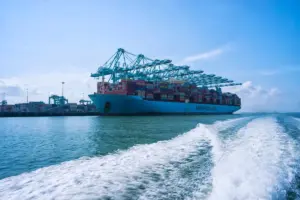
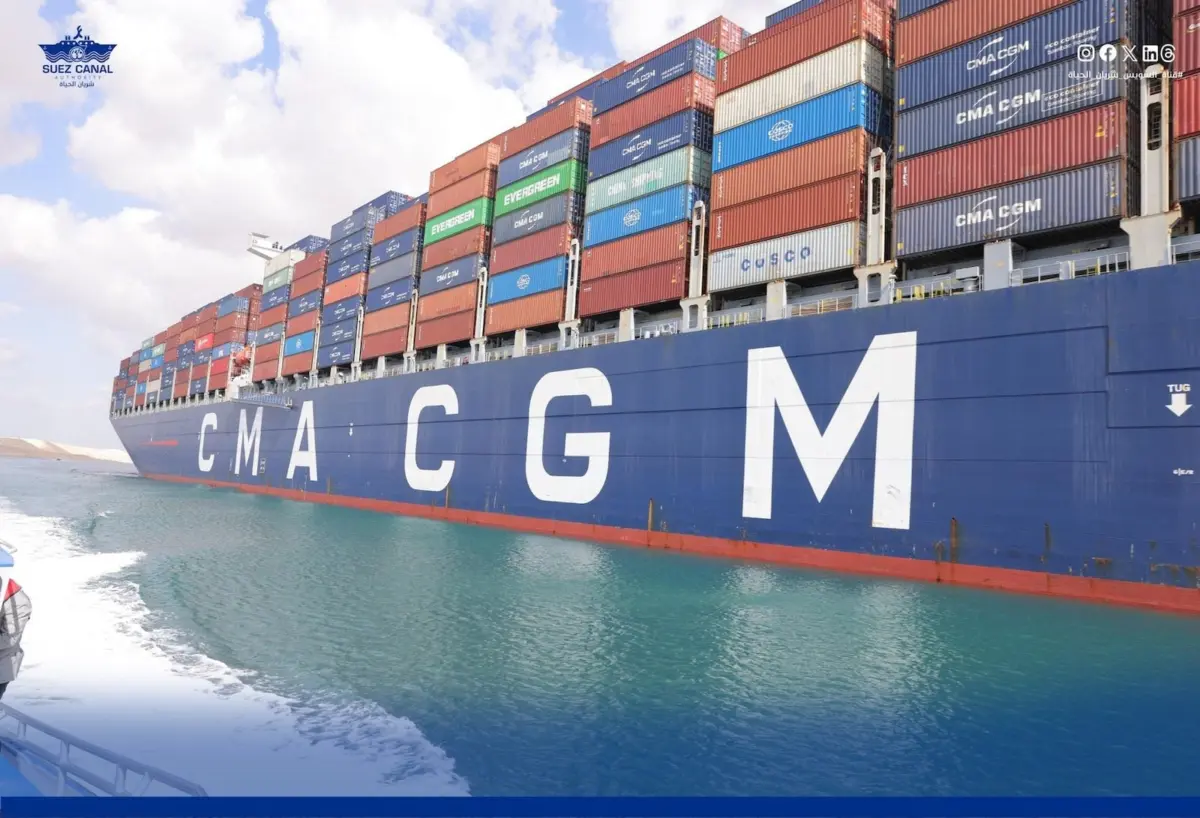
This strategic joint venture, executed in close coordination with the Saudi Ports Authority (Mawani), represents a major expansion of RSGT’s existing concession at the port. By constructing state-of-the-art deep-water berths and integrating next-generation container-handling technology, the partners aim to future-proof the terminal to accommodate the world’s largest Ultra-Large Container Vessels (ULCVs).
Beyond local port economics, the deal serves as a critical link in Saudi Arabia’s ambitious Vision 2030 and National Transport and Logistics Strategy (NTLS). By anchoring global shipping majors like CMA CGM directly into its domestic infrastructure, the Kingdom is accelerating its transformation into a premier global logistics hub bridging Asia, Europe, and Africa. Simultaneously, the transaction highlights a growing global trend of vertical integration, where ocean carriers acquire direct equity in port terminals to guarantee supply chain resilience and secure priority access along vital trade corridors.
Detailed Chronology of the Deal and Partnership
A High-Profile Bilateral Signing in Paris
The finalization of the definitive agreements for Terminal 4 did not occur in isolation; rather, it was elevated to the highest levels of international diplomacy. The contracts were officially signed in Paris on the sidelines of the French-Saudi Investment Roundtable. The event was attended by Saudi Crown Prince Mohammed bin Salman and French President Emmanuel Macron, highlighting the geopolitical and macroeconomic weight of the agreement.
The presence of both heads of state underscores the strategic alignment between French corporate capabilities and Saudi Arabia’s economic diversification initiatives. For France, CMA CGM represents a national champion in global logistics; for Saudi Arabia, RSGT is a flagship domestic port operator backed by the Public Investment Fund (PIF).
+-----------------------------------------------------------------+
|                       CHRONOLOGY OF EVENTS                      |
+-----------------------------------------------------------------+
|                                                                 |
|  [Vision 2030 Launch]                                           |
|         │                                                       |
|         ▼                                                       |
|  [Mawani Concession Restructuring at Jeddah Islamic Port]       |
|         │                                                       |
|         ▼                                                       |
|  [RSGT Identifies Expansion Needs for Terminal 4]               |
|         │                                                       |
|         ▼                                                       |
|  [Strategic Negotiations with CMA CGM Group]                    |
|         │                                                       |
|         ▼                                                       |
|  [Paris Accord: Signing during French-Saudi Roundtable]         |
|         │                                                       |
|         ▼                                                       |
|  [Phase 1 Infrastructure Deployment & Berth Deepening]          |
|                                                                 |
+-----------------------------------------------------------------+
The Role of Mawani and the Concession Framework
The Saudi Ports Authority (Mawani) has been systematically restructuring the country’s port concessions to attract foreign direct investment (FDI) and boost operational efficiencies. The Terminal 4 project is integrated directly into RSGT’s existing long-term concession framework at Jeddah Islamic Port.
Rather than operating as a fragmented, isolated facility, Terminal 4 will leverage RSGT’s established terminal footprint, shared gate systems, and administrative infrastructure. This integrated approach ensures that the $434 million capital expenditure is directed entirely toward capacity-building, deep-water dredging, and advanced electrification, rather than redundant support facilities.
Supporting Context & Metrics
Technical Specifications and Infrastructure Upgrades
The $434 million capital allocation is earmarked for extensive civil engineering and equipment procurement designed to handle the next generation of mega-containerships. Key components of the infrastructure program include:
- Deep-Water Berths: Dredging and quay wall reinforcement to achieve depths capable of receiving vessels with drafts exceeding 16 meters. This will allow the terminal to seamlessly service 24,000-TEU class vessels without tidal restrictions.
- Super-Post-Panamax Ship-to-Shore (STS) Cranes: The acquisition of 10 new high-performance, state-of-the-art STS cranes. These units feature extended outreach capabilities to service vessels up to 26 container rows wide.
- Yard Automation and Electrification: Integration of advanced terminal operating systems (TOS) and hybrid/electric yard gantry cranes to reduce carbon intensity while maximizing container stacking density and throughput velocity.
| Metric | Project Specifications |
|---|---|
| Initial Capital Investment | $434 Million (SAR 1.6 Billion) |
| Additional Annual Capacity | 2.6 Million TEUs |
| Primary Equipment Addition | 10 New Ship-to-Shore (STS) Cranes |
| Target Vessel Class | Ultra-Large Container Vessels (ULCVs) up to 24,000+ TEUs |
| Key Regulatory Partner | Saudi Ports Authority (Mawani) |
| Parent Port | Jeddah Islamic Port, Saudi Arabia |
Jeddah’s Strategic Location on the East-West Axis
Jeddah Islamic Port is historically the largest and busiest port in Saudi Arabia, handling over 60% of the country’s maritime imports and exports. Its location on the Red Sea coast puts it directly on the primary maritime trade lane connecting East Asia with Europe via the Suez Canal—a route that handles roughly 10% to 12% of global maritime trade.
                          [Suez Canal / Europe]
                                   ▲
                                   │
                           (Red Sea Corridor)
                                   │
                      [ JEDDAH ISLAMIC PORT ] ◄───► [Saudi Hinterland]
                        (Terminal 4 Expansion)
                                   │
                           (Red Sea Corridor)
                                   │
                                   ▼
                         [Bab el-Mandeb / Asia]
By expanding capacity by 2.6 million TEUs, the port aims to transition from a primary import-export gateway for the Saudi domestic market into a major transshipment hub. In transshipment, mega-vessels drop off large volumes of cargo that are subsequently distributed to smaller regional ports in East Africa, the Levant, and the wider Arabian Peninsula via feeder networks.
CMA CGM’s Global Terminal Strategy
For Marseille-based CMA CGM, the transaction is a continuation of its aggressive vertical integration strategy. The group now holds equity stakes in 64 port terminals worldwide.
In the wake of the extreme supply chain disruptions of the pandemic era, ocean carriers realized that owning vessel capacity was only half the battle; controlling the land-sea interface (the marine terminal) is crucial to maintaining schedule reliability. By securing long-term operational control over Terminal 4 alongside RSGT, CMA CGM ensures that its vessels receive priority berthing, rapid turnarounds, and minimized demurrage risks in one of the most congested maritime corridors in the world.
Official Statements and Corporate Perspectives
The leadership of the participating organizations emphasized the long-term, transformational nature of this partnership, highlighting how it merges private commercial ambition with national economic policy.
Lars Vang Christensen, Group CEO of RSGT, framed the transaction as a watershed moment for the terminal operator:
"Today’s signing marks a significant milestone in the development of RSGT and Jeddah Islamic Port. Through our upcoming partnership with CMA CGM, and with the continued support of the Ministry of Transport and Logistics Services and Mawani, we are delivering a project that will increase our container capacity significantly."
From the carrier perspective, Rodolphe Saadé, Chairman and CEO of CMA CGM Group, pointed to the strategic necessity of terminal ownership in the modern maritime economy:
"As the global trade landscape continues to evolve and infrastructures need to expand and modernize, terminals are becoming increasingly strategic assets, essential to securing our operations, strengthening major trade corridors, and providing our customers with greater reliability."
Aamer Abdullah Alireza, Executive Chairman of RSGT, drew a direct line between the corporate venture and Saudi Arabia’s overarching national strategy:
"Together with CMA CGM, we are investing in infrastructure that will create long-term value, strengthen national competitiveness, and support the Kingdom’s transformation into a leading global logistics hub."
Future Outlook and Strategic Implications
Catalyzing Vision 2030 and the NTLS
The Terminal 4 development is a concrete implementation of Saudi Arabia’s National Transport and Logistics Strategy (NTLS), which aims to position the Kingdom as a top-10 country in the global Logistics Performance Index (LPI) by 2030.
+-----------------------------------------------------------------------+
|                       VISION 2030 PORT TARGETS                        |
+-----------------------------------------------------------------------+
|                                                                       |
|  Current Regional Standing: Major Import-Export Gateway               |
|  Target National Port Capacity: 40 Million TEUs annually by 2030      |
|  Key Growth Drivers:                                                  |
|    - Deep-water berth expansions (Terminal 4)                         |
|    - Integration of global liner alliances (CMA CGM)                  |
|    - Streamlined customs and intermodal rail connections              |
|                                                                       |
+-----------------------------------------------------------------------+
To reach these goals, the Kingdom must expand its overall port capacity to over 40 million TEUs annually. The 2.6 million TEUs added by this project represent a significant step toward that target. The project also aims to improve intermodal connectivity, linking the port to the Saudi Landbridge project—a proposed railway network designed to connect the Arabian Gulf coast with the Red Sea coast, enabling transcontinental overland transit.
Escalating Regional Port Competition
The expansion of Jeddah’s Terminal 4 will inevitably intensify competition in the Red Sea and Arabian Gulf maritime sectors. Jeddah is positioned directly against other regional heavyweights, such as:
- King Abdullah Port (KAP): Located just north of Jeddah, this privately-developed port has rapidly captured market share by offering deep-water berths and highly efficient customs clearing.
- Port of Salalah (Oman) & Port of Aden (Yemen): Key transshipment hubs situated near the mouth of the Red Sea.
- Jebel Ali Port (Dubai, UAE): The undisputed regional giant in transshipment and logistics.
By upgrading its facilities to accommodate the largest ULCVs and partnering with CMA CGM—a key member of the Ocean Alliance—Jeddah Islamic Port is positioning itself to capture a larger share of the transshipment market, offering carriers a highly competitive alternative to traditional hubs.
Environmental and Technological Integration
As the maritime industry faces mounting pressure to decarbonize, the development of Terminal 4 will serve as a testing ground for sustainable port operations in the Middle East. The joint venture is expected to prioritize green terminal logistics, including the installation of shore-power connection capabilities (cold ironing), which allow vessels to turn off their auxiliary diesel engines and plug into the local electrical grid while at berth. Furthermore, the integration of automated guided vehicles (AGVs) and digital twin technologies will help optimize container movements, reducing idle times for trucks and vessels alike, and ultimately lowering the overall carbon footprint per TEU handled.