By Philippe Lazaro
Digital Content Manager
Estimated Reading Time: 7 minutes
Executive Overview
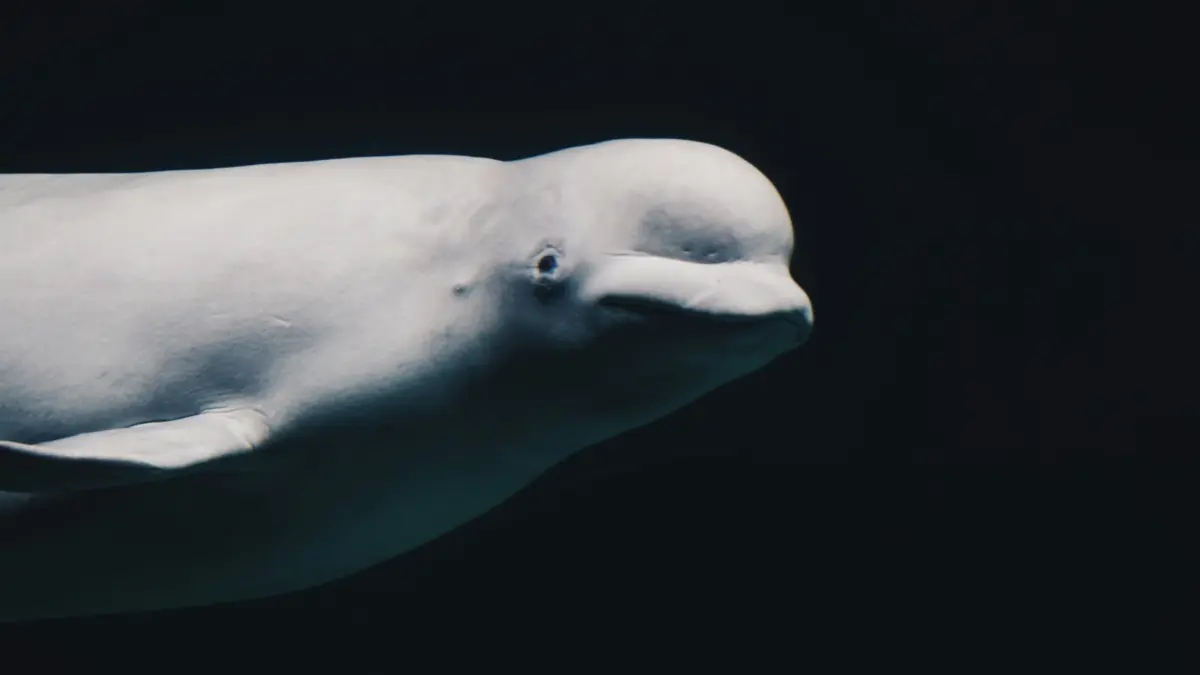
To stand on the banks of the St. Lawrence River in Quebec is to bear witness to an extraordinary ecological anachronism. Beneath the murky, rushing surface, a sudden flash of ivory reveals a pod of beluga whales slicing effortlessly through freshwater currents. These small, social Arctic cetaceans navigate the exact same industrial shipping lanes as massive container vessels, commercial trawlers, and recreational kayaks—hundreds of miles away from the open ocean they are traditionally adapted to call home.
The story of how Arctic whales came to permanently inhabit a Canadian river is not merely a tale of aquatic migration; it is a profound historical document written in ice, sediment, and DNA. Approximately 15,000 years ago, the catastrophic retreat of the colossal Wisconsin ice sheet reconfigured the North American landscape, leaving behind a temporary inland ocean and trapping a pioneering population of belugas. For millennia, this genetically isolated group has adapted to the shifting dynamics of the St. Lawrence estuary, embedding themselves deeply into the region’s biodiversity, Indigenous cultural heritage, and ecological stability.

Today, however, this ancient lineage faces an unprecedented existential crisis. Once numbering roughly 10,000 strong at the dawn of the 20th century, the St. Lawrence beluga population has plummeted to fewer than 900 individuals, earning them a stark endangered designation. While legacy pressures—including industrial hunting (which persisted legally until 1979), high chemical contaminant loads, and intense vessel traffic—laid the groundwork for their decline, modern climate change is accelerating their peril. A rapidly warming Arctic is fundamentally destabilizing marine ecosystems, driving apex predators like orcas into historical beluga sanctuaries, while diminishing sea ice and introducing disruptive acoustic pollution.
As global temperatures continue to shatter historical minimums, the fate of the St. Lawrence beluga has transformed into a high-stakes test of human environmental stewardship. Protecting these resilient survivors is not merely a matter of preserving a single subpopulation; it is an urgent defense of irreplaceable genetic diversity, cultural heritage, and the health of an interconnected global ocean.
Detailed Chronology: From Glacial Depths to Modern Estuaries
To understand the modern predicament of the St. Lawrence beluga, one must look back deep into the Pleistocene epoch, tracing a timeline spanning over fifteen millennia of geological and evolutionary upheaval.
Phase I: The Glacial Compression and the Champlain Sea (c. 15,000 BCE – 10,000 BCE)
Roughly 15,000 years ago, the North American continent groaned beneath the immense weight of the Wisconsin ice sheet, an apocalyptic expanse of glacial ice thousands of feet thick that covered much of Canada and the northern United States. As global temperatures slowly began to rise, this colossal sheet initiated a sluggish, centuries-long retreat.

The sheer weight of the glacier had severely depressed the Earth’s crust beneath it, creating a vast topographical depression. As the ice melted on a continental scale, cold saline waters from the Atlantic Ocean rushed inward, flooding the low-lying basin. This cataclysm birthed the Champlain Sea—a massive inland body of saltwater that stretched eastward from the modern-day Atlantic coastline all the way west toward the nascent Great Lakes and parts of present-day New York State.
Phase II: Marine Invasions and Fossil Legacies
During the peak of the Champlain Sea’s existence, Arctic-adapted marine mammals thrived in an environment that would today seem entirely alien to the geography of interior North America. Porpoises, humpback whales, fin whales, bowhead whales, ringed seals, and walruses swam freely across what are now the St. Lawrence lowlands, farm fields, and dense suburban developments.
The physical evidence of this forgotten marine era lies buried beneath the Canadian topsoil. Paleontologists and researchers have systematically unspooled this history by recovering ancient fossilized remains tucked between Quebec City and the Ottawa Valley. Notably, in 2001, the Université du Québec à Montréal unearthed a remarkably preserved beluga fossil dated to more than 10,000 years old, confirming that ancestral white whales were active participants in this prehistoric ecosystem.
Phase III: The Continental Rebound and Isolation (c. 8,000 BCE – Modern Era)
As the last vestiges of the Wisconsin glacier melted away, a geological process known as isostatic rebound occurred. Relieved of the crushing weight of billions of tons of ice, the Earth’s crust slowly lifted upward. This land rise caused the Champlain Sea to drain progressively back into the Atlantic Ocean.
Where the great sea once stood, the St. Lawrence River valley formed. While most marine mammals retreated northward with the receding cold-water habitats, a distinct population of beluga whales remained behind in the newly established St. Lawrence estuary. Cut off from the broader marine populations in northern Canada, Alaska, and Russia, these whales became genetically isolated.
Over thousands of years of evolutionary divergence, this stranded group forged a unique path. Their seasonal migration patterns, feeding habits, and social behaviors adapted intimately to the specialized, fluctuating salinity and temperature rhythms of the river. For longer than recorded human history, this lineage has known no other home.
Supporting Context & Metrics: The Numbers Behind the Decline
The historical resilience of the St. Lawrence belugas is currently crashing against the unyielding realities of modern human industrialization and global heating. The metrics charting their trajectory paint a sobering portrait of an endangered ecosystem.
- Population Freefall: At the turn of the 20th century, historical estimates place the St. Lawrence beluga population at roughly 10,000 individuals. By the time targeted commercial and recreational hunting was finally banned in 1979, the population had already been severely depleted. Today, recent aerial and boat surveys suggest that the population hovers between 900 and 1,800 individuals, with many marine biologists warning that the lower estimate is the most statistically accurate representation of surviving mature animals.
- The Arctic Sea Ice Crisis: Every September, scientists at the National Snow and Ice Data Center (NSIDC) record the annual Arctic sea ice minimum—the point at which summer melt reaches its maximum extent before the winter refreeze. The last 19 September extents recorded between 2007 and 2025 rank as the 19 lowest on record since satellite observations began nearly five decades ago. This continuous downward trend line signals accelerated warming that directly impacts Arctic food webs and displaces marine predators.
- Geographic Isolation and Vulnerability: The St. Lawrence belugas are not alone in their vulnerability. In Alaska, Cook Inlet belugas face a similarly perilous endangered status, while other Canadian Arctic sub-populations remain subjects of intense conservation concern. Because the St. Lawrence group has been genetically isolated for millennia, their extinction would represent an irreversible loss of irreplaceable genetic diversity and evolutionary adaptation that cannot simply be "replaced" by populations elsewhere.
Official Statements & Expert Perspectives
Marine conservationists and scientific institutions emphasize that the threats facing the St. Lawrence beluga extend far beyond local pollution controls. They represent a collision between historical evolutionary lineages and rapid, human-induced environmental disruption.
"Groups of belugas in places like the St. Lawrence River and the Arctic have been separated for such long periods that they highlight the importance of genetic diversity when it comes to climate resilience," notes conservation literature from the Ocean Conservancy. "Losing one distinct subpopulation, like the St. Lawrence group, cannot simply be offset by pointing to healthy numbers of belugas in another part of our world. They represent thousands of years of localized history, unique cultural adaptations, and ecological memory."
Furthermore, marine scientists point out that the shifting Arctic climate is rewriting predator-prey dynamics in real-time. As disappearing sea ice opens up historic ice-choked corridors, killer whales (Orcinus orca)—formidable apex predators capable of hunting all major Arctic whale species—are increasingly documented pushing further south into traditional beluga nurseries and feeding grounds.
Simultaneously, the industrialization of the St. Lawrence watershed has choked the river with chemical pollutants, including heavy metals, polycyclic aromatic hydrocarbons (PAHs), and agricultural runoff. Combined with relentless commercial vessel traffic, which generates pervasive underwater acoustic noise, these factors disrupt the complex echolocation networks belugas rely upon to hunt, navigate, and communicate.
Future Outlook: Charting a New Course for Conservation
The plight of the St. Lawrence beluga acts as a biological barometer, serving simultaneously as a living record of what the North American marine environment once was and a flashing warning sign of what it is rapidly becoming. The warming of our oceans shapes life in ways that travel far inland and persist longer than human political cycles can anticipate.
Addressing this crisis requires legislative action and structural modernization of marine protection frameworks. One critical legislative instrument currently championed by conservation advocates is the proposed Whale CHARTS Act.
The Whale CHARTS Act: A Vital Step Forward
If implemented effectively, the Whale CHARTS Act would fundamentally transform marine safety and cetacean conservation by:
- Expanding Near-Real-Time Monitoring: Amending the National Oceanic and Atmospheric Administration’s (NOAA) tracking and mitigation programs to dramatically improve detection capabilities for large cetaceans.
- Mapping Migration Corridors: Enhancing scientific understanding of the precise geographical locations and seasonal extents of baleen and sperm whale migration routes.
- Protecting Critical Habitats: Securing vulnerable feeding, mating, and calving grounds from catastrophic ship strikes and industrial encroachment.
Ultimately, saving the St. Lawrence beluga demands a dual commitment: aggressively reining in global carbon emissions to halt the systemic warming of our polar regions, and strictly managing local industrial pressures within our great waterways. These ancient white sentinels have survived the retreat of continental glaciers, the draining of inland seas, and centuries of human pressure. Whether they survive the modern century depends entirely upon the urgency and scale of our collective response today.