









Executive Overview
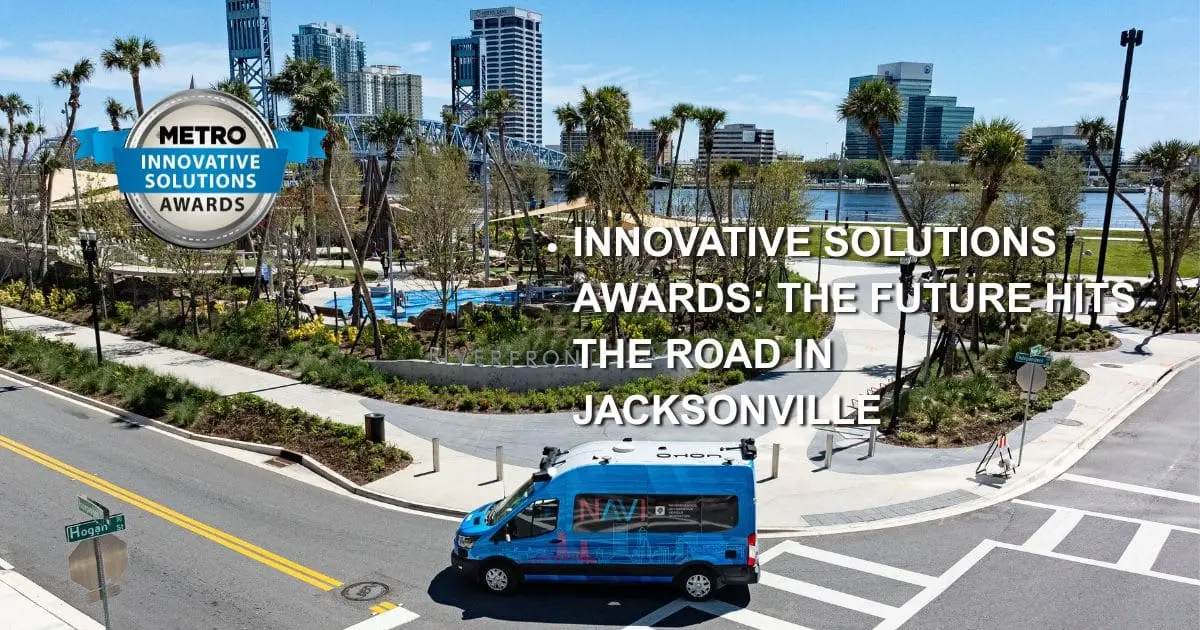
The conversation surrounding autonomous vehicles (AVs) in public transportation has officially shifted from speculative futurism to real-world execution. In Jacksonville, Florida, the Jacksonville Transportation Authority (JTA) has fundamentally redefined what urban mobility looks like through its Neighborhood Autonomous Vehicle Innovation (NAVI) program. Recognized recently with a prestigious METRO Innovative Solutions Award, NAVI represents the United States’ first fully operational, fully integrated autonomous public transportation network deployed in a live urban environment.
Far exceeding a simple pilot project involving self-driving cars on city streets, NAVI serves as the operational bedrock of JTA’s ambitious Ultimate Urban Circulator (U2C) long-term initiative. By seamlessly weaving together autonomous rolling stock, intelligent roadside infrastructure, robust cybersecurity frameworks, and a state-of-the-art command hub, the JTA has successfully proven that driverless transit can operate safely, efficiently, and reliably within mixed-traffic metropolitan settings.
This article explores the multi-year evolution of the NAVI program, analyzing the technological ecosystem that powers it, the strategic partnerships that fueled its rise, the rigorous workforce development initiatives securing its future, and the invaluable blueprint it now offers transit agencies worldwide.
Detailed Chronology: From Concept to Concrete Reality
The realization of the nation’s premier autonomous transit network did not happen overnight. It is the product of meticulous planning, strategic foresight, and years of intergovernmental collaboration that began with a desire to reimagine urban mobility in northeastern Florida.
Modernizing the Skyway and Hatching the U2C Vision
The origins of NAVI trace back to an operational challenge faced by many mid-sized American transit agencies: aging legacy infrastructure. JTA leadership recognized that Jacksonville’s downtown automated monorail system—the historic Skyway—while functional, offered limited flexibility for expansion. To truly serve a growing urban core and anticipate future economic developments, the agency needed a more dynamic, adaptable circulator system.
This realization birthed the Ultimate Urban Circulator (U2C) initiative. Conceived as a phased master plan, the U2C aimed to replace and expand upon the Skyway footprint by utilizing cutting-edge autonomous vehicle technology. The vision was clear: connect downtown Jacksonville’s central business district, residential zones, and major sports and entertainment hubs with a flexible, high-frequency transit option that could scale alongside the city.
Laying the Groundwork: Funding and the Bay Street Innovation Corridor
Transforming the U2C concept into a tangible transit service required overcoming significant regulatory, financial, and infrastructural hurdles. JTA actively pursued and secured critical funding partnerships through the Florida Department of Transportation (FDOT) and the Federal Transit Administration (FTA).

With capital secured, the agency turned its attention to the physical canvas: the Bay Street Innovation Corridor. This 3.5-mile route through the city’s urban core was specifically chosen to test the limits of autonomous mobility in real-world conditions. Spanning from the central business district through residential neighborhoods and out to the sports and entertainment district—including stops near EverBank Stadium—the route exposed autonomous vehicles to complex urban stressors, including heavy pedestrian traffic, unpredictable motorists, and complex intersection geometries.
Before a single fare-paying passenger boarded a NAVI vehicle, JTA underwent an exhaustive pre-revenue testing phase. Vehicles were subjected to thousands of miles of simulated and real-world trials, evaluating their reaction times, sensor accuracy, communication capabilities with roadside infrastructure, and fail-safe redundancies. Only after clearing these rigorous benchmarks did the system open to the public, establishing a new gold standard for transit deployment safety.
The Technological Ecosystem: Beyond the Self-Driving Vehicle
A common pitfall in early autonomous transit deployments has been an over-reliance on the vehicle itself, treating autonomy as a plug-and-play gadget. JTA avoided this trap by constructing a comprehensive, interconnected mobility ecosystem where the vehicles are merely one component of a much larger, intelligent network.
[Autonomous Vehicles] <---> [Intelligent Roadside Infrastructure]
         ^                                    ^
         |                                    |
         v                                    v
[Autonomous Innovation Center (AIC)] <---> [Dedicated Cybersecurity]
Intelligent Roadside Infrastructure and the Bay Street Corridor
Along the Bay Street Innovation Corridor, the infrastructure is just as smart as the vehicles navigating it. The corridor features a suite of connected devices that communicate continuously with the fleet in real time.
- Traffic Signal Priority (TSP): Integrated traffic signals talk directly to approaching NAVI vehicles, optimizing signal timings to maintain schedule reliability and smooth out travel times through busy intersections.
- Advanced Sensor Arrays: High-definition cameras, pedestrian detection systems, and roadway-embedded flood sensors line the corridor. These systems feed continuous environmental data back to both the vehicles and the central command facility, providing an unprecedented level of situational awareness.
- Redundancy Layers: By combining on-vehicle LiDAR, radar, and optical sensors with external roadside intelligence, the system creates multiple layers of operational redundancy. If a vehicle’s onboard sensor experiences a momentary blind spot, external infrastructure bridges the gap.
The Autonomous Innovation Center (AIC): The Heart of Operations
At the operational core of the NAVI program stands the Autonomous Innovation Center (AIC), located in Jacksonville’s LaVilla district. Serving far more than a simple parking garage, the AIC functions as the command nexus for the entire U2C initiative.
Inside the AIC, technicians and operators monitor fleet health, manage live vehicle routing, oversee battery charging cycles, and conduct routine maintenance. The facility was engineered with the future in mind, incorporating several groundbreaking sustainable and resilient features:
- Solar Microgrid: A rooftop installation of 129 solar panels generates clean energy to offset the building’s baseline power demands, supported by advanced battery energy storage systems.
- Public Charging Infrastructure: The facility includes electric vehicle charging stations accessible to the public, promoting broader regional electrification goals.
- Isolated Cybersecurity Architecture: Recognizing the unique vulnerabilities of connected transportation systems, the AIC operates on a dedicated, highly secure cybersecurity network completely isolated from JTA’s broader corporate IT infrastructure.
- Modular Construction: Utilizing accelerated fabrication techniques, the AIC was built efficiently and designed with structural modularity to accommodate the inevitable physical and operational expansion of the U2C network.
Supporting Context, Metrics, and Workforce Development
Deploying advanced technology in the public sector requires addressing two critical pillars often overlooked by private-sector tech developers: public confidence and workforce sustainability.
Cultivating Public Trust Through Real-World Experience
Introducing autonomous vehicles to the general public inevitably elicits a mixture of excitement and skepticism. JTA recognized early on that building public trust could not be achieved through press releases alone; it required direct, tactile experience.
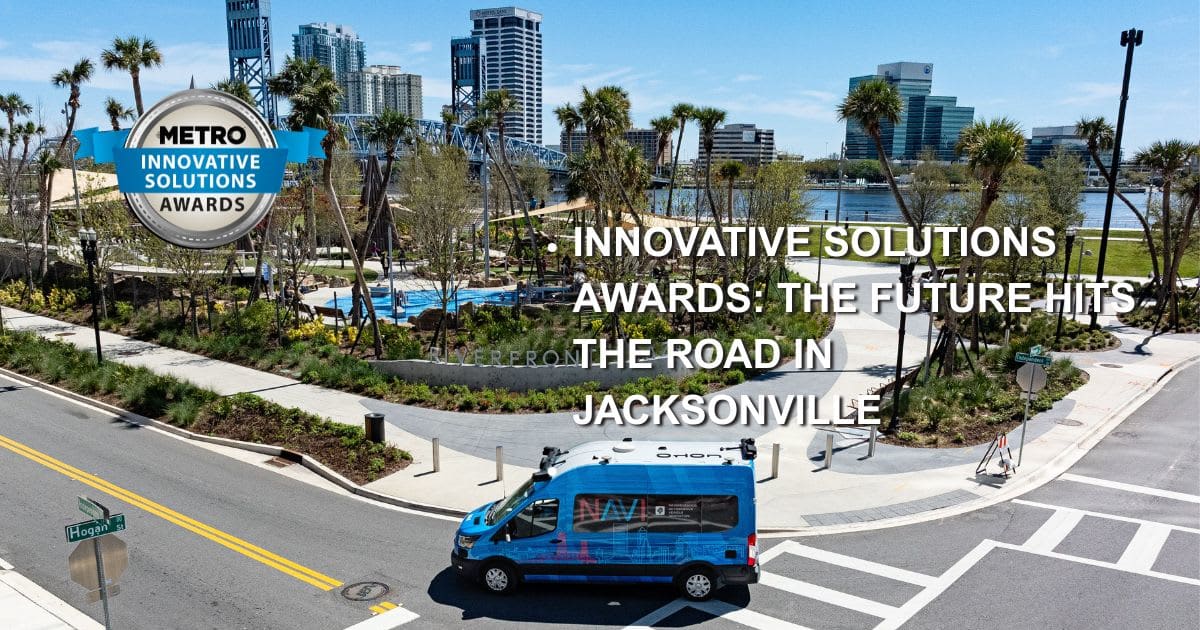
Since launching service along the 12-stop route, community feedback has been overwhelmingly positive. First-time riders frequently transition from curiosity to advocacy once they experience the smooth, predictable ride quality of the NAVI vehicles. By embedding autonomous transit into everyday routines—such as commuting to work, attending a football game at EverBank Stadium, or running errands in downtown Jacksonville—JTA is effectively normalizing the technology, proving that driverless transit is not a sci-fi novelty, but a practical, safe daily utility.
Preparing the Workforce of Tomorrow
True innovation is sustainable only when the people operating and maintaining it possess the requisite skills. To prevent a technical talent bottleneck, JTA partnered with educational institutions, most notably Florida State College at Jacksonville (FSCJ).
Together, JTA and FSCJ have developed specialized training programs focused on:
- Autonomous vehicle mechanical and software maintenance.
- Intelligent transportation system (ITS) troubleshooting.
- Cybersecurity protocols for connected vehicle fleets.
- High-voltage electric fleet management and charging infrastructure upkeep.
These curricula ensure that as automation expands across North American transit systems, a skilled, locally trained workforce is ready to support the industry’s evolution.
Official Statements and Institutional Reflection
The significance of the NAVI program’s success has resonated across the entire transit industry, validating years of collaborative effort between public agencies and private innovators.
Reflecting on the receipt of the METRO Innovative Solutions Award, official representatives from the Jacksonville Transportation Authority expressed deep gratitude for the coalition that brought the vision to life:
"Receiving METRO’s Innovative Solutions Award is a tremendous honor and a meaningful validation of the work our team and partners have accomplished together. While we’re proud of the recognition, what makes this award especially significant is that it acknowledges years of collaboration, innovation, and persistence by a broad coalition of public and private partners who believed in a bold vision for the future of public transportation."
Elaborating on the philosophy of integrated technology, JTA officials emphasized that the true triumph of the program lies in systemic cohesion:
"The vehicles, signals, sensors, communications systems, and the Autonomous Innovation Center all work together. When these technologies work together, they create multiple layers of redundancy and operational support that enhance safety while delivering a more reliable passenger experience."
Looking at the broader implications for the municipal transit sector, leadership offered a definitive conclusion regarding the current state of the industry:
"Our experience shows that autonomous public transportation is no longer a future concept; it can be safely and successfully deployed today when supported by the right infrastructure, partnerships, and operational framework."
Future Outlook: A National Blueprint for Urban Mobility
As the Ultimate Urban Circulator continues its phased expansion beyond downtown Jacksonville into adjacent residential and commercial corridors, the NAVI program stands as a towering success story and a living laboratory for transit agencies across the globe.
The lessons harvested from Jacksonville’s streets are clear and actionable for any municipality looking toward an automated future:
- Start with a Real Need: Technology must serve a defined transportation objective, not dictate policy.
- Build an Ecosystem: Autonomous vehicles require smart infrastructure, robust command centers, and dedicated communication networks to succeed safely.
- Forge Cross-Sector Partnerships: Success relies on the tight alignment of federal, state, and local agencies, private tech vendors, and academic institutions.
- Invest in People: Workforce development programs must run parallel to technological procurement to ensure long-term operational resilience.
- Prioritize Community Engagement: Building public trust through safe, transparent, and routine deployment is just as important as engineering reliability.
Through NAVI, the Jacksonville Transportation Authority has permanently altered the trajectory of public transit. By proving that autonomous networks can operate safely, efficiently, and harmoniously within complex urban environments, JTA has delivered more than a local circulator—it has handed the entire transportation industry a blueprint for the future.