








Executive Overview
A dangerous new chapter in Middle Eastern geopolitics opened on Tuesday, September 1, 2026, as the United States launched a series of coordinated air strikes against Islamic Revolutionary Guard Corps (IRGC) targets inside Iran. The military action has effectively shattered fragile hopes that a weekend exchange of fire could be contained, raising the specter of an all-out regional war. The strikes followed a highly volatile 48 hours during which commercial shipping in the Strait of Hormuz was directly targeted, sending shockwaves through global energy markets.
The military escalation triggered an immediate reaction in the energy sector. Brent crude futures, already trading up 2% on the day, surged an additional 2% as reports emerged of the strikes and prior attacks on two Saudi-owned supertankers transiting the Strait of Hormuz. With Iran threatening a total blockade of the vital waterway—through which approximately a fifth of the world’s petroleum passes—the global economy faces the immediate threat of a severe energy supply shock.
Politically, both Washington and Tehran have adopted uncompromising stances. U.S. President Donald Trump has warned of devastating consequences should Iran choose to retaliate, while Treasury Secretary Scott Bessent announced a sweeping new sanctions regime designed to "economically asphyxiate" the Iranian government. Conversely, Iranian leadership remains defiant, declaring that if Tehran is barred from exporting its oil, no other nation in the Persian Gulf will be permitted to do so either. As both military machines brace for further conflict, the international community is left to contemplate the failure of recent diplomatic efforts and the very real possibility of a prolonged maritime and territorial war.
Detailed Chronology of Escalation
The current crisis is the culmination of a six-month-old conflict that erupted on February 28, 2026, following a series of joint U.S. and Israeli military strikes against targets in Iran and Lebanon. While the conflict had briefly settled into a tense economic and diplomatic standoff over the summer, the past 72 hours have witnessed a rapid and violent unraveling of the status quo.
[Feb 28, 2026] Conflict Erupts (US/Israeli Strikes in Iran & Lebanon)
       │
       ▼
[June 2026]   Memorandum of Understanding (MOU) Signed
       │
       ▼
[Aug 2026]    60-Day Negotiation Window Expires Without Agreement
       │
       ▼
[Aug 30, 2026] U.S. Forces Strike Iran's Larak Island
       │
       ▼
[Aug 31, 2026] Iran Retaliates: Missiles Target U.S. Air Bases in Jordan
       │
       ▼
[Aug 31 (PM)] Two Saudi Supertankers Attacked in Strait of Hormuz
       │
       ▼
[Sept 1, 2026] U.S. Launches Coordinated Air Strikes on Mainland Iran
The Failed June Accord
In June 2026, the warring parties signed a Memorandum of Understanding (MOU) designed to halt the hostilities that had already claimed thousands of lives. The MOU established a temporary cessation of direct military actions and paved the way for a 60-day negotiation window aimed at resolving long-term security and economic grievances. However, this critical window closed in late August without a comprehensive treaty. Washington accused Tehran of using the interim period to rearm its regional proxies, while Tehran claimed the U.S. was attempting to dictate terms rather than negotiate in good faith.
The Weekend Flashpoint
The return to active combat began on Sunday, August 30, when U.S. forces launched targeted strikes against Iranian military installations on Larak Island, a strategically positioned outpost in the Strait of Hormuz.
Tehran’s response was swift and direct. On Monday, August 31, the IRGC launched a barrage of ballistic missiles targeting two U.S. air bases in Jordan. Despite the gravity of targeting American bases, statements from both capitals initially suggested a desire to avoid a wider war. President Trump remarked that the exchange did not necessarily signal a return to full-scale conflict, while a senior Iranian diplomatic source characterized the events as a "limited and contained confrontation."
The Maritime Escalation and Tuesday’s Strikes
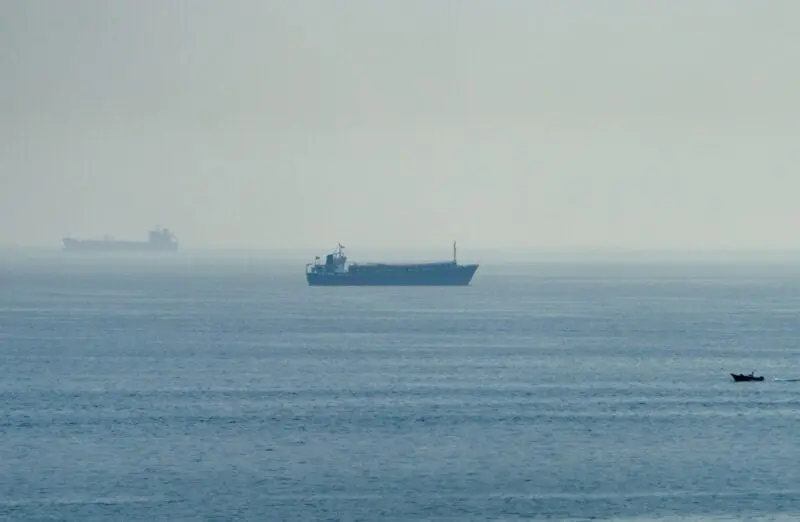
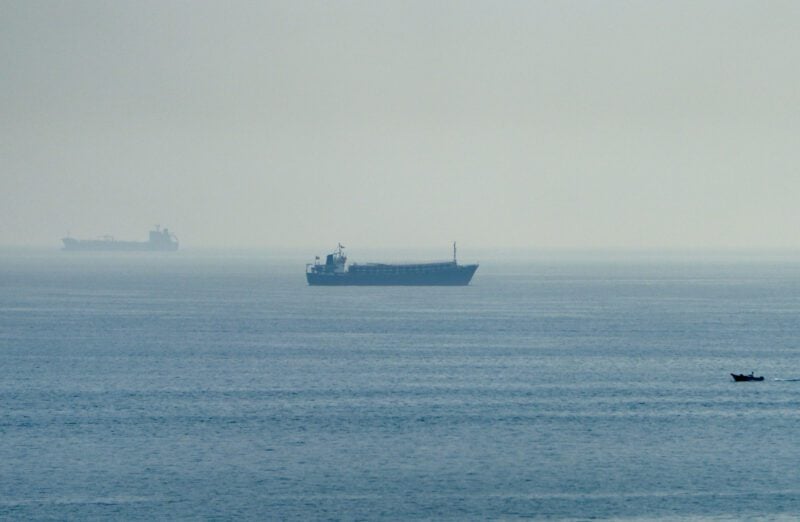
Any hope of containment evaporated late Monday night when two Saudi-owned supertankers transiting outbound through the Strait of Hormuz were struck by unidentified projectiles within minutes of each other. The attacks directly threatened the safety of global maritime trade and prompted immediate military planning in Washington.
At 12:00 PM ET (1600 GMT) on Tuesday, September 1, U.S. Central Command (CENTCOM) initiated a wave of air strikes targeting critical IRGC infrastructure along Iran’s southern coastline. Reports of heavy explosions quickly emerged from several key locations:
- Qeshm Island: A major IRGC naval outpost commanding the northern flank of the Strait of Hormuz.
- Bandar Abbas: Iran’s primary naval base and a critical commercial port city.
- Chabahar: A strategic deep-water port on the Gulf of Oman, essential for Iran’s non-oil trade.
- Jask and Sirik: Coastal towns housing anti-ship missile batteries and surveillance installations.
Supporting Context, Market Metrics, and Maritime Impact
The military operations on Tuesday represent a direct threat to global energy security due to their proximity to the Strait of Hormuz. The strait is a narrow geopolitical chokepoint separating the Persian Gulf from the Gulf of Oman, measuring just 21 miles wide at its narrowest point.
The Strategic Value of the Strait of Hormuz
The geographical placement of the U.S. targets highlights the tactical nature of the strikes. By targeting Qeshm Island, Bandar Abbas, Jask, and Sirik, the U.S. military aimed to degrade the IRGC’s ability to launch anti-ship missiles, deploy fast-attack craft, and lay naval mines.
| Target Location | Tactical Significance | Military Assets Housed |
|---|---|---|
| Qeshm Island | Controls the northern shipping lanes of the Strait | Fast-attack craft, coastal radar systems |
| Bandar Abbas | Headquarters of the Islamic Republic of Iran Navy (IRIN) | Submarines, surface combatants, logistical hubs |
| Chabahar Port | Direct access to the Indian Ocean, bypassing the Strait | Maritime surveillance, drone launching facilities |
| Jask / Sirik | Commands the eastern approaches to the Strait | Mobile anti-ship ballistic and cruise missile batteries |
Maritime Assault on Saudi Supertankers
According to data compiled by shipping intelligence firms Marisks and Kpler, the two supertankers targeted on Monday evening were carrying Saudi crude oil destined for international markets. The vessels were hit by highly precise projectiles while transiting the outbound traffic separation scheme in the Strait of Hormuz.
While neither vessel sank, the attacks highlighted the vulnerability of commercial shipping in the region. Marine insurance underwriters immediately responded by raising war risk premiums for vessels transiting the Persian Gulf, adding significant operational costs to global shipping.
Energy Market Reactions
The immediate consequence of the military strikes and maritime attacks was a sharp spike in crude oil benchmarks. Brent crude futures (LCOc1) experienced a two-stage rally on Tuesday:
- Initial Surge: Up 2% in early trading following reports of the Monday night tanker attacks.
- Secondary Spike: Jumped an additional 2% immediately after CENTCOM confirmed the commencement of air strikes on mainland Iranian targets.
Energy analysts warn that a prolonged closure of the Strait of Hormuz could push crude prices well above $100 per barrel, triggering a global inflationary wave.
Brent Crude Price Movement (Sept 1, 2026)
[Baseline] ──> [+2% on Tanker Attack Reports] ──> [+4% Total after U.S. Air Strikes]
The Strategy of "Economic Asphyxiation"
Parallel to the military action, the United States is preparing to deploy its financial arsenal. Speaking from the G20 finance leaders’ meeting in Asheville, North Carolina, U.S. Treasury Secretary Scott Bessent outlined an aggressive economic strategy designed to cripple the Iranian regime.
Bessent stated that Washington is prepared to implement a "zero-tolerance" policy regarding enforcement. The upcoming sanctions package will target:
- Iranian Financial Institutions: Complete isolation of remaining Iranian banks from the global financial system.
- Airline Leasing Companies: Sanctions against international firms providing aircraft or leasing services to Iranian carriers.
- Secondary Sanctions: Penalties against third-party countries and corporate entities that continue to purchase Iranian petroleum or facilitate trade with IRGC-linked businesses.
Official Statements and Diplomatic Posturing
The rhetoric from both Washington and Tehran indicates a complete breakdown of diplomatic channels, with both sides projecting absolute resolve.
United States: Warnings of Overwhelming Force
U.S. Central Command took the unusual step of announcing the strikes in real-time on the social media platform X:
"Today at 12 p.m. ET (1600 GMT), U.S. forces began striking Islamic Revolutionary Guard Corps (IRGC) targets in Iran. The strikes follow recent attempted attacks by the IRGC against commercial shipping in the Strait of Hormuz and against American service members deployed to the region."
President Donald Trump reinforced this message with a stern warning directed at Iranian leadership, writing on his social media channel that any attempt to retaliate would be met with disproportionate force:
"If Iran retaliates for these actions, they will be hit again at a much harder and higher level than they have ever been hit before."
In Asheville, Treasury Secretary Scott Bessent emphasized the economic component of the administration’s strategy, stating:
"We have zero tolerance. We are going to economically asphyxiate this regime. If you do business with the IRGC or the Iranian state, you will be cut off from the United States financial system."
Furthermore, the U.S. Embassy in Qatar issued a security advisory urging American citizens in the region to maintain high levels of vigilance, warning of potential flight cancellations, sudden airspace closures, and widespread travel disruptions.
Iran: Defiance and Threats of Total Blockade
In Tehran, government officials and military commanders showed no signs of yielding to either military or economic pressure. Speaking at a regional summit in Kyrgyzstan shortly before the U.S. strikes commenced, Iranian President Masoud Pezeshkian defended his country’s actions, stating that Tehran had been willing to honor its commitments under the June MOU, but blamed Washington for violating the terms.
Following the strikes, Iranian Foreign Ministry spokesman Esmaeil Baghaei delivered a scathing critique of American diplomacy during a press conference in Tehran:
"Washington is addicted to making excessive demands and has mistaken negotiations for dictating terms. As long as they act in this manner, they will certainly get no result other than what they have achieved so far. Tehran will use all our capabilities, whether on the battlefield or through our diplomatic apparatus, to defend our sovereignty."
The most severe threat came from Iranian Parliament Speaker Mohammad Baqer Qalibaf, who warned that Iran possesses the capability to halt all maritime trade in the Gulf:
"If the enemy wants us not to export oil from the Persian Gulf, no one will be able to export oil. We will ensure that the consequences are felt globally."
Additionally, the state-run Fars news agency quoted an unnamed IRGC spokesperson who warned that the United States "will deeply regret its new attacks."
Future Outlook and Strategic Implications
The transition from localized proxy skirmishes to direct, state-on-state military actions between the United States and Iran marks a volatile shift in the Middle Eastern security architecture. The failure of the June MOU suggests that traditional diplomatic frameworks are currently insufficient to bridge the gap between Washington’s demands and Tehran’s strategic ambitions.
Scenarios for Escalation
Industry experts and military strategists see three primary paths forward for this conflict:
- Controlled Tactical Attrition: The U.S. continues targeted strikes to degrade IRGC capabilities while avoiding critical civil infrastructure, and Iran responds with asymmetric attacks via regional proxies in Iraq, Syria, and Yemen. This maintains a high-tension state without triggering a land invasion.
- Asymmetric Maritime War: Denied the ability to export oil due to impending U.S. sanctions, Iran attempts a covert blockade of the Strait of Hormuz using naval mines, drone swarms, and submarine operations. This would force a direct coalition escort operation, putting global shipping in constant jeopardy.
- Uncontrolled Regional Escalation: A successful Iranian strike on a major U.S. asset or military base triggers a massive, sustained air campaign by the U.S. and its allies, targeting Iran’s command-and-control centers, nuclear research facilities, and economic infrastructure.
The Analyst’s Perspective
The long-term outlook remains grim for those hoping for a swift diplomatic resolution. As John Evans, an analyst at oil brokerage PVM, noted:
"The tit-for-tat missile exchanges between the U.S. and Iran bring validation to those who believe that even if not a ‘forever war’, this conflict will run and run."
With diplomatic avenues exhausted and both nations locked into escalatory military postures, the shipping lanes of the Persian Gulf are likely to remain highly volatile for the foreseeable future. International businesses, shipping conglomerates, and energy markets must now adapt to a high-risk environment where economic sanctions and military strikes are deeply intertwined.