










Executive Overview
The rapid, relentless convergence of generative artificial intelligence and the global travel industry has reached a defining inflection point. As tech titans and nimble conversational platforms roll out autonomous software agents capable of planning, booking, and executing complex itineraries, legacy travel giants face a high-stakes strategic dilemma.
Should they embrace these nascent ecosystems and risk relinquishing direct customer relationships, or should they stand aloof, safeguarding their proprietary channels while risking catastrophic obsolescence?
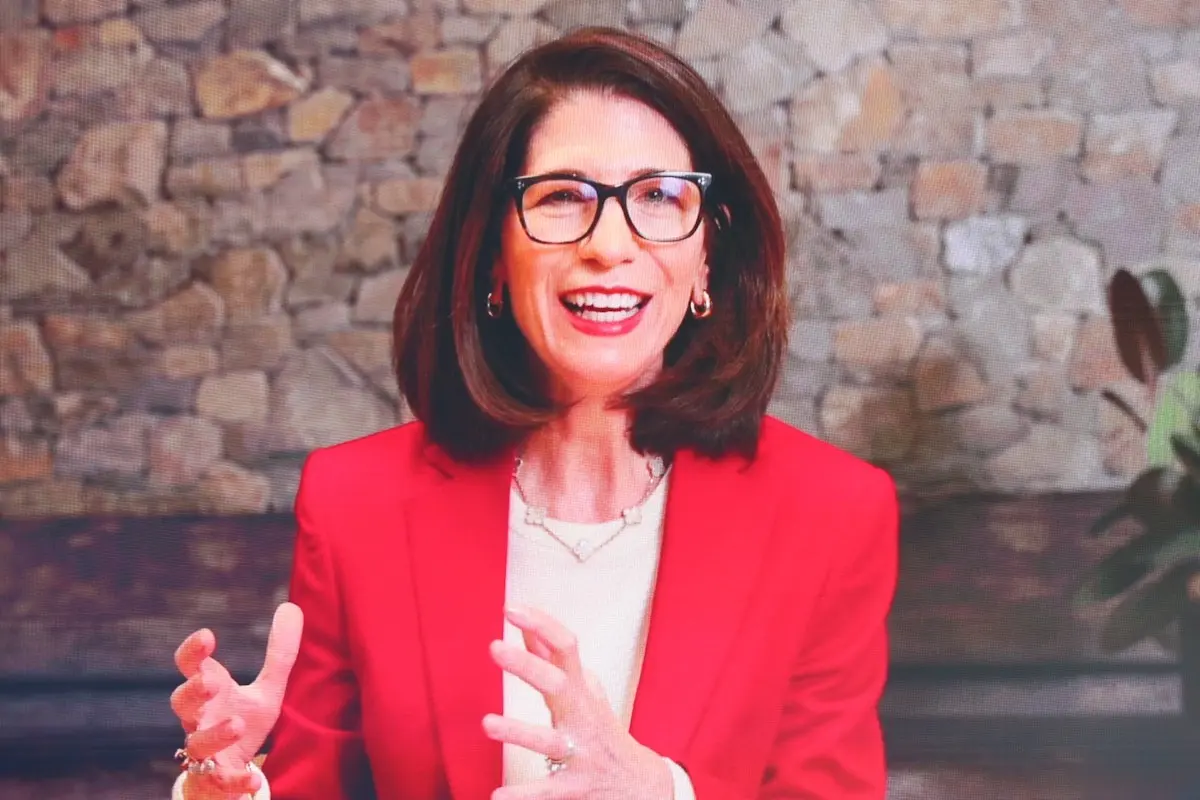
This existential tension took center stage at the recent industry discussions, encapsulated by a high-profile dialogue between Skift moderator Dennis Schaal and Ariane Gorin, Chief Executive Officer of Expedia Group.
Addressing the audience, Gorin laid bare the operational philosophy guiding one of the world’s largest online travel agencies (OTAs) through the turbulent dawn of "agentic AI." At the heart of Expedia’s modern playbook is a pragmatic, highly experimental ethos: be everywhere the consumer is, secure a seat at the table early, and maintain an active dialogue with every major technological power broker—from Meta and Google to OpenAI and Anthropic.
The immediate catalyst for this strategic urgency is Meta’s newly launched AI agent, Muse. Heralded by The Wall Street Journal as an "instant hit" mere weeks after its public debut, Muse represents a new class of consumer-facing conversational tools that blend natural language understanding with transactional capability. For Expedia, the arrival of Muse was not viewed as a competitive threat to be shunned, but rather as an inevitable frontier to be conquered. Gorin confirmed definitively that Expedia will integrate with Meta’s Muse, signaling a flexible approach that treats each emerging platform on a strictly case-by-case basis.
This in-depth report explores the structural shifts currently reshaping the travel technology landscape. We examine the mechanics of agentic AI, analyze Expedia’s calculated maneuvers across Silicon Valley’s shifting alliances, evaluate the risks of disintermediation, and forecast how automated assistants will permanently alter how the world travels.
Detailed Chronology: The Rise of Agentic AI and Expedia’s Strategic Pivot
To understand Expedia’s current posture toward platforms like Meta’s Muse, one must trace the rapid acceleration of conversational artificial intelligence over the past twenty-four months.

From Static Search to Autonomous Action
For the better part of three decades, online travel booking followed a predictable, search-driven paradigm. Consumers visited a dedicated website or app, entered specific parameters (such as departure cities, destination airports, check-in dates, and star ratings), sifted through dense grids of filtered results, and manually stitched together flights, hotels, and car rentals.
While aggregators and OTAs optimized this funnel relentlessly, the cognitive load remained largely with the traveler.
The commercialization of large language models (LLMs) in 2023 began to disrupt this linear journey. Initially, generative AI manifested as chatbot enhancements—automated concierge tools capable of answering basic customer service inquiries or offering high-level travel inspiration. However, by late 2024 and moving into 2026, the technology matured into agentic AI.
Unlike passive chatbots, AI agents possess autonomous execution capabilities. They can perceive user intent, reason through complex constraints, interact with external Application Programming Interfaces (APIs), and execute multi-step transactions on behalf of the user.
Meta’s Muse Enters the Fray
It was within this hyper-accelerated innovation cycle that Meta introduced Muse. Built on advanced reasoning architectures and deeply integrated into Meta’s expansive social and messaging ecosystem, Muse captured public and industry imagination almost overnight. Within two weeks of its launch, The Wall Street Journal labeled it an "instant hit," noting its unprecedented user adoption rates and its uncanny ability to synthesize lifestyle preferences with real-time transactional data.
For travel brands, the sudden emergence of Muse presented an immediate strategic crossroads. Because Meta commands billions of daily active users across Facebook, Instagram, and WhatsApp, an AI agent operating natively within that ecosystem threatens to capture consumer travel intent before those users ever think to open the Expedia app or navigate to Google.
Expedia’s Early Engagement and Partnership Approach
Rather than retreating behind walled gardens or attempting to starve emerging platforms of inventory, Expedia Group—under Gorin’s leadership—chose a proactive path of engagement. Recognizing that consumer habits are shaped by convenience rather than brand loyalty alone, Expedia positioned its engineering and business development teams to interface directly with the creators of these ecosystems.
According to Gorin, Expedia’s current engagement strategy spans a broad spectrum of tech giants. The company maintains active, collaborative discussions and technical integrations with:
- Google: Leveraging established search integrations while navigating the tech giant’s own evolving AI-driven travel features.
- OpenAI: Exploring how conversational interfaces built on GPT architecture can seamlessly pull real-time hotel and flight inventory via Expedia’s robust B2B and B2C APIs.
- Anthropic: Engaging with advanced safety-oriented AI models to ensure reliable, hallucination-free itinerary planning.
- Meta: Finalizing integration protocols to ensure Expedia’s vast inventory powers recommendations within platforms like Muse.
This multi-pronged deployment reflects a core executive conviction: in an era of platform volatility, strategic visibility supersedes premature perfection.
Supporting Context & Metrics: The Battle for the Consumer Interface
The race to control agentic AI in travel is underpinned by staggering macroeconomic realities and shifting consumer behaviors. To contextualize why CEOs like Ariane Gorin are willing to experiment with unproven platforms, one must examine the broader digital ecosystem.
The Threat of Disintermediation
The primary fear haunting travel executives is disintermediation—the risk that an intermediary AI layer interposes itself between the traveler and the travel provider, stripping away brand equity, customer data, and high-margin direct traffic.
If a consumer asks Meta’s Muse to "book a five-star romantic weekend in Santorini for under $3,000," and Muse handles the entire end-to-end transaction invisibly, the end supplier (whether it is Marriott, British Airways, or Expedia itself) risks becoming a mere commodity fulfillment engine, stripped of direct customer touchpoints.
Historically, OTAs like Expedia fought fiercely to build direct app engagement, recognizing that direct traffic yields superior customer lifetime value (LTV) and protects margins from high customer acquisition costs (CAC) paid to search giants. However, as consumer attention migrates toward conversational super-apps and AI agents, resisting the migration is no longer viable.
As Gorin pointed out during her Skift Global Forum discussion, travel brands cannot afford to sit on the sidelines while consumer habits are being permanently rewired.

The Economics of API-Driven Travel Distribution
Expedia Group is uniquely positioned to weather—and indeed profit from—this shift due to its dual identity as both a consumer-facing brand (Expedia, Hotels.com, Vrbo) and a massive B2B technology supplier (Expedia Partner Solutions).
By opening its vast supply network through advanced APIs, Expedia can act as the invisible engine powering multiple competing AI agents. Even if a consumer books a trip through Meta’s Muse or an OpenAI-powered assistant, the underlying inventory, pricing algorithms, and fulfillment mechanics may very well be driven by Expedia’s infrastructure.
This hybrid approach transforms a potential existential threat into a lucrative b2b distribution channel, diversifying revenue streams beyond direct-to-consumer bookings.
Official Statements and Industry Insights
The dialogue between Ariane Gorin and Dennis Schaal at the Skift Global Forum provided crucial clarity on how tier-one travel executives are framing the AI revolution. Below are the key philosophical pillars articulated during the session:
The Case-by-Case Experimental Mandate
Addressing the dilemma of whether to join new platforms, Gorin emphasized that absolute, rigid policies are counterproductive in a rapidly evolving technological landscape.
"Every travel company with a direct channel faces the same question when a new platform gains traction quickly: join it and risk losing control, or stay off of it and risk being left out."
Rather than choosing paralysis, Expedia adopted an agile framework. The decision to partner with platforms like Meta’s Muse is evaluated on a case-by-case and experimental basis. This allows Expedia to test user engagement, monitor conversion funnel integrity, and evaluate data-sharing terms without locking the enterprise into irreversible long-term commitments before the economic models of agentic AI have fully matured.
Being at the Table
A recurring theme of Gorin’s commentary was the necessity of active participation during the formative stages of platform development.
"You want to be at the table as discussions evolve."
In the world of technology standardization, early participants help shape protocol design, API capabilities, and user experience standards. Brands that refuse to engage early often find themselves forced to adopt sub-optimal interfaces designed entirely by third-party tech monoliths. By embedding technical teams alongside engineers at Google, OpenAI, Anthropic, and Meta, Expedia ensures that its inventory, brand standards, and customer safety protocols are baked into the foundational architecture of conversational commerce.
The Ultimate Strategic Takeaway
Summarizing the overarching lesson for the broader travel and hospitality sector, the operational consensus is clear:
You don’t have to understand where agentic AI might ultimately end up to know you should be watching it every step of the way.
Future Outlook: What to Watch in the Next Era of Travel Tech
As the dust settles on the initial wave of agentic AI deployments, industry analysts and corporate strategists are turning their attention to the critical milestones that will define the next phase of digital travel.
1. The Economics of Conversational Conversions
While user engagement numbers for tools like Meta’s Muse have captured headlines, the ultimate test for travel platforms will be monetization and conversion efficiency. Do conversational queries convert into high-value bookings at rates comparable to traditional search funnels? Or do users treat AI agents primarily as inspirational sounding boards before reverting to traditional OTAs for checkout? Monitoring average order values (AOV) and conversion drop-off rates across AI channels will be paramount.
2. Data Ownership and Customer Identity
As transactions move deeper into third-party AI ecosystems, questions surrounding data ownership will intensify. Who owns the customer profile generated during a multi-turn conversational planning session? Will platforms like Meta share granular preference data with suppliers like Expedia, or will they act as gatekeepers holding customer identity hostage? The legal and commercial frameworks governing data privacy in agentic commerce remain largely unwritten.
3. Trust, Hallucinations, and Complex Itinerary Management
While booking a single domestic flight or a standard hotel room is relatively straightforward for an LLM, complex multi-destination itineraries involving intricate flight connections, multi-supplier cancellations, and localized customer service support present severe operational risks. If an AI agent botches a booking or fails to handle a weather-related cancellation, who bears the liability? Travel brands that can guarantee robust post-booking customer service integration within AI-driven chats will hold a decisive competitive advantage.
4. Consolidation and Regulatory Scrutiny
As a handful of tech giants control the primary conversational interfaces through which consumers access the internet, regulatory bodies in the European Union, United States, and beyond are casting a wary eye on potential anti-competitive behavior. Antitrust watchdogs will closely monitor whether platform owners privilege their own travel recommendation algorithms or unfairly squeeze third-party OTAs like Expedia.
Conclusion
The transformation of travel booking from static search bars to dynamic, autonomous AI agents represents the most significant structural evolution in the industry since the advent of the internet.
Through the strategic lens of Expedia Group CEO Ariane Gorin, the path forward is defined not by fearful isolationism, but by courageous, calculated pragmatism. By maintaining an open-door policy toward emerging powerhouses like Meta’s Muse while rigorously analyzing partnership terms on a case-by-case basis, Expedia is demonstrating how legacy travel giants can successfully navigate uncertainty.
For the broader travel ecosystem, the message is unequivocal: the future of booking will be conversational, agentic, and deeply integrated. Those who choose to sit at the table will help write the rules of the future; those who stay away risk being left behind in the digital past.