






Executive Overview
In a significant development for both maritime engineering and European aerospace logistics, Compagnie Maritime Nantaise, a subsidiary of the Sogestran Group, officially signed a shipbuilding contract on August 21, 2026, with Guangzhou Shipyard International (GSI) for a highly specialized Roll-on/Roll-off (RoRo) cargo vessel. Scheduled to enter operational service by 2030, this custom-designed vessel is engineered specifically to secure and streamline the sea transport corridor for Europe’s sovereign space sector, carrying high-value, environmentally sensitive launch vehicle components and satellites across the Atlantic Ocean.
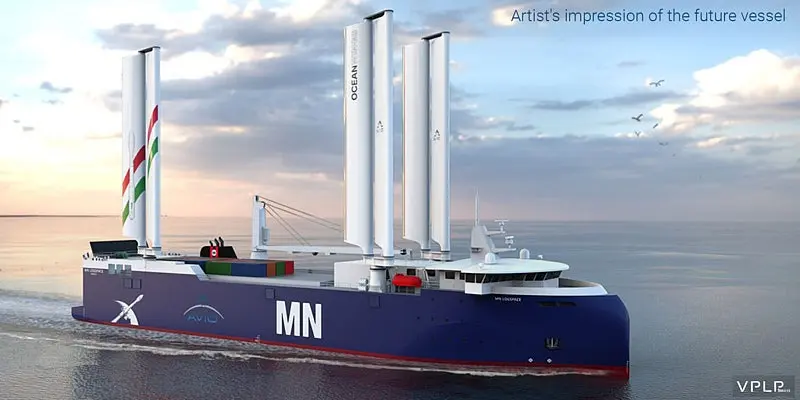
Designed through a collaborative partnership between Danish naval architecture firm Knud E. Hansen and French maritime design firm VPLP Design, the new ship represents a fusion of wind-assisted propulsion and specialized heavy-lift cargo architecture. The vessel’s primary mission will be the transportation of Avio’s Vega-C launch vehicles and oversized structural elements for the Ariane 6 rocket from production facilities in Europe directly to the Guiana Space Centre (Centre Spatial Guyanais – CSG) in Kourou, French Guiana.
Equipped with three automated OceanWings rigid sail systems, an optimized hull form, advanced dynamic weather-routing software, and full compatibility with low-carbon biofuels, the vessel reflects a strategic effort to decarbonize critical maritime supply chains while fulfilling the stringent security and environmental requirements of the global space industry.
Detailed Chronology
+-----------------------------------------------------------------------------------+
|                                  TIMELINE OF EVENTS                               |
+-----------------------------------------------------------------------------------+
|                                                                                   |
|  [ Pre-2026 Development Phase ]                                                  |
|  * Joint design studies initiated by Knud E. Hansen and VPLP Design.             |
|  * Integration of OceanWings rigid sail technology into aerospace RoRo concept.   |
|                                                                                   |
|  [ August 21, 2026: Official Contract Execution ]                                |
|  * Compagnie Maritime Nantaise / Sogestran Group formally executes ship construction|
|    contract with Guangzhou Shipyard International (GSI).                         |
|                                                                                   |
|  [ 2026 – 2028: Engineering & Construction Phase ]                                |
|  * Hull fabrication, machinery installation, and structural assembly at GSI.     |
|  * Outfitting of climate-controlled holds and specialized RoRo decks.             |
|                                                                                   |
|  [ 2028 – 2029: System Integration & Sea Trials ]                                 |
|  * Installation and calibration of three automated OceanWings rigid sails.        |
|  * Transatlantic sea trials and climate control system validation.                |
|                                                                                   |
|  [ 2030: Operational Entry into Service ]                                        |
|  * Commercial maiden voyage to Guiana Space Centre in Kourou.                     |
|  * Integration into primary supply chain for Vega-C and Ariane 6 launch hardware. |
|                                                                                   |
+-----------------------------------------------------------------------------------+
Strategic Procurement Timeline
The execution of the procurement agreement on August 21, 2026, marks the culmination of extensive design iterations and logistical planning. Compagnie Maritime Nantaise, which holds a long-standing history of managing strategic and high-security cargo for French and European institutions, initiated the project to replace aging logistical infrastructure and align with stricter environmental standards set by the International Maritime Organization (IMO) and the European Union.
The contract selection of Guangzhou Shipyard International (GSI)—a yard recognized for its capability in constructing complex RoRo vessels, dual-fuel passenger ferries, and specialized ice-class ships—followed an international tender process focused on hull execution capability and advanced structural integration expertise.
Construction and Commissioning Milestones
- 2026–2028: Steel cutting, keel laying, and structural block integration will take place at GSI’s facilities in South China. Simultaneous manufacturing of the wing-sail assemblies and high-precision environmental control systems will occur across specialized facilities in Europe.
- 2029: Sea trials are slated to commence, focusing on verifying the interaction between the ship’s conventional propulsion machinery, automated sail management systems, and specialized ballast configurations designed to limit vessel motion during transit.
- 2030: The vessel will formally enter service, establishing a dedicated green maritime bridge between mainland European manufacturing sites—such as Colleferro (Italy) for Vega-C, alongside French and German facilities for Ariane 6—and the tropical climate of French Guiana.
Supporting Context & Metrics
Maritime Engineering and Deck Configurations
Transporting aerospace hardware presents unique logistical challenges. Modern launch vehicles—such as the P120C solid rocket motor stages used on both the Vega-C and Ariane 6—are exceptionally heavy, highly sensitive to environmental fluctuations, and vulnerable to micro-vibrations and humidity during sea voyages.
+-----------------------------------------------------------------------------------+
|                        VESSEL DECK ARCHITECTURE & LAYOUT                          |
+-----------------------------------------------------------------------------------+
|                                                                                   |
|  [ Open Deck ]           Flexible stowage for oversized non-sensitive cargo,       |
|                          containers, and auxiliary support gear.                  |
|  -------------------------------------------------------------------------------  |
|  [ Climate Compartment ] Fully enclosed, temperature/humidity-regulated space     |
|                          designed for satellite payloads & delicate avionics.     |
|  -------------------------------------------------------------------------------  |
|  [ Main RoRo Deck ]      Reinforced deck for heavy rolling stock, P120C rocket    |
|                          boosters, and Vega-C / Ariane 6 structural stages.       |
|                                                                                   |
+-----------------------------------------------------------------------------------+
To meet these specialized transport needs, the vessel features three distinct cargo zones:
- Main RoRo Deck: Engineered with high-load floor capacities to support heavy wheeled transporters carrying fully assembled rocket stages and solid propellant boosters.
- Climate-Controlled Compartment: A specialized sealed hold equipped with advanced HVAC filtration, strict temperature and relative-humidity regulation, and cleanroom-like environments designed to protect delicate satellite payloads, optical instruments, and sensitive electronic assemblies.
- Flexible Open Deck: Designed to accommodate secondary oversized cargo, support containers, and specialized equipment required for launch pad operations at Kourou.
Sustainable Propulsion Metrics and Wind-Assisted Technology
The vessel’s primary technical highlight is its hybrid propulsion system, which blends traditional marine engines with wind-assisted propulsion. The ship’s layout incorporates three automated OceanWings rigid sails—a technology originally derived from high-performance hydrofoil racing yachts by VPLP Design and commercialized for deep-sea shipping.
+-----------------------------------------------------------------------------------+
|                       HYBRID PROPULSION SYSTEM ARCHITECTURE                       |
+-----------------------------------------------------------------------------------+
|                                                                                   |
|                      +----------------------------------+                         |
|                      |   Automated Weather-Routing System|                         |
|                      +----------------+-----------------+                         |
|                                       |                                           |
|                                       v                                           |
|     +---------------------------------+----------------------------------+        |
|     |                                                                    |        |
|     v                                                                    v        |
| +----------------------------------+        +-----------------------------------+ |
| |  3 x OceanWings Rigid Sails      |        |  Conventional Biofuel Machinery   | |
| |  - Fully automated reefing/trim  |        |  - Compatible with FAME / HVO     | |
| |  - Real-time wind capture        |        |  - Low-emission propulsion        | |
| +----------------------------------+        +-----------------------------------+ |
|     |                                                                    |        |
|     +---------------------------------+----------------------------------+        |
|                                       |                                           |
|                                       v                                           |
|                      +----------------------------------+                         |
|                      |  Hydrodynamically Optimized Hull |                         |
|                      +----------------------------------+                         |
|                                                                                   |
+-----------------------------------------------------------------------------------+
Key Technical & Environmental Metrics:
- Primary Propulsion Integration: Conventional diesel-mechanical engine configuration optimized to run continuously on low-carbon biofuels, such as Hydrotreated Vegetable Oil (HVO) and Fatty Acid Methyl Esters (FAME).
- Wind-Assisted Systems: Three reefable and tiltable OceanWings rigid sails that automatically trim based on real-time wind speed and angle data, significantly reducing engine load during transatlantic passages.
- Efficiency Gains: The integration of the OceanWings sails, paired with Knud E. Hansen’s hydrodynamically optimized hull form, is expected to yield substantial fuel savings and lower greenhouse gas emissions compared to conventional cargo vessels operating on similar routes.
- Operational Software: Advanced weather-routing algorithms analyze transatlantic meteorological patterns to continuously alter sailing courses, optimizing the capture of trade winds while steering clear of severe sea states that could subject sensitive space cargo to excessive g-forces.
Strategic Cargo Profile: Vega-C and Ariane 6
The transatlantic route between Western Europe and French Guiana serves as a critical artery for European space operations.
+-----------------------------------------------------------------------------------+
|                        TRANSATLANTIC SPACE SUPPLY CHAIN                           |
+-----------------------------------------------------------------------------------+
|                                                                                   |
|  [ European Manufacturing Facilities ]                                            |
|   * Italy (Avio): Vega-C rocket stages & P120C motors                             |
|   * France & Germany (ArianeGroup): Ariane 6 core stages, fairings, payload adapters |
|                                       |                                           |
|                                       v                                           |
|  [ Maritime Transit Vessel ]                                                      |
|   * Custom RoRo Ship featuring OceanWings sails & climate control                 |
|   * Optimized route across the Atlantic Ocean via weather-routing algorithms       |
|                                       |                                           |
|                                       v                                           |
|  [ Guiana Space Centre (CSG), Kourou ]                                            |
|   * Integration into launch pads for European commercial and sovereign missions   |
|                                                                                   |
+-----------------------------------------------------------------------------------+- Avio’s Vega-C: Manufactured predominantly by Avio in Colleferro, Italy, the Vega-C light-lift launch vehicle relies heavily on maritime transport to move its main structural components and P120C solid rocket motor stages across the ocean safely.
- Ariane 6 Logistics: Built by ArianeGroup across various European sites, the heavy-lift Ariane 6 requires dedicated maritime transport for large elements such as the upper stage, main cryogenic stage, and payload fairings. The vessel’s flexible open deck and main RoRo hold provide the volumetric space required to shuttle these components.
Official Statements
Reflecting on the execution of the contract and the technological path chosen for the vessel, key stakeholders highlighted both the environmental responsibility and technical precision required for the project.
"Securing this contract with Guangzhou Shipyard International marks a decisive step forward in our strategy to provide specialized, low-carbon shipping solutions for Europe’s strategic industries," stated a senior executive from the Sogestran Group. "By integrating sail-assisted propulsion into a highly specialized RoRo architecture, Compagnie Maritime Nantaise is demonstrating that complex, high-value space logistics can lead the transition toward sustainable maritime operations."
Commentary from the design team emphasized the engineering challenges involved in balancing heavy-lift capabilities with wind-assisted propulsion.
"Designing a vessel tasked with transporting delicate aerospace payloads requires an uncompromised focus on stability, motion mitigation, and environmental control," said a spokesperson for Knud E. Hansen. "Working alongside VPLP Design, we developed a dynamic hull form that integrates seamlessly with the OceanWings system, ensuring optimal aerodynamics and hydrodynamics without compromising cargo capacity or roll dynamics."
Addressing the importance of maintaining an uninterrupted supply chain for space operations, representatives from Avio and the broader European space supply community noted:
"The launch cadence of Vega-C and Ariane 6 relies entirely on a seamless, secure, and resilient maritime supply chain. Having a dedicated, next-generation vessel equipped with advanced cargo preservation technologies guarantees that rocket stages arrive at the Guiana Space Centre ready for integration, minimizing transit risk and environmental footprint."
Future Outlook
Setting a Precedent for Green Maritime Corridors
The introduction of this specialized vessel in 2030 will serve as an operational showcase for decarbonized commercial shipping. As international maritime regulations tighten under the IMO’s Revised Strategy on Reduction of GHG Emissions, deep-sea specialized transportation must adapt. By combining rigid sail propulsion with biofuel capabilities and advanced weather-routing software, Compagnie Maritime Nantaise is establishing a benchmark for green transport corridors in specialized shipping sectors.
The vessel follows in the footsteps of pioneer wind-assisted cargo projects—such as the Canopée, which began serving Ariane 6 logistics in recent years—proving that wind-assisted propulsion is evolving from experimental trials into an operational standard for specialized maritime logistics.
Strengthening European Access to Space
Beyond its environmental metrics, the vessel plays an important geopolitical and strategic role in securing Europe’s independent space capabilities. Consistent, reliable access to the launch facilities in Kourou requires a fleet of specialized cargo ships capable of maintaining tight schedules despite changing transatlantic weather patterns.
By expanding its dedicated fleet with this custom-engineered RoRo vessel, Compagnie Maritime Nantaise ensures that Europe’s space infrastructure—including ESA programs, commercial satellite constellations, and sovereign defense payloads—remains supported by a modern logistics fleet capable of operating cleanly and reliably through 2030 and beyond.